CISA Releases Six Industrial Control Systems Advisories

 ​CISA released six Industrial Control Systems (ICS) advisories on July 15, 2025. These advisories provide timely information about current security issues, vulnerabilities, and exploits surrounding ICS.

ICSA-25-196-01 Hitachi Energy Asset Suite
ICSA-25-196-02 ABB RMC-100
ICSA-25-196-03 LITEON IC48A and IC80A EV Chargers 
ICSA-25-037-02 Schneider Electric EcoStruxure (Update B)
ICSA-25-140-08 Schneider Electric Modicon Controllers (Update A)
ICSA-25-070-01 Schneider Electric Uni-Telway Driver (Update A)

CISA encourages users and administrators to review newly released ICS advisories for technical details and mitigations. 

CISA released six Industrial Control Systems (ICS) advisories on July 15, 2025. These advisories provide timely information about current security issues, vulnerabilities, and exploits surrounding ICS.

CISA encourages users and administrators to review newly released ICS advisories for technical details and mitigations.

 Read More

ABB RMC-100

 ​View CSAF
1. EXECUTIVE SUMMARY

CVSS v4 8.2
ATTENTION: Exploitable remotely/low attack complexity
Vendor: ABB
Equipment: RMC-100
Vulnerabilities: Use of Hard-coded Cryptographic Key, Stack-based Buffer Overflow

2. RISK EVALUATION
Successful exploitation of these vulnerabilities could allow an attacker to gain unauthenticated access to the MQTT configuration data, cause a denial-of-service condition on the MQTT configuration web server (REST interface), or decrypt encrypted MQTT broker credentials.
3. TECHNICAL DETAILS
3.1 AFFECTED PRODUCTS
ABB reports the following versions of RMC-100 with the REST interface are affected. The vulnerabilities are only present when the REST interface is enabled. This interface is disabled by default:

RMC-100: 2105457-043 through 2105457-045
RMC-100 LITE: 2106229-015 through 2106229-016

3.2 VULNERABILITY OVERVIEW
3.2.1 USE OF HARD-CODED CRYPTOGRAPHIC KEY CWE-321
When the REST interface is enabled by the user, and an attacker gains access to the source code and the control network, the attacker can bypass REST interface authentication and gain access to MQTT configuration data.
CVE-2025-6074 has been assigned to this vulnerability. A CVSS v3.1 base score of 6.5 has been calculated; the CVSS vector string is (CVSS:3.1/AV:N/AC:L/PR:N/UI:N/S:U/C:L/I:L/A:N).
A CVSS v4 score has also been calculated for CVE-2025-6074. A base score of 6.3 has been calculated; the CVSS vector string is (CVSS:4.0/AV:N/AC:L/AT:P/PR:N/UI:N/VC:L/VI:L/VA:N/SC:N/SI:N/SA:N).
3.2.2 STACK-BASED BUFFER OVERFLOW CWE-121
When the REST interface is enabled by the user, if an attacker gains access to the control network, user/password broker authentication is enabled, and CVE-2025-6074 is exploited, the attacker can overflow the buffer for the username or password.
CVE-2025-6073 has been assigned to this vulnerability. A CVSS v3.1 base score of 7.5 has been calculated; the CVSS vector string is (CVSS:3.1/AV:N/AC:L/PR:N/UI:N/S:U/C:N/I:N/A:H).
A CVSS v4 score has also been calculated for CVE-2025-6073. A base score of 8.2 has been calculated; the CVSS vector string is (CVSS:4.0/AV:N/AC:L/AT:P/PR:N/UI:N/VC:N/VI:N/VA:H/SC:N/SI:N/SA:N).
3.2.3 STACK-BASED BUFFER OVERFLOW CWE-121
When the REST interface is enabled by the user, if an attacker gains access to the control network and exploits CVE-2025-6074, the attacker can use the JSON configuration to overflow the expiration date field.
CVE-2025-6072 has been assigned to this vulnerability. A CVSS v3.1 base score of 7.5 has been calculated; the CVSS vector string is (CVSS:3.1/AV:N/AC:L/PR:N/UI:N/S:U/C:N/I:N/A:H).
A CVSS v4 score has also been calculated for CVE-2025-6072. A base score of 8.2 has been calculated; the CVSS vector string is (CVSS:4.0/AV:N/AC:L/AT:P/PR:N/UI:N/VC:N/VI:N/VA:H/SC:N/SI:N/SA:N).
3.2.4 USE OF HARD-CODED CRYPTOGRAPHIC KEY CWE-321
An attacker can gain access to salted information to decrypt MQTT information.
CVE-2025-6071 has been assigned to this vulnerability. A CVSS v3.1 base score of 5.3 has been calculated; the CVSS vector string is (CVSS:3.1/AV:N/AC:L/PR:N/UI:N/S:U/C:L/I:N/A:N).
A CVSS v4 score has also been calculated for CVE-2025-6071. A base score of 6.3 has been calculated; the CVSS vector string is (CVSS:4.0/AV:N/AC:L/AT:P/PR:N/UI:N/VC:L/VI:N/VA:N/SC:L/SI:N/SA:N).
3.3 BACKGROUND

CRITICAL INFRASTRUCTURE SECTORS: Critical Manufacturing
COUNTRIES/AREAS DEPLOYED: Worldwide, except regions mandated to follow EU CRA
COMPANY HEADQUARTERS LOCATION: Switzerland

3.4 RESEARCHER
Vera Mens of Claroty Team82 reported these vulnerabilities to ABB.
4. MITIGATIONS
ABB recommends disabling the REST interface when it is not being used to configure the MQTT functionality. By default, when the REST interface is disabled so there is no risk. The RMC-100 is not intended for access over public networks such as the Internet. An attacker would need access to the user’s private control network to exploit these vulnerabilities. Proper network segmentation is recommended.
For more information, see ABB’s cybersecurity advisory.
For any installation of software-related products, ABB strongly recommends the following (non-exhaustive) list of cybersecurity practices:

Isolate special-purpose networks (e.g., for automation systems) and remote devices behind firewalls and separate them from any general-purpose networks (e.g., office or home networks).
Install physical controls to ensure that no unauthorized personnel can access devices, components, peripheral equipment, and networks.
Never connect programming software or computers containing programming software to any network other than the network for the devices that it is intended for.
Scan all data imported into your environment before use to detect potential malware infections.
Minimize network exposure for all applications and endpoints to ensure that they are not accessible from the Internet unless they are designed for such exposure and the intended use requires such.
Ensure all nodes are always up-to-date in terms of installed software, operating system, and firmware patches as well as antivirus and firewall.
When remote access is required, use secure methods, such as virtual private networks (VPNs). Recognize that VPNs may have vulnerabilities and should be updated to the most current version available. Also, understand that VPNs are only as secure as the connected devices.

CISA recommends users take defensive measures to minimize the risk of exploitation of these vulnerabilities. CISA reminds organizations to perform proper impact analysis and risk assessment prior to deploying defensive measures.
CISA also provides a section for control systems security recommended practices on the ICS webpage on cisa.gov/ics. Several CISA products detailing cyber defense best practices are available for reading and download, including Improving Industrial Control Systems Cybersecurity with Defense-in-Depth Strategies.
CISA encourages organizations to implement recommended cybersecurity strategies for proactive defense of ICS assets.
Additional mitigation guidance and recommended practices are publicly available on the ICS webpage at cisa.gov/ics in the technical information paper, ICS-TIP-12-146-01B–Targeted Cyber Intrusion Detection and Mitigation Strategies.
Organizations observing suspected malicious activity should follow established internal procedures and report findings to CISA for tracking and correlation against other incidents.
No known public exploitation specifically targeting these vulnerabilities has been reported to CISA at this time.
5. UPDATE HISTORY

July 15, 2025: Initial Publication 
View CSAF

1. EXECUTIVE SUMMARY

  • CVSS v4 8.2
  • ATTENTION: Exploitable remotely/low attack complexity
  • Vendor: ABB
  • Equipment: RMC-100
  • Vulnerabilities: Use of Hard-coded Cryptographic Key, Stack-based Buffer Overflow

2. RISK EVALUATION

Successful exploitation of these vulnerabilities could allow an attacker to gain unauthenticated access to the MQTT configuration data, cause a denial-of-service condition on the MQTT configuration web server (REST interface), or decrypt encrypted MQTT broker credentials.

3. TECHNICAL DETAILS

3.1 AFFECTED PRODUCTS

ABB reports the following versions of RMC-100 with the REST interface are affected. The vulnerabilities are only present when the REST interface is enabled. This interface is disabled by default:

  • RMC-100: 2105457-043 through 2105457-045
  • RMC-100 LITE: 2106229-015 through 2106229-016

3.2 VULNERABILITY OVERVIEW

3.2.1 USE OF HARD-CODED CRYPTOGRAPHIC KEY CWE-321

When the REST interface is enabled by the user, and an attacker gains access to the source code and the control network, the attacker can bypass REST interface authentication and gain access to MQTT configuration data.

CVE-2025-6074 has been assigned to this vulnerability. A CVSS v3.1 base score of 6.5 has been calculated; the CVSS vector string is (CVSS:3.1/AV:N/AC:L/PR:N/UI:N/S:U/C:L/I:L/A:N).

A CVSS v4 score has also been calculated for CVE-2025-6074. A base score of 6.3 has been calculated; the CVSS vector string is (CVSS:4.0/AV:N/AC:L/AT:P/PR:N/UI:N/VC:L/VI:L/VA:N/SC:N/SI:N/SA:N).

3.2.2 STACK-BASED BUFFER OVERFLOW CWE-121

When the REST interface is enabled by the user, if an attacker gains access to the control network, user/password broker authentication is enabled, and CVE-2025-6074 is exploited, the attacker can overflow the buffer for the username or password.

CVE-2025-6073 has been assigned to this vulnerability. A CVSS v3.1 base score of 7.5 has been calculated; the CVSS vector string is (CVSS:3.1/AV:N/AC:L/PR:N/UI:N/S:U/C:N/I:N/A:H).

A CVSS v4 score has also been calculated for CVE-2025-6073. A base score of 8.2 has been calculated; the CVSS vector string is (CVSS:4.0/AV:N/AC:L/AT:P/PR:N/UI:N/VC:N/VI:N/VA:H/SC:N/SI:N/SA:N).

3.2.3 STACK-BASED BUFFER OVERFLOW CWE-121

When the REST interface is enabled by the user, if an attacker gains access to the control network and exploits CVE-2025-6074, the attacker can use the JSON configuration to overflow the expiration date field.

CVE-2025-6072 has been assigned to this vulnerability. A CVSS v3.1 base score of 7.5 has been calculated; the CVSS vector string is (CVSS:3.1/AV:N/AC:L/PR:N/UI:N/S:U/C:N/I:N/A:H).

A CVSS v4 score has also been calculated for CVE-2025-6072. A base score of 8.2 has been calculated; the CVSS vector string is (CVSS:4.0/AV:N/AC:L/AT:P/PR:N/UI:N/VC:N/VI:N/VA:H/SC:N/SI:N/SA:N).

3.2.4 USE OF HARD-CODED CRYPTOGRAPHIC KEY CWE-321

An attacker can gain access to salted information to decrypt MQTT information.

CVE-2025-6071 has been assigned to this vulnerability. A CVSS v3.1 base score of 5.3 has been calculated; the CVSS vector string is (CVSS:3.1/AV:N/AC:L/PR:N/UI:N/S:U/C:L/I:N/A:N).

A CVSS v4 score has also been calculated for CVE-2025-6071. A base score of 6.3 has been calculated; the CVSS vector string is (CVSS:4.0/AV:N/AC:L/AT:P/PR:N/UI:N/VC:L/VI:N/VA:N/SC:L/SI:N/SA:N).

3.3 BACKGROUND

  • CRITICAL INFRASTRUCTURE SECTORS: Critical Manufacturing
  • COUNTRIES/AREAS DEPLOYED: Worldwide, except regions mandated to follow EU CRA
  • COMPANY HEADQUARTERS LOCATION: Switzerland

3.4 RESEARCHER

Vera Mens of Claroty Team82 reported these vulnerabilities to ABB.

4. MITIGATIONS

ABB recommends disabling the REST interface when it is not being used to configure the MQTT functionality. By default, when the REST interface is disabled so there is no risk. The RMC-100 is not intended for access over public networks such as the Internet. An attacker would need access to the user’s private control network to exploit these vulnerabilities. Proper network segmentation is recommended.

For more information, see ABB’s cybersecurity advisory.

For any installation of software-related products, ABB strongly recommends the following (non-exhaustive) list of cybersecurity practices:

  • Isolate special-purpose networks (e.g., for automation systems) and remote devices behind firewalls and separate them from any general-purpose networks (e.g., office or home networks).
  • Install physical controls to ensure that no unauthorized personnel can access devices, components, peripheral equipment, and networks.
  • Never connect programming software or computers containing programming software to any network other than the network for the devices that it is intended for.
  • Scan all data imported into your environment before use to detect potential malware infections.
  • Minimize network exposure for all applications and endpoints to ensure that they are not accessible from the Internet unless they are designed for such exposure and the intended use requires such.
  • Ensure all nodes are always up-to-date in terms of installed software, operating system, and firmware patches as well as antivirus and firewall.
  • When remote access is required, use secure methods, such as virtual private networks (VPNs). Recognize that VPNs may have vulnerabilities and should be updated to the most current version available. Also, understand that VPNs are only as secure as the connected devices.

CISA recommends users take defensive measures to minimize the risk of exploitation of these vulnerabilities. CISA reminds organizations to perform proper impact analysis and risk assessment prior to deploying defensive measures.

CISA also provides a section for control systems security recommended practices on the ICS webpage on cisa.gov/ics. Several CISA products detailing cyber defense best practices are available for reading and download, including Improving Industrial Control Systems Cybersecurity with Defense-in-Depth Strategies.

CISA encourages organizations to implement recommended cybersecurity strategies for proactive defense of ICS assets.

Additional mitigation guidance and recommended practices are publicly available on the ICS webpage at cisa.gov/ics in the technical information paper, ICS-TIP-12-146-01B–Targeted Cyber Intrusion Detection and Mitigation Strategies.

Organizations observing suspected malicious activity should follow established internal procedures and report findings to CISA for tracking and correlation against other incidents.

No known public exploitation specifically targeting these vulnerabilities has been reported to CISA at this time.

5. UPDATE HISTORY

  • July 15, 2025: Initial Publication
 Read More

LITEON IC48A and IC80A EV Chargers

 ​View CSAF
1. EXECUTIVE SUMMARY

CVSS v4 8.7
ATTENTION: Exploitable remotely/low attack complexity
Vendor: LITEON
Equipment: IC48A and IC80A
Vulnerability: Plaintext Storage of a Password

2. RISK EVALUATION
Successful exploitation of this vulnerability could allow an attacker to access sensitive information when accessing the Liteon EV chargers.
3. TECHNICAL DETAILS
3.1 AFFECTED PRODUCTS
The following versions of LITEON EV chargers are affected:

LITEON IC48A: Firmware versions prior to 01.00.19r
LITEON IC80A: Firmware versions prior to 01.01.12e

3.2 VULNERABILITY OVERVIEW
3.2.1 PLAINTEXT STORAGE OF A PASSWORD CWE-256
LITEON IC48A firmware versions prior to 01.00.19r and LITEON IC80A firmware versions prior to 01.01.12e store FTP-server-access-credentials in cleartext in their system logs.
CVE-2025-7357 has been assigned to this vulnerability. A CVSS v3.1 base score of 7.5 has been calculated; the CVSS vector string is (AV:N/AC:L/PR:N/UI:N/S:U/C:H/I:N/A:N).
A CVSS v4 score has also been calculated for CVE-2025-7357. A base score of 8.7 has been calculated; the CVSS vector string is (AV:N/AC:L/AT:N/PR:N/UI:N/VC:H/VI:N/VA:N/SC:N/SI:N/SA:N).
3.3 BACKGROUND

CRITICAL INFRASTRUCTURE SECTORS: Commercial Facilities, Energy, Transportation Systems
COUNTRIES/AREAS DEPLOYED: Worldwide
COMPANY HEADQUARTERS LOCATION: Taiwan

3.4 RESEARCHER
Murat Sagdullaev of Electrada reported this vulnerability to CISA.
4. MITIGATIONS
LITEON has released the following firmware versions for the following EV chargers:

LITEON IC48A: Firmware versions 01.00.20h
LITEON IC80A: Firmware versions 01.01.13m

For more information, contact LITEON.
CISA recommends users take defensive measures to minimize the risk of exploitation of this vulnerability, such as:

Minimize network exposure for all control system devices and/or systems, ensuring they are not accessible from the internet.
Locate control system networks and remote devices behind firewalls and isolating them from business networks.
When remote access is required, use more secure methods, such as Virtual Private Networks (VPNs), recognizing VPNs may have vulnerabilities and should be updated to the most current version available. Also recognize VPN is only as secure as the connected devices.

CISA reminds organizations to perform proper impact analysis and risk assessment prior to deploying defensive measures.
CISA also provides a section for control systems security recommended practices on the ICS webpage on cisa.gov/ics. Several CISA products detailing cyber defense best practices are available for reading and download, including Improving Industrial Control Systems Cybersecurity with Defense-in-Depth Strategies.
CISA encourages organizations to implement recommended cybersecurity strategies for proactive defense of ICS assets.
Additional mitigation guidance and recommended practices are publicly available on the ICS webpage at cisa.gov/ics in the technical information paper, ICS-TIP-12-146-01B–Targeted Cyber Intrusion Detection and Mitigation Strategies.
Organizations observing suspected malicious activity should follow established internal procedures and report findings to CISA for tracking and correlation against other incidents.
No known public exploitation specifically targeting this vulnerability has been reported to CISA at this time.
5. UPDATE HISTORY

July 15, 2025: Initial Publication 

View CSAF

1. EXECUTIVE SUMMARY

  • CVSS v4 8.7
  • ATTENTION: Exploitable remotely/low attack complexity
  • Vendor: LITEON
  • Equipment: IC48A and IC80A
  • Vulnerability: Plaintext Storage of a Password

2. RISK EVALUATION

Successful exploitation of this vulnerability could allow an attacker to access sensitive information when accessing the Liteon EV chargers.

3. TECHNICAL DETAILS

3.1 AFFECTED PRODUCTS

The following versions of LITEON EV chargers are affected:

  • LITEON IC48A: Firmware versions prior to 01.00.19r
  • LITEON IC80A: Firmware versions prior to 01.01.12e

3.2 VULNERABILITY OVERVIEW

3.2.1 PLAINTEXT STORAGE OF A PASSWORD CWE-256

LITEON IC48A firmware versions prior to 01.00.19r and LITEON IC80A firmware versions prior to 01.01.12e store FTP-server-access-credentials in cleartext in their system logs.

CVE-2025-7357 has been assigned to this vulnerability. A CVSS v3.1 base score of 7.5 has been calculated; the CVSS vector string is (AV:N/AC:L/PR:N/UI:N/S:U/C:H/I:N/A:N).

A CVSS v4 score has also been calculated for CVE-2025-7357. A base score of 8.7 has been calculated; the CVSS vector string is (AV:N/AC:L/AT:N/PR:N/UI:N/VC:H/VI:N/VA:N/SC:N/SI:N/SA:N).

3.3 BACKGROUND

  • CRITICAL INFRASTRUCTURE SECTORS: Commercial Facilities, Energy, Transportation Systems
  • COUNTRIES/AREAS DEPLOYED: Worldwide
  • COMPANY HEADQUARTERS LOCATION: Taiwan

3.4 RESEARCHER

Murat Sagdullaev of Electrada reported this vulnerability to CISA.

4. MITIGATIONS

LITEON has released the following firmware versions for the following EV chargers:

  • LITEON IC48A: Firmware versions 01.00.20h
  • LITEON IC80A: Firmware versions 01.01.13m

For more information, contact LITEON.

CISA recommends users take defensive measures to minimize the risk of exploitation of this vulnerability, such as:

  • Minimize network exposure for all control system devices and/or systems, ensuring they are not accessible from the internet.
  • Locate control system networks and remote devices behind firewalls and isolating them from business networks.
  • When remote access is required, use more secure methods, such as Virtual Private Networks (VPNs), recognizing VPNs may have vulnerabilities and should be updated to the most current version available. Also recognize VPN is only as secure as the connected devices.

CISA reminds organizations to perform proper impact analysis and risk assessment prior to deploying defensive measures.

CISA also provides a section for control systems security recommended practices on the ICS webpage on cisa.gov/ics. Several CISA products detailing cyber defense best practices are available for reading and download, including Improving Industrial Control Systems Cybersecurity with Defense-in-Depth Strategies.

CISA encourages organizations to implement recommended cybersecurity strategies for proactive defense of ICS assets.

Additional mitigation guidance and recommended practices are publicly available on the ICS webpage at cisa.gov/ics in the technical information paper, ICS-TIP-12-146-01B–Targeted Cyber Intrusion Detection and Mitigation Strategies.

Organizations observing suspected malicious activity should follow established internal procedures and report findings to CISA for tracking and correlation against other incidents.

No known public exploitation specifically targeting this vulnerability has been reported to CISA at this time.

5. UPDATE HISTORY

  • July 15, 2025: Initial Publication

 Read More

DOGE Denizen Marko Elez Leaked API Key for xAI

​Marko Elez, a 25-year-old employee at Elon Musk’s Department of Government Efficiency (DOGE), has been granted access to sensitive databases at the U.S. Social Security Administration, the Treasury and Justice departments, and the Department of Homeland Security. So it should fill all Americans with a deep sense of confidence to learn that Mr. Elez over the weekend inadvertently published a private key that allowed anyone to interact directly with more than four dozen large language models (LLMs) developed by Musk’s artificial intelligence company xAI. 

Marko Elez, a 25-year-old employee at Elon Musk’s Department of Government Efficiency (DOGE), has been granted access to sensitive databases at the U.S. Social Security Administration, the Treasury and Justice departments, and the Department of Homeland Security. So it should fill all Americans with a deep sense of confidence to learn that Mr. Elez over the weekend inadvertently published a private key that allowed anyone to interact directly with more than four dozen large language models (LLMs) developed by Musk’s artificial intelligence company xAI.

Image: Shutterstock, @sdx15.

On July 13, Mr. Elez committed a code script to GitHub called “agent.py” that included a private application programming interface (API) key for xAI. The inclusion of the private key was first flagged by GitGuardian, a company that specializes in detecting and remediating exposed secrets in public and proprietary environments. GitGuardian’s systems constantly scan GitHub and other code repositories for exposed API keys, and fire off automated alerts to affected users.

Philippe Caturegli, “chief hacking officer” at the security consultancy Seralys, said the exposed API key allowed access to at least 52 different LLMs used by xAI. The most recent LLM in the list was called “grok-4-0709” and was created on July 9, 2025.

Grok, the generative AI chatbot developed by xAI and integrated into Twitter/X, relies on these and other LLMs (a query to Grok before publication shows Grok currently uses Grok-3, which was launched in Feburary 2025). Earlier today, xAI announced that the Department of Defense will begin using Grok as part of a contract worth up to $200 million. The contract award came less than a week after Grok began spewing antisemitic rants and invoking Adolf Hitler.

Mr. Elez did not respond to a request for comment. The code repository containing the private xAI key was removed shortly after Caturegli notified Elez via email. However, Caturegli said the exposed API key still works and has not yet been revoked.

“If a developer can’t keep an API key private, it raises questions about how they’re handling far more sensitive government information behind closed doors,” Caturegli told KrebsOnSecurity.

Prior to joining DOGE, Marko Elez worked for a number of Musk’s companies. His DOGE career began at the Department of the Treasury, and a legal battle over DOGE’s access to Treasury databases showed Elez was sending unencrypted personal information in violation of the agency’s policies.

While still at Treasury, Elez resigned after The Wall Street Journal linked him to social media posts that advocated racism and eugenics. When Vice President J.D. Vance lobbied for Elez to be rehired, President Trump agreed and Musk reinstated him.

Since his re-hiring as a DOGE employee, Elez has been granted access to databases at one federal agency after another. TechCrunch reported in February 2025 that he was working at the Social Security Administration. In March, Business Insider found Elez was part of a DOGE detachment assigned to the Department of Labor.

Marko Elez, in a photo from a social media profile.

In April, The New York Times reported that Elez held positions at the U.S. Customs and Border Protection and the Immigration and Customs Enforcement (ICE) bureaus, as well as the Department of Homeland Security. The Washington Post later reported that Elez, while serving as a DOGE advisor at the Department of Justice, had gained access to the Executive Office for Immigration Review’s Courts and Appeals System (EACS).

Elez is not the first DOGE worker to publish internal API keys for xAI: In May, KrebsOnSecurity detailed how another DOGE employee leaked a private xAI key on GitHub for two months, exposing LLMs that were custom made for working with internal data from Musk’s companies, including SpaceX, Tesla and Twitter/X.

Caturegli said it’s difficult to trust someone with access to confidential government systems when they can’t even manage the basics of operational security.

“One leak is a mistake,” he said. “But when the same type of sensitive key gets exposed again and again, it’s not just bad luck, it’s a sign of deeper negligence and a broken security culture.”


Read More

CISA Adds One Known Exploited Vulnerability to Catalog

 ​CISA has added one new vulnerability to its Known Exploited Vulnerabilities (KEV) Catalog, based on evidence of active exploitation. 

CVE-2025-47812 Wing FTP Server Improper Neutralization of Null Byte or NUL Character Vulnerability

These types of vulnerabilities are frequent attack vectors for malicious cyber actors and pose significant risks to the federal enterprise. 

Binding Operational Directive (BOD) 22-01: Reducing the Significant Risk of Known Exploited Vulnerabilities established the KEV Catalog as a living list of known Common Vulnerabilities and Exposures (CVEs) that carry significant risk to the federal enterprise. BOD 22-01 requires Federal Civilian Executive Branch (FCEB) agencies to remediate identified vulnerabilities by the due date to protect FCEB networks against active threats. See the BOD 22-01 Fact Sheet for more information. 

Although BOD 22-01 only applies to FCEB agencies, CISA strongly urges all organizations to reduce their exposure to cyberattacks by prioritizing timely remediation of KEV Catalog vulnerabilities as part of their vulnerability management practice. CISA will continue to add vulnerabilities to the catalog that meet the specified criteria.  

CISA has added one new vulnerability to its Known Exploited Vulnerabilities (KEV) Catalog, based on evidence of active exploitation. 

  • CVE-2025-47812 Wing FTP Server Improper Neutralization of Null Byte or NUL Character Vulnerability

These types of vulnerabilities are frequent attack vectors for malicious cyber actors and pose significant risks to the federal enterprise. 

Binding Operational Directive (BOD) 22-01: Reducing the Significant Risk of Known Exploited Vulnerabilities established the KEV Catalog as a living list of known Common Vulnerabilities and Exposures (CVEs) that carry significant risk to the federal enterprise. BOD 22-01 requires Federal Civilian Executive Branch (FCEB) agencies to remediate identified vulnerabilities by the due date to protect FCEB networks against active threats. See the BOD 22-01 Fact Sheet for more information. 

Although BOD 22-01 only applies to FCEB agencies, CISA strongly urges all organizations to reduce their exposure to cyberattacks by prioritizing timely remediation of KEV Catalog vulnerabilities as part of their vulnerability management practice. CISA will continue to add vulnerabilities to the catalog that meet the specified criteria

 Read More

UK Charges Four in ‘Scattered Spider’ Ransom Group

​Authorities in the United Kingdom this week arrested four alleged members of “Scattered Spider,” a prolific data theft and extortion group whose recent victims include multiple airlines and the U.K. retail chain Marks & Spencer. 

Authorities in the United Kingdom this week arrested four alleged members of “Scattered Spider,” a prolific data theft and extortion group whose recent victims include multiple airlines and the U.K. retail chain Marks & Spencer.

Scattered Spider is the name given to an English-speaking cybercrime group known for using social engineering tactics to break into companies and steal data for ransom, often impersonating employees or contractors to deceive IT help desks into granting access. The FBI warned last month that Scattered Spider had recently shifted to targeting companies in the retail and airline sectors.

The U.K.’s National Crime Agency (NCA) declined verify the names of those arrested, saying only that they included two males aged 19, another aged 17, and 20-year-old female. The NCA said the defendants were charged in cyberattacks against Marks & Spencer, the U.K. retailer Harrods, and the British food retailer Co-op Group.

KrebsOnSecurity has learned the identities of the two 19-year-old suspects. Multiple sources close to the investigation said those arrested include Owen David Flowers, a U.K. man alleged to have been involved in the cyber intrusion and ransomware attack that shut down several MGM Casino properties in September 2023. Those same sources said the woman arrested is or recently was in a relationship with Flowers.

Sources told KrebsOnSecurity that Flowers, who allegedly went by the hacker handles “bo764,” “Holy,” and “Nazi,” was the group member who anonymously gave interviews to the media in the days after the MGM hack. His real name was omitted from a September 2024 story about the group because he was not yet charged in that incident.

The bigger fish netted as part of the Scattered Spider dragnet is Thalha Jubair, a U.K. man whose alleged exploits under various monikers have been well-documented in stories on this site. Jubair is believed to have used the nickname “Earth2Star,” which corresponds to a founding member of the cybercrime-focused Telegram channel “Star Fraud Chat.”

In 2023, KrebsOnSecurity published an investigation into the work of three different SIM-swapping groups that phished credentials from T-Mobile employees and used that access to offer a service whereby any T-Mobile phone number could be swapped to a new device. Star Chat was by far the most active and consequential of the three SIM-swapping groups, who collectively broke into T-Mobile’s network more than 100 times in the second half of 2022.

Jubair allegedly used the handles “Earth2Star” and “Star Ace,” and was a core member of a prolific SIM-swapping group operating in 2022. Star Ace posted this image to the Star Fraud chat channel on Telegram, and it lists various prices for SIM-swaps.

Sources tell KrebsOnSecurity that Jubair also was a core member of the LAPSUS$ cybercrime group that broke into dozens of technology companies in 2022, stealing source code and other internal data from tech giants including Microsoft, Nvidia, Okta, Rockstar Games, Samsung, T-Mobile, and Uber.

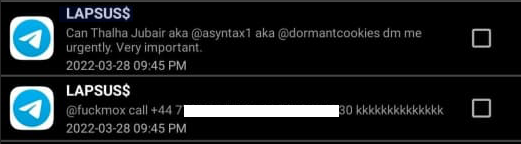
In April 2022, KrebsOnSecurity published internal chat records from LAPSUS$, and those chats indicated Jubair was using the nicknames Amtrak and Asyntax. At one point in the chats, Amtrak told the LAPSUS$ group leader not to share T-Mobile’s logo in images sent to the group because he’d been previously busted for SIM-swapping and his parents would suspect he was back at it again.

As shown in those chats, the leader of LAPSUS$ eventually decided to betray Amtrak by posting his real name, phone number, and other hacker handles into a public chat room on Telegram.

In March 2022, the leader of the LAPSUS$ data extortion group exposed Thalha Jubair’s name and hacker handles in a public chat room on Telegram.

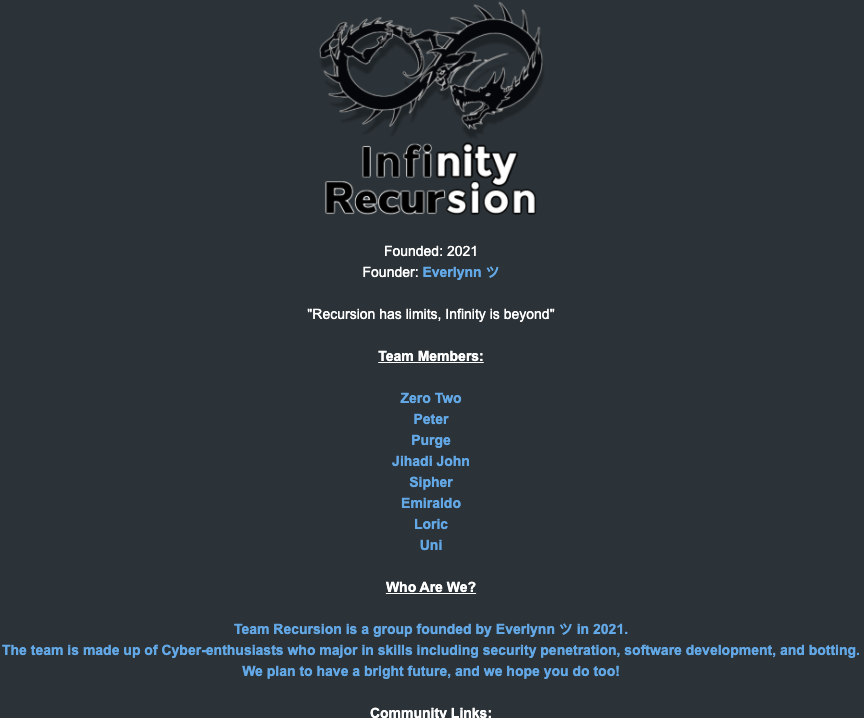
That story about the leaked LAPSUS$ chats connected Amtrak/Asyntax/Jubair to the identity “Everlynn,” the founder of a cybercriminal service that sold fraudulent “emergency data requests” targeting the major social media and email providers. In such schemes, the hackers compromise email accounts tied to police departments and government agencies, and then send unauthorized demands for subscriber data while claiming the information being requested can’t wait for a court order because it relates to an urgent matter of life and death.

The roster of the now-defunct “Infinity Recursion” hacking team, from which some member of LAPSUS$ hail.

Sources say Jubair also used the nickname “Operator,” and that until recently he was the administrator of the Doxbin, a long-running and highly toxic online community that is used to “dox” or post deeply personal information on people. In May 2024, several popular cybercrime channels on Telegram ridiculed Operator after it was revealed that he’d staged his own kidnapping in a botched plan to throw off law enforcement investigators.

In November 2024, U.S. authorities charged five men aged 20 to 25 in connection with the Scattered Spider group, which has long relied on recruiting minors to carry out its most risky activities. Indeed, many of the group’s core members were recruited from online gaming platforms like Roblox and Minecraft in their early teens, and have been perfecting their social engineering tactics for years.

“There is a clear pattern that some of the most depraved threat actors first joined cybercrime gangs at an exceptionally young age,” said Allison Nixon, chief research officer at the New York based security firm Unit 221B. “Cybercriminals arrested at 15 or younger need serious intervention and monitoring to prevent a years long massive escalation.”


Read More

CISA Adds One Known Exploited Vulnerability to Catalog

 ​CISA has added one new vulnerability to its Known Exploited Vulnerabilities (KEV) Catalog, based on evidence of active exploitation. 

CVE-2025-5777 Citrix NetScaler ADC and Gateway Out-of-Bounds Read Vulnerability

These types of vulnerabilities are frequent attack vectors for malicious cyber actors and pose significant risks to the federal enterprise. 

Binding Operational Directive (BOD) 22-01: Reducing the Significant Risk of Known Exploited Vulnerabilities established the KEV Catalog as a living list of known Common Vulnerabilities and Exposures (CVEs) that carry significant risk to the federal enterprise. BOD 22-01 requires Federal Civilian Executive Branch (FCEB) agencies to remediate identified vulnerabilities by the due date to protect FCEB networks against active threats. See the BOD 22-01 Fact Sheet for more information. 

Although BOD 22-01 only applies to FCEB agencies, CISA strongly urges all organizations to reduce their exposure to cyberattacks by prioritizing timely remediation of KEV Catalog vulnerabilities as part of their vulnerability management practice. CISA will continue to add vulnerabilities to the catalog that meet the specified criteria.  

CISA has added one new vulnerability to its Known Exploited Vulnerabilities (KEV) Catalog, based on evidence of active exploitation. 

  • CVE-2025-5777 Citrix NetScaler ADC and Gateway Out-of-Bounds Read Vulnerability

These types of vulnerabilities are frequent attack vectors for malicious cyber actors and pose significant risks to the federal enterprise. 

Binding Operational Directive (BOD) 22-01: Reducing the Significant Risk of Known Exploited Vulnerabilities established the KEV Catalog as a living list of known Common Vulnerabilities and Exposures (CVEs) that carry significant risk to the federal enterprise. BOD 22-01 requires Federal Civilian Executive Branch (FCEB) agencies to remediate identified vulnerabilities by the due date to protect FCEB networks against active threats. See the BOD 22-01 Fact Sheet for more information. 

Although BOD 22-01 only applies to FCEB agencies, CISA strongly urges all organizations to reduce their exposure to cyberattacks by prioritizing timely remediation of KEV Catalog vulnerabilities as part of their vulnerability management practice. CISA will continue to add vulnerabilities to the catalog that meet the specified criteria

 Read More

Delta Electronics DTM Soft

 ​View CSAF
1. EXECUTIVE SUMMARY

CVSS v4 8.4
ATTENTION: Low attack complexity
Vendor: Delta Electronics
Equipment: DTM Soft
Vulnerability: Deserialization of Untrusted Data

2. RISK EVALUATION
Successful exploitation of this vulnerability could allow an attacker to encrypt files referencing the application in order to extract information.
3. TECHNICAL DETAILS
3.1 AFFECTED PRODUCTS
The following Delta Electronics products are affected:

DTM Soft: Versions 1.6.0.0 and prior

3.2 VULNERABILITY OVERVIEW
3.2.1 DESERIALIZATION OF UNTRUSTED DATA CWE-502
Delta DTM Soft is vulnerable to a deserialization of untrusted data vulnerability which may allow an attacker to extract information.
CVE-2025-53415 has been assigned to this vulnerability. A CVSS v3.1 base score of 7.8 has been calculated; the CVSS vector string is (AV:L/AC:L/PR:N/UI:R/S:U/C:H/I:H/A:H).
A CVSS v4 score has also been calculated for CVE-2025-53415. A base score of 8.4 has been calculated; the CVSS vector string is (AV:L/AC:L/AT:N/PR:N/UI:A/VC:H/VI:H/VA:H/SC:N/SI:N/SA:N).
3.3 BACKGROUND

CRITICAL INFRASTRUCTURE SECTORS: Critical Manufacturing
COUNTRIES/AREAS DEPLOYED: Worldwide
COMPANY HEADQUARTERS LOCATION: Taiwan

3.4 RESEARCHER
kimiya working with Trend Micro Zero Day Initiative reported this vulnerability to CISA.
4. MITIGATIONS
Delta has released a new version of DTM Soft on their Download Center and recommends users update to the latest version.
For more information, please see Delta Electronics’ advisory Delta-PCSA-2025-00009..
CISA recommends users take defensive measures to minimize the risk of exploitation of this vulnerability, such as:

Minimize network exposure for all control system devices and/or systems, ensuring they are not accessible from the internet.
Locate control system networks and remote devices behind firewalls and isolating them from business networks.
When remote access is required, use more secure methods, such as Virtual Private Networks (VPNs), recognizing VPNs may have vulnerabilities and should be updated to the most current version available. Also recognize VPN is only as secure as the connected devices.

CISA reminds organizations to perform proper impact analysis and risk assessment prior to deploying defensive measures.
CISA also provides a section for control systems security recommended practices on the ICS webpage on cisa.gov/ics. Several CISA products detailing cyber defense best practices are available for reading and download, including Improving Industrial Control Systems Cybersecurity with Defense-in-Depth Strategies.
CISA encourages organizations to implement recommended cybersecurity strategies for proactive defense of ICS assets.
Additional mitigation guidance and recommended practices are publicly available on the ICS webpage at cisa.gov/ics in the technical information paper, ICS-TIP-12-146-01B–Targeted Cyber Intrusion Detection and Mitigation Strategies.
Organizations observing suspected malicious activity should follow established internal procedures and report findings to CISA for tracking and correlation against other incidents.
CISA also recommends users take the following measures to protect themselves from social engineering attacks:

Do not click web links or open attachments in unsolicited email messages.
Refer to Recognizing and Avoiding Email Scams for more information on avoiding email scams.
Refer to Avoiding Social Engineering and Phishing Attacks for more information on social engineering attacks.

No known public exploitation specifically targeting this vulnerability has been reported to CISA at this time. This vulnerability is not exploitable remotely.
5. UPDATE HISTORY

July 10, 2025: Initial Publication 

View CSAF

1. EXECUTIVE SUMMARY

  • CVSS v4 8.4
  • ATTENTION: Low attack complexity
  • Vendor: Delta Electronics
  • Equipment: DTM Soft
  • Vulnerability: Deserialization of Untrusted Data

2. RISK EVALUATION

Successful exploitation of this vulnerability could allow an attacker to encrypt files referencing the application in order to extract information.

3. TECHNICAL DETAILS

3.1 AFFECTED PRODUCTS

The following Delta Electronics products are affected:

  • DTM Soft: Versions 1.6.0.0 and prior

3.2 VULNERABILITY OVERVIEW

3.2.1 DESERIALIZATION OF UNTRUSTED DATA CWE-502

Delta DTM Soft is vulnerable to a deserialization of untrusted data vulnerability which may allow an attacker to extract information.

CVE-2025-53415 has been assigned to this vulnerability. A CVSS v3.1 base score of 7.8 has been calculated; the CVSS vector string is (AV:L/AC:L/PR:N/UI:R/S:U/C:H/I:H/A:H).

A CVSS v4 score has also been calculated for CVE-2025-53415. A base score of 8.4 has been calculated; the CVSS vector string is (AV:L/AC:L/AT:N/PR:N/UI:A/VC:H/VI:H/VA:H/SC:N/SI:N/SA:N).

3.3 BACKGROUND

  • CRITICAL INFRASTRUCTURE SECTORS: Critical Manufacturing
  • COUNTRIES/AREAS DEPLOYED: Worldwide
  • COMPANY HEADQUARTERS LOCATION: Taiwan

3.4 RESEARCHER

kimiya working with Trend Micro Zero Day Initiative reported this vulnerability to CISA.

4. MITIGATIONS

Delta has released a new version of DTM Soft on their Download Center and recommends users update to the latest version.

For more information, please see Delta Electronics’ advisory Delta-PCSA-2025-00009..

CISA recommends users take defensive measures to minimize the risk of exploitation of this vulnerability, such as:

  • Minimize network exposure for all control system devices and/or systems, ensuring they are not accessible from the internet.
  • Locate control system networks and remote devices behind firewalls and isolating them from business networks.
  • When remote access is required, use more secure methods, such as Virtual Private Networks (VPNs), recognizing VPNs may have vulnerabilities and should be updated to the most current version available. Also recognize VPN is only as secure as the connected devices.

CISA reminds organizations to perform proper impact analysis and risk assessment prior to deploying defensive measures.

CISA also provides a section for control systems security recommended practices on the ICS webpage on cisa.gov/ics. Several CISA products detailing cyber defense best practices are available for reading and download, including Improving Industrial Control Systems Cybersecurity with Defense-in-Depth Strategies.

CISA encourages organizations to implement recommended cybersecurity strategies for proactive defense of ICS assets.

Additional mitigation guidance and recommended practices are publicly available on the ICS webpage at cisa.gov/ics in the technical information paper, ICS-TIP-12-146-01B–Targeted Cyber Intrusion Detection and Mitigation Strategies.

Organizations observing suspected malicious activity should follow established internal procedures and report findings to CISA for tracking and correlation against other incidents.

CISA also recommends users take the following measures to protect themselves from social engineering attacks:

No known public exploitation specifically targeting this vulnerability has been reported to CISA at this time. This vulnerability is not exploitable remotely.

5. UPDATE HISTORY

  • July 10, 2025: Initial Publication

 Read More

Siemens TIA Administrator

 ​As of January 10, 2023, CISA will no longer be updating ICS security advisories for Siemens product vulnerabilities beyond the initial advisory. For the most up-to-date information on vulnerabilities in this advisory, please see Siemens’ ProductCERT Security Advisories (CERT Services | Services | Siemens Global).
View CSAF
1. EXECUTIVE SUMMARY

CVSS v4 8.5
ATTENTION: Low attack complexity
Vendor: Siemens
Equipment: TIA Administrator
Vulnerabilities: Improper Verification of Cryptographic Signature, Improper Access Control

2. RISK EVALUATION
Successful exploitation of these vulnerabilities could allow an attacker to escalate privilege or execute arbitrary code during installations.
3. TECHNICAL DETAILS
3.1 AFFECTED PRODUCTS
Siemens reports that the following products are affected:

TIA Administrator: All versions prior to V3.0.6

3.2 VULNERABILITY OVERVIEW
3.2.1 IMPROPER VERIFICATION OF CRYPTOGRAPHIC SIGNATURE CWE-347
The affected application improperly validates code signing certificates. This could allow an attacker to bypass the check and execute arbitrary code during installations.
CVE-2025-23364 has been assigned to this vulnerability. A CVSS v3.1 base score of 6.2 has been calculated; the CVSS vector string is (CVSS:3.1/AV:L/AC:L/PR:N/UI:N/S:U/C:N/I:H/A:N).
A CVSS v4 score has also been calculated for CVE-2025-23364. A base score of 6.9 has been calculated; the CVSS vector string is (CVSS:4.0/AV:L/AC:L/AT:N/PR:N/UI:N/VC:N/VI:H/VA:N/SC:N/SI:N/SA:N).
3.2.2 IMPROPER ACCESS CONTROL CWE-284
The affected application allows low-privileged users to trigger installations by overwriting cache files and modifying the downloads path. This would allow an attacker to escalate privilege and execute arbitrary code.
CVE-2025-23365 has been assigned to this vulnerability. A CVSS v3.1 base score of 7.8 has been calculated; the CVSS vector string is (CVSS:3.1/AV:L/AC:L/PR:L/UI:N/S:U/C:H/I:H/A:H).
A CVSS v4 score has also been calculated for CVE-2025-23365. A base score of 8.5 has been calculated; the CVSS vector string is (CVSS:4.0/AV:L/AC:L/AT:N/PR:L/UI:N/VC:H/VI:H/VA:H/SC:N/SI:N/SA:N).
3.3 BACKGROUND

CRITICAL INFRASTRUCTURE SECTORS: Critical Manufacturing
COUNTRIES/AREAS DEPLOYED: Worldwide
COMPANY HEADQUARTERS LOCATION: Germany

3.4 RESEARCHER
Siemens reported these vulnerabilities to CISA.
4. MITIGATIONS
Siemens has identified the following specific workarounds and mitigations users can apply to reduce risk:

TIA Administrator: Update to V3.0.6 or later version

As a general security measure, Siemens recommends protecting network access to devices with appropriate mechanisms. To operate the devices in a protected IT environment, Siemens recommends configuring the environment according to Siemens’ operational guidelines for industrial security and following recommendations in the product manuals.
Additional information on industrial security by Siemens can be found on the Siemens industrial security webpage
For more information see the associated Siemens security advisory SSA-573669 in HTML and CSAF.
CISA recommends users take defensive measures to minimize the risk of exploitation of these vulnerabilities, such as:

Minimize network exposure for all control system devices and/or systems, ensuring they are not accessible from the internet.
Locate control system networks and remote devices behind firewalls and isolating them from business networks.
When remote access is required, use more secure methods, such as Virtual Private Networks (VPNs). Recognize VPNs may have vulnerabilities, should be updated to the most recent version available, and are only as secure as the connected devices.

CISA reminds organizations to perform proper impact analysis and risk assessment prior to deploying defensive measures.
CISA also provides a section for control systems security recommended practices on the ICS webpage on cisa.gov. Several CISA products detailing cyber defense best practices are available for reading and download, including Improving Industrial Control Systems Cybersecurity with Defense-in-Depth Strategies.
CISA encourages organizations to implement recommended cybersecurity strategies for proactive defense of ICS assets.
Additional mitigation guidance and recommended practices are publicly available on the ICS webpage at cisa.gov in the technical information paper, ICS-TIP-12-146-01B–Targeted Cyber Intrusion Detection and Mitigation Strategies.
Organizations observing suspected malicious activity should follow established internal procedures and report findings to CISA for tracking and correlation against other incidents.
CISA also recommends users take the following measures to protect themselves from social engineering attacks:

Do not click web links or open attachments in unsolicited email messages.
Refer to Recognizing and Avoiding Email Scams for more information on avoiding email scams.
Refer to Avoiding Social Engineering and Phishing Attacks for more information on social engineering attacks.

No known public exploitation specifically targeting these vulnerabilities has been reported to CISA at this time. These vulnerabilities are not exploitable remotely.
5. UPDATE HISTORY

July 10, 2025: Initial Republication of Siemens SSA-573669 

As of January 10, 2023, CISA will no longer be updating ICS security advisories for Siemens product vulnerabilities beyond the initial advisory. For the most up-to-date information on vulnerabilities in this advisory, please see Siemens’ ProductCERT Security Advisories (CERT Services | Services | Siemens Global).

View CSAF

1. EXECUTIVE SUMMARY

  • CVSS v4 8.5
  • ATTENTION: Low attack complexity
  • Vendor: Siemens
  • Equipment: TIA Administrator
  • Vulnerabilities: Improper Verification of Cryptographic Signature, Improper Access Control

2. RISK EVALUATION

Successful exploitation of these vulnerabilities could allow an attacker to escalate privilege or execute arbitrary code during installations.

3. TECHNICAL DETAILS

3.1 AFFECTED PRODUCTS

Siemens reports that the following products are affected:

  • TIA Administrator: All versions prior to V3.0.6

3.2 VULNERABILITY OVERVIEW

3.2.1 IMPROPER VERIFICATION OF CRYPTOGRAPHIC SIGNATURE CWE-347

The affected application improperly validates code signing certificates. This could allow an attacker to bypass the check and execute arbitrary code during installations.

CVE-2025-23364 has been assigned to this vulnerability. A CVSS v3.1 base score of 6.2 has been calculated; the CVSS vector string is (CVSS:3.1/AV:L/AC:L/PR:N/UI:N/S:U/C:N/I:H/A:N).

A CVSS v4 score has also been calculated for CVE-2025-23364. A base score of 6.9 has been calculated; the CVSS vector string is (CVSS:4.0/AV:L/AC:L/AT:N/PR:N/UI:N/VC:N/VI:H/VA:N/SC:N/SI:N/SA:N).

3.2.2 IMPROPER ACCESS CONTROL CWE-284

The affected application allows low-privileged users to trigger installations by overwriting cache files and modifying the downloads path. This would allow an attacker to escalate privilege and execute arbitrary code.

CVE-2025-23365 has been assigned to this vulnerability. A CVSS v3.1 base score of 7.8 has been calculated; the CVSS vector string is (CVSS:3.1/AV:L/AC:L/PR:L/UI:N/S:U/C:H/I:H/A:H).

A CVSS v4 score has also been calculated for CVE-2025-23365. A base score of 8.5 has been calculated; the CVSS vector string is (CVSS:4.0/AV:L/AC:L/AT:N/PR:L/UI:N/VC:H/VI:H/VA:H/SC:N/SI:N/SA:N).

3.3 BACKGROUND

  • CRITICAL INFRASTRUCTURE SECTORS: Critical Manufacturing
  • COUNTRIES/AREAS DEPLOYED: Worldwide
  • COMPANY HEADQUARTERS LOCATION: Germany

3.4 RESEARCHER

Siemens reported these vulnerabilities to CISA.

4. MITIGATIONS

Siemens has identified the following specific workarounds and mitigations users can apply to reduce risk:

As a general security measure, Siemens recommends protecting network access to devices with appropriate mechanisms. To operate the devices in a protected IT environment, Siemens recommends configuring the environment according to Siemens’ operational guidelines for industrial security and following recommendations in the product manuals.

Additional information on industrial security by Siemens can be found on the Siemens industrial security webpage

For more information see the associated Siemens security advisory SSA-573669 in HTML and CSAF.

CISA recommends users take defensive measures to minimize the risk of exploitation of these vulnerabilities, such as:

  • Minimize network exposure for all control system devices and/or systems, ensuring they are not accessible from the internet.
  • Locate control system networks and remote devices behind firewalls and isolating them from business networks.
  • When remote access is required, use more secure methods, such as Virtual Private Networks (VPNs). Recognize VPNs may have vulnerabilities, should be updated to the most recent version available, and are only as secure as the connected devices.

CISA reminds organizations to perform proper impact analysis and risk assessment prior to deploying defensive measures.

CISA also provides a section for control systems security recommended practices on the ICS webpage on cisa.gov. Several CISA products detailing cyber defense best practices are available for reading and download, including Improving Industrial Control Systems Cybersecurity with Defense-in-Depth Strategies.

CISA encourages organizations to implement recommended cybersecurity strategies for proactive defense of ICS assets.

Additional mitigation guidance and recommended practices are publicly available on the ICS webpage at cisa.gov in the technical information paper, ICS-TIP-12-146-01B–Targeted Cyber Intrusion Detection and Mitigation Strategies.

Organizations observing suspected malicious activity should follow established internal procedures and report findings to CISA for tracking and correlation against other incidents.

CISA also recommends users take the following measures to protect themselves from social engineering attacks:

No known public exploitation specifically targeting these vulnerabilities has been reported to CISA at this time. These vulnerabilities are not exploitable remotely.

5. UPDATE HISTORY

  • July 10, 2025: Initial Republication of Siemens SSA-573669

 Read More

Siemens TIA Project-Server and TIA Portal

 ​As of January 10, 2023, CISA will no longer be updating ICS security advisories for Siemens product vulnerabilities beyond the initial advisory. For the most up-to-date information on vulnerabilities in this advisory, please see Siemens’ ProductCERT Security Advisories (CERT Services | Services | Siemens Global).
View CSAF
1. EXECUTIVE SUMMARY

CVSS v4 5.3
ATTENTION: Exploitable remotely/low attack complexity
Vendor: Siemens
Equipment: Project-Server and TIA Portal
Vulnerability: Unrestricted Upload of File with Dangerous Type

2. RISK EVALUATION
Successful exploitation of this vulnerability could allow an attacker to cause a denial-of-service condition.
3. TECHNICAL DETAILS
3.1 AFFECTED PRODUCTS
Siemens reports that the following products are affected:

TIA Project-Server: Versions prior to V2.1.1
TIA Project-Server V17: All versions
Totally Integrated Automation Portal (TIA Portal) V17: All versions
Totally Integrated Automation Portal (TIA Portal) V18: All versions
Totally Integrated Automation Portal (TIA Portal) V19: All versions
Totally Integrated Automation Portal (TIA Portal) V20: Versions prior to V20 Update 3

3.2 VULNERABILITY OVERVIEW
3.2.1 UNRESTRICTED UPLOAD OF FILE WITH DANGEROUS TYPE CWE-434
The affected application improperly handles uploaded projects in the document root. This could allow an attacker with contributor privileges to cause denial of service by uploading a malicious project.
CVE-2025-27127 has been assigned to this vulnerability. A CVSS v3 base score of 4.3 has been calculated; the CVSS vector string is (CVSS:3.1/AV:N/AC:L/PR:L/UI:N/S:U/C:N/I:N/A:L).
A CVSS v4 score has also been calculated for CVE-2025-27127. A base score of 5.3 has been calculated; the CVSS vector string is (CVSS:4.0/AV:N/AC:L/AT:N/PR:L/UI:N/VC:N/VI:N/VA:L/SC:N/SI:N/SA:N).
3.3 BACKGROUND

CRITICAL INFRASTRUCTURE SECTORS: Critical Manufacturing
COUNTRIES/AREAS DEPLOYED: Worldwide
COMPANY HEADQUARTERS LOCATION: Germany

3.4 RESEARCHER
Siemens reported this vulnerability to CISA.
4. MITIGATIONS
Siemens has released new versions for several affected products and recommends updating to the latest versions. Siemens is preparing further fix versions and recommends countermeasures for products where fixes are unavailable or not yet available:

TIA Project-Server V17, TIA Portal V17, TIA Portal V18: Currently no fix is planned
TIA Portal V19: Currently no fix is available
TIA Project-Server: Update to V2.1.1 or later version
Totally Integrated Automation Portal (TIA Portal) V20: Update to V20 Update 3 or later version

As a general security measure, Siemens recommends protecting network access to devices with appropriate mechanisms. To operate the devices in a protected IT environment, Siemens recommends configuring the environment according to Siemens’ operational guidelines for industrial security and following recommendations in the product manuals.
Additional information on industrial security by Siemens can be found on the Siemens industrial security webpage
For more information see the associated Siemens security advisory SSA-460466 in HTML and CSAF.
CISA recommends users take defensive measures to minimize the risk of exploitation of this vulnerability, such as:

Minimize network exposure for all control system devices and/or systems, ensuring they are not accessible from the internet.
Locate control system networks and remote devices behind firewalls and isolating them from business networks.
When remote access is required, use more secure methods, such as Virtual Private Networks (VPNs). Recognize VPNs may have vulnerabilities, should be updated to the most recent version available, and are only as secure as the connected devices.

CISA reminds organizations to perform proper impact analysis and risk assessment prior to deploying defensive measures.
CISA also provides a section for control systems security recommended practices on the ICS webpage on cisa.gov. Several CISA products detailing cyber defense best practices are available for reading and download, including Improving Industrial Control Systems Cybersecurity with Defense-in-Depth Strategies.
CISA encourages organizations to implement recommended cybersecurity strategies for proactive defense of ICS assets.
Additional mitigation guidance and recommended practices are publicly available on the ICS webpage at cisa.gov in the technical information paper, ICS-TIP-12-146-01B–Targeted Cyber Intrusion Detection and Mitigation Strategies.
Organizations observing suspected malicious activity should follow established internal procedures and report findings to CISA for tracking and correlation against other incidents.
CISA also recommends users take the following measures to protect themselves from social engineering attacks:

Do not click web links or open attachments in unsolicited email messages.
Refer to Recognizing and Avoiding Email Scams for more information on avoiding email scams.
Refer to Avoiding Social Engineering and Phishing Attacks for more information on social engineering attacks.

No known public exploitation specifically targeting this vulnerability has been reported to CISA at this time.
5. UPDATE HISTORY

July 10, 2025: Initial Republication of Siemens SSA-460466 

As of January 10, 2023, CISA will no longer be updating ICS security advisories for Siemens product vulnerabilities beyond the initial advisory. For the most up-to-date information on vulnerabilities in this advisory, please see Siemens’ ProductCERT Security Advisories (CERT Services | Services | Siemens Global).

View CSAF

1. EXECUTIVE SUMMARY

  • CVSS v4 5.3
  • ATTENTION: Exploitable remotely/low attack complexity
  • Vendor: Siemens
  • Equipment: Project-Server and TIA Portal
  • Vulnerability: Unrestricted Upload of File with Dangerous Type

2. RISK EVALUATION

Successful exploitation of this vulnerability could allow an attacker to cause a denial-of-service condition.

3. TECHNICAL DETAILS

3.1 AFFECTED PRODUCTS

Siemens reports that the following products are affected:

  • TIA Project-Server: Versions prior to V2.1.1
  • TIA Project-Server V17: All versions
  • Totally Integrated Automation Portal (TIA Portal) V17: All versions
  • Totally Integrated Automation Portal (TIA Portal) V18: All versions
  • Totally Integrated Automation Portal (TIA Portal) V19: All versions
  • Totally Integrated Automation Portal (TIA Portal) V20: Versions prior to V20 Update 3

3.2 VULNERABILITY OVERVIEW

3.2.1 UNRESTRICTED UPLOAD OF FILE WITH DANGEROUS TYPE CWE-434

The affected application improperly handles uploaded projects in the document root. This could allow an attacker with contributor privileges to cause denial of service by uploading a malicious project.

CVE-2025-27127 has been assigned to this vulnerability. A CVSS v3 base score of 4.3 has been calculated; the CVSS vector string is (CVSS:3.1/AV:N/AC:L/PR:L/UI:N/S:U/C:N/I:N/A:L).

A CVSS v4 score has also been calculated for CVE-2025-27127. A base score of 5.3 has been calculated; the CVSS vector string is (CVSS:4.0/AV:N/AC:L/AT:N/PR:L/UI:N/VC:N/VI:N/VA:L/SC:N/SI:N/SA:N).

3.3 BACKGROUND

  • CRITICAL INFRASTRUCTURE SECTORS: Critical Manufacturing
  • COUNTRIES/AREAS DEPLOYED: Worldwide
  • COMPANY HEADQUARTERS LOCATION: Germany

3.4 RESEARCHER

Siemens reported this vulnerability to CISA.

4. MITIGATIONS

Siemens has released new versions for several affected products and recommends updating to the latest versions. Siemens is preparing further fix versions and recommends countermeasures for products where fixes are unavailable or not yet available:

  • TIA Project-Server V17, TIA Portal V17, TIA Portal V18: Currently no fix is planned
  • TIA Portal V19: Currently no fix is available
  • TIA Project-Server: Update to V2.1.1 or later version
  • Totally Integrated Automation Portal (TIA Portal) V20: Update to V20 Update 3 or later version

As a general security measure, Siemens recommends protecting network access to devices with appropriate mechanisms. To operate the devices in a protected IT environment, Siemens recommends configuring the environment according to Siemens’ operational guidelines for industrial security and following recommendations in the product manuals.

Additional information on industrial security by Siemens can be found on the Siemens industrial security webpage

For more information see the associated Siemens security advisory SSA-460466 in HTML and CSAF.

CISA recommends users take defensive measures to minimize the risk of exploitation of this vulnerability, such as:

  • Minimize network exposure for all control system devices and/or systems, ensuring they are not accessible from the internet.
  • Locate control system networks and remote devices behind firewalls and isolating them from business networks.
  • When remote access is required, use more secure methods, such as Virtual Private Networks (VPNs). Recognize VPNs may have vulnerabilities, should be updated to the most recent version available, and are only as secure as the connected devices.

CISA reminds organizations to perform proper impact analysis and risk assessment prior to deploying defensive measures.

CISA also provides a section for control systems security recommended practices on the ICS webpage on cisa.gov. Several CISA products detailing cyber defense best practices are available for reading and download, including Improving Industrial Control Systems Cybersecurity with Defense-in-Depth Strategies.

CISA encourages organizations to implement recommended cybersecurity strategies for proactive defense of ICS assets.

Additional mitigation guidance and recommended practices are publicly available on the ICS webpage at cisa.gov in the technical information paper, ICS-TIP-12-146-01B–Targeted Cyber Intrusion Detection and Mitigation Strategies.

Organizations observing suspected malicious activity should follow established internal procedures and report findings to CISA for tracking and correlation against other incidents.

CISA also recommends users take the following measures to protect themselves from social engineering attacks:

No known public exploitation specifically targeting this vulnerability has been reported to CISA at this time.

5. UPDATE HISTORY

  • July 10, 2025: Initial Republication of Siemens SSA-460466

 Read More

Scroll to Top