Fuji Electric Smart Editor

 ​View CSAF
1. EXECUTIVE SUMMARY

CVSS v4 8.4
ATTENTION: Low attack complexity
Vendor: Fuji Electric
Equipment: Smart Editor
Vulnerabilities: Out-of-bounds Read, Out-of-bounds Write, Stack-based Buffer Overflow

2. RISK EVALUATION
Successful exploitation of these vulnerabilities could allow an attacker to execute arbitrary code.
3. TECHNICAL DETAILS
3.1 AFFECTED PRODUCTS
The following Fuji Electric products are affected:

Smart Editor: Versions 1.0.1.0 and prior

3.2 VULNERABILITY OVERVIEW
3.2.1 OUT-OF-BOUNDS READ CWE-125
The affected product is vulnerable to an out-of-bounds read, which may allow an attacker to execute arbitrary code.
CVE-2025-32412 has been assigned to this vulnerability. A CVSS v3.1 base score of 7.8 has been calculated; the CVSS vector string is (AV:L/AC:L/PR:N/UI:R/S:U/C:H/I:H/A:H).
A CVSS v4 score has also been calculated for CVE-2025-32412. A base score of 8.4 has been calculated; the CVSS vector string is (AV:L/AC:L/AT:N/PR:N/UI:A/VC:H/VI:H/VA:H/SC:N/SI:N/SA:N).
3.2.2 OUT-OF-BOUNDS WRITE CWE-787
The affected product is vulnerable to an out-of-bounds write, which may allow an attacker to execute arbitrary code.
CVE-2025-41413 has been assigned to this vulnerability. A CVSS v3.1 base score of 7.8 has been calculated; the CVSS vector string is (AV:L/AC:L/PR:N/UI:R/S:U/C:H/I:H/A:H).
A CVSS v4 score has also been calculated for CVE-2025-41413. A base score of 8.4 has been calculated; the CVSS vector string is (AV:L/AC:L/AT:N/PR:N/UI:A/VC:H/VI:H/VA:H/SC:N/SI:N/SA:N).
3.2.3 STACK-BASED BUFFER OVERFLOW CWE-121
The affected product is vulnerable to a stack-based buffer overflow, which may allow an attacker to execute arbitrary code.
CVE-2025-41388 has been assigned to this vulnerability. A CVSS v3.1 base score of 7.8 has been calculated; the CVSS vector string is (AV:L/AC:L/PR:N/UI:R/S:U/C:H/I:H/A:H).
A CVSS v4 score has also been calculated for CVE-2025-41388. A base score of 8.4 has been calculated; the CVSS vector string is (AV:L/AC:L/AT:N/PR:N/UI:A/VC:H/VI:H/VA:H/SC:N/SI:N/SA:N).
3.3 BACKGROUND

CRITICAL INFRASTRUCTURE SECTORS: Critical Manufacturing
COUNTRIES/AREAS DEPLOYED: Worldwide
COMPANY HEADQUARTERS LOCATION: Japan

3.4 RESEARCHER
kimiya working with Trend Micro Zero Day Initiative reported these vulnerabilities to CISA.
4. MITIGATIONS
Fuji Electric recommends users update to Smart Editor v1.0.2.0 or later.
CISA recommends users take defensive measures to minimize the risk of exploitation of these vulnerabilities, such as:

Minimize network exposure for all control system devices and/or systems, ensuring they are not accessible from the internet.
Locate control system networks and remote devices behind firewalls and isolating them from business networks.
When remote access is required, use more secure methods, such as Virtual Private Networks (VPNs), recognizing VPNs may have vulnerabilities and should be updated to the most current version available. Also recognize VPN is only as secure as the connected devices.

CISA reminds organizations to perform proper impact analysis and risk assessment prior to deploying defensive measures.
CISA also provides a section for control systems security recommended practices on the ICS webpage on cisa.gov/ics. Several CISA products detailing cyber defense best practices are available for reading and download, including Improving Industrial Control Systems Cybersecurity with Defense-in-Depth Strategies.
CISA encourages organizations to implement recommended cybersecurity strategies for proactive defense of ICS assets.
Additional mitigation guidance and recommended practices are publicly available on the ICS webpage at cisa.gov/ics in the technical information paper, ICS-TIP-12-146-01B–Targeted Cyber Intrusion Detection and Mitigation Strategies.
Organizations observing suspected malicious activity should follow established internal procedures and report findings to CISA for tracking and correlation against other incidents.
No known public exploitation specifically targeting these vulnerabilities has been reported to CISA at this time. These vulnerabilities are not exploitable remotely.
5. UPDATE HISTORY

June 17, 2025: Initial Publication 

View CSAF

1. EXECUTIVE SUMMARY

  • CVSS v4 8.4
  • ATTENTION: Low attack complexity
  • Vendor: Fuji Electric
  • Equipment: Smart Editor
  • Vulnerabilities: Out-of-bounds Read, Out-of-bounds Write, Stack-based Buffer Overflow

2. RISK EVALUATION

Successful exploitation of these vulnerabilities could allow an attacker to execute arbitrary code.

3. TECHNICAL DETAILS

3.1 AFFECTED PRODUCTS

The following Fuji Electric products are affected:

  • Smart Editor: Versions 1.0.1.0 and prior

3.2 VULNERABILITY OVERVIEW

3.2.1 OUT-OF-BOUNDS READ CWE-125

The affected product is vulnerable to an out-of-bounds read, which may allow an attacker to execute arbitrary code.

CVE-2025-32412 has been assigned to this vulnerability. A CVSS v3.1 base score of 7.8 has been calculated; the CVSS vector string is (AV:L/AC:L/PR:N/UI:R/S:U/C:H/I:H/A:H).

A CVSS v4 score has also been calculated for CVE-2025-32412. A base score of 8.4 has been calculated; the CVSS vector string is (AV:L/AC:L/AT:N/PR:N/UI:A/VC:H/VI:H/VA:H/SC:N/SI:N/SA:N).

3.2.2 OUT-OF-BOUNDS WRITE CWE-787

The affected product is vulnerable to an out-of-bounds write, which may allow an attacker to execute arbitrary code.

CVE-2025-41413 has been assigned to this vulnerability. A CVSS v3.1 base score of 7.8 has been calculated; the CVSS vector string is (AV:L/AC:L/PR:N/UI:R/S:U/C:H/I:H/A:H).

A CVSS v4 score has also been calculated for CVE-2025-41413. A base score of 8.4 has been calculated; the CVSS vector string is (AV:L/AC:L/AT:N/PR:N/UI:A/VC:H/VI:H/VA:H/SC:N/SI:N/SA:N).

3.2.3 STACK-BASED BUFFER OVERFLOW CWE-121

The affected product is vulnerable to a stack-based buffer overflow, which may allow an attacker to execute arbitrary code.

CVE-2025-41388 has been assigned to this vulnerability. A CVSS v3.1 base score of 7.8 has been calculated; the CVSS vector string is (AV:L/AC:L/PR:N/UI:R/S:U/C:H/I:H/A:H).

A CVSS v4 score has also been calculated for CVE-2025-41388. A base score of 8.4 has been calculated; the CVSS vector string is (AV:L/AC:L/AT:N/PR:N/UI:A/VC:H/VI:H/VA:H/SC:N/SI:N/SA:N).

3.3 BACKGROUND

  • CRITICAL INFRASTRUCTURE SECTORS: Critical Manufacturing
  • COUNTRIES/AREAS DEPLOYED: Worldwide
  • COMPANY HEADQUARTERS LOCATION: Japan

3.4 RESEARCHER

kimiya working with Trend Micro Zero Day Initiative reported these vulnerabilities to CISA.

4. MITIGATIONS

Fuji Electric recommends users update to Smart Editor v1.0.2.0 or later.

CISA recommends users take defensive measures to minimize the risk of exploitation of these vulnerabilities, such as:

  • Minimize network exposure for all control system devices and/or systems, ensuring they are not accessible from the internet.
  • Locate control system networks and remote devices behind firewalls and isolating them from business networks.
  • When remote access is required, use more secure methods, such as Virtual Private Networks (VPNs), recognizing VPNs may have vulnerabilities and should be updated to the most current version available. Also recognize VPN is only as secure as the connected devices.

CISA reminds organizations to perform proper impact analysis and risk assessment prior to deploying defensive measures.

CISA also provides a section for control systems security recommended practices on the ICS webpage on cisa.gov/ics. Several CISA products detailing cyber defense best practices are available for reading and download, including Improving Industrial Control Systems Cybersecurity with Defense-in-Depth Strategies.

CISA encourages organizations to implement recommended cybersecurity strategies for proactive defense of ICS assets.

Additional mitigation guidance and recommended practices are publicly available on the ICS webpage at cisa.gov/ics in the technical information paper, ICS-TIP-12-146-01B–Targeted Cyber Intrusion Detection and Mitigation Strategies.

Organizations observing suspected malicious activity should follow established internal procedures and report findings to CISA for tracking and correlation against other incidents.

No known public exploitation specifically targeting these vulnerabilities has been reported to CISA at this time. These vulnerabilities are not exploitable remotely.

5. UPDATE HISTORY

  • June 17, 2025: Initial Publication

 Read More

CISA Adds Two Known Exploited Vulnerabilities to Catalog

 ​CISA has added two new vulnerabilities to its Known Exploited Vulnerabilities (KEV) Catalog, based on evidence of active exploitation. 

CVE-2025-43200 Apple Multiple Products Unspecified Vulnerability
CVE-2023-33538 TP-Link Multiple Routers Command Injection Vulnerability

These types of vulnerabilities are frequent attack vectors for malicious cyber actors and pose significant risks to the federal enterprise. 

Binding Operational Directive (BOD) 22-01: Reducing the Significant Risk of Known Exploited Vulnerabilities established the KEV Catalog as a living list of known Common Vulnerabilities and Exposures (CVEs) that carry significant risk to the federal enterprise. BOD 22-01 requires Federal Civilian Executive Branch (FCEB) agencies to remediate identified vulnerabilities by the due date to protect FCEB networks against active threats. See the BOD 22-01 Fact Sheet for more information. 

Although BOD 22-01 only applies to FCEB agencies, CISA strongly urges all organizations to reduce their exposure to cyberattacks by prioritizing timely remediation of KEV Catalog vulnerabilities as part of their vulnerability management practice. CISA will continue to add vulnerabilities to the catalog that meet the specified criteria.  

CISA has added two new vulnerabilities to its Known Exploited Vulnerabilities (KEV) Catalog, based on evidence of active exploitation. 

These types of vulnerabilities are frequent attack vectors for malicious cyber actors and pose significant risks to the federal enterprise. 

Binding Operational Directive (BOD) 22-01: Reducing the Significant Risk of Known Exploited Vulnerabilities established the KEV Catalog as a living list of known Common Vulnerabilities and Exposures (CVEs) that carry significant risk to the federal enterprise. BOD 22-01 requires Federal Civilian Executive Branch (FCEB) agencies to remediate identified vulnerabilities by the due date to protect FCEB networks against active threats. See the BOD 22-01 Fact Sheet for more information. 

Although BOD 22-01 only applies to FCEB agencies, CISA strongly urges all organizations to reduce their exposure to cyberattacks by prioritizing timely remediation of KEV Catalog vulnerabilities as part of their vulnerability management practice. CISA will continue to add vulnerabilities to the catalog that meet the specified criteria

 Read More

Inside a Dark Adtech Empire Fed by Fake CAPTCHAs

​Late last year, security researchers made a startling discovery: Kremlin-backed disinformation campaigns were bypassing moderation on social media platforms by leveraging the same malicious advertising technology that powers a sprawling ecosystem of online hucksters and website hackers. A new report on the fallout from that investigation finds this dark ad tech industry is far more resilient and incestuous than previously known. 

Late last year, security researchers made a startling discovery: Kremlin-backed disinformation campaigns were bypassing moderation on social media platforms by leveraging the same malicious advertising technology that powers a sprawling ecosystem of online hucksters and website hackers. A new report on the fallout from that investigation finds this dark ad tech industry is far more resilient and incestuous than previously known.

Image: Infoblox.

In November 2024, researchers at the security firm Qurium published an investigation into “Doppelganger,” a disinformation network that promotes pro-Russian narratives and infiltrates Europe’s media landscape by pushing fake news through a network of cloned websites.

Doppelganger campaigns use specialized links that bounce the visitor’s browser through a long series of domains before the fake news content is served. Qurium found Doppelganger relies on a sophisticated “domain cloaking” service, a technology that allows websites to present different content to search engines compared to what regular visitors see. The use of cloaking services helps the disinformation sites remain online longer than they otherwise would, while ensuring that only the targeted audience gets to view the intended content.

Qurium discovered that Doppelganger’s cloaking service also promoted online dating sites, and shared much of the same infrastructure with VexTrio, which is thought to be the oldest malicious traffic distribution system (TDS) in existence. While TDSs are commonly used by legitimate advertising networks to manage traffic from disparate sources and to track who or what is behind each click, VexTrio’s TDS largely manages web traffic from victims of phishing, malware, and social engineering scams.

BREAKING BAD

Digging deeper, Qurium noticed Doppelganger’s cloaking service used an Internet provider in Switzerland as the first entry point in a chain of domain redirections. They also noticed the same infrastructure hosted a pair of co-branded affiliate marketing services that were driving traffic to sketchy adult dating sites: LosPollos[.]com and TacoLoco[.]co.

The LosPollos ad network incorporates many elements and references from the hit series “Breaking Bad,” mirroring the fictional “Los Pollos Hermanos” restaurant chain that served as a money laundering operation for a violent methamphetamine cartel.

The LosPollos advertising network invokes characters and themes from the hit show Breaking Bad. The logo for LosPollos (upper left) is the image of Gustavo Fring, the fictional chicken restaurant chain owner in the show.

Affiliates who sign up with LosPollos are given JavaScript-heavy “smartlinks” that drive traffic into the VexTrio TDS, which in turn distributes the traffic among a variety of advertising partners, including dating services, sweepstakes offers, bait-and-switch mobile apps, financial scams and malware download sites.

LosPollos affiliates typically stitch these smart links into WordPress websites that have been hacked via known vulnerabilities, and those affiliates will earn a small commission each time an Internet user referred by any of their hacked sites falls for one of these lures.

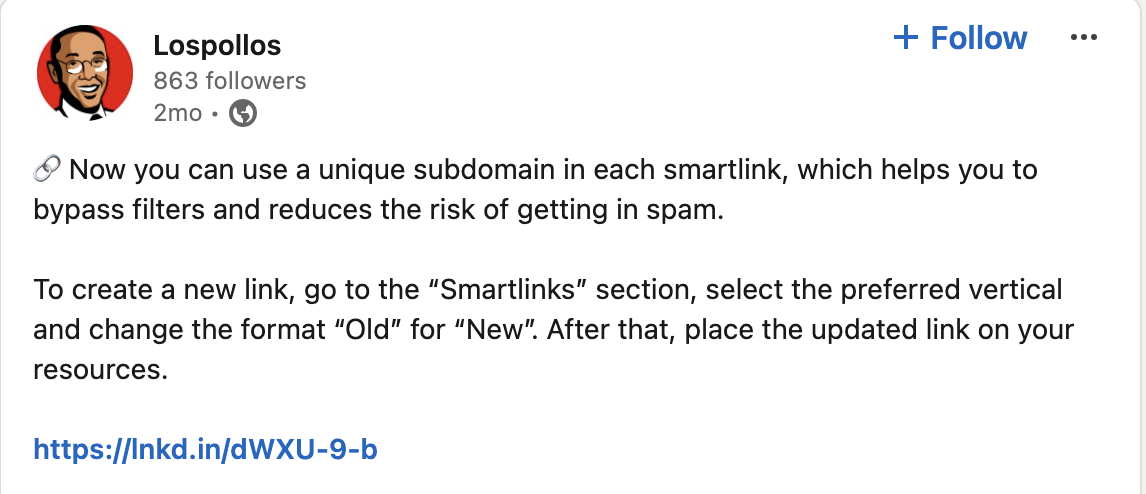
The Los Pollos advertising network promoting itself on LinkedIn.

According to Qurium, TacoLoco is a traffic monetization network that uses deceptive tactics to trick Internet users into enabling “push notifications,” a cross-platform browser standard that allows websites to show pop-up messages which appear outside of the browser. For example, on Microsoft Windows systems these notifications typically show up in the bottom right corner of the screen — just above the system clock.

In the case of VexTrio and TacoLoco, the notification approval requests themselves are deceptive — disguised as “CAPTCHA” challenges designed to distinguish automated bot traffic from real visitors. For years, VexTrio and its partners have successfully tricked countless users into enabling these site notifications, which are then used to continuously pepper the victim’s device with a variety of phony virus alerts and misleading pop-up messages.

Examples of VexTrio landing pages that lead users to accept push notifications on their device.

According to a December 2024 annual report from GoDaddy, nearly 40 percent of compromised websites in 2024 redirected visitors to VexTrio via LosPollos smartlinks.

ADSPRO AND TEKNOLOGY

On November 14, 2024, Qurium published research to support its findings that LosPollos and TacoLoco were services operated by Adspro Group, a company registered in the Czech Republic and Russia, and that Adspro runs its infrastructure at the Swiss hosting providers C41 and Teknology SA.

Qurium noted the LosPollos and TacoLoco sites state that their content is copyrighted by ByteCore AG and SkyForge Digital AG, both Swiss firms that are run by the owner of Teknology SA, Giulio Vitorrio Leonardo Cerutti. Further investigation revealed LosPollos and TacoLoco were apps developed by a company called Holacode, which lists Cerutti as its CEO.

The apps marketed by Holacode include numerous VPN services, as well as one called Spamshield that claims to stop unwanted push notifications. But in January, Infoblox said they tested the app on their own mobile devices, and found it hides the user’s notifications, and then after 24 hours stops hiding them and demands payment. Spamshield subsequently changed its developer name from Holacode to ApLabz, although Infoblox noted that the Terms of Service for several of the rebranded ApLabz apps still referenced Holacode in their terms of service.

Incredibly, Cerutti threatened to sue me for defamation before I’d even uttered his name or sent him a request for comment (Cerutti sent the unsolicited legal threat back in January after his company and my name were merely tagged in an Infoblox post on LinkedIn about VexTrio).

Asked to comment on the findings by Qurium and Infoblox, Cerutti vehemently denied being associated with VexTrio. Cerutti asserted that his companies all strictly adhere to the regulations of the countries in which they operate, and that they have been completely transparent about all of their operations.

“We are a group operating in the advertising and marketing space, with an affiliate network program,” Cerutti responded. “I am not [going] to say we are perfect, but I strongly declare we have no connection with VexTrio at all.”

“Unfortunately, as a big player in this space we also get to deal with plenty of publisher fraud, sketchy traffic, fake clicks, bots, hacked, listed and resold publisher accounts, etc, etc.,” Cerutti continued. “We bleed lots of money to such malpractices and conduct regular internal screenings and audits in a constant battle to remove bad traffic sources. It is also a highly competitive space, where some upstarts will often play dirty against more established mainstream players like us.”

Working with Qurium, researchers at the security firm Infoblox released details about VexTrio’s infrastructure to their industry partners. Just four days after Qurium published its findings, LosPollos announced it was suspending its push monetization service. Less than a month later, Adspro had rebranded to Aimed Global.

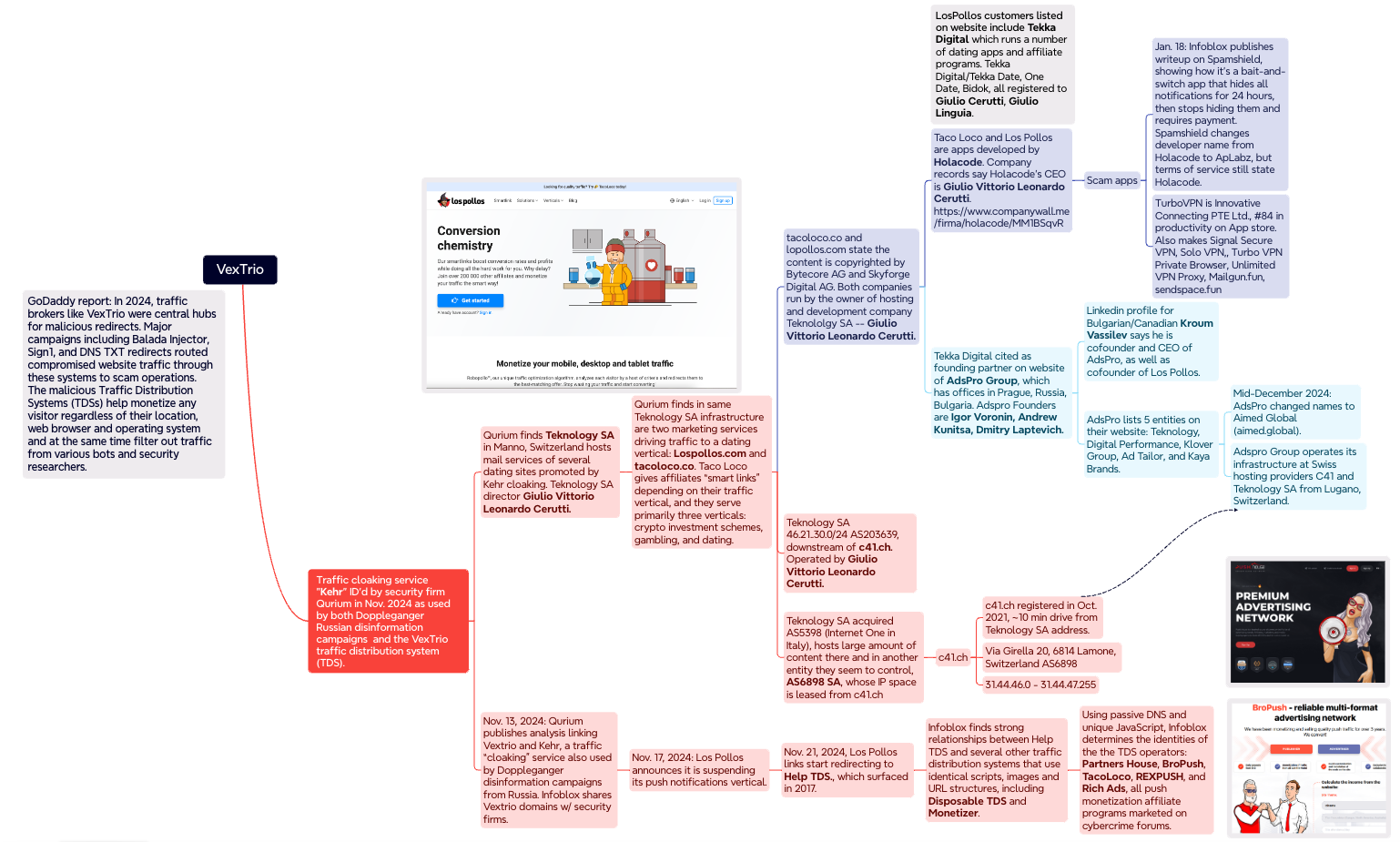
A mind map illustrating some of the key findings and connections in the Infoblox and Qurium investigations. Click to enlarge.

A REVEALING PIVOT

In March 2025, researchers at GoDaddy chronicled how DollyWay — a malware strain that has consistently redirected victims to VexTrio throughout its eight years of activity — suddenly stopped doing that on November 20, 2024. Virtually overnight, DollyWay and several other malware families that had previously used VexTrio began pushing their traffic through another TDS called Help TDS.

Digging further into historical DNS records and the unique code scripts used by the Help TDS, Infoblox determined it has long enjoyed an exclusive relationship with VexTrio (at least until LosPollos ended its push monetization service in November).

In a report released today, Infoblox said an exhaustive analysis of the JavaScript code, website lures, smartlinks and DNS patterns used by VexTrio and Help TDS linked them with at least four other TDS operators (not counting TacoLoco). Those four entities — Partners House, BroPush, RichAds and RexPush — are all Russia-based push monetization programs that pay affiliates to drive signups for a variety of schemes, but mostly online dating services.

“As Los Pollos push monetization ended, we’ve seen an increase in fake CAPTCHAs that drive user acceptance of push notifications, particularly from Partners House,” the Infoblox report reads. “The relationship of these commercial entities remains a mystery; while they are certainly long-time partners redirecting traffic to one another, and they all have a Russian nexus, there is no overt common ownership.”

Renee Burton, vice president of threat intelligence at Infoblox, said the security industry generally treats the deceptive methods used by VexTrio and other malicious TDSs as a kind of legally grey area that is mostly associated with less dangerous security threats, such as adware and scareware.

But Burton argues that this view is myopic, and helps perpetuate a dark adtech industry that also pushes plenty of straight-up malware, noting that hundreds of thousands of compromised websites around the world every year redirect victims to the tangled web of VexTrio and VexTrio-affiliate TDSs.

“These TDSs are a nefarious threat, because they’re the ones you can connect to the delivery of things like information stealers and scams that cost consumers billions of dollars a year,” Burton said. “From a larger strategic perspective, my takeaway is that Russian organized crime has control of malicious adtech, and these are just some of the many groups involved.”

WHAT CAN YOU DO?

As KrebsOnSecurity warned way back in 2020, it’s a good idea to be very sparing in approving notifications when browsing the Web. In many cases these notifications are benign, but as we’ve seen there are numerous dodgy firms that are paying site owners to install their notification scripts, and then reselling that communications pathway to scammers and online hucksters.

If you’d like to prevent sites from ever presenting notification requests, all of the major browser makers let you do this — either across the board or on a per-website basis. While it is true that blocking notifications entirely can break the functionality of some websites, doing this for any devices you manage on behalf of your less tech-savvy friends or family members might end up saving everyone a lot of headache down the road.

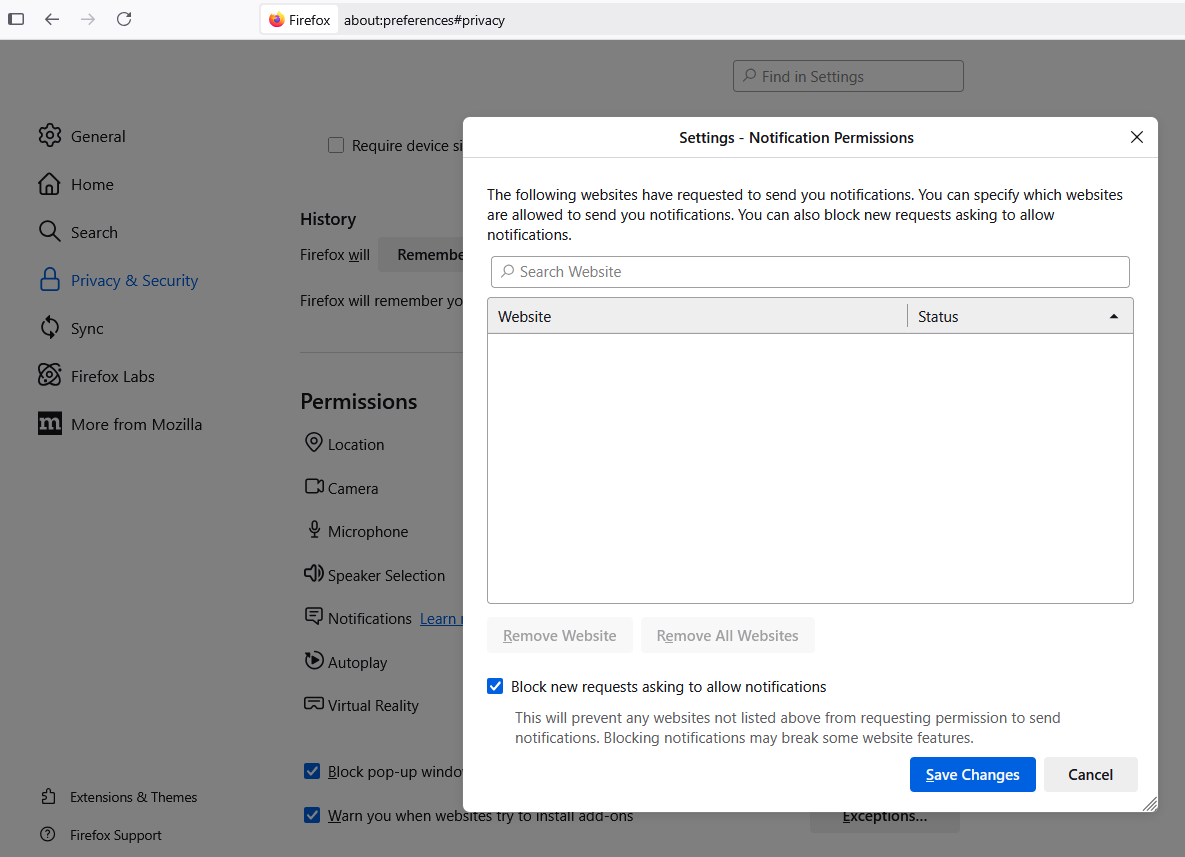
To modify site notification settings in Mozilla Firefox, navigate to Settings, Privacy & Security, Permissions, and click the “Settings” tab next to “Notifications.” That page will display any notifications already permitted and allow you to edit or delete any entries. Tick the box next to “Block new requests asking to allow notifications” to stop them altogether.

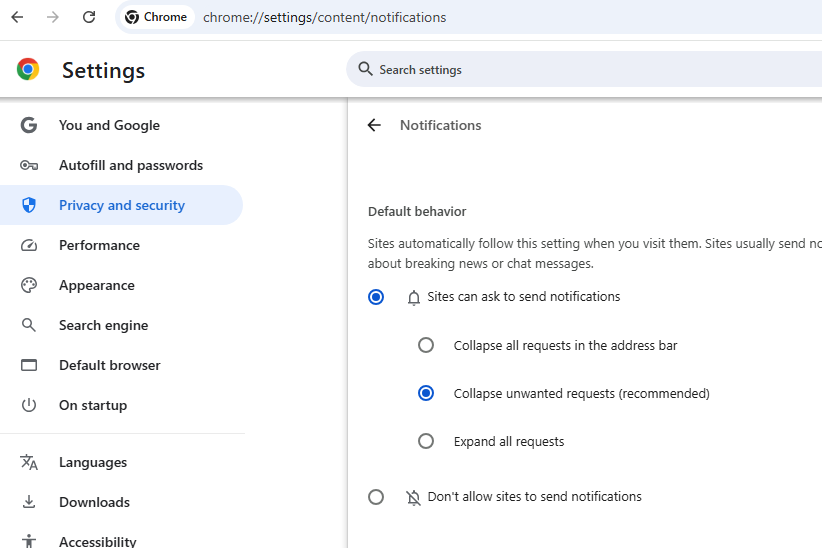
In Google Chrome, click the icon with the three dots to the right of the address bar, scroll all the way down to Settings, Privacy and Security, Site Settings, and Notifications. Select the “Don’t allow sites to send notifications” button if you want to banish notification requests forever.

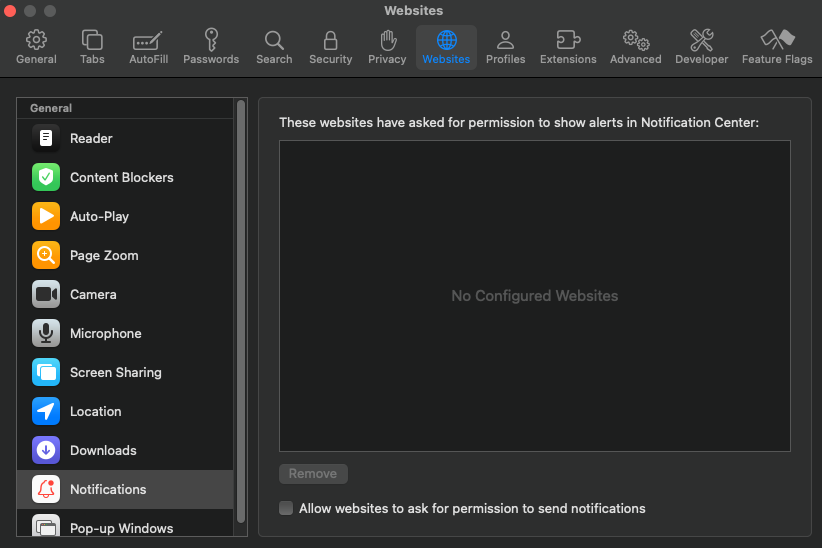
In Apple’s Safari browser, go to Settings, Websites, and click on Notifications in the sidebar. Uncheck the option to “allow websites to ask for permission to send notifications” if you wish to turn off notification requests entirely.


Read More

Ransomware Actors Exploit Unpatched SimpleHelp Remote Monitoring and Management to Compromise Utility Billing Software Provider

 ​Summary
The Cybersecurity and Infrastructure Security Agency (CISA) is releasing this advisory in response to ransomware actors leveraging unpatched instances of a vulnerability in SimpleHelp Remote Monitoring and Management (RMM) to compromise customers of a utility billing software provider. This incident reflects a broader pattern of ransomware actors targeting organizations through unpatched versions of SimpleHelp RMM since January 2025.
SimpleHelp versions 5.5.7 and earlier contain several vulnerabilities, including CVE-2024-57727—a path traversal vulnerability.1 Ransomware actors likely leveraged CVE-2024-57727 to access downstream customers’ unpatched SimpleHelp RMM for disruption of services in double extortion compromises.1 
CISA added CVE-2024-57727 to its Known Exploited Vulnerabilities (KEV) Catalog on Feb. 13, 2025.
CISA urges software vendors, downstream customers, and end users to immediately implement the Mitigations listed in this advisory based on confirmed compromise or risk of compromise.
Download the PDF version of this report:

AA25-163A Ransomware Actors Exploit Unpatched SimpleHelp Remote Monitoring and Management to Compromise Utility Billing Software Provider
(PDF, 420.49 KB
)

Mitigations
CISA recommends organizations implement the mitigations below to respond to emerging ransomware activity exploiting SimpleHelp software. These mitigations align with the Cross-Sector Cybersecurity Performance Goals (CPGs) developed by CISA and the National Institute of Standards and Technology (NIST). The CPGs provide a minimum set of practices and protections that CISA and NIST recommend all organizations implement. CISA and NIST based the CPGs on existing cybersecurity frameworks and guidance to protect against the most common and impactful threats, tactics, techniques, and procedures. Visit CISA’s CPGs webpage for more information on the CPGs, including additional recommended baseline protections. These mitigations apply to all critical infrastructure organizations.
Vulnerable Third-Party Vendors
If SimpleHelp is embedded or bundled in vendor-owned software or if a third-party service provider leverages SimpleHelp on a downstream customer’s network, then identify the SimpleHelp server version at the top of the file <file_path>/SimpleHelp/configuration/serverconfig.xml. If version 5.5.7 or prior is found or has been used since January 2025, third-party vendors should:

Isolate the SimpleHelp server instance from the internet or stop the server process.
Upgrade immediately to the latest SimpleHelp version in accordance with SimpleHelp’s security vulnerability advisory.2
Contact your downstream customers to direct them to take actions to secure their endpoints and undertake threat hunting actions on their network.

Vulnerable Downstream Customers and End Users
Determine if the system is running an unpatched version of SimpleHelp RMM either directly or embedded in third-party software.
SimpleHelp Endpoints
Determine if an endpoint is running the remote access (RAS) service by checking the following paths depending on the specific environment:

Windows: %APPDATA%JWrapper-Remote Access
Linux: /opt/JWrapper-Remote Access
MacOs: /Library/Application Support/JWrapper-Remote Access

If RAS installation is present and running, open the serviceconfig.xml file in <file_path>/JWrapper-Remote Access/JWAppsSharedConfig/ to determine if the registered service is vulnerable. The lines starting with <ConnectTo indicate the server addresses where the service is registered.
SimpleHelp Server
Determine the version of any SimpleHelp server by performing an HTTP query against it. Add /allversions (e.g., https://simple-help.com/allversions) to query the URL for the version page. This page will list the running version.
If an unpatched SimpleHelp version 5.5.7 or earlier is confirmed on a system, organizations should conduct threat hunting actions for evidence of compromise and continuously monitor for unusual inbound and outbound traffic from the SimpleHelp server. Note: This is not an exhaustive list of indicators of compromise.

 Refer to SimpleHelp’s guidance to determine compromise and next steps.3
Isolate the SimpleHelp server instance from the internet or stop the server process.
Search for any suspicious or anomalous executables with three alphabetic letter filenames (e.g., aaa.exe, bbb.exe, etc.) with a creation time after January 2025. Additionally, perform host and network vulnerability security scans via reputable scanning services to verify malware is not on the system.
Even if there is no evidence of compromise, users should immediately upgrade to the latest SimpleHelp version in accordance with SimpleHelp’s security vulnerabilities advisory.4

If your organization is unable to immediately identify and patch vulnerable versions of SimpleHelp, apply appropriate workarounds. In this circumstance, CISA recommends using other vendor-provided mitigations when available. These non-patching workarounds should not be considered permanent fixes and organizations should apply the appropriate patch as soon as it is made available.
Encrypted Downstream Customers and End Users
If a system has been encrypted by ransomware:

Disconnect the affected system from the internet.
Use clean installation media (e.g., a bootable USD drive or DVD) to reinstall the operating system. Ensure the installation media is free from malware.
Wipe the system and only restore data from a clean backup. Ensure data files are obtained from a protected environment to avoid reintroducing ransomware to the system.

CISA urges you to promptly report ransomware incidents to a local FBI Field Office, FBI’s Internet Crime Compliant Center (IC3), and CISA via CISA’s 24/7 Operations Center (report@cisa.gov or 888-282-0870).
Proactive Mitigations to Reduce Risk
To reduce opportunities for intrusion and to strengthen response to ransomware activity, CISA recommends customers of vendors and managed service providers (MSPs) implement the following best practices:

Maintain a robust asset inventory and hardware list [CPG 1.A].
Maintain a clean, offline backup of the system to ensure encryption will not occur once reverted. Conduct a daily system backup on a separate, offline device, such as a flash drive or external hard drive. Remove the device from the computer after backup is complete [CPG 2.R].
Do not expose remote services such as Remote Desktop Protocol (RDP) on the web. If these services must be exposed, apply appropriate compensating controls to prevent common forms of abuse and exploitation. Disable unnecessary OS applications and network protocols on internet-facing assets [CPG 2.W].
Conduct a risk analysis for RMM software on the network. If RMM is required, ask third-party vendors what security controls are in place.
Establish and maintain open communication channels with third-party vendors to stay informed about their patch management process.
For software vendors, consider integrating a Software Bill of Materials (SBOM) into products to reduce the amount of time for vulnerability remediation.

An SBOM is a formal record of components used to build software. SBOMs enhance supply chain risk management by quickly identifying and avoiding known vulnerabilities, identifying security requirements, and managing mitigations for vulnerabilities. For more information, see CISA’s SBOM page.

Resources

Health-ISAC:Threat Bulletin: SimpleHelp RMM Software Leveraged in Exploitation Attempt to Breach Networks
Arctic Wolf: Arctic Wolf Observes Campaign Exploiting SimpleHelp RMM Software for Initial Access
CISA: #StopRansomware Guide

Reporting
Your organization has no obligation to respond or provide information back to FBI in response to this advisory. If, after reviewing the information provided, your organization decides to provide information to FBI, reporting must be consistent with applicable state and federal laws.
FBI is interested in any information that can be shared, to include boundary logs showing communication to and from foreign IP addresses, a sample ransom note, communications with threat actors, Bitcoin wallet information, decryptor files, and/or a benign sample of an encrypted file.
Additional details of interest include a targeted company point of contact, status and scope of infection, estimated loss, operational impact, transaction IDs, date of infection, date detected, initial attack vector, and host- and network-based indicators.
CISA and FBI do not encourage paying ransom as payment does not guarantee victim files will be recovered. Furthermore, payment may also embolden adversaries to target additional organizations, encourage other criminal actors to engage in the distribution of ransomware, and/or fund illicit activities. Regardless of whether you or your organization have decided to pay the ransom, FBI and CISA urge you to promptly report ransomware incidents to FBI’s Internet Crime Complain Center (IC3), a local FBI Field Office, or CISA via the agency’s Incident Reporting System or its 24/7 Operations Center (report@cisa.gov) or by calling 1-844-Say-CISA (1-844-729-2472).
SimpleHelp users or vendors can contact support@simple-help.com for assistance with queries or concerns.
Disclaimer
The information in this report is being provided “as is” for informational purposes only. CISA does not endorse any commercial entity, product, company, or service, including any entities, products, or services linked within this document. Any reference to specific commercial entities, products, processes, or services by service mark, trademark, manufacturer, or otherwise, does not constitute or imply endorsement, recommendation, or favor by CISA.
Version History
June 12, 2025: Initial version.
Notes
1. Anthony Bradshaw, et. al., “DragonForce Actors Target SimpleHelp Vulnerabilities to Attack MSP, Customers,” Sophos News, May 27, 2025, https://news.sophos.com/en-us/2025/05/27/dragonforce-actors-target-simplehelp-vulnerabilities-to-attack-msp-customers/.2. For instructions for upgrading to the latest version of SimpleHelp, see SimpleHelp’s security vulnerability advisory.3. To determine possibility of compromise and next steps, see SimpleHelp’s guidance.4. For instructions for upgrading to the latest version of SimpleHelp, see SimpleHelp’s security vulnerability advisory. 

Summary

The Cybersecurity and Infrastructure Security Agency (CISA) is releasing this advisory in response to ransomware actors leveraging unpatched instances of a vulnerability in SimpleHelp Remote Monitoring and Management (RMM) to compromise customers of a utility billing software provider. This incident reflects a broader pattern of ransomware actors targeting organizations through unpatched versions of SimpleHelp RMM since January 2025.

SimpleHelp versions 5.5.7 and earlier contain several vulnerabilities, including CVE-2024-57727—a path traversal vulnerability.1 Ransomware actors likely leveraged CVE-2024-57727 to access downstream customers’ unpatched SimpleHelp RMM for disruption of services in double extortion compromises.1 

CISA added CVE-2024-57727 to its Known Exploited Vulnerabilities (KEV) Catalog on Feb. 13, 2025.

CISA urges software vendors, downstream customers, and end users to immediately implement the Mitigations listed in this advisory based on confirmed compromise or risk of compromise.

Download the PDF version of this report:

Mitigations

CISA recommends organizations implement the mitigations below to respond to emerging ransomware activity exploiting SimpleHelp software. These mitigations align with the Cross-Sector Cybersecurity Performance Goals (CPGs) developed by CISA and the National Institute of Standards and Technology (NIST). The CPGs provide a minimum set of practices and protections that CISA and NIST recommend all organizations implement. CISA and NIST based the CPGs on existing cybersecurity frameworks and guidance to protect against the most common and impactful threats, tactics, techniques, and procedures. Visit CISA’s CPGs webpage for more information on the CPGs, including additional recommended baseline protections. These mitigations apply to all critical infrastructure organizations.

Vulnerable Third-Party Vendors

If SimpleHelp is embedded or bundled in vendor-owned software or if a third-party service provider leverages SimpleHelp on a downstream customer’s network, then identify the SimpleHelp server version at the top of the file <file_path>/SimpleHelp/configuration/serverconfig.xml. If version 5.5.7 or prior is found or has been used since January 2025, third-party vendors should:

  1. Isolate the SimpleHelp server instance from the internet or stop the server process.
  2. Upgrade immediately to the latest SimpleHelp version in accordance with SimpleHelp’s security vulnerability advisory.2
  3. Contact your downstream customers to direct them to take actions to secure their endpoints and undertake threat hunting actions on their network.

Vulnerable Downstream Customers and End Users

Determine if the system is running an unpatched version of SimpleHelp RMM either directly or embedded in third-party software.

SimpleHelp Endpoints

Determine if an endpoint is running the remote access (RAS) service by checking the following paths depending on the specific environment:

  • Windows: %APPDATA%JWrapper-Remote Access
  • Linux: /opt/JWrapper-Remote Access
  • MacOs: /Library/Application Support/JWrapper-Remote Access

If RAS installation is present and running, open the serviceconfig.xml file in <file_path>/JWrapper-Remote Access/JWAppsSharedConfig/ to determine if the registered service is vulnerable. The lines starting with <ConnectTo indicate the server addresses where the service is registered.

SimpleHelp Server

Determine the version of any SimpleHelp server by performing an HTTP query against it. Add /allversions (e.g., https://simple-help.com/allversions) to query the URL for the version page. This page will list the running version.

If an unpatched SimpleHelp version 5.5.7 or earlier is confirmed on a system, organizations should conduct threat hunting actions for evidence of compromise and continuously monitor for unusual inbound and outbound traffic from the SimpleHelp server. Note: This is not an exhaustive list of indicators of compromise.

  1.  Refer to SimpleHelp’s guidance to determine compromise and next steps.3
  2. Isolate the SimpleHelp server instance from the internet or stop the server process.
  3. Search for any suspicious or anomalous executables with three alphabetic letter filenames (e.g., aaa.exe, bbb.exe, etc.) with a creation time after January 2025. Additionally, perform host and network vulnerability security scans via reputable scanning services to verify malware is not on the system.
  4. Even if there is no evidence of compromise, users should immediately upgrade to the latest SimpleHelp version in accordance with SimpleHelp’s security vulnerabilities advisory.4

If your organization is unable to immediately identify and patch vulnerable versions of SimpleHelp, apply appropriate workarounds. In this circumstance, CISA recommends using other vendor-provided mitigations when available. These non-patching workarounds should not be considered permanent fixes and organizations should apply the appropriate patch as soon as it is made available.

Encrypted Downstream Customers and End Users

If a system has been encrypted by ransomware:

  1. Disconnect the affected system from the internet.
  2. Use clean installation media (e.g., a bootable USD drive or DVD) to reinstall the operating system. Ensure the installation media is free from malware.
  3. Wipe the system and only restore data from a clean backup. Ensure data files are obtained from a protected environment to avoid reintroducing ransomware to the system.

CISA urges you to promptly report ransomware incidents to a local FBI Field Office, FBI’s Internet Crime Compliant Center (IC3), and CISA via CISA’s 24/7 Operations Center (report@cisa.gov or 888-282-0870).

Proactive Mitigations to Reduce Risk

To reduce opportunities for intrusion and to strengthen response to ransomware activity, CISA recommends customers of vendors and managed service providers (MSPs) implement the following best practices:

  • Maintain a robust asset inventory and hardware list [CPG 1.A].
  • Maintain a clean, offline backup of the system to ensure encryption will not occur once reverted. Conduct a daily system backup on a separate, offline device, such as a flash drive or external hard drive. Remove the device from the computer after backup is complete [CPG 2.R].
  • Do not expose remote services such as Remote Desktop Protocol (RDP) on the web. If these services must be exposed, apply appropriate compensating controls to prevent common forms of abuse and exploitation. Disable unnecessary OS applications and network protocols on internet-facing assets [CPG 2.W].
  • Conduct a risk analysis for RMM software on the network. If RMM is required, ask third-party vendors what security controls are in place.
  • Establish and maintain open communication channels with third-party vendors to stay informed about their patch management process.
  • For software vendors, consider integrating a Software Bill of Materials (SBOM) into products to reduce the amount of time for vulnerability remediation.
    • An SBOM is a formal record of components used to build software. SBOMs enhance supply chain risk management by quickly identifying and avoiding known vulnerabilities, identifying security requirements, and managing mitigations for vulnerabilities. For more information, see CISA’s SBOM page.

Resources

Reporting

Your organization has no obligation to respond or provide information back to FBI in response to this advisory. If, after reviewing the information provided, your organization decides to provide information to FBI, reporting must be consistent with applicable state and federal laws.

FBI is interested in any information that can be shared, to include boundary logs showing communication to and from foreign IP addresses, a sample ransom note, communications with threat actors, Bitcoin wallet information, decryptor files, and/or a benign sample of an encrypted file.

Additional details of interest include a targeted company point of contact, status and scope of infection, estimated loss, operational impact, transaction IDs, date of infection, date detected, initial attack vector, and host- and network-based indicators.

CISA and FBI do not encourage paying ransom as payment does not guarantee victim files will be recovered. Furthermore, payment may also embolden adversaries to target additional organizations, encourage other criminal actors to engage in the distribution of ransomware, and/or fund illicit activities. Regardless of whether you or your organization have decided to pay the ransom, FBI and CISA urge you to promptly report ransomware incidents to FBI’s Internet Crime Complain Center (IC3), a local FBI Field Office, or CISA via the agency’s Incident Reporting System or its 24/7 Operations Center (report@cisa.gov) or by calling 1-844-Say-CISA (1-844-729-2472).

SimpleHelp users or vendors can contact support@simple-help.com for assistance with queries or concerns.

Disclaimer

The information in this report is being provided “as is” for informational purposes only. CISA does not endorse any commercial entity, product, company, or service, including any entities, products, or services linked within this document. Any reference to specific commercial entities, products, processes, or services by service mark, trademark, manufacturer, or otherwise, does not constitute or imply endorsement, recommendation, or favor by CISA.

Version History

June 12, 2025: Initial version.

Notes

1. Anthony Bradshaw, et. al., “DragonForce Actors Target SimpleHelp Vulnerabilities to Attack MSP, Customers,” Sophos News, May 27, 2025, https://news.sophos.com/en-us/2025/05/27/dragonforce-actors-target-simplehelp-vulnerabilities-to-attack-msp-customers/.
2. For instructions for upgrading to the latest version of SimpleHelp, see SimpleHelp’s security vulnerability advisory.
3. To determine possibility of compromise and next steps, see SimpleHelp’s guidance.
4. For instructions for upgrading to the latest version of SimpleHelp, see SimpleHelp’s security vulnerability advisory.

 Read More

AVEVA PI Connector for CygNet

 ​View CSAF
1. EXECUTIVE SUMMARY

CVSS v4 6.9
ATTENTION: Low attack complexity
Vendor: AVEVA
Equipment: PI Connector for CygNet
Vulnerabilities: Cross-site Scripting, Improper Validation of Integrity Check Value

2. RISK EVALUATION
Successful exploitation of these vulnerabilities could allow an attacker to persist arbitrary code in the administrative portal of the product or cause a denial-of-service condition.
3. TECHNICAL DETAILS
3.1 AFFECTED PRODUCTS
The following versions of PI Connector for CygNet are affected:

PI Connector for CygNet: Version 1.6.14 and prior

3.2 VULNERABILITY OVERVIEW
3.2.1 Improper Neutralization of Input During Web Page Generation (‘Cross-site Scripting’) CWE-79
A cross-site scripting vulnerability exists in PI Connector for CygNet Versions 1.6.14 and prior that, if exploited, could allow an administrator miscreant with local access to the connector admin portal to persist arbitrary JavaScript code that will be executed by other users who visit affected pages.
CVE-2025-4417 has been assigned to this vulnerability. A CVSS v3.1 base score of 5.5 has been calculated; the CVSS vector string is (AV:L/AC:L/PR:H/UI:R/S:C/C:N/I:H/A:N).
A CVSS v4 score has also been calculated for CVE-2025-4417. A base score of 6.9 has been calculated; the CVSS vector string is (AV:L/AC:L/AT:N/PR:H/UI:P/VC:N/VI:H/VA:N/SC:H/SI:H/SA:N).
3.2.2 Improper Validation of Integrity Check Value CWE-354
An improper validation of integrity check value vulnerability exists in PI Connector for CygNet Versions 1.6.14 and prior that, if exploited, could allow a miscreant with elevated privileges to modify PI Connector for CygNet local data files (cache and buffers) in a way that causes the connector service to become unresponsive.
CVE-2025-4418 has been assigned to this vulnerability. A CVSS v3.1 base score of 4.4 has been calculated; the CVSS vector string is (AV:L/AC:L/PR:H/UI:N/S:U/C:N/I:N/A:H).
A CVSS v4 score has also been calculated for CVE-2025-4418. A base score of 6.7 has been calculated; the CVSS vector string is (AV:L/AC:L/AT:N/PR:H/UI:N/VC:N/VI:N/VA:H/SC:N/SI:N/SA:N).
3.3 BACKGROUND

CRITICAL INFRASTRUCTURE SECTORS: Critical Manufacturing
COUNTRIES/AREAS DEPLOYED: Worldwide
COMPANY HEADQUARTERS LOCATION: United Kingdom

3.4 RESEARCHER
AVEVA Ethical Disclosure reported these vulnerabilities to CISA.
4. MITIGATIONS
AVEVA recommends that organizations evaluate the impact of these vulnerabilities based on their operational environment, architecture, and product implementation. Users of affected product versions should apply security updates to mitigate the risk of exploit.
All affected versions of PI Connector for CygNet can be fixed by upgrading to PI Connector for CygNet v1.7.0 or higher. From OSISoft Customer Portal, search for “PI Connector for CygNet” and select Version 1.7.0 or higher.
AVEVA further recommends users follow general defensive measures:

Ensure that PI Connector for CygNet administrative access is only provided to trusted entities.
Audit custom installation folder Access Control Lists (ACLs) to ensure access is only provided to trusted entities.
Audit and limit membership to the OS Local “Administrators” and “PI Connector Administrators” groups.

For additional information please refer to AVEVA-2025-002.
CISA recommends users take defensive measures to minimize the risk of exploitation of these vulnerabilities, such as:

Minimize network exposure for all control system devices and/or systems, ensuring they are not accessible from the Internet.
Locate control system networks and remote devices behind firewalls and isolating them from business networks.
When remote access is required, use more secure methods, such as Virtual Private Networks (VPNs), recognizing VPNs may have vulnerabilities and should be updated to the most current version available. Also recognize VPN is only as secure as the connected devices.

CISA reminds organizations to perform proper impact analysis and risk assessment prior to deploying defensive measures.
CISA also provides a section for control systems security recommended practices on the ICS webpage on cisa.gov/ics. Several CISA products detailing cyber defense best practices are available for reading and download, including Improving Industrial Control Systems Cybersecurity with Defense-in-Depth Strategies.
CISA encourages organizations to implement recommended cybersecurity strategies for proactive defense of ICS assets.
Additional mitigation guidance and recommended practices are publicly available on the ICS webpage at cisa.gov/ics in the technical information paper, ICS-TIP-12-146-01B–Targeted Cyber Intrusion Detection and Mitigation Strategies.
Organizations observing suspected malicious activity should follow established internal procedures and report findings to CISA for tracking and correlation against other incidents.
CISA also recommends users take the following measures to protect themselves from social engineering attacks:

Do not click web links or open attachments in unsolicited email messages.
Refer to Recognizing and Avoiding Email Scams for more information on avoiding email scams.
Refer to Avoiding Social Engineering and Phishing Attacks for more information on social engineering attacks.

No known public exploitation specifically targeting these vulnerabilities has been reported to CISA at this time. These vulnerabilities are not exploitable remotely.
5. UPDATE HISTORY

June 12, 2025: Initial Publication 

View CSAF

1. EXECUTIVE SUMMARY

  • CVSS v4 6.9
  • ATTENTION: Low attack complexity
  • Vendor: AVEVA
  • Equipment: PI Connector for CygNet
  • Vulnerabilities: Cross-site Scripting, Improper Validation of Integrity Check Value

2. RISK EVALUATION

Successful exploitation of these vulnerabilities could allow an attacker to persist arbitrary code in the administrative portal of the product or cause a denial-of-service condition.

3. TECHNICAL DETAILS

3.1 AFFECTED PRODUCTS

The following versions of PI Connector for CygNet are affected:

  • PI Connector for CygNet: Version 1.6.14 and prior

3.2 VULNERABILITY OVERVIEW

3.2.1 Improper Neutralization of Input During Web Page Generation (‘Cross-site Scripting’) CWE-79

A cross-site scripting vulnerability exists in PI Connector for CygNet Versions 1.6.14 and prior that, if exploited, could allow an administrator miscreant with local access to the connector admin portal to persist arbitrary JavaScript code that will be executed by other users who visit affected pages.

CVE-2025-4417 has been assigned to this vulnerability. A CVSS v3.1 base score of 5.5 has been calculated; the CVSS vector string is (AV:L/AC:L/PR:H/UI:R/S:C/C:N/I:H/A:N).

A CVSS v4 score has also been calculated for CVE-2025-4417. A base score of 6.9 has been calculated; the CVSS vector string is (AV:L/AC:L/AT:N/PR:H/UI:P/VC:N/VI:H/VA:N/SC:H/SI:H/SA:N).

3.2.2 Improper Validation of Integrity Check Value CWE-354

An improper validation of integrity check value vulnerability exists in PI Connector for CygNet Versions 1.6.14 and prior that, if exploited, could allow a miscreant with elevated privileges to modify PI Connector for CygNet local data files (cache and buffers) in a way that causes the connector service to become unresponsive.

CVE-2025-4418 has been assigned to this vulnerability. A CVSS v3.1 base score of 4.4 has been calculated; the CVSS vector string is (AV:L/AC:L/PR:H/UI:N/S:U/C:N/I:N/A:H).

A CVSS v4 score has also been calculated for CVE-2025-4418. A base score of 6.7 has been calculated; the CVSS vector string is (AV:L/AC:L/AT:N/PR:H/UI:N/VC:N/VI:N/VA:H/SC:N/SI:N/SA:N).

3.3 BACKGROUND

  • CRITICAL INFRASTRUCTURE SECTORS: Critical Manufacturing
  • COUNTRIES/AREAS DEPLOYED: Worldwide
  • COMPANY HEADQUARTERS LOCATION: United Kingdom

3.4 RESEARCHER

AVEVA Ethical Disclosure reported these vulnerabilities to CISA.

4. MITIGATIONS

AVEVA recommends that organizations evaluate the impact of these vulnerabilities based on their operational environment, architecture, and product implementation. Users of affected product versions should apply security updates to mitigate the risk of exploit.

All affected versions of PI Connector for CygNet can be fixed by upgrading to PI Connector for CygNet v1.7.0 or higher. From OSISoft Customer Portal, search for “PI Connector for CygNet” and select Version 1.7.0 or higher.

AVEVA further recommends users follow general defensive measures:

  • Ensure that PI Connector for CygNet administrative access is only provided to trusted entities.
  • Audit custom installation folder Access Control Lists (ACLs) to ensure access is only provided to trusted entities.
  • Audit and limit membership to the OS Local “Administrators” and “PI Connector Administrators” groups.

For additional information please refer to AVEVA-2025-002.

CISA recommends users take defensive measures to minimize the risk of exploitation of these vulnerabilities, such as:

  • Minimize network exposure for all control system devices and/or systems, ensuring they are not accessible from the Internet.
  • Locate control system networks and remote devices behind firewalls and isolating them from business networks.
  • When remote access is required, use more secure methods, such as Virtual Private Networks (VPNs), recognizing VPNs may have vulnerabilities and should be updated to the most current version available. Also recognize VPN is only as secure as the connected devices.

CISA reminds organizations to perform proper impact analysis and risk assessment prior to deploying defensive measures.

CISA also provides a section for control systems security recommended practices on the ICS webpage on cisa.gov/ics. Several CISA products detailing cyber defense best practices are available for reading and download, including Improving Industrial Control Systems Cybersecurity with Defense-in-Depth Strategies.

CISA encourages organizations to implement recommended cybersecurity strategies for proactive defense of ICS assets.

Additional mitigation guidance and recommended practices are publicly available on the ICS webpage at cisa.gov/ics in the technical information paper, ICS-TIP-12-146-01B–Targeted Cyber Intrusion Detection and Mitigation Strategies.

Organizations observing suspected malicious activity should follow established internal procedures and report findings to CISA for tracking and correlation against other incidents.

CISA also recommends users take the following measures to protect themselves from social engineering attacks:

No known public exploitation specifically targeting these vulnerabilities has been reported to CISA at this time. These vulnerabilities are not exploitable remotely.

5. UPDATE HISTORY

  • June 12, 2025: Initial Publication

 Read More

Siemens Tecnomatix Plant Simulation

 ​As of January 10, 2023, CISA will no longer be updating ICS security advisories for Siemens product vulnerabilities beyond the initial advisory. For the most up-to-date information on vulnerabilities in this advisory, please see Siemens’ ProductCERT Security Advisories (CERT Services | Services | Siemens Global).
View CSAF
1. EXECUTIVE SUMMARY

CVSS v4 7.3
ATTENTION: Low attack complexity
Vendor: Siemens
Equipment: Tecnomatix Plant Simulation
Vulnerability: Out-of-bounds Read

2. RISK EVALUATION
Successful exploitation of this vulnerability could allow an attacker to execute code in the context of the current process.
3. TECHNICAL DETAILS
3.1 AFFECTED PRODUCTS
Siemens reports that the following products are affected:

Tecnomatix Plant Simulation V2404: All versions prior to V2404.0013

3.2 VULNERABILITY OVERVIEW
3.2.1 OUT-OF-BOUNDS READ CWE-125
The affected applications contain an out-of-bounds read past the end of an allocated structure while parsing specially crafted WRL files. This could allow an attacker to execute code in the context of the current process.
CVE-2025-32454 has been assigned to this vulnerability. A CVSS v3 base score of 7.8 has been assigned; the CVSS vector string is (CVSS:3.1/AV:L/AC:L/PR:N/UI:R/S:U/C:H/I:H/A:H).
A CVSS v4 score has also been calculated for CVE-2025-32454. A base score of 7.3 has been calculated; the CVSS vector string is (AV:L/AC:H/AT:N/PR:N/UI:P/VC:H/VI:H/VA:H/SC:N/SI:N/SA:N).
3.3 BACKGROUND

CRITICAL INFRASTRUCTURE SECTORS: Critical Manufacturing
COUNTRIES/AREAS DEPLOYED: Worldwide
COMPANY HEADQUARTERS LOCATION: Germany

3.4 RESEARCHER
Michael Heinzl reported this vulnerability to Siemens. Siemens reported this vulnerability to CISA.
4. MITIGATIONS
Siemens has identified the following specific workarounds and mitigations users can apply to reduce risk:

Tecnomatix Plant Simulation V2404: Do not open untrusted WRL files in affected applications
Tecnomatix Plant Simulation V2404: Update to V2404.0013 or later version

As a general security measure, Siemens recommends protecting network access to devices with appropriate mechanisms. To operate the devices in a protected IT environment, Siemens recommends configuring the environment according to Siemens’ operational guidelines for industrial security and following recommendations in the product manuals.
Additional information on industrial security by Siemens can be found on the Siemens industrial security webpage
For more information see the associated Siemens security advisory SSA-486186 in HTML and CSAF.
CISA recommends users take defensive measures to minimize the risk of exploitation of this vulnerability, such as:

Minimize network exposure for all control system devices and/or systems, ensuring they are not accessible from the internet.
Locate control system networks and remote devices behind firewalls and isolating them from business networks.
When remote access is required, use more secure methods, such as Virtual Private Networks (VPNs). Recognize VPNs may have vulnerabilities, should be updated to the most recent version available, and are only as secure as the connected devices.

CISA reminds organizations to perform proper impact analysis and risk assessment prior to deploying defensive measures.
CISA also provides a section for control systems security recommended practices on the ICS webpage on cisa.gov. Several CISA products detailing cyber defense best practices are available for reading and download, including Improving Industrial Control Systems Cybersecurity with Defense-in-Depth Strategies.
CISA encourages organizations to implement recommended cybersecurity strategies for proactive defense of ICS assets.
Additional mitigation guidance and recommended practices are publicly available on the ICS webpage at cisa.gov in the technical information paper, ICS-TIP-12-146-01B–Targeted Cyber Intrusion Detection and Mitigation Strategies.
Organizations observing suspected malicious activity should follow established internal procedures and report findings to CISA for tracking and correlation against other incidents.
CISA also recommends users take the following measures to protect themselves from social engineering attacks:

Do not click web links or open attachments in unsolicited email messages.
Refer to Recognizing and Avoiding Email Scams for more information on avoiding email scams.
Refer to Avoiding Social Engineering and Phishing Attacks for more information on social engineering attacks.

No known public exploitation specifically targeting this vulnerability has been reported to CISA at this time. This vulnerability is not exploitable remotely.
5. UPDATE HISTORY

June 12, 2025: Initial Publication 

As of January 10, 2023, CISA will no longer be updating ICS security advisories for Siemens product vulnerabilities beyond the initial advisory. For the most up-to-date information on vulnerabilities in this advisory, please see Siemens’ ProductCERT Security Advisories (CERT Services | Services | Siemens Global).

View CSAF

1. EXECUTIVE SUMMARY

  • CVSS v4 7.3
  • ATTENTION: Low attack complexity
  • Vendor: Siemens
  • Equipment: Tecnomatix Plant Simulation
  • Vulnerability: Out-of-bounds Read

2. RISK EVALUATION

Successful exploitation of this vulnerability could allow an attacker to execute code in the context of the current process.

3. TECHNICAL DETAILS

3.1 AFFECTED PRODUCTS

Siemens reports that the following products are affected:

  • Tecnomatix Plant Simulation V2404: All versions prior to V2404.0013

3.2 VULNERABILITY OVERVIEW

3.2.1 OUT-OF-BOUNDS READ CWE-125

The affected applications contain an out-of-bounds read past the end of an allocated structure while parsing specially crafted WRL files. This could allow an attacker to execute code in the context of the current process.

CVE-2025-32454 has been assigned to this vulnerability. A CVSS v3 base score of 7.8 has been assigned; the CVSS vector string is (CVSS:3.1/AV:L/AC:L/PR:N/UI:R/S:U/C:H/I:H/A:H).

A CVSS v4 score has also been calculated for CVE-2025-32454. A base score of 7.3 has been calculated; the CVSS vector string is (AV:L/AC:H/AT:N/PR:N/UI:P/VC:H/VI:H/VA:H/SC:N/SI:N/SA:N).

3.3 BACKGROUND

  • CRITICAL INFRASTRUCTURE SECTORS: Critical Manufacturing
  • COUNTRIES/AREAS DEPLOYED: Worldwide
  • COMPANY HEADQUARTERS LOCATION: Germany

3.4 RESEARCHER

Michael Heinzl reported this vulnerability to Siemens. Siemens reported this vulnerability to CISA.

4. MITIGATIONS

Siemens has identified the following specific workarounds and mitigations users can apply to reduce risk:

  • Tecnomatix Plant Simulation V2404: Do not open untrusted WRL files in affected applications
  • Tecnomatix Plant Simulation V2404: Update to V2404.0013 or later version

As a general security measure, Siemens recommends protecting network access to devices with appropriate mechanisms. To operate the devices in a protected IT environment, Siemens recommends configuring the environment according to Siemens’ operational guidelines for industrial security and following recommendations in the product manuals.

Additional information on industrial security by Siemens can be found on the Siemens industrial security webpage

For more information see the associated Siemens security advisory SSA-486186 in HTML and CSAF.

CISA recommends users take defensive measures to minimize the risk of exploitation of this vulnerability, such as:

  • Minimize network exposure for all control system devices and/or systems, ensuring they are not accessible from the internet.
  • Locate control system networks and remote devices behind firewalls and isolating them from business networks.
  • When remote access is required, use more secure methods, such as Virtual Private Networks (VPNs). Recognize VPNs may have vulnerabilities, should be updated to the most recent version available, and are only as secure as the connected devices.

CISA reminds organizations to perform proper impact analysis and risk assessment prior to deploying defensive measures.

CISA also provides a section for control systems security recommended practices on the ICS webpage on cisa.gov. Several CISA products detailing cyber defense best practices are available for reading and download, including Improving Industrial Control Systems Cybersecurity with Defense-in-Depth Strategies.

CISA encourages organizations to implement recommended cybersecurity strategies for proactive defense of ICS assets.

Additional mitigation guidance and recommended practices are publicly available on the ICS webpage at cisa.gov in the technical information paper, ICS-TIP-12-146-01B–Targeted Cyber Intrusion Detection and Mitigation Strategies.

Organizations observing suspected malicious activity should follow established internal procedures and report findings to CISA for tracking and correlation against other incidents.

CISA also recommends users take the following measures to protect themselves from social engineering attacks:

No known public exploitation specifically targeting this vulnerability has been reported to CISA at this time. This vulnerability is not exploitable remotely.

5. UPDATE HISTORY

  • June 12, 2025: Initial Publication

 Read More

CISA Releases Ten Industrial Control Systems Advisories

 ​CISA released ten Industrial Control Systems (ICS) advisories on June 12, 2025. These advisories provide timely information about current security issues, vulnerabilities, and exploits surrounding ICS.

ICSA-25-162-01 Siemens Tecnomatix Plant Simulation
ICSA-25-162-02 Siemens RUGGEDCOM APE1808
ICSA-25-162-03 Siemens SCALANCE and RUGGEDCOM
ICSA-25-162-04 Siemens SCALANCE and RUGGEDCOM
ICSA-25-162-05 Siemens SIMATIC S7-1500 CPU Family
ICSA-25-162-06 Siemens Energy Services
ICSA-25-162-07 AVEVA PI Data Archive
ICSA-25-162-08 AVEVA PI Web API
ICSA-25-162-09 AVEVA PI Connector for CygNet
ICSA-25-162-10 PTZOptics and Other Pan-Tilt-Zoom Cameras

CISA encourages users and administrators to review newly released ICS advisories for technical details and mitigations. 

CISA released ten Industrial Control Systems (ICS) advisories on June 12, 2025. These advisories provide timely information about current security issues, vulnerabilities, and exploits surrounding ICS.

CISA encourages users and administrators to review newly released ICS advisories for technical details and mitigations.

 Read More

Siemens RUGGEDCOM APE1808

 ​As of January 10, 2023, CISA will no longer be updating ICS security advisories for Siemens product vulnerabilities beyond the initial advisory. For the most up-to-date information on vulnerabilities in this advisory, please see Siemens’ ProductCERT Security Advisories (CERT Services | Services | Siemens Global).
View CSAF
1. EXECUTIVE SUMMARY

CVSS v4 5.1
ATTENTION: Exploitable remotely/low attack complexity
Vendor: Siemens
Equipment: RUGGEDCOM APE1808
Vulnerability: Cross-site Scripting

2. RISK EVALUATION
Successful exploitation of this vulnerability could allow an attacker to execute malicious JavaScript in the context of an authenticated Captive Portal user’s browser when they click on a specially crafted link.
3. TECHNICAL DETAILS
3.1 AFFECTED PRODUCTS
Siemens reports that the following products are affected:

Siemens RUGGEDCOM APE1808: All versions with Palo Alto Networks Virtual NGFW with an enabled GlobalProtect gateway or portal

3.2 VULNERABILITY OVERVIEW
3.2.1 IMPROPER NEUTRALIZATION OF INPUT DURING WEB PAGE GENERATION (‘CROSS-SITE SCRIPTING’) CWE-79
A reflected cross-site scripting (XSS) vulnerability in the GlobalProtect gateway and portal features of Palo Alto Networks PAN-OS software enables execution of malicious JavaScript in the context of an authenticated Captive Portal user’s browser when they click on a specially crafted link. The primary risk is phishing attacks that can lead to credential theft-particularly if you enabled Clientless VPN.
CVE-2025-0133 has been assigned to this vulnerability. A CVSS v3 base score of 4.3 has been assigned; the CVSS vector string is (CVSS:3.1/AV:N/AC:L/PR:N/UI:R/S:U/C:N/I:L/A:N).
A CVSS v4 score has also been calculated for CVE-2025-0133. A base score of 5.1 has been calculated; the CVSS vector string is (AV:N/AC:L/AT:N/PR:N/UI:A/VC:N/VI:L/VA:N/SC:N/SI:N/SA:N).
3.3 BACKGROUND

CRITICAL INFRASTRUCTURE SECTORS: Critical Manufacturing
COUNTRIES/AREAS DEPLOYED: Worldwide
COMPANY HEADQUARTERS LOCATION: Germany

3.4 RESEARCHER
Siemens reported this vulnerability to CISA.
4. MITIGATIONS
Siemens has identified the following specific workarounds and mitigations users can apply to reduce risk:

RUGGEDCOM APE1808: Disable Clientless VPN. For additional mitigation measures, refer to Palo Alto Networks’ Security Advisory
RUGGEDCOM APE1808: Contact customer support to receive patch and update information

As a general security measure, Siemens recommends protecting network access to devices with appropriate mechanisms. To operate the devices in a protected IT environment, Siemens recommends configuring the environment according to Siemens’ operational guidelines for industrial security and following recommendations in the product manuals.
Additional information on industrial security by Siemens can be found on the Siemens industrial security webpage
For more information see the associated Siemens security advisory SSA-513708 in HTML and CSAF.
CISA recommends users take defensive measures to minimize the risk of exploitation of this vulnerability, such as:

Minimize network exposure for all control system devices and/or systems, ensuring they are not accessible from the internet.
Locate control system networks and remote devices behind firewalls and isolating them from business networks.
When remote access is required, use more secure methods, such as Virtual Private Networks (VPNs). Recognize VPNs may have vulnerabilities, should be updated to the most recent version available, and are only as secure as the connected devices.

CISA reminds organizations to perform proper impact analysis and risk assessment prior to deploying defensive measures.
CISA also provides a section for control systems security recommended practices on the ICS webpage on cisa.gov. Several CISA products detailing cyber defense best practices are available for reading and download, including Improving Industrial Control Systems Cybersecurity with Defense-in-Depth Strategies.
CISA encourages organizations to implement recommended cybersecurity strategies for proactive defense of ICS assets.
Additional mitigation guidance and recommended practices are publicly available on the ICS webpage at cisa.gov in the technical information paper, ICS-TIP-12-146-01B–Targeted Cyber Intrusion Detection and Mitigation Strategies.
Organizations observing suspected malicious activity should follow established internal procedures and report findings to CISA for tracking and correlation against other incidents.
CISA also recommends users take the following measures to protect themselves from social engineering attacks:

Do not click web links or open attachments in unsolicited email messages.
Refer to Recognizing and Avoiding Email Scams for more information on avoiding email scams.
Refer to Avoiding Social Engineering and Phishing Attacks for more information on social engineering attacks.

No known public exploitation specifically targeting this vulnerability has been reported to CISA at this time.
5. UPDATE HISTORY

June 12, 2025: Initial Publication 

As of January 10, 2023, CISA will no longer be updating ICS security advisories for Siemens product vulnerabilities beyond the initial advisory. For the most up-to-date information on vulnerabilities in this advisory, please see Siemens’ ProductCERT Security Advisories (CERT Services | Services | Siemens Global).

View CSAF

1. EXECUTIVE SUMMARY

  • CVSS v4 5.1
  • ATTENTION: Exploitable remotely/low attack complexity
  • Vendor: Siemens
  • Equipment: RUGGEDCOM APE1808
  • Vulnerability: Cross-site Scripting

2. RISK EVALUATION

Successful exploitation of this vulnerability could allow an attacker to execute malicious JavaScript in the context of an authenticated Captive Portal user’s browser when they click on a specially crafted link.

3. TECHNICAL DETAILS

3.1 AFFECTED PRODUCTS

Siemens reports that the following products are affected:

  • Siemens RUGGEDCOM APE1808: All versions with Palo Alto Networks Virtual NGFW with an enabled GlobalProtect gateway or portal

3.2 VULNERABILITY OVERVIEW

3.2.1 IMPROPER NEUTRALIZATION OF INPUT DURING WEB PAGE GENERATION (‘CROSS-SITE SCRIPTING’) CWE-79

A reflected cross-site scripting (XSS) vulnerability in the GlobalProtect gateway and portal features of Palo Alto Networks PAN-OS software enables execution of malicious JavaScript in the context of an authenticated Captive Portal user’s browser when they click on a specially crafted link. The primary risk is phishing attacks that can lead to credential theft-particularly if you enabled Clientless VPN.

CVE-2025-0133 has been assigned to this vulnerability. A CVSS v3 base score of 4.3 has been assigned; the CVSS vector string is (CVSS:3.1/AV:N/AC:L/PR:N/UI:R/S:U/C:N/I:L/A:N).

A CVSS v4 score has also been calculated for CVE-2025-0133. A base score of 5.1 has been calculated; the CVSS vector string is (AV:N/AC:L/AT:N/PR:N/UI:A/VC:N/VI:L/VA:N/SC:N/SI:N/SA:N).

3.3 BACKGROUND

  • CRITICAL INFRASTRUCTURE SECTORS: Critical Manufacturing
  • COUNTRIES/AREAS DEPLOYED: Worldwide
  • COMPANY HEADQUARTERS LOCATION: Germany

3.4 RESEARCHER

Siemens reported this vulnerability to CISA.

4. MITIGATIONS

Siemens has identified the following specific workarounds and mitigations users can apply to reduce risk:

  • RUGGEDCOM APE1808: Disable Clientless VPN. For additional mitigation measures, refer to Palo Alto Networks’ Security Advisory
  • RUGGEDCOM APE1808: Contact customer support to receive patch and update information

As a general security measure, Siemens recommends protecting network access to devices with appropriate mechanisms. To operate the devices in a protected IT environment, Siemens recommends configuring the environment according to Siemens’ operational guidelines for industrial security and following recommendations in the product manuals.

Additional information on industrial security by Siemens can be found on the Siemens industrial security webpage

For more information see the associated Siemens security advisory SSA-513708 in HTML and CSAF.

CISA recommends users take defensive measures to minimize the risk of exploitation of this vulnerability, such as:

  • Minimize network exposure for all control system devices and/or systems, ensuring they are not accessible from the internet.
  • Locate control system networks and remote devices behind firewalls and isolating them from business networks.
  • When remote access is required, use more secure methods, such as Virtual Private Networks (VPNs). Recognize VPNs may have vulnerabilities, should be updated to the most recent version available, and are only as secure as the connected devices.

CISA reminds organizations to perform proper impact analysis and risk assessment prior to deploying defensive measures.

CISA also provides a section for control systems security recommended practices on the ICS webpage on cisa.gov. Several CISA products detailing cyber defense best practices are available for reading and download, including Improving Industrial Control Systems Cybersecurity with Defense-in-Depth Strategies.

CISA encourages organizations to implement recommended cybersecurity strategies for proactive defense of ICS assets.

Additional mitigation guidance and recommended practices are publicly available on the ICS webpage at cisa.gov in the technical information paper, ICS-TIP-12-146-01B–Targeted Cyber Intrusion Detection and Mitigation Strategies.

Organizations observing suspected malicious activity should follow established internal procedures and report findings to CISA for tracking and correlation against other incidents.

CISA also recommends users take the following measures to protect themselves from social engineering attacks:

No known public exploitation specifically targeting this vulnerability has been reported to CISA at this time.

5. UPDATE HISTORY

  • June 12, 2025: Initial Publication

 Read More

Siemens SIMATIC S7-1500 CPU Family

 ​As of January 10, 2023, CISA will no longer be updating ICS security advisories for Siemens product vulnerabilities beyond the initial advisory. For the most up-to-date information on vulnerabilities in this advisory, please see Siemens’ ProductCERT Security Advisories (CERT Services | Services | Siemens Global).
View CSAF
1. EXECUTIVE SUMMARY

CVSS v4 8.7
ATTENTION: Exploitable remotely/low attack complexity
Vendor: Siemens
Equipment: SIMATIC S7-1500 CPU family
Vulnerabilities: Missing Encryption of Sensitive Data, Out-of-bounds Read, Use After Free, Stack-based Buffer Overflow, Incorrect Provision of Specified Functionality, Out-of-bounds Write, Incorrect Calculation of Buffer Size, Heap-based Buffer Overflow, External Control of File Name or Path, Uncontrolled Resource Consumption, Improper Input Validation, Truncation of Security-relevant Information, Missing Critical Step in Authentication, Improper Neutralization of Special Elements used in an OS Command (‘OS Command Injection’), Access of Resource Using Incompatible Type (‘Type Confusion’), Signal Handler Race Condition, Inefficient Algorithmic Complexity, Concurrent Execution using Shared Resource with Improper Synchronization (‘Race Condition’), NULL Pointer Dereference, Reachable Assertion, Return of Pointer Value Outside of Expected Range, Improper Handling of Length Parameter Inconsistency, Integer Overflow or Wraparound, Improper Locking, Improper Validation of Array Index, Buffer Underwrite (‘Buffer Underflow’), Use of Uninitialized Resource, Detection of Error Condition Without Action, Premature Release of Resource During Expected Lifetime

2. RISK EVALUATION
Successful exploitation of these vulnerabilities could allow an attacker to affect the confidentiality, integrity, or availability of affected devices.
3. TECHNICAL DETAILS
3.1 AFFECTED PRODUCTS
Siemens reports that the following products are affected:

SIMATIC S7-1500 CPU 1518-4 PN/DP MFP (6ES7518-4AX00-1AB0): V3.1.5 and prior
SIMATIC S7-1500 CPU 1518-4 PN/DP MFP (6ES7518-4AX00-1AC0): V3.1.5 and prior
SIMATIC S7-1500 CPU 1518F-4 PN/DP MFP (6ES7518-4FX00-1AB0): V3.1.5 and prior
SIMATIC S7-1500 CPU 1518F-4 PN/DP MFP (6ES7518-4FX00-1AC0): V3.1.5 and prior
SIPLUS S7-1500 CPU 1518-4 PN/DP MFP (6AG1518-4AX00-4AC0): V3.1.5 and prior

3.2 VULNERABILITY OVERVIEW
3.2.1 MISSING ENCRYPTION OF SENSITIVE DATA CWE-311
sshd in OpenSSH 6.2 through 8.x before 8.8, when certain non-default configurations are used, allows privilege escalation because supplemental groups are not initialized as expected. Helper programs for AuthorizedKeysCommand and AuthorizedPrincipalsCommand may run with privileges associated with group memberships of the sshd process, if the configuration specifies running the command as a different user.
CVE-2021-41617 has been assigned to this vulnerability. A CVSS v3 base score of 7.0 has been assigned; the CVSS vector string is (CVSS:3.1/AV:L/AC:H/PR:L/UI:N/S:U/C:H/I:H/A:H).
3.2.2 OUT-OF-BOUNDS READ CWE-125
A flaw was found in glibc. When the getaddrinfo function is called with the AF_UNSPEC address family and the system is configured with no-aaaa mode via /etc/resolv.conf, a DNS response via TCP larger than 2048 bytes can potentially disclose stack contents through the function returned address data, and may cause a crash.
CVE-2023-4527 has been assigned to this vulnerability. A CVSS v3 base score of 6.5 has been assigned; the CVSS vector string is (CVSS:3.1/AV:N/AC:H/PR:N/UI:N/S:U/C:L/I:N/A:H).
3.2.3 USE AFTER FREE CWE-416
A flaw was found in glibc. In an extremely rare situation, the getaddrinfo function may access memory that has been freed, resulting in an application crash. This issue is only exploitable when a NSS module implements only the nssgethostbyname2_r and _nssgetcanonname_r hooks without implementing the _nss*_gethostbyname3_r hook. The resolved name should return a large number of IPv6 and IPv4, and the call to the getaddrinfo function should have the AF_INET6 address family with AI_CANONNAME, AI_ALL and AI_V4MAPPED as flags.
CVE-2023-4806 has been assigned to this vulnerability. A CVSS v3 base score of 5.9 has been assigned; the CVSS vector string is (CVSS:3.1/AV:N/AC:H/PR:N/UI:N/S:U/C:N/I:N/A:H).
3.2.4 STACK-BASED BUFFER OVERFLOW CWE-121
A buffer overflow was discovered in the GNU C Library’s dynamic loader ld.so while processing the GLIBC_TUNABLES environment variable. This issue could allow a local attacker to use maliciously crafted GLIBC_TUNABLES environment variables when launching binaries with SUID permission to execute code with elevated privileges.
CVE-2023-4911 has been assigned to this vulnerability. A CVSS v3 base score of 7.8 has been assigned; the CVSS vector string is (CVSS:3.1/AV:L/AC:L/PR:L/UI:N/S:U/C:H/I:H/A:H).
3.2.5 INCORRECT PROVISION OF SPECIFIED FUNCTIONALITY CWE-684
Issue summary: A bug has been identified in the processing of key and initialization vector (IV) lengths. This can lead to potential truncation or overruns during the initialization of some symmetric ciphers. Impact summary: A truncation in the IV can result in non-uniqueness, which could result in loss of confidentiality for some cipher modes. When calling EVP_EncryptInit_ex2(), EVP_DecryptInit_ex2() or EVP_CipherInit_ex2() the provided OSSL_PARAM array is processed after the key and IV have been established. Any alterations to the key length, via the “keylen” parameter or the IV length, via the “ivlen” parameter, within the OSSL_PARAM array will not take effect as intended, potentially causing truncation or overreading of these values. The following ciphers and cipher modes are impacted: RC2, RC4, RC5, CCM, GCM and OCB. For the CCM, GCM and OCB cipher modes, truncation of the IV can result in loss of confidentiality. For example, when following NIST’s SP 800-38D section 8.2.1 guidance for constructing a deterministic IV for AES in GCM mode, truncation of the counter portion could lead to IV reuse. Both truncations and overruns of the key and overruns of the IV will produce incorrect results and could, in some cases, trigger a memory exception. However, these issues are not currently assessed as security critical. Changing the key and/or IV lengths is not considered to be a common operation and the vulnerable API was recently introduced. Furthermore it is likely that application developers will have spotted this problem during testing since decryption would fail unless both peers in the communication were similarly vulnerable. For these reasons we expect the probability of an application being vulnerable to this to be quite low. However if an application is vulnerable then this issue is considered very serious. For these reasons we have assessed this issue as Moderate severity overall. The OpenSSL SSL/TLS implementation is not affected by this issue. The OpenSSL 3.0 and 3.1 FIPS providers are not affected by this because the issue lies outside of the FIPS provider boundary. OpenSSL 3.1 and 3.0 are vulnerable to this issue.
CVE-2023-5363 has been assigned to this vulnerability. A CVSS v3 base score of 7.5 has been assigned; the CVSS vector string is (CVSS:3.1/AV:N/AC:L/PR:N/UI:N/S:U/C:H/I:N/A:N).
3.2.6 OUT-OF-BOUNDS WRITE CWE-787
A heap-based buffer overflow was found in the __vsyslog_internal function of the glibc library. This function is called by the syslog and vsyslog functions. This issue occurs when the openlog function was not called, or called with the ident argument set to NULL, and the program name (the basename of argv[0]) is bigger than 1024 bytes, resulting in an application crash or local privilege escalation. This issue affects glibc 2.36 and newer.
CVE-2023-6246 has been assigned to this vulnerability. A CVSS v3 base score of 7.8 has been assigned; the CVSS vector string is (CVSS:3.1/AV:L/AC:L/PR:L/UI:N/S:U/C:H/I:H/A:H).
3.2.7 OUT-OF-BOUNDS WRITE CWE-787
An off-by-one heap-based buffer overflow was found in the __vsyslog_internal function of the glibc library. This function is called by the syslog and vsyslog functions. This issue occurs when these functions are called with a message bigger than INT_MAX bytes, leading to an incorrect calculation of the buffer size to store the message, resulting in an application crash. This issue affects glibc 2.37 and newer.
CVE-2023-6779 has been assigned to this vulnerability. A CVSS v3 base score of 7.5 has been assigned; the CVSS vector string is (CVSS:3.1/AV:N/AC:L/PR:N/UI:N/S:U/C:N/I:N/A:H).
3.2.8 INCORRECT CALCULATION OF BUFFER SIZE CWE-131
An integer overflow was found in the __vsyslog_internal function of the glibc library. This function is called by the syslog and vsyslog functions. This issue occurs when these functions are called with a very long message, leading to an incorrect calculation of the buffer size to store the message, resulting in undefined behavior. This issue affects glibc 2.37 and newer.
CVE-2023-6780 has been assigned to this vulnerability. A CVSS v3 base score of 5.3 has been assigned; the CVSS vector string is (CVSS:3.1/AV:N/AC:L/PR:N/UI:N/S:U/C:N/I:N/A:L).
3.2.9 MISSING ENCRYPTION OF SENSITIVE DATA CWE-311
ssh-add in OpenSSH before 9.3 adds smartcard keys to ssh-agent without the intended per-hop destination constraints. The earliest affected version is 8.9.
CVE-2023-28531 has been assigned to this vulnerability. A CVSS v3 base score of 9.8 has been assigned; the CVSS vector string is (CVSS:3.1/AV:N/AC:L/PR:N/UI:N/S:U/C:H/I:H/A:H).
3.2.10 HEAP-BASED BUFFER OVERFLOW CWE-122
This flaw makes curl overflow a heap-based buffer in the SOCKS5 proxy handshake. When curl is asked to pass along the hostname to the SOCKS5 proxy to allow that to resolve the address instead of it getting done by curl itself, the maximum length that hostname can be is 255 bytes. If the hostname is detected to be longer than 255 bytes, curl switches to local name resolving and instead passes on the resolved address only to the proxy. Due to a bug, the local variable that means “let the host resolve the name” could get the wrong value during a slow SOCKS5 handshake, and contrary to the intention, copy the too long hostname to the target buffer instead of copying just the resolved address there.
CVE-2023-38545 has been assigned to this vulnerability. A CVSS v3 base score of 8.8 has been assigned; the CVSS vector string is (CVSS:3.1/AV:N/AC:L/PR:N/UI:R/S:U/C:H/I:H/A:H).
3.2.11 EXTERNAL CONTROL OF FILE NAME OR PATH CWE-73
This flaw allows an attacker to insert cookies at will into a running program using libcurl, if the specific series of conditions are met. libcurl performs transfers. In its API, an application creates “easy handles” that are the individual handles for single transfers. libcurl provides a function call that duplicates en easy handle called curl_easy_duphandle. If a transfer has cookies enabled when the handle is duplicated, the cookie-enable state is also cloned – but without cloning the actual cookies. If the source handle did not read any cookies from a specific file on disk, the cloned version of the handle would instead store the file name as none (using the four ASCII letters, no quotes). Subsequent use of the cloned handle that does not explicitly set a source to load cookies from would then inadvertently load cookies from a file named none – if such a file exists and is readable in the current directory of the program using libcurl. And if using the correct file format of course.
CVE-2023-38546 has been assigned to this vulnerability. A CVSS v3 base score of 3.7 has been assigned; the CVSS vector string is (CVSS:3.1/AV:N/AC:H/PR:N/UI:N/S:U/C:N/I:L/A:N).
3.2.12 UNCONTROLLED RESOURCE CONSUMPTION CWE-400
The HTTP/2 protocol allows a denial of service (server resource consumption) because request cancellation can reset many streams quickly, as exploited in the wild in August through October 2023.
CVE-2023-44487 has been assigned to this vulnerability. A CVSS v3 base score of 7.5 has been assigned; the CVSS vector string is (CVSS:3.1/AV:N/AC:L/PR:N/UI:N/S:U/C:N/I:N/A:H).
A CVSS v4 score has also been calculated for CVE-2023-44487. A base score of 8.7 has been calculated; the CVSS vector string is (CVSS:4.0/AV:N/AC:L/AT:N/PR:N/UI:N/VC:N/VI:N/VA:H/SC:N/SI:N/SA:N).
3.2.13 IMPROPER INPUT VALIDATION CWE-20
This flaw allows a malicious HTTP server to set “super cookies” in curl that are then passed back to more origins than what is otherwise allowed or possible. This allows a site to set cookies that then would get sent to different and unrelated sites and domains. It could do this by exploiting a mixed case flaw in curl’s function that verifies a given cookie domain against the Public Suffix List (PSL). For example a cookie could be set with domain=co.UK when the URL used a lower-case hostname curl.co.uk, even though co.uk is listed as a PSL domain.
CVE-2023-46218 has been assigned to this vulnerability. A CVSS v3 base score of 6.5 has been assigned; the CVSS vector string is (CVSS:3.1/AV:N/AC:L/PR:N/UI:N/S:U/C:L/I:L/A:N).
3.2.14 MISSING ENCRYPTION OF SENSITIVE DATA CWE-311
When saving HSTS data to an excessively long file name, curl could end up removing all contents, making subsequent requests using that file unaware of the HSTS status they should otherwise use.
CVE-2023-46219 has been assigned to this vulnerability. A CVSS v3 base score of 5.3 has been assigned; the CVSS vector string is (CVSS:3.1/AV:N/AC:L/PR:N/UI:N/S:U/C:N/I:L/A:N).
3.2.15 TRUNCATION OF SECURITY-RELEVANT INFORMATION CWE-222
The SSH transport protocol with certain OpenSSH extensions, found in OpenSSH before 9.6 and other products, allows remote attackers to bypass integrity checks such that some packets are omitted (from the extension negotiation message), and a client and server may consequently end up with a connection for which some security features have been downgraded or disabled, aka a Terrapin attack. This occurs because the SSH Binary Packet Protocol (BPP), implemented by these extensions, mishandles the handshake phase and mishandles use of sequence numbers. For example, there is an effective attack against SSH’s use of ChaCha20-Poly1305 (and CBC with Encrypt-then-MAC). The bypass occurs in chacha20-poly1305@openssh.com and (if CBC is used) the -etm@openssh.com MAC algorithms. This also affects Maverick Synergy Java SSH API before 3.1.0-SNAPSHOT, Dropbear through 2022.83, Ssh before 5.1.1 in Erlang/OTP, PuTTY before 0.80, AsyncSSH before 2.14.2, golang.org/x/crypto before 0.17.0, libssh before 0.10.6, libssh2 through 1.11.0, Thorn Tech SFTP Gateway before 3.4.6, Tera Term before 5.1, Paramiko before 3.4.0, jsch before 0.2.15, SFTPGo before 2.5.6, Netgate pfSense Plus through 23.09.1, Netgate pfSense CE through 2.7.2, HPN-SSH through 18.2.0, ProFTPD before 1.3.8b (and before1.3.9rc2), ORYX CycloneSSH before 2.3.4, NetSarang XShell 7 before Build 0144, CrushFTP before 10.6.0, ConnectBot SSH library before 2.2.22, Apache MINA sshd through 2.11.0, sshj through 0.37.0, TinySSH through 20230101, trilead-ssh2 6401, the net-ssh gem 7.2.0 for Ruby, the mscdex ssh2 module before 1.15.0 for Node.js, the thrussh library before 0.35.1 for Rust, and the Russh crate before 0.40.2 for Rust; and there could be effects on Bitvise SSH through 9.31.
CVE-2023-48795 has been assigned to this vulnerability. A CVSS v3 base score of 5.9 has been assigned; the CVSS vector string is (CVSS:3.1/AV:N/AC:H/PR:N/UI:N/S:U/C:N/I:H/A:N).
3.2.16 MISSING CRITICAL STEP IN AUTHENTICATION CWE-304
In ssh-agent in OpenSSH before 9.6, certain destination constraints can be incompletely applied. When destination constraints are specified during addition of PKCS#11-hosted private keys, these constraints are only applied to the first key, even if a PKCS#11 token returns multiple keys.
CVE-2023-51384 has been assigned to this vulnerability. A CVSS v3 base score of 5.5 has been assigned; the CVSS vector string is (CVSS:3.1/AV:L/AC:L/PR:L/UI:N/S:U/C:H/I:N/A:N).
3.2.17 IMPROPER NEUTRALIZATION OF SPECIAL ELEMENTS USED IN AN OS COMMAND (‘OS COMMAND INJECTION’) CWE-78
In ssh in OpenSSH before 9.6, OS command injection might occur if a user name or host name has shell metacharacters, and this name is referenced by an expansion token in certain situations. For example, an untrusted Git repository can have a submodule with shell metacharacters in a user name or host name.
CVE-2023-51385 has been assigned to this vulnerability. A CVSS v3 base score of 6.5 has been assigned; the CVSS vector string is (CVSS:3.1/AV:N/AC:L/PR:N/UI:N/S:U/C:L/I:L/A:N).
3.2.18 IMPROPER INPUT VALIDATION CWE-20
netfilter: allow exp not to be removed in nf_ct_find_expectation Currently nf_conntrack_in() calling nf_ct_find_expectation() will remove the exp from the hash table. However, in some scenario, we expect the exp not to be removed when the created ct will not be confirmed, like in OVS and TC conntrack in the following patches. This patch allows exp not to be removed by setting IPS_CONFIRMED in the status of the tmpl.
CVE-2023-52927 has been assigned to this vulnerability. A CVSS v3 base score of 4.7 has been assigned; the CVSS vector string is (CVSS:3.1/AV:L/AC:H/PR:L/UI:N/S:U/C:N/I:N/A:H).
3.2.19 OUT-OF-BOUNDS WRITE CWE-787
The iconv() function in the GNU C Library versions 2.39 and older may overflow the output buffer passed to it by up to 4 bytes when converting strings to the ISO-2022-CN-EXT character set, which may be used to crash an application or overwrite a neighboring variable.
CVE-2024-2961 has been assigned to this vulnerability. A CVSS v3 base score of 8.8 has been assigned; the CVSS vector string is (CVSS:3.1/AV:N/AC:L/PR:L/UI:N/S:U/C:H/I:H/A:H).
3.2.20 ACCESS OF RESOURCE USING INCOMPATIBLE TYPE (‘TYPE CONFUSION’) CWE-843
Applications performing certificate name checks (e.g., TLS clients checking server certificates) may attempt to read an invalid memory address resulting in abnormal termination of the application process. Impact summary: Abnormal termination of an application can a cause a denial of service. Applications performing certificate name checks (e.g., TLS clients checking server certificates) may attempt to read an invalid memory address when comparing the expected name with an otherName subject alternative name of an X.509 certificate. This may result in an exception that terminates the application program. Note that basic certificate chain validation (signatures, dates, …) is not affected, the denial of service can occur only when the application also specifies an expected DNS name, Email address or IP address. TLS servers rarely solicit client certificates, and even when they do, they generally don’t perform a name check against a reference identifier (expected identity), but rather extract the presented identity after checking the certificate chain. So TLS servers are generally not affected and the severity of the issue is Moderate. The FIPS modules in 3.3, 3.2, 3.1 and 3.0 are not affected by this issue.
CVE-2024-6119 has been assigned to this vulnerability. A CVSS v3 base score of 7.5 has been assigned; the CVSS vector string is (CVSS:3.1/AV:N/AC:L/PR:N/UI:N/S:U/C:H/I:N/A:N).
3.2.21 SIGNAL HANDLER RACE CONDITION CWE-364
A security regression (CVE-2006-5051) was discovered in OpenSSH’s server (sshd). There is a race condition which can lead to sshd to handle some signals in an unsafe manner. An unauthenticated, remote attacker may be able to trigger it by failing to authenticate within a set time period.
CVE-2024-6387 has been assigned to this vulnerability. A CVSS v3 base score of 8.1 has been assigned; the CVSS vector string is (CVSS:3.1/AV:N/AC:H/PR:N/UI:N/S:U/C:H/I:H/A:H).
3.2.22 INEFFICIENT ALGORITHMIC COMPLEXITY CWE-407
A flaw in libtasn1 causes inefficient handling of specific certificate data. When processing a large number of elements in a certificate, libtasn1 takes much longer than expected, which can slow down or even crash the system. This flaw allows an attacker to send a specially crafted certificate, causing a denial-of-service attack.
CVE-2024-12133 has been assigned to this vulnerability. A CVSS v3 base score of 5.3 has been assigned; the CVSS vector string is (CVSS:3.1/AV:N/AC:L/PR:N/UI:N/S:U/C:N/I:N/A:L).
3.2.23 INEFFICIENT ALGORITHMIC COMPLEXITY CWE-407
A flaw was found in GnuTLS, which relies on libtasn1 for ASN.1 data processing. Due to an inefficient algorithm in libtasn1, decoding certain DER-encoded certificate data can take excessive time, leading to increased resource consumption. This flaw allows a remote attacker to send a specially crafted certificate, causing GnuTLS to become unresponsive or slow, resulting in a denial-of-service condition.
CVE-2024-12243 has been assigned to this vulnerability. A CVSS v3 base score of 5.3 has been assigned; the CVSS vector string is (CVSS:3.1/AV:N/AC:L/PR:N/UI:N/S:U/C:N/I:N/A:L).
3.2.24 CONCURRENT EXECUTION USING SHARED RESOURCE WITH IMPROPER SYNCHRONIZATION (‘RACE CONDITION’) CWE-362
A race condition was found in the Linux kernel’s scsi device driver in lpfc_unregister_fcf_rescan() function. This can result in a null pointer dereference issue, possibly leading to a kernel panic or denial of service issue.
CVE-2024-24855 has been assigned to this vulnerability. A CVSS v3 base score of 5.0 has been assigned; the CVSS vector string is (CVSS:3.1/AV:L/AC:H/PR:L/UI:R/S:U/C:N/I:L/A:H).
3.2.25 IMPROPER INPUT VALIDATION CWE-20
net: dsa: netdev_priv() dereference before check on non-DSA netdevice events.
CVE-2024-26596 has been assigned to this vulnerability. A CVSS v3 base score of 5.5 has been assigned; the CVSS vector string is (CVSS:3.1/AV:L/AC:L/PR:L/UI:N/S:U/C:N/I:N/A:H).
3.2.26 IMPROPER INPUT VALIDATION CWE-20
wall in util-linux through 2.40, often installed with setgid tty permissions, allows escape sequences to be sent to other users’ terminals through argv. (Specifically, escape sequences received from stdin are blocked, but escape sequences received from argv are not blocked.) There may be plausible scenarios where this leads to account takeover.
CVE-2024-28085 has been assigned to this vulnerability. A CVSS v3 base score of 8.8 has been assigned; the CVSS vector string is (CVSS:3.0/AV:N/AC:L/PR:L/UI:N/S:U/C:H/I:H/A:H).
3.2.27 STACK-BASED BUFFER OVERFLOW CWE-121
nscd: Stack-based buffer overflow in netgroup cache If the Name Service Cache Daemon’s (nscd) fixed size cache is exhausted by client requests then a subsequent client request for netgroup data may result in a stack-based buffer overflow. This flaw was introduced in glibc 2.15 when the cache was added to nscd. This vulnerability is only present in the nscd binary.
CVE-2024-33599 has been assigned to this vulnerability. A CVSS v3 base score of 7.6 has been assigned; the CVSS vector string is (CVSS:3.1/AV:N/AC:L/PR:L/UI:N/S:U/C:L/I:L/A:H).
3.2.28 NULL POINTER DEREFERENCE CWE-476
nscd: Null pointer crashes after notfound response If the Name Service Cache Daemon’s (nscd) cache fails to add a not-found netgroup response to the cache, the client request can result in a null pointer dereference. This flaw was introduced in glibc 2.15 when the cache was added to nscd. This vulnerability is only present in the nscd binary.
CVE-2024-33600 has been assigned to this vulnerability. A CVSS v3 base score of 5.3 has been assigned; the CVSS vector string is (CVSS:3.1/AV:N/AC:L/PR:N/UI:N/S:U/C:N/I:N/A:L).
3.2.29 REACHABLE ASSERTION CWE-617
nscd: netgroup cache may terminate daemon on memory allocation failure The Name Service Cache Daemon’s (nscd) netgroup cache uses xmalloc or xrealloc and these functions may terminate the process due to a memory allocation failure resulting in a denial of service to the clients. The flaw was introduced in glibc 2.15 when the cache was added to nscd. This vulnerability is only present in the nscd binary.
CVE-2024-33601 has been assigned to this vulnerability. A CVSS v3 base score of 4.0 has been assigned; the CVSS vector string is (CVSS:3.1/AV:L/AC:L/PR:N/UI:N/S:U/C:N/I:N/A:L).
3.2.30 RETURN OF POINTER VALUE OUTSIDE OF EXPECTED RANGE CWE-466
nscd: netgroup cache assumes NSS callback uses in-buffer strings The Name Service Cache Daemon’s (nscd) netgroup cache can corrupt memory when the NSS callback does not store all strings in the provided buffer. The flaw was introduced in glibc 2.15 when the cache was added to nscd. This vulnerability is only present in the nscd binary.
CVE-2024-33602 has been assigned to this vulnerability. A CVSS v3 base score of 4.0 has been assigned; the CVSS vector string is (CVSS:3.1/AV:L/AC:L/PR:N/UI:N/S:U/C:N/I:N/A:L).
3.2.31 IMPROPER INPUT VALIDATION CWE-20
An issue was discovered in GNOME GLib before 2.78.5, and 2.79.x and 2.80.x before 2.80.1. When a GDBus-based client subscribes to signals from a trusted system service such as NetworkManager on a shared computer, other users of the same computer can send spoofed D-Bus signals that the GDBus-based client will wrongly interpret as having been sent by the trusted system service. This could lead to the GDBus-based client behaving incorrectly, with an application-dependent impact.
CVE-2024-34397 has been assigned to this vulnerability. A CVSS v3 base score of 5.2 has been assigned; the CVSS vector string is (CVSS:3.1/AV:P/AC:L/PR:N/UI:N/S:U/C:N/I:H/A:L).
3.2.32 IMPROPER HANDLING OF LENGTH PARAMETER INCONSISTENCY CWE-130
In MIT Kerberos 5 (aka krb5) before 1.21.3, an attacker can modify the plaintext Extra Count field of a confidential GSS krb5 wrap token, causing the unwrapped token to appear truncated to the application.
CVE-2024-37370 has been assigned to this vulnerability. A CVSS v3 base score of 7.4 has been assigned; the CVSS vector string is (CVSS:3.1/AV:N/AC:H/PR:N/UI:N/S:U/C:N/I:H/A:H).
A CVSS v4 score has also been calculated for CVE-2024-37370. A base score of 8.3 has been calculated; the CVSS vector string is (CVSS:4.0/AV:N/AC:H/AT:N/PR:N/UI:N/VC:N/VI:H/VA:H/SC:N/SI:N/SA:N).
3.2.33 IMPROPER HANDLING OF LENGTH PARAMETER INCONSISTENCY CWE-130
In MIT Kerberos 5 (aka krb5) before 1.21.3, an attacker can cause invalid memory reads during GSS message token handling by sending message tokens with invalid length fields.
CVE-2024-37371 has been assigned to this vulnerability. A CVSS v3 base score of 6.5 has been assigned; the CVSS vector string is (CVSS:3.1/AV:N/AC:L/PR:L/UI:N/S:U/C:N/I:N/A:H).
A CVSS v4 score has also been calculated for CVE-2024-37371. A base score of 7.1 has been calculated; the CVSS vector string is (CVSS:4.0/AV:N/AC:L/AT:N/PR:L/UI:N/VC:N/VI:N/VA:H/SC:N/SI:N/SA:N).
3.2.34 INCORRECT CALCULATION OF BUFFER SIZE CWE-131
An issue was discovered in libexpat before 2.6.3. xmlparse.c does not reject a negative length for XML_ParseBuffer.
CVE-2024-45490 has been assigned to this vulnerability. A CVSS v3 base score of 9.8 has been assigned; the CVSS vector string is (CVSS:3.1/AV:N/AC:L/PR:N/UI:N/S:U/C:H/I:H/A:H).
3.2.35 INTEGER OVERFLOW OR WRAPAROUND CWE-190
An issue was discovered in libexpat before 2.6.3. dtdCopy in xmlparse.c can have an integer overflow for nDefaultAtts on 32-bit platforms (where UINT_MAX equals SIZE_MAX).
CVE-2024-45491 has been assigned to this vulnerability. A CVSS v3 base score of 7.3 has been assigned; the CVSS vector string is (CVSS:3.1/AV:N/AC:L/PR:N/UI:N/S:U/C:L/I:L/A:L).
3.2.36 INTEGER OVERFLOW OR WRAPAROUND CWE-190
An issue was discovered in libexpat before 2.6.3. nextScaffoldPart in xmlparse.c can have an integer overflow for m_groupSize on 32-bit platforms (where UINT_MAX equals SIZE_MAX).
CVE-2024-45492 has been assigned to this vulnerability. A CVSS v3 base score of 7.3 has been assigned; the CVSS vector string is (CVSS:3.1/AV:N/AC:L/PR:N/UI:N/S:U/C:L/I:L/A:L).
3.2.37 IMPROPER INPUT VALIDATION CWE-20
In the Linux kernel, the following vulnerability has been resolved: fs/ntfs3: Add rough attr alloc_size check
CVE-2024-50246 has been assigned to this vulnerability. A CVSS v3 base score of 7.8 has been assigned; the CVSS vector string is (CVSS:3.1/AV:L/AC:L/PR:L/UI:N/S:U/C:H/I:H/A:H).
3.2.38 USE AFTER FREE CWE-416
block, bfq: bfqq uaf in bfq_limit_depth() Set new allocated bfqq to bic or remove freed bfqq from bic are both protected by bfqd->lock, however bfq_limit_depth() is deferencing bfqq from bic without the lock, this can lead to UAF if the io_context is shared by multiple tasks.
CVE-2024-53166 has been assigned to this vulnerability. A CVSS v3 base score of 7.8 has been assigned; the CVSS vector string is (CVSS:3.1/AV:L/AC:L/PR:L/UI:N/S:U/C:H/I:H/A:H).
3.2.39 IMPROPER LOCKING CWE-667
memcg: A soft lockup vulnerability in the product with about 56,000 tasks were in the OOM cgroup, it was traversing them when the soft lockup was triggered.
CVE-2024-57977 has been assigned to this vulnerability. A CVSS v3 base score of 5.5 has been assigned; the CVSS vector string is (CVSS:3.1/AV:L/AC:L/PR:L/UI:N/S:U/C:N/I:N/A:H).
3.2.40 IMPROPER VALIDATION OF ARRAY INDEX CWE-129
net_sched: sch_sfq: vulnerability caused by incorrectly handling a packet limit of 1, leading to an array-index-out-of-bounds error and subsequent crash when the queue length is decremented for an empty slot.
CVE-2024-57996 has been assigned to this vulnerability. A CVSS v3 base score of 5.5 has been assigned; the CVSS vector string is (CVSS:3.1/AV:L/AC:L/PR:L/UI:N/S:U/C:N/I:N/A:H).
3.2.41 IMPROPER INPUT VALIDATION CWE-20
tpm: Change to kvalloc() in eventlog/acpi.c.
CVE-2024-58005 has been assigned to this vulnerability. A CVSS v3 base score of 5.5 has been assigned; the CVSS vector string is (CVSS:3.1/AV:L/AC:L/PR:L/UI:N/S:U/C:N/I:N/A:H).
3.2.42 BUFFER UNDERWRITE (‘BUFFER UNDERFLOW’) CWE-124
GLib is vulnerable to an integer overflow in the g_string_insert_unichar() function. When the position at which to insert the character is large, the position will overflow, leading to a buffer underwrite.
CVE-2025-4373 has been assigned to this vulnerability. A CVSS v3 base score of 4.8 has been assigned; the CVSS vector string is (CVSS:3.1/AV:N/AC:H/PR:N/UI:N/S:U/C:N/I:L/A:L).
3.2.43 SIGNAL HANDLER RACE CONDITION CWE-364
A vulnerability was found in systemd-coredump. This flaw allows an attacker to force a SUID process to crash and replace it with a non-SUID binary to access the original’s privileged process coredump, allowing the attacker to read sensitive data, such as /etc/shadow content, loaded by the original process. A SUID binary or process has a special type of permission, which allows the process to run with the file owner’s permissions, regardless of the user executing the binary. This allows the process to access more restricted data than unprivileged users or processes would be able to. An attacker can leverage this flaw by forcing a SUID process to crash and force the Linux kernel to recycle the process PID before systemd-coredump can analyze the /proc/pid/auxv file. If the attacker wins the race condition, they gain access to the original’s SUID process coredump file. They can read sensitive content loaded into memory by the original binary, affecting data confidentiality.
CVE-2025-4598 has been assigned to this vulnerability. A CVSS v3 base score of 4.7 has been assigned; the CVSS vector string is (CVSS:3.1/AV:L/AC:H/PR:L/UI:N/S:U/C:H/I:N/A:N).
3.2.44 CONCURRENT EXECUTION USING SHARED RESOURCE WITH IMPROPER SYNCHRONIZATION (‘RACE CONDITION’) CWE-362
net: vulnerability arises because unregister_netdevice_many_notify might run before the rtnl lock section of ethnl operations, leading to potential use of destroyed locks, which is fixed by denying operations on devices being unregistered.
CVE-2025-21701 has been assigned to this vulnerability. A CVSS v3 base score of 4.7 has been assigned; the CVSS vector string is (CVSS:3.1/AV:L/AC:H/PR:L/UI:N/S:U/C:N/I:N/A:H).
3.2.45 IMPROPER INPUT VALIDATION CWE-20
pfifo_tail_enqueue: Drop new packet when sch->limit == 0.
CVE-2025-21702 has been assigned to this vulnerability. A CVSS v3 base score of 7.0 has been assigned; the CVSS vector string is (CVSS:3.1/AV:L/AC:H/PR:L/UI:N/S:U/C:H/I:H/A:H).
3.2.46 IMPROPER INPUT VALIDATION CWE-20
md/md-bitmap: vulnerability caused by bitmap_get_stats() can be called even if the bitmap is destroyed or not fully initialized, leading to a kernel crash, which is fixed by synchronizing bitmap_get_stats() with bitmap_info.mutex.
CVE-2025-21712 has been assigned to this vulnerability. A CVSS v3 base score of 5.5 has been assigned; the CVSS vector string is (CVSS:3.1/AV:L/AC:L/PR:L/UI:N/S:U/C:N/I:N/A:H).
3.2.47 IMPROPER INPUT VALIDATION CWE-20
iommufd/iova_bitmap: Fix shift-out-of-bounds in iova_bitmap_offset_to_index(). Resolve a UBSAN shift-out-of-bounds issue in iova_bitmap_offset_to_index() where shifting the constant “1” (of type int) by bitmap->mapped.pgshift (an unsigned long value) could result in undefined behavior. The constant “1” defaults to a 32-bit “int”, and when “pgshift” exceeds 31 (e.g., pgshift = 63) the shift operation overflows, as the result cannot be represented in a 32-bit type.
CVE-2025-21724 has been assigned to this vulnerability. A CVSS v3 base score of 5.5 has been assigned; the CVSS vector string is (CVSS:3.1/AV:L/AC:L/PR:L/UI:N/S:U/C:N/I:N/A:H).
3.2.48 IMPROPER INPUT VALIDATION CWE-20
bpf: Send signals asynchronously if !preemptible BPF programs can execute in all kinds of contexts and when a program running in a non-preemptible context uses the bpf_send_signal() kfunc, it will cause issues because this kfunc can sleep.
CVE-2025-21728 has been assigned to this vulnerability. A CVSS v3 base score of 5.5 has been assigned; the CVSS vector string is (CVSS:3.1/AV:L/AC:L/PR:L/UI:N/S:U/C:N/I:N/A:H).
3.2.49 IMPROPER INPUT VALIDATION CWE-20
In the Linux kernel, the following vulnerability has been resolved: blk-cgroup: Fix class @block_class’s subsystem refcount leakage blkcg_fill_root_iostats() iterates over @block_class’s devices by class_dev_iter_(init|next)(), but does not end iterating with class_dev_iter_exit(), so causes the class’s subsystem refcount leakage. Fix by ending the iterating with class_dev_iter_exit().
CVE-2025-21745 has been assigned to this vulnerability. A CVSS v3 base score of 5.5 has been assigned; the CVSS vector string is (CVSS:3.1/AV:L/AC:L/PR:L/UI:N/S:U/C:N/I:N/A:H).
3.2.50 IMPROPER INPUT VALIDATION CWE-20
vsock: Keep the binding until socket destruction Preserve sockets bindings; this includes both resulting from an explicit bind() and those implicitly bound through autobind during connect().
CVE-2025-21756 has been assigned to this vulnerability. A CVSS v3 base score of 5.5 has been assigned; the CVSS vector string is (CVSS:3.1/AV:L/AC:L/PR:L/UI:N/S:U/C:N/I:N/A:H).
3.2.51 IMPROPER INPUT VALIDATION CWE-20
ipv6: mcast: add RCU protection to mld_newpack() mld_newpack() can be called without RTNL or RCU being held.
CVE-2025-21758 has been assigned to this vulnerability. A CVSS v3 base score of 5.5 has been assigned; the CVSS vector string is (CVSS:3.1/AV:L/AC:L/PR:L/UI:N/S:U/C:N/I:N/A:H).
3.2.52 IMPROPER INPUT VALIDATION CWE-20
ipv6: use RCU protection in ip6_default_advmss() ip6_default_advmss() needs rcu protection to make sure the net structure it reads does not disappear.
CVE-2025-21765 has been assigned to this vulnerability. A CVSS v3 base score of 5.5 has been assigned; the CVSS vector string is (CVSS:3.1/AV:L/AC:L/PR:L/UI:N/S:U/C:N/I:N/A:H).
3.2.53 IMPROPER INPUT VALIDATION CWE-20
ipv4: use RCU protection in __ip_rt_update_pmtu(). __ip_rt_update_pmtu() must use RCU protection to make sure the net structure it reads does not disappear.
CVE-2025-21766 has been assigned to this vulnerability. A CVSS v3 base score of 5.5 has been assigned; the CVSS vector string is (CVSS:3.1/AV:L/AC:L/PR:L/UI:N/S:U/C:N/I:N/A:H).
3.2.54 IMPROPER INPUT VALIDATION CWE-20
In the Linux kernel, the following vulnerability has been resolved: clocksource: Use migrate_disable() to avoid calling get_random_u32() in atomic context The following bug report happened with a PREEMPT_RT kernel: BUG: sleeping function called from invalid context at kernel/locking/spinlock_rt.c:48 in_atomic(): 1, irqs_disabled(): 0, non_block: 0, pid: 2012, name: kwatchdog preempt_count: 1, expected: 0 RCU nest depth: 0, expected: 0 get_random_u32+0x4f/0x110 clocksource_verify_choose_cpus+0xab/0x1a0 clocksource_verify_percpu.part.0+0x6b/0x330 clocksource_watchdog_kthread+0x193/0x1a0 It is due to the fact that clocksource_verify_choose_cpus() is invoked with preemption disabled. This function invokes get_random_u32() to obtain random numbers for choosing CPUs. The batched_entropy_32 local lock and/or the base_crng.lock spinlock in driver/char/random.c will be acquired during the call. In PREEMPT_RT kernel, they are both sleeping locks and so cannot be acquired in atomic context. Fix this problem by using migrate_disable() to allow smp_processor_id() to be reliably used without introducing atomic context. preempt_disable() is then called after clocksource_verify_choose_cpus() but before the clocksource measurement is being run to avoid introducing unexpected latency.
CVE-2025-21767 has been assigned to this vulnerability. A CVSS v3 base score of 5.5 has been assigned; the CVSS vector string is (CVSS:3.1/AV:L/AC:L/PR:L/UI:N/S:U/C:N/I:N/A:H).
3.2.55 IMPROPER INPUT VALIDATION CWE-20
NFSD: hang in nfsd4_shutdown_callback. If nfs4_client is in courtesy state then there is no point to send the callback. This causes nfsd4_shutdown_callback to hang since cl_cb_inflight is not 0. This hang lasts about 15 minutes until TCP notifies NFSD that the connection was dropped.
CVE-2025-21795 has been assigned to this vulnerability. A CVSS v3 base score of 5.5 has been assigned; the CVSS vector string is (CVSS:3.1/AV:L/AC:L/PR:L/UI:N/S:U/C:N/I:N/A:H).
3.2.56 IMPROPER INPUT VALIDATION CWE-20
nfsd: clear acl_access/acl_default after releasing them If getting acl_default fails, acl_access and acl_default will be released simultaneously.
CVE-2025-21796 has been assigned to this vulnerability. A CVSS v3 base score of 5.5 has been assigned; the CVSS vector string is (CVSS:3.1/AV:L/AC:L/PR:L/UI:N/S:U/C:N/I:N/A:H).
3.2.57 NULL POINTER DEREFERENCE CWE-476
In the Linux kernel, the following vulnerability has been resolved: nfp: bpf: Add check for nfp_app_ctrl_msg_alloc() Add check for the return value of nfp_app_ctrl_msg_alloc() in nfp_bpf_cmsg_alloc() to prevent null pointer dereference.
CVE-2025-21848 has been assigned to this vulnerability. A CVSS v3 base score of 5.5 has been assigned; the CVSS vector string is (CVSS:3.1/AV:L/AC:L/PR:L/UI:N/S:U/C:N/I:N/A:H).
3.2.58 USE OF UNINITIALIZED RESOURCE CWE-908
drop_monitor: incorrect initialization order. If drop_monitor is built as a kernel module, syzkaller may have time to send a netlink NET_DM_CMD_START message during the module loading. This will call the net_dm_monitor_start() function that uses a spinlock that has not yet been initialized.
CVE-2025-21862 has been assigned to this vulnerability. A CVSS v3 base score of 5.5 has been assigned; the CVSS vector string is (CVSS:3.1/AV:L/AC:L/PR:L/UI:N/S:U/C:N/I:N/A:H).
3.2.59 NULL POINTER DEREFERENCE CWE-476
In the Linux kernel, the following vulnerability has been resolved: tcp: drop secpath at the same time as we currently drop dst Xiumei reported hitting the WARN in xfrm6_tunnel_net_exit while running tests that boil down to: – create a pair of netns – run a basic TCP test over ipcomp6 – delete the pair of netns The xfrm_state found on spi_byaddr was not deleted at the time we delete the netns, because we still have a reference on it. This lingering reference comes from a secpath (which holds a ref on the xfrm_state), which is still attached to an skb. This skb is not leaked, it ends up on sk_receive_queue and then gets defer-free’d by skb_attempt_defer_free. The problem happens when we defer freeing an skb (push it on one CPU’s defer_list), and don’t flush that list before the netns is deleted. In that case, we still have a reference on the xfrm_state that we don’t expect at this point. We already drop the skb’s dst in the TCP receive path when it’s no longer needed, so let’s also drop the secpath. At this point, tcp_filter has already called into the LSM hooks that may require the secpath, so it should not be needed anymore. However, in some of those places, the MPTCP extension has just been attached to the skb, so we cannot simply drop all extensions.
CVE-2025-21864 has been assigned to this vulnerability. A CVSS v3 base score of 5.5 has been assigned; the CVSS vector string is (CVSS:3.1/AV:L/AC:L/PR:L/UI:N/S:U/C:N/I:N/A:H).
3.2.60 OUT-OF-BOUNDS WRITE CWE-787
gtp: Suppress list corruption splat in gtp_net_exit_batch_rtnl(). Commit eb28fd76c0a0 (“gtp: Destroy device along with udp socket’s netns dismantle.”) added the for_each_netdev() loop in gtp_net_exit_batch_rtnl() to destroy devices in each netns as done in geneve and ip tunnels. However, this could trigger ->dellink() twice for the same device during ->exit_batch_rtnl().
CVE-2025-21865 has been assigned to this vulnerability. A CVSS v3 base score of 5.5 has been assigned; the CVSS vector string is (CVSS:3.1/AV:L/AC:L/PR:L/UI:N/S:U/C:N/I:N/A:H).
3.2.61 DETECTION OF ERROR CONDITION WITHOUT ACTION CWE-390
A vulnerability was found in OpenSSH when the VerifyHostKeyDNS option is enabled. A machine-in-the-middle attack can be performed by a malicious machine impersonating a legit server. This issue occurs due to how OpenSSH mishandles error codes in specific conditions when verifying the host key. For an attack to be considered successful, the attacker needs to manage to exhaust the client’s memory resource first, turning the attack complexity high.
CVE-2025-26465 has been assigned to this vulnerability. A CVSS v3 base score of 6.8 has been assigned; the CVSS vector string is (CVSS:3.1/AV:N/AC:H/PR:N/UI:R/S:U/C:H/I:H/A:N).
3.2.62 PREMATURE RELEASE OF RESOURCE DURING EXPECTED LIFETIME CWE-826
The threaded .xz decoder in liblzma has a vulnerability that can at least result in a crash (denial of service). The effects include heap use after free and writing to an address based on the null pointer plus an offset.
CVE-2025-31115 has been assigned to this vulnerability. A CVSS v3 base score of 7.5 has been assigned; the CVSS vector string is (CVSS:3.1/AV:N/AC:L/PR:N/UI:N/S:U/C:N/I:N/A:H).
A CVSS v4 score has also been calculated for CVE-2025-31115. A base score of 8.7 has been calculated; the CVSS vector string is (CVSS:4.0/AV:N/AC:L/AT:N/PR:N/UI:N/VC:N/VI:N/VA:H/SC:N/SI:N/SA:N).
3.2.63 IMPROPER INPUT VALIDATION CWE-20
net-tools is a collection of programs that form the base set of the NET-3 networking distribution for the Linux operating system. Inn versions up to and including 2.10, the Linux network utilities (like ifconfig) from the net-tools package do not properly validate the structure of /proc files when showing interfaces. get_name() in interface.c copies interface labels from /proc/net/dev into a fixed 16-byte stack buffer without bounds checking, leading to possible arbitrary code execution or crash. The known attack path does not require privilege but also does not provide privilege escalation in this scenario. A patch is available and expected to be part of version 2.20.
CVE-2025-46836 has been assigned to this vulnerability. A CVSS v3 base score of 6.6 has been assigned; the CVSS vector string is (CVSS:3.1/AV:L/AC:L/PR:L/UI:N/S:U/C:L/I:L/A:H).
3.3 BACKGROUND

CRITICAL INFRASTRUCTURE SECTORS: Energy
COUNTRIES/AREAS DEPLOYED: Worldwide
COMPANY HEADQUARTERS LOCATION: Germany

3.4 RESEARCHER
Siemens reported these vulnerabilities to CISA.
4. MITIGATIONS
Siemens is preparing fixed versions and reports that currently, no fix is available.
As a general security measure, Siemens recommends protecting network access to devices with appropriate mechanisms. To operate the devices in a protected IT environment, Siemens recommends configuring the environment according to Siemens’ operational guidelines for industrial security and following recommendations in the product manuals.
Additional information on industrial security by Siemens can be found on the Siemens industrial security webpage
For more information see the associated Siemens security advisory SSA-082556 in HTML and CSAF.
CISA recommends users take defensive measures to minimize the risk of exploitation of these vulnerabilities, such as:

Minimize network exposure for all control system devices and/or systems, ensuring they are not accessible from the internet.
Locate control system networks and remote devices behind firewalls and isolating them from business networks.
When remote access is required, use more secure methods, such as Virtual Private Networks (VPNs). Recognize VPNs may have vulnerabilities, should be updated to the most recent version available, and are only as secure as the connected devices.

CISA reminds organizations to perform proper impact analysis and risk assessment prior to deploying defensive measures.
CISA also provides a section for control systems security recommended practices on the ICS webpage on cisa.gov. Several CISA products detailing cyber defense best practices are available for reading and download, including Improving Industrial Control Systems Cybersecurity with Defense-in-Depth Strategies.
CISA encourages organizations to implement recommended cybersecurity strategies for proactive defense of ICS assets.
Additional mitigation guidance and recommended practices are publicly available on the ICS webpage at cisa.gov in the technical information paper, ICS-TIP-12-146-01B–Targeted Cyber Intrusion Detection and Mitigation Strategies.
Organizations observing suspected malicious activity should follow established internal procedures and report findings to CISA for tracking and correlation against other incidents.
CISA also recommends users take the following measures to protect themselves from social engineering attacks:

Do not click web links or open attachments in unsolicited email messages.
Refer to Recognizing and Avoiding Email Scams for more information on avoiding email scams.
Refer to Avoiding Social Engineering and Phishing Attacks for more information on social engineering attacks.

No known public exploitation specifically targeting these vulnerabilities for the products listed in Section 3.1 has been reported to CISA at this time.
5. UPDATE HISTORY

June 12, 2025: Initial Republication of Siemens SSA-082556 

As of January 10, 2023, CISA will no longer be updating ICS security advisories for Siemens product vulnerabilities beyond the initial advisory. For the most up-to-date information on vulnerabilities in this advisory, please see Siemens’ ProductCERT Security Advisories (CERT Services | Services | Siemens Global).

View CSAF

1. EXECUTIVE SUMMARY

  • CVSS v4 8.7
  • ATTENTION: Exploitable remotely/low attack complexity
  • Vendor: Siemens
  • Equipment: SIMATIC S7-1500 CPU family
  • Vulnerabilities: Missing Encryption of Sensitive Data, Out-of-bounds Read, Use After Free, Stack-based Buffer Overflow, Incorrect Provision of Specified Functionality, Out-of-bounds Write, Incorrect Calculation of Buffer Size, Heap-based Buffer Overflow, External Control of File Name or Path, Uncontrolled Resource Consumption, Improper Input Validation, Truncation of Security-relevant Information, Missing Critical Step in Authentication, Improper Neutralization of Special Elements used in an OS Command (‘OS Command Injection’), Access of Resource Using Incompatible Type (‘Type Confusion’), Signal Handler Race Condition, Inefficient Algorithmic Complexity, Concurrent Execution using Shared Resource with Improper Synchronization (‘Race Condition’), NULL Pointer Dereference, Reachable Assertion, Return of Pointer Value Outside of Expected Range, Improper Handling of Length Parameter Inconsistency, Integer Overflow or Wraparound, Improper Locking, Improper Validation of Array Index, Buffer Underwrite (‘Buffer Underflow’), Use of Uninitialized Resource, Detection of Error Condition Without Action, Premature Release of Resource During Expected Lifetime

2. RISK EVALUATION

Successful exploitation of these vulnerabilities could allow an attacker to affect the confidentiality, integrity, or availability of affected devices.

3. TECHNICAL DETAILS

3.1 AFFECTED PRODUCTS

Siemens reports that the following products are affected:

  • SIMATIC S7-1500 CPU 1518-4 PN/DP MFP (6ES7518-4AX00-1AB0): V3.1.5 and prior
  • SIMATIC S7-1500 CPU 1518-4 PN/DP MFP (6ES7518-4AX00-1AC0): V3.1.5 and prior
  • SIMATIC S7-1500 CPU 1518F-4 PN/DP MFP (6ES7518-4FX00-1AB0): V3.1.5 and prior
  • SIMATIC S7-1500 CPU 1518F-4 PN/DP MFP (6ES7518-4FX00-1AC0): V3.1.5 and prior
  • SIPLUS S7-1500 CPU 1518-4 PN/DP MFP (6AG1518-4AX00-4AC0): V3.1.5 and prior

3.2 VULNERABILITY OVERVIEW

3.2.1 MISSING ENCRYPTION OF SENSITIVE DATA CWE-311

sshd in OpenSSH 6.2 through 8.x before 8.8, when certain non-default configurations are used, allows privilege escalation because supplemental groups are not initialized as expected. Helper programs for AuthorizedKeysCommand and AuthorizedPrincipalsCommand may run with privileges associated with group memberships of the sshd process, if the configuration specifies running the command as a different user.

CVE-2021-41617 has been assigned to this vulnerability. A CVSS v3 base score of 7.0 has been assigned; the CVSS vector string is (CVSS:3.1/AV:L/AC:H/PR:L/UI:N/S:U/C:H/I:H/A:H).

3.2.2 OUT-OF-BOUNDS READ CWE-125

A flaw was found in glibc. When the getaddrinfo function is called with the AF_UNSPEC address family and the system is configured with no-aaaa mode via /etc/resolv.conf, a DNS response via TCP larger than 2048 bytes can potentially disclose stack contents through the function returned address data, and may cause a crash.

CVE-2023-4527 has been assigned to this vulnerability. A CVSS v3 base score of 6.5 has been assigned; the CVSS vector string is (CVSS:3.1/AV:N/AC:H/PR:N/UI:N/S:U/C:L/I:N/A:H).

3.2.3 USE AFTER FREE CWE-416

A flaw was found in glibc. In an extremely rare situation, the getaddrinfo function may access memory that has been freed, resulting in an application crash. This issue is only exploitable when a NSS module implements only the nssgethostbyname2_r and _nssgetcanonname_r hooks without implementing the _nss*_gethostbyname3_r hook. The resolved name should return a large number of IPv6 and IPv4, and the call to the getaddrinfo function should have the AF_INET6 address family with AI_CANONNAME, AI_ALL and AI_V4MAPPED as flags.

CVE-2023-4806 has been assigned to this vulnerability. A CVSS v3 base score of 5.9 has been assigned; the CVSS vector string is (CVSS:3.1/AV:N/AC:H/PR:N/UI:N/S:U/C:N/I:N/A:H).

3.2.4 STACK-BASED BUFFER OVERFLOW CWE-121

A buffer overflow was discovered in the GNU C Library’s dynamic loader ld.so while processing the GLIBC_TUNABLES environment variable. This issue could allow a local attacker to use maliciously crafted GLIBC_TUNABLES environment variables when launching binaries with SUID permission to execute code with elevated privileges.

CVE-2023-4911 has been assigned to this vulnerability. A CVSS v3 base score of 7.8 has been assigned; the CVSS vector string is (CVSS:3.1/AV:L/AC:L/PR:L/UI:N/S:U/C:H/I:H/A:H).

3.2.5 INCORRECT PROVISION OF SPECIFIED FUNCTIONALITY CWE-684

Issue summary: A bug has been identified in the processing of key and initialization vector (IV) lengths. This can lead to potential truncation or overruns during the initialization of some symmetric ciphers. Impact summary: A truncation in the IV can result in non-uniqueness, which could result in loss of confidentiality for some cipher modes. When calling EVP_EncryptInit_ex2(), EVP_DecryptInit_ex2() or EVP_CipherInit_ex2() the provided OSSL_PARAM array is processed after the key and IV have been established. Any alterations to the key length, via the “keylen” parameter or the IV length, via the “ivlen” parameter, within the OSSL_PARAM array will not take effect as intended, potentially causing truncation or overreading of these values. The following ciphers and cipher modes are impacted: RC2, RC4, RC5, CCM, GCM and OCB. For the CCM, GCM and OCB cipher modes, truncation of the IV can result in loss of confidentiality. For example, when following NIST’s SP 800-38D section 8.2.1 guidance for constructing a deterministic IV for AES in GCM mode, truncation of the counter portion could lead to IV reuse. Both truncations and overruns of the key and overruns of the IV will produce incorrect results and could, in some cases, trigger a memory exception. However, these issues are not currently assessed as security critical. Changing the key and/or IV lengths is not considered to be a common operation and the vulnerable API was recently introduced. Furthermore it is likely that application developers will have spotted this problem during testing since decryption would fail unless both peers in the communication were similarly vulnerable. For these reasons we expect the probability of an application being vulnerable to this to be quite low. However if an application is vulnerable then this issue is considered very serious. For these reasons we have assessed this issue as Moderate severity overall. The OpenSSL SSL/TLS implementation is not affected by this issue. The OpenSSL 3.0 and 3.1 FIPS providers are not affected by this because the issue lies outside of the FIPS provider boundary. OpenSSL 3.1 and 3.0 are vulnerable to this issue.

CVE-2023-5363 has been assigned to this vulnerability. A CVSS v3 base score of 7.5 has been assigned; the CVSS vector string is (CVSS:3.1/AV:N/AC:L/PR:N/UI:N/S:U/C:H/I:N/A:N).

3.2.6 OUT-OF-BOUNDS WRITE CWE-787

A heap-based buffer overflow was found in the __vsyslog_internal function of the glibc library. This function is called by the syslog and vsyslog functions. This issue occurs when the openlog function was not called, or called with the ident argument set to NULL, and the program name (the basename of argv[0]) is bigger than 1024 bytes, resulting in an application crash or local privilege escalation. This issue affects glibc 2.36 and newer.

CVE-2023-6246 has been assigned to this vulnerability. A CVSS v3 base score of 7.8 has been assigned; the CVSS vector string is (CVSS:3.1/AV:L/AC:L/PR:L/UI:N/S:U/C:H/I:H/A:H).

3.2.7 OUT-OF-BOUNDS WRITE CWE-787

An off-by-one heap-based buffer overflow was found in the __vsyslog_internal function of the glibc library. This function is called by the syslog and vsyslog functions. This issue occurs when these functions are called with a message bigger than INT_MAX bytes, leading to an incorrect calculation of the buffer size to store the message, resulting in an application crash. This issue affects glibc 2.37 and newer.

CVE-2023-6779 has been assigned to this vulnerability. A CVSS v3 base score of 7.5 has been assigned; the CVSS vector string is (CVSS:3.1/AV:N/AC:L/PR:N/UI:N/S:U/C:N/I:N/A:H).

3.2.8 INCORRECT CALCULATION OF BUFFER SIZE CWE-131

An integer overflow was found in the __vsyslog_internal function of the glibc library. This function is called by the syslog and vsyslog functions. This issue occurs when these functions are called with a very long message, leading to an incorrect calculation of the buffer size to store the message, resulting in undefined behavior. This issue affects glibc 2.37 and newer.

CVE-2023-6780 has been assigned to this vulnerability. A CVSS v3 base score of 5.3 has been assigned; the CVSS vector string is (CVSS:3.1/AV:N/AC:L/PR:N/UI:N/S:U/C:N/I:N/A:L).

3.2.9 MISSING ENCRYPTION OF SENSITIVE DATA CWE-311

ssh-add in OpenSSH before 9.3 adds smartcard keys to ssh-agent without the intended per-hop destination constraints. The earliest affected version is 8.9.

CVE-2023-28531 has been assigned to this vulnerability. A CVSS v3 base score of 9.8 has been assigned; the CVSS vector string is (CVSS:3.1/AV:N/AC:L/PR:N/UI:N/S:U/C:H/I:H/A:H).

3.2.10 HEAP-BASED BUFFER OVERFLOW CWE-122

This flaw makes curl overflow a heap-based buffer in the SOCKS5 proxy handshake. When curl is asked to pass along the hostname to the SOCKS5 proxy to allow that to resolve the address instead of it getting done by curl itself, the maximum length that hostname can be is 255 bytes. If the hostname is detected to be longer than 255 bytes, curl switches to local name resolving and instead passes on the resolved address only to the proxy. Due to a bug, the local variable that means “let the host resolve the name” could get the wrong value during a slow SOCKS5 handshake, and contrary to the intention, copy the too long hostname to the target buffer instead of copying just the resolved address there.

CVE-2023-38545 has been assigned to this vulnerability. A CVSS v3 base score of 8.8 has been assigned; the CVSS vector string is (CVSS:3.1/AV:N/AC:L/PR:N/UI:R/S:U/C:H/I:H/A:H).

3.2.11 EXTERNAL CONTROL OF FILE NAME OR PATH CWE-73

This flaw allows an attacker to insert cookies at will into a running program using libcurl, if the specific series of conditions are met. libcurl performs transfers. In its API, an application creates “easy handles” that are the individual handles for single transfers. libcurl provides a function call that duplicates en easy handle called curl_easy_duphandle. If a transfer has cookies enabled when the handle is duplicated, the cookie-enable state is also cloned – but without cloning the actual cookies. If the source handle did not read any cookies from a specific file on disk, the cloned version of the handle would instead store the file name as none (using the four ASCII letters, no quotes). Subsequent use of the cloned handle that does not explicitly set a source to load cookies from would then inadvertently load cookies from a file named none – if such a file exists and is readable in the current directory of the program using libcurl. And if using the correct file format of course.

CVE-2023-38546 has been assigned to this vulnerability. A CVSS v3 base score of 3.7 has been assigned; the CVSS vector string is (CVSS:3.1/AV:N/AC:H/PR:N/UI:N/S:U/C:N/I:L/A:N).

3.2.12 UNCONTROLLED RESOURCE CONSUMPTION CWE-400

The HTTP/2 protocol allows a denial of service (server resource consumption) because request cancellation can reset many streams quickly, as exploited in the wild in August through October 2023.

CVE-2023-44487 has been assigned to this vulnerability. A CVSS v3 base score of 7.5 has been assigned; the CVSS vector string is (CVSS:3.1/AV:N/AC:L/PR:N/UI:N/S:U/C:N/I:N/A:H).

A CVSS v4 score has also been calculated for CVE-2023-44487. A base score of 8.7 has been calculated; the CVSS vector string is (CVSS:4.0/AV:N/AC:L/AT:N/PR:N/UI:N/VC:N/VI:N/VA:H/SC:N/SI:N/SA:N).

3.2.13 IMPROPER INPUT VALIDATION CWE-20

This flaw allows a malicious HTTP server to set “super cookies” in curl that are then passed back to more origins than what is otherwise allowed or possible. This allows a site to set cookies that then would get sent to different and unrelated sites and domains. It could do this by exploiting a mixed case flaw in curl’s function that verifies a given cookie domain against the Public Suffix List (PSL). For example a cookie could be set with domain=co.UK when the URL used a lower-case hostname curl.co.uk, even though co.uk is listed as a PSL domain.

CVE-2023-46218 has been assigned to this vulnerability. A CVSS v3 base score of 6.5 has been assigned; the CVSS vector string is (CVSS:3.1/AV:N/AC:L/PR:N/UI:N/S:U/C:L/I:L/A:N).

3.2.14 MISSING ENCRYPTION OF SENSITIVE DATA CWE-311

When saving HSTS data to an excessively long file name, curl could end up removing all contents, making subsequent requests using that file unaware of the HSTS status they should otherwise use.

CVE-2023-46219 has been assigned to this vulnerability. A CVSS v3 base score of 5.3 has been assigned; the CVSS vector string is (CVSS:3.1/AV:N/AC:L/PR:N/UI:N/S:U/C:N/I:L/A:N).

3.2.15 TRUNCATION OF SECURITY-RELEVANT INFORMATION CWE-222

The SSH transport protocol with certain OpenSSH extensions, found in OpenSSH before 9.6 and other products, allows remote attackers to bypass integrity checks such that some packets are omitted (from the extension negotiation message), and a client and server may consequently end up with a connection for which some security features have been downgraded or disabled, aka a Terrapin attack. This occurs because the SSH Binary Packet Protocol (BPP), implemented by these extensions, mishandles the handshake phase and mishandles use of sequence numbers. For example, there is an effective attack against SSH’s use of ChaCha20-Poly1305 (and CBC with Encrypt-then-MAC). The bypass occurs in chacha20-poly1305@openssh.com and (if CBC is used) the -etm@openssh.com MAC algorithms. This also affects Maverick Synergy Java SSH API before 3.1.0-SNAPSHOT, Dropbear through 2022.83, Ssh before 5.1.1 in Erlang/OTP, PuTTY before 0.80, AsyncSSH before 2.14.2, golang.org/x/crypto before 0.17.0, libssh before 0.10.6, libssh2 through 1.11.0, Thorn Tech SFTP Gateway before 3.4.6, Tera Term before 5.1, Paramiko before 3.4.0, jsch before 0.2.15, SFTPGo before 2.5.6, Netgate pfSense Plus through 23.09.1, Netgate pfSense CE through 2.7.2, HPN-SSH through 18.2.0, ProFTPD before 1.3.8b (and before1.3.9rc2), ORYX CycloneSSH before 2.3.4, NetSarang XShell 7 before Build 0144, CrushFTP before 10.6.0, ConnectBot SSH library before 2.2.22, Apache MINA sshd through 2.11.0, sshj through 0.37.0, TinySSH through 20230101, trilead-ssh2 6401, the net-ssh gem 7.2.0 for Ruby, the mscdex ssh2 module before 1.15.0 for Node.js, the thrussh library before 0.35.1 for Rust, and the Russh crate before 0.40.2 for Rust; and there could be effects on Bitvise SSH through 9.31.

CVE-2023-48795 has been assigned to this vulnerability. A CVSS v3 base score of 5.9 has been assigned; the CVSS vector string is (CVSS:3.1/AV:N/AC:H/PR:N/UI:N/S:U/C:N/I:H/A:N).

3.2.16 MISSING CRITICAL STEP IN AUTHENTICATION CWE-304

In ssh-agent in OpenSSH before 9.6, certain destination constraints can be incompletely applied. When destination constraints are specified during addition of PKCS#11-hosted private keys, these constraints are only applied to the first key, even if a PKCS#11 token returns multiple keys.

CVE-2023-51384 has been assigned to this vulnerability. A CVSS v3 base score of 5.5 has been assigned; the CVSS vector string is (CVSS:3.1/AV:L/AC:L/PR:L/UI:N/S:U/C:H/I:N/A:N).

3.2.17 IMPROPER NEUTRALIZATION OF SPECIAL ELEMENTS USED IN AN OS COMMAND (‘OS COMMAND INJECTION’) CWE-78

In ssh in OpenSSH before 9.6, OS command injection might occur if a user name or host name has shell metacharacters, and this name is referenced by an expansion token in certain situations. For example, an untrusted Git repository can have a submodule with shell metacharacters in a user name or host name.

CVE-2023-51385 has been assigned to this vulnerability. A CVSS v3 base score of 6.5 has been assigned; the CVSS vector string is (CVSS:3.1/AV:N/AC:L/PR:N/UI:N/S:U/C:L/I:L/A:N).

3.2.18 IMPROPER INPUT VALIDATION CWE-20

netfilter: allow exp not to be removed in nf_ct_find_expectation Currently nf_conntrack_in() calling nf_ct_find_expectation() will remove the exp from the hash table. However, in some scenario, we expect the exp not to be removed when the created ct will not be confirmed, like in OVS and TC conntrack in the following patches. This patch allows exp not to be removed by setting IPS_CONFIRMED in the status of the tmpl.

CVE-2023-52927 has been assigned to this vulnerability. A CVSS v3 base score of 4.7 has been assigned; the CVSS vector string is (CVSS:3.1/AV:L/AC:H/PR:L/UI:N/S:U/C:N/I:N/A:H).

3.2.19 OUT-OF-BOUNDS WRITE CWE-787

The iconv() function in the GNU C Library versions 2.39 and older may overflow the output buffer passed to it by up to 4 bytes when converting strings to the ISO-2022-CN-EXT character set, which may be used to crash an application or overwrite a neighboring variable.

CVE-2024-2961 has been assigned to this vulnerability. A CVSS v3 base score of 8.8 has been assigned; the CVSS vector string is (CVSS:3.1/AV:N/AC:L/PR:L/UI:N/S:U/C:H/I:H/A:H).

3.2.20 ACCESS OF RESOURCE USING INCOMPATIBLE TYPE (‘TYPE CONFUSION’) CWE-843

Applications performing certificate name checks (e.g., TLS clients checking server certificates) may attempt to read an invalid memory address resulting in abnormal termination of the application process. Impact summary: Abnormal termination of an application can a cause a denial of service. Applications performing certificate name checks (e.g., TLS clients checking server certificates) may attempt to read an invalid memory address when comparing the expected name with an otherName subject alternative name of an X.509 certificate. This may result in an exception that terminates the application program. Note that basic certificate chain validation (signatures, dates, …) is not affected, the denial of service can occur only when the application also specifies an expected DNS name, Email address or IP address. TLS servers rarely solicit client certificates, and even when they do, they generally don’t perform a name check against a reference identifier (expected identity), but rather extract the presented identity after checking the certificate chain. So TLS servers are generally not affected and the severity of the issue is Moderate. The FIPS modules in 3.3, 3.2, 3.1 and 3.0 are not affected by this issue.

CVE-2024-6119 has been assigned to this vulnerability. A CVSS v3 base score of 7.5 has been assigned; the CVSS vector string is (CVSS:3.1/AV:N/AC:L/PR:N/UI:N/S:U/C:H/I:N/A:N).

3.2.21 SIGNAL HANDLER RACE CONDITION CWE-364

A security regression (CVE-2006-5051) was discovered in OpenSSH’s server (sshd). There is a race condition which can lead to sshd to handle some signals in an unsafe manner. An unauthenticated, remote attacker may be able to trigger it by failing to authenticate within a set time period.

CVE-2024-6387 has been assigned to this vulnerability. A CVSS v3 base score of 8.1 has been assigned; the CVSS vector string is (CVSS:3.1/AV:N/AC:H/PR:N/UI:N/S:U/C:H/I:H/A:H).

3.2.22 INEFFICIENT ALGORITHMIC COMPLEXITY CWE-407

A flaw in libtasn1 causes inefficient handling of specific certificate data. When processing a large number of elements in a certificate, libtasn1 takes much longer than expected, which can slow down or even crash the system. This flaw allows an attacker to send a specially crafted certificate, causing a denial-of-service attack.

CVE-2024-12133 has been assigned to this vulnerability. A CVSS v3 base score of 5.3 has been assigned; the CVSS vector string is (CVSS:3.1/AV:N/AC:L/PR:N/UI:N/S:U/C:N/I:N/A:L).

3.2.23 INEFFICIENT ALGORITHMIC COMPLEXITY CWE-407

A flaw was found in GnuTLS, which relies on libtasn1 for ASN.1 data processing. Due to an inefficient algorithm in libtasn1, decoding certain DER-encoded certificate data can take excessive time, leading to increased resource consumption. This flaw allows a remote attacker to send a specially crafted certificate, causing GnuTLS to become unresponsive or slow, resulting in a denial-of-service condition.

CVE-2024-12243 has been assigned to this vulnerability. A CVSS v3 base score of 5.3 has been assigned; the CVSS vector string is (CVSS:3.1/AV:N/AC:L/PR:N/UI:N/S:U/C:N/I:N/A:L).

3.2.24 CONCURRENT EXECUTION USING SHARED RESOURCE WITH IMPROPER SYNCHRONIZATION (‘RACE CONDITION’) CWE-362

A race condition was found in the Linux kernel’s scsi device driver in lpfc_unregister_fcf_rescan() function. This can result in a null pointer dereference issue, possibly leading to a kernel panic or denial of service issue.

CVE-2024-24855 has been assigned to this vulnerability. A CVSS v3 base score of 5.0 has been assigned; the CVSS vector string is (CVSS:3.1/AV:L/AC:H/PR:L/UI:R/S:U/C:N/I:L/A:H).

3.2.25 IMPROPER INPUT VALIDATION CWE-20

net: dsa: netdev_priv() dereference before check on non-DSA netdevice events.

CVE-2024-26596 has been assigned to this vulnerability. A CVSS v3 base score of 5.5 has been assigned; the CVSS vector string is (CVSS:3.1/AV:L/AC:L/PR:L/UI:N/S:U/C:N/I:N/A:H).

3.2.26 IMPROPER INPUT VALIDATION CWE-20

wall in util-linux through 2.40, often installed with setgid tty permissions, allows escape sequences to be sent to other users’ terminals through argv. (Specifically, escape sequences received from stdin are blocked, but escape sequences received from argv are not blocked.) There may be plausible scenarios where this leads to account takeover.

CVE-2024-28085 has been assigned to this vulnerability. A CVSS v3 base score of 8.8 has been assigned; the CVSS vector string is (CVSS:3.0/AV:N/AC:L/PR:L/UI:N/S:U/C:H/I:H/A:H).

3.2.27 STACK-BASED BUFFER OVERFLOW CWE-121

nscd: Stack-based buffer overflow in netgroup cache If the Name Service Cache Daemon’s (nscd) fixed size cache is exhausted by client requests then a subsequent client request for netgroup data may result in a stack-based buffer overflow. This flaw was introduced in glibc 2.15 when the cache was added to nscd. This vulnerability is only present in the nscd binary.

CVE-2024-33599 has been assigned to this vulnerability. A CVSS v3 base score of 7.6 has been assigned; the CVSS vector string is (CVSS:3.1/AV:N/AC:L/PR:L/UI:N/S:U/C:L/I:L/A:H).

3.2.28 NULL POINTER DEREFERENCE CWE-476

nscd: Null pointer crashes after notfound response If the Name Service Cache Daemon’s (nscd) cache fails to add a not-found netgroup response to the cache, the client request can result in a null pointer dereference. This flaw was introduced in glibc 2.15 when the cache was added to nscd. This vulnerability is only present in the nscd binary.

CVE-2024-33600 has been assigned to this vulnerability. A CVSS v3 base score of 5.3 has been assigned; the CVSS vector string is (CVSS:3.1/AV:N/AC:L/PR:N/UI:N/S:U/C:N/I:N/A:L).

3.2.29 REACHABLE ASSERTION CWE-617

nscd: netgroup cache may terminate daemon on memory allocation failure The Name Service Cache Daemon’s (nscd) netgroup cache uses xmalloc or xrealloc and these functions may terminate the process due to a memory allocation failure resulting in a denial of service to the clients. The flaw was introduced in glibc 2.15 when the cache was added to nscd. This vulnerability is only present in the nscd binary.

CVE-2024-33601 has been assigned to this vulnerability. A CVSS v3 base score of 4.0 has been assigned; the CVSS vector string is (CVSS:3.1/AV:L/AC:L/PR:N/UI:N/S:U/C:N/I:N/A:L).

3.2.30 RETURN OF POINTER VALUE OUTSIDE OF EXPECTED RANGE CWE-466

nscd: netgroup cache assumes NSS callback uses in-buffer strings The Name Service Cache Daemon’s (nscd) netgroup cache can corrupt memory when the NSS callback does not store all strings in the provided buffer. The flaw was introduced in glibc 2.15 when the cache was added to nscd. This vulnerability is only present in the nscd binary.

CVE-2024-33602 has been assigned to this vulnerability. A CVSS v3 base score of 4.0 has been assigned; the CVSS vector string is (CVSS:3.1/AV:L/AC:L/PR:N/UI:N/S:U/C:N/I:N/A:L).

3.2.31 IMPROPER INPUT VALIDATION CWE-20

An issue was discovered in GNOME GLib before 2.78.5, and 2.79.x and 2.80.x before 2.80.1. When a GDBus-based client subscribes to signals from a trusted system service such as NetworkManager on a shared computer, other users of the same computer can send spoofed D-Bus signals that the GDBus-based client will wrongly interpret as having been sent by the trusted system service. This could lead to the GDBus-based client behaving incorrectly, with an application-dependent impact.

CVE-2024-34397 has been assigned to this vulnerability. A CVSS v3 base score of 5.2 has been assigned; the CVSS vector string is (CVSS:3.1/AV:P/AC:L/PR:N/UI:N/S:U/C:N/I:H/A:L).

3.2.32 IMPROPER HANDLING OF LENGTH PARAMETER INCONSISTENCY CWE-130

In MIT Kerberos 5 (aka krb5) before 1.21.3, an attacker can modify the plaintext Extra Count field of a confidential GSS krb5 wrap token, causing the unwrapped token to appear truncated to the application.

CVE-2024-37370 has been assigned to this vulnerability. A CVSS v3 base score of 7.4 has been assigned; the CVSS vector string is (CVSS:3.1/AV:N/AC:H/PR:N/UI:N/S:U/C:N/I:H/A:H).

A CVSS v4 score has also been calculated for CVE-2024-37370. A base score of 8.3 has been calculated; the CVSS vector string is (CVSS:4.0/AV:N/AC:H/AT:N/PR:N/UI:N/VC:N/VI:H/VA:H/SC:N/SI:N/SA:N).

3.2.33 IMPROPER HANDLING OF LENGTH PARAMETER INCONSISTENCY CWE-130

In MIT Kerberos 5 (aka krb5) before 1.21.3, an attacker can cause invalid memory reads during GSS message token handling by sending message tokens with invalid length fields.

CVE-2024-37371 has been assigned to this vulnerability. A CVSS v3 base score of 6.5 has been assigned; the CVSS vector string is (CVSS:3.1/AV:N/AC:L/PR:L/UI:N/S:U/C:N/I:N/A:H).

A CVSS v4 score has also been calculated for CVE-2024-37371. A base score of 7.1 has been calculated; the CVSS vector string is (CVSS:4.0/AV:N/AC:L/AT:N/PR:L/UI:N/VC:N/VI:N/VA:H/SC:N/SI:N/SA:N).

3.2.34 INCORRECT CALCULATION OF BUFFER SIZE CWE-131

An issue was discovered in libexpat before 2.6.3. xmlparse.c does not reject a negative length for XML_ParseBuffer.

CVE-2024-45490 has been assigned to this vulnerability. A CVSS v3 base score of 9.8 has been assigned; the CVSS vector string is (CVSS:3.1/AV:N/AC:L/PR:N/UI:N/S:U/C:H/I:H/A:H).

3.2.35 INTEGER OVERFLOW OR WRAPAROUND CWE-190

An issue was discovered in libexpat before 2.6.3. dtdCopy in xmlparse.c can have an integer overflow for nDefaultAtts on 32-bit platforms (where UINT_MAX equals SIZE_MAX).

CVE-2024-45491 has been assigned to this vulnerability. A CVSS v3 base score of 7.3 has been assigned; the CVSS vector string is (CVSS:3.1/AV:N/AC:L/PR:N/UI:N/S:U/C:L/I:L/A:L).

3.2.36 INTEGER OVERFLOW OR WRAPAROUND CWE-190

An issue was discovered in libexpat before 2.6.3. nextScaffoldPart in xmlparse.c can have an integer overflow for m_groupSize on 32-bit platforms (where UINT_MAX equals SIZE_MAX).

CVE-2024-45492 has been assigned to this vulnerability. A CVSS v3 base score of 7.3 has been assigned; the CVSS vector string is (CVSS:3.1/AV:N/AC:L/PR:N/UI:N/S:U/C:L/I:L/A:L).

3.2.37 IMPROPER INPUT VALIDATION CWE-20

In the Linux kernel, the following vulnerability has been resolved: fs/ntfs3: Add rough attr alloc_size check

CVE-2024-50246 has been assigned to this vulnerability. A CVSS v3 base score of 7.8 has been assigned; the CVSS vector string is (CVSS:3.1/AV:L/AC:L/PR:L/UI:N/S:U/C:H/I:H/A:H).

3.2.38 USE AFTER FREE CWE-416

block, bfq: bfqq uaf in bfq_limit_depth() Set new allocated bfqq to bic or remove freed bfqq from bic are both protected by bfqd->lock, however bfq_limit_depth() is deferencing bfqq from bic without the lock, this can lead to UAF if the io_context is shared by multiple tasks.

CVE-2024-53166 has been assigned to this vulnerability. A CVSS v3 base score of 7.8 has been assigned; the CVSS vector string is (CVSS:3.1/AV:L/AC:L/PR:L/UI:N/S:U/C:H/I:H/A:H).

3.2.39 IMPROPER LOCKING CWE-667

memcg: A soft lockup vulnerability in the product with about 56,000 tasks were in the OOM cgroup, it was traversing them when the soft lockup was triggered.

CVE-2024-57977 has been assigned to this vulnerability. A CVSS v3 base score of 5.5 has been assigned; the CVSS vector string is (CVSS:3.1/AV:L/AC:L/PR:L/UI:N/S:U/C:N/I:N/A:H).

3.2.40 IMPROPER VALIDATION OF ARRAY INDEX CWE-129

net_sched: sch_sfq: vulnerability caused by incorrectly handling a packet limit of 1, leading to an array-index-out-of-bounds error and subsequent crash when the queue length is decremented for an empty slot.

CVE-2024-57996 has been assigned to this vulnerability. A CVSS v3 base score of 5.5 has been assigned; the CVSS vector string is (CVSS:3.1/AV:L/AC:L/PR:L/UI:N/S:U/C:N/I:N/A:H).

3.2.41 IMPROPER INPUT VALIDATION CWE-20

tpm: Change to kvalloc() in eventlog/acpi.c.

CVE-2024-58005 has been assigned to this vulnerability. A CVSS v3 base score of 5.5 has been assigned; the CVSS vector string is (CVSS:3.1/AV:L/AC:L/PR:L/UI:N/S:U/C:N/I:N/A:H).

3.2.42 BUFFER UNDERWRITE (‘BUFFER UNDERFLOW’) CWE-124

GLib is vulnerable to an integer overflow in the g_string_insert_unichar() function. When the position at which to insert the character is large, the position will overflow, leading to a buffer underwrite.

CVE-2025-4373 has been assigned to this vulnerability. A CVSS v3 base score of 4.8 has been assigned; the CVSS vector string is (CVSS:3.1/AV:N/AC:H/PR:N/UI:N/S:U/C:N/I:L/A:L).

3.2.43 SIGNAL HANDLER RACE CONDITION CWE-364

A vulnerability was found in systemd-coredump. This flaw allows an attacker to force a SUID process to crash and replace it with a non-SUID binary to access the original’s privileged process coredump, allowing the attacker to read sensitive data, such as /etc/shadow content, loaded by the original process. A SUID binary or process has a special type of permission, which allows the process to run with the file owner’s permissions, regardless of the user executing the binary. This allows the process to access more restricted data than unprivileged users or processes would be able to. An attacker can leverage this flaw by forcing a SUID process to crash and force the Linux kernel to recycle the process PID before systemd-coredump can analyze the /proc/pid/auxv file. If the attacker wins the race condition, they gain access to the original’s SUID process coredump file. They can read sensitive content loaded into memory by the original binary, affecting data confidentiality.

CVE-2025-4598 has been assigned to this vulnerability. A CVSS v3 base score of 4.7 has been assigned; the CVSS vector string is (CVSS:3.1/AV:L/AC:H/PR:L/UI:N/S:U/C:H/I:N/A:N).

3.2.44 CONCURRENT EXECUTION USING SHARED RESOURCE WITH IMPROPER SYNCHRONIZATION (‘RACE CONDITION’) CWE-362

net: vulnerability arises because unregister_netdevice_many_notify might run before the rtnl lock section of ethnl operations, leading to potential use of destroyed locks, which is fixed by denying operations on devices being unregistered.

CVE-2025-21701 has been assigned to this vulnerability. A CVSS v3 base score of 4.7 has been assigned; the CVSS vector string is (CVSS:3.1/AV:L/AC:H/PR:L/UI:N/S:U/C:N/I:N/A:H).

3.2.45 IMPROPER INPUT VALIDATION CWE-20

pfifo_tail_enqueue: Drop new packet when sch->limit == 0.

CVE-2025-21702 has been assigned to this vulnerability. A CVSS v3 base score of 7.0 has been assigned; the CVSS vector string is (CVSS:3.1/AV:L/AC:H/PR:L/UI:N/S:U/C:H/I:H/A:H).

3.2.46 IMPROPER INPUT VALIDATION CWE-20

md/md-bitmap: vulnerability caused by bitmap_get_stats() can be called even if the bitmap is destroyed or not fully initialized, leading to a kernel crash, which is fixed by synchronizing bitmap_get_stats() with bitmap_info.mutex.

CVE-2025-21712 has been assigned to this vulnerability. A CVSS v3 base score of 5.5 has been assigned; the CVSS vector string is (CVSS:3.1/AV:L/AC:L/PR:L/UI:N/S:U/C:N/I:N/A:H).

3.2.47 IMPROPER INPUT VALIDATION CWE-20

iommufd/iova_bitmap: Fix shift-out-of-bounds in iova_bitmap_offset_to_index(). Resolve a UBSAN shift-out-of-bounds issue in iova_bitmap_offset_to_index() where shifting the constant “1” (of type int) by bitmap->mapped.pgshift (an unsigned long value) could result in undefined behavior. The constant “1” defaults to a 32-bit “int”, and when “pgshift” exceeds 31 (e.g., pgshift = 63) the shift operation overflows, as the result cannot be represented in a 32-bit type.

CVE-2025-21724 has been assigned to this vulnerability. A CVSS v3 base score of 5.5 has been assigned; the CVSS vector string is (CVSS:3.1/AV:L/AC:L/PR:L/UI:N/S:U/C:N/I:N/A:H).

3.2.48 IMPROPER INPUT VALIDATION CWE-20

bpf: Send signals asynchronously if !preemptible BPF programs can execute in all kinds of contexts and when a program running in a non-preemptible context uses the bpf_send_signal() kfunc, it will cause issues because this kfunc can sleep.

CVE-2025-21728 has been assigned to this vulnerability. A CVSS v3 base score of 5.5 has been assigned; the CVSS vector string is (CVSS:3.1/AV:L/AC:L/PR:L/UI:N/S:U/C:N/I:N/A:H).

3.2.49 IMPROPER INPUT VALIDATION CWE-20

In the Linux kernel, the following vulnerability has been resolved: blk-cgroup: Fix class @block_class’s subsystem refcount leakage blkcg_fill_root_iostats() iterates over @block_class’s devices by class_dev_iter_(init|next)(), but does not end iterating with class_dev_iter_exit(), so causes the class’s subsystem refcount leakage. Fix by ending the iterating with class_dev_iter_exit().

CVE-2025-21745 has been assigned to this vulnerability. A CVSS v3 base score of 5.5 has been assigned; the CVSS vector string is (CVSS:3.1/AV:L/AC:L/PR:L/UI:N/S:U/C:N/I:N/A:H).

3.2.50 IMPROPER INPUT VALIDATION CWE-20

vsock: Keep the binding until socket destruction Preserve sockets bindings; this includes both resulting from an explicit bind() and those implicitly bound through autobind during connect().

CVE-2025-21756 has been assigned to this vulnerability. A CVSS v3 base score of 5.5 has been assigned; the CVSS vector string is (CVSS:3.1/AV:L/AC:L/PR:L/UI:N/S:U/C:N/I:N/A:H).

3.2.51 IMPROPER INPUT VALIDATION CWE-20

ipv6: mcast: add RCU protection to mld_newpack() mld_newpack() can be called without RTNL or RCU being held.

CVE-2025-21758 has been assigned to this vulnerability. A CVSS v3 base score of 5.5 has been assigned; the CVSS vector string is (CVSS:3.1/AV:L/AC:L/PR:L/UI:N/S:U/C:N/I:N/A:H).

3.2.52 IMPROPER INPUT VALIDATION CWE-20

ipv6: use RCU protection in ip6_default_advmss() ip6_default_advmss() needs rcu protection to make sure the net structure it reads does not disappear.

CVE-2025-21765 has been assigned to this vulnerability. A CVSS v3 base score of 5.5 has been assigned; the CVSS vector string is (CVSS:3.1/AV:L/AC:L/PR:L/UI:N/S:U/C:N/I:N/A:H).

3.2.53 IMPROPER INPUT VALIDATION CWE-20

ipv4: use RCU protection in __ip_rt_update_pmtu(). __ip_rt_update_pmtu() must use RCU protection to make sure the net structure it reads does not disappear.

CVE-2025-21766 has been assigned to this vulnerability. A CVSS v3 base score of 5.5 has been assigned; the CVSS vector string is (CVSS:3.1/AV:L/AC:L/PR:L/UI:N/S:U/C:N/I:N/A:H).

3.2.54 IMPROPER INPUT VALIDATION CWE-20

In the Linux kernel, the following vulnerability has been resolved: clocksource: Use migrate_disable() to avoid calling get_random_u32() in atomic context The following bug report happened with a PREEMPT_RT kernel: BUG: sleeping function called from invalid context at kernel/locking/spinlock_rt.c:48 in_atomic(): 1, irqs_disabled(): 0, non_block: 0, pid: 2012, name: kwatchdog preempt_count: 1, expected: 0 RCU nest depth: 0, expected: 0 get_random_u32+0x4f/0x110 clocksource_verify_choose_cpus+0xab/0x1a0 clocksource_verify_percpu.part.0+0x6b/0x330 clocksource_watchdog_kthread+0x193/0x1a0 It is due to the fact that clocksource_verify_choose_cpus() is invoked with preemption disabled. This function invokes get_random_u32() to obtain random numbers for choosing CPUs. The batched_entropy_32 local lock and/or the base_crng.lock spinlock in driver/char/random.c will be acquired during the call. In PREEMPT_RT kernel, they are both sleeping locks and so cannot be acquired in atomic context. Fix this problem by using migrate_disable() to allow smp_processor_id() to be reliably used without introducing atomic context. preempt_disable() is then called after clocksource_verify_choose_cpus() but before the clocksource measurement is being run to avoid introducing unexpected latency.

CVE-2025-21767 has been assigned to this vulnerability. A CVSS v3 base score of 5.5 has been assigned; the CVSS vector string is (CVSS:3.1/AV:L/AC:L/PR:L/UI:N/S:U/C:N/I:N/A:H).

3.2.55 IMPROPER INPUT VALIDATION CWE-20

NFSD: hang in nfsd4_shutdown_callback. If nfs4_client is in courtesy state then there is no point to send the callback. This causes nfsd4_shutdown_callback to hang since cl_cb_inflight is not 0. This hang lasts about 15 minutes until TCP notifies NFSD that the connection was dropped.

CVE-2025-21795 has been assigned to this vulnerability. A CVSS v3 base score of 5.5 has been assigned; the CVSS vector string is (CVSS:3.1/AV:L/AC:L/PR:L/UI:N/S:U/C:N/I:N/A:H).

3.2.56 IMPROPER INPUT VALIDATION CWE-20

nfsd: clear acl_access/acl_default after releasing them If getting acl_default fails, acl_access and acl_default will be released simultaneously.

CVE-2025-21796 has been assigned to this vulnerability. A CVSS v3 base score of 5.5 has been assigned; the CVSS vector string is (CVSS:3.1/AV:L/AC:L/PR:L/UI:N/S:U/C:N/I:N/A:H).

3.2.57 NULL POINTER DEREFERENCE CWE-476

In the Linux kernel, the following vulnerability has been resolved: nfp: bpf: Add check for nfp_app_ctrl_msg_alloc() Add check for the return value of nfp_app_ctrl_msg_alloc() in nfp_bpf_cmsg_alloc() to prevent null pointer dereference.

CVE-2025-21848 has been assigned to this vulnerability. A CVSS v3 base score of 5.5 has been assigned; the CVSS vector string is (CVSS:3.1/AV:L/AC:L/PR:L/UI:N/S:U/C:N/I:N/A:H).

3.2.58 USE OF UNINITIALIZED RESOURCE CWE-908

drop_monitor: incorrect initialization order. If drop_monitor is built as a kernel module, syzkaller may have time to send a netlink NET_DM_CMD_START message during the module loading. This will call the net_dm_monitor_start() function that uses a spinlock that has not yet been initialized.

CVE-2025-21862 has been assigned to this vulnerability. A CVSS v3 base score of 5.5 has been assigned; the CVSS vector string is (CVSS:3.1/AV:L/AC:L/PR:L/UI:N/S:U/C:N/I:N/A:H).

3.2.59 NULL POINTER DEREFERENCE CWE-476

In the Linux kernel, the following vulnerability has been resolved: tcp: drop secpath at the same time as we currently drop dst Xiumei reported hitting the WARN in xfrm6_tunnel_net_exit while running tests that boil down to: – create a pair of netns – run a basic TCP test over ipcomp6 – delete the pair of netns The xfrm_state found on spi_byaddr was not deleted at the time we delete the netns, because we still have a reference on it. This lingering reference comes from a secpath (which holds a ref on the xfrm_state), which is still attached to an skb. This skb is not leaked, it ends up on sk_receive_queue and then gets defer-free’d by skb_attempt_defer_free. The problem happens when we defer freeing an skb (push it on one CPU’s defer_list), and don’t flush that list before the netns is deleted. In that case, we still have a reference on the xfrm_state that we don’t expect at this point. We already drop the skb’s dst in the TCP receive path when it’s no longer needed, so let’s also drop the secpath. At this point, tcp_filter has already called into the LSM hooks that may require the secpath, so it should not be needed anymore. However, in some of those places, the MPTCP extension has just been attached to the skb, so we cannot simply drop all extensions.

CVE-2025-21864 has been assigned to this vulnerability. A CVSS v3 base score of 5.5 has been assigned; the CVSS vector string is (CVSS:3.1/AV:L/AC:L/PR:L/UI:N/S:U/C:N/I:N/A:H).

3.2.60 OUT-OF-BOUNDS WRITE CWE-787

gtp: Suppress list corruption splat in gtp_net_exit_batch_rtnl(). Commit eb28fd76c0a0 (“gtp: Destroy device along with udp socket’s netns dismantle.”) added the for_each_netdev() loop in gtp_net_exit_batch_rtnl() to destroy devices in each netns as done in geneve and ip tunnels. However, this could trigger ->dellink() twice for the same device during ->exit_batch_rtnl().

CVE-2025-21865 has been assigned to this vulnerability. A CVSS v3 base score of 5.5 has been assigned; the CVSS vector string is (CVSS:3.1/AV:L/AC:L/PR:L/UI:N/S:U/C:N/I:N/A:H).

3.2.61 DETECTION OF ERROR CONDITION WITHOUT ACTION CWE-390

A vulnerability was found in OpenSSH when the VerifyHostKeyDNS option is enabled. A machine-in-the-middle attack can be performed by a malicious machine impersonating a legit server. This issue occurs due to how OpenSSH mishandles error codes in specific conditions when verifying the host key. For an attack to be considered successful, the attacker needs to manage to exhaust the client’s memory resource first, turning the attack complexity high.

CVE-2025-26465 has been assigned to this vulnerability. A CVSS v3 base score of 6.8 has been assigned; the CVSS vector string is (CVSS:3.1/AV:N/AC:H/PR:N/UI:R/S:U/C:H/I:H/A:N).

3.2.62 PREMATURE RELEASE OF RESOURCE DURING EXPECTED LIFETIME CWE-826

The threaded .xz decoder in liblzma has a vulnerability that can at least result in a crash (denial of service). The effects include heap use after free and writing to an address based on the null pointer plus an offset.

CVE-2025-31115 has been assigned to this vulnerability. A CVSS v3 base score of 7.5 has been assigned; the CVSS vector string is (CVSS:3.1/AV:N/AC:L/PR:N/UI:N/S:U/C:N/I:N/A:H).

A CVSS v4 score has also been calculated for CVE-2025-31115. A base score of 8.7 has been calculated; the CVSS vector string is (CVSS:4.0/AV:N/AC:L/AT:N/PR:N/UI:N/VC:N/VI:N/VA:H/SC:N/SI:N/SA:N).

3.2.63 IMPROPER INPUT VALIDATION CWE-20

net-tools is a collection of programs that form the base set of the NET-3 networking distribution for the Linux operating system. Inn versions up to and including 2.10, the Linux network utilities (like ifconfig) from the net-tools package do not properly validate the structure of /proc files when showing interfaces. get_name() in interface.c copies interface labels from /proc/net/dev into a fixed 16-byte stack buffer without bounds checking, leading to possible arbitrary code execution or crash. The known attack path does not require privilege but also does not provide privilege escalation in this scenario. A patch is available and expected to be part of version 2.20.

CVE-2025-46836 has been assigned to this vulnerability. A CVSS v3 base score of 6.6 has been assigned; the CVSS vector string is (CVSS:3.1/AV:L/AC:L/PR:L/UI:N/S:U/C:L/I:L/A:H).

3.3 BACKGROUND

  • CRITICAL INFRASTRUCTURE SECTORS: Energy
  • COUNTRIES/AREAS DEPLOYED: Worldwide
  • COMPANY HEADQUARTERS LOCATION: Germany

3.4 RESEARCHER

Siemens reported these vulnerabilities to CISA.

4. MITIGATIONS

Siemens is preparing fixed versions and reports that currently, no fix is available.

As a general security measure, Siemens recommends protecting network access to devices with appropriate mechanisms. To operate the devices in a protected IT environment, Siemens recommends configuring the environment according to Siemens’ operational guidelines for industrial security and following recommendations in the product manuals.

Additional information on industrial security by Siemens can be found on the Siemens industrial security webpage

For more information see the associated Siemens security advisory SSA-082556 in HTML and CSAF.

CISA recommends users take defensive measures to minimize the risk of exploitation of these vulnerabilities, such as:

  • Minimize network exposure for all control system devices and/or systems, ensuring they are not accessible from the internet.
  • Locate control system networks and remote devices behind firewalls and isolating them from business networks.
  • When remote access is required, use more secure methods, such as Virtual Private Networks (VPNs). Recognize VPNs may have vulnerabilities, should be updated to the most recent version available, and are only as secure as the connected devices.

CISA reminds organizations to perform proper impact analysis and risk assessment prior to deploying defensive measures.

CISA also provides a section for control systems security recommended practices on the ICS webpage on cisa.gov. Several CISA products detailing cyber defense best practices are available for reading and download, including Improving Industrial Control Systems Cybersecurity with Defense-in-Depth Strategies.

CISA encourages organizations to implement recommended cybersecurity strategies for proactive defense of ICS assets.

Additional mitigation guidance and recommended practices are publicly available on the ICS webpage at cisa.gov in the technical information paper, ICS-TIP-12-146-01B–Targeted Cyber Intrusion Detection and Mitigation Strategies.

Organizations observing suspected malicious activity should follow established internal procedures and report findings to CISA for tracking and correlation against other incidents.

CISA also recommends users take the following measures to protect themselves from social engineering attacks:

No known public exploitation specifically targeting these vulnerabilities for the products listed in Section 3.1 has been reported to CISA at this time.

5. UPDATE HISTORY

  • June 12, 2025: Initial Republication of Siemens SSA-082556

 Read More

AVEVA PI Data Archive

 ​View CSAF
1. EXECUTIVE SUMMARY

CVSS v4 7.1
ATTENTION: Exploitable remotely/low attack complexity
Vendor: AVEVA
Equipment: PI Data Archive
Vulnerabilities: Uncaught Exception, Heap-based Buffer Overflow

2. RISK EVALUATION
Successful exploitation of these vulnerabilities could shut down necessary subsystems and cause a denial-of-service condition.
3. TECHNICAL DETAILS
3.1 AFFECTED PRODUCTS
The following versions of PI Data Archive, as delivered by PI Server are affected:

PI Data Archive: Versions 2018 SP3 Patch 4 and prior (CVE-2025-44019)
PI Data Archive: Version 2023 (CVE-2025-44019, CVE-2025-36539)
PI Data Archive: Version 2023 Patch 1 (CVE-2025-44019, CVE-2025-36539)
PI Server: Versions 2018 SP3 Patch 6 and prior (CVE-2025-44019)
PI Server: Version 2023 (CVE-2025-44019, CVE-2025-36539)
PI Server: Version 2023 Patch 1 (CVE-2025-44019, CVE-2025-36539)

3.2 VULNERABILITY OVERVIEW
3.2.1 UNCAUGHT EXCEPTION CWE-248
The affected products are vulnerable to an uncaught exception that, if exploited, could allow an authenticated user to shut down certain necessary PI Data Archive subsystems, resulting in a denial of service. Depending on the timing of the crash, data present in snapshots/write cache may be lost.
CVE-2025-44019 has been assigned to this vulnerability. A CVSS v3.1 base score of 7.1 has been calculated; the CVSS vector string is (AV:N/AC:L/PR:L/UI:N/S:U/C:N/I:L/A:H).
A CVSS v4 score has also been calculated for CVE-2025-44019. A base score of 7.1 has been calculated; the CVSS vector string is (CVSS:4.0/AV:N/AC:L/AT:N/PR:L/UI:N/VC:N/VI:L/VA:H/SC:N/SI:N/SA:N).
3.2.2 UNCAUGHT EXCEPTION CWE-248
The affected products are vulnerable to an uncaught exception that, if exploited, could allow an authenticated user to shut down certain necessary PI Data Archive subsystems, resulting in a denial of service.
CVE-2025-36539 has been assigned to this vulnerability. A CVSS v3.1 base score of 6.5 has been calculated; the CVSS vector string is (AV:N/AC:L/PR:L/UI:N/S:U/C:N/I:N/A:H).
A CVSS v4 score has also been calculated for CVE-2025-36539. A base score of 7.1 has been calculated; the CVSS vector string is (CVSS:4.0/AV:N/AC:L/AT:N/PR:L/UI:N/VC:N/VI:N/VA:H/SC:N/SI:N/SA:N).
3.3 BACKGROUND

CRITICAL INFRASTRUCTURE SECTORS: Critical Manufacturing
COUNTRIES/AREAS DEPLOYED: Worldwide
COMPANY HEADQUARTERS LOCATION: United Kingdom

3.4 RESEARCHER
AVEVA Ethical Disclosure reported these vulnerabilities to CISA.
4. MITIGATIONS
AVEVA recommends that organizations evaluate the impact of these vulnerabilities based on their operational environment, architecture, and product implementation. Users with affected product versions should apply security updates to mitigate the risk of exploit.
(CVE-2025-44019, CVE-2025-36539) All affected versions of PI Data Archive and PI Server can be fixed by upgrading to PI Server 2024 or higher. From OSISoft Customer Portal, search for “AVEVA PI Server” and select version 2024 or higher.
(CVE-2025-44019) PI Data Archive 2018 SP3 Patch 4 and all prior and PI Server 2018 SP3 Patch 6 and all prior can alternatively be fixed by upgrading to PI Server 2018 SP3 Patch 7 or higher. From OSISoft Customer Portal, search for “AVEVA PI Server” and select Version 2018 SP3 Patch 7 or higher.
AVEVA further recommends users follow general defensive measures:

Monitor liveness of PI Network Manager and PI Archive Subsystem services.
Set the PI Network Manager and PI Archive Subsystem services to automatically restart.
Limit Port 5450 access to trusted workstations and software.
For a list of PI System firewall port requirements, see knowledge base article KB01162 – Firewall Port Requirements.
Impact and severity of vulnerabilities can be reduced through industry accepted IT practices. Please consult your IT engineer for advice on how to best implement these firewall restrictions in your organization’s architecture. OSIsoft technical support provides guidance on architectural approaches, backup procedures, network defenses, and operating system configuration.
For a starting point on PI System security best practices, see knowledge base article KB00833 – Seven best practices for securing your PI Server.

For additional information please refer to AVEVA-2025-001.
CISA recommends users take defensive measures to minimize the risk of exploitation of these vulnerabilities, such as:

Minimize network exposure for all control system devices and/or systems, ensuring they are not accessible from the Internet.
Locate control system networks and remote devices behind firewalls and isolating them from business networks.
When remote access is required, use more secure methods, such as Virtual Private Networks (VPNs), recognizing VPNs may have vulnerabilities and should be updated to the most current version available. Also recognize VPN is only as secure as the connected devices.

CISA reminds organizations to perform proper impact analysis and risk assessment prior to deploying defensive measures.
CISA also provides a section for control systems security recommended practices on the ICS webpage on cisa.gov/ics. Several CISA products detailing cyber defense best practices are available for reading and download, including Improving Industrial Control Systems Cybersecurity with Defense-in-Depth Strategies.
CISA encourages organizations to implement recommended cybersecurity strategies for proactive defense of ICS assets.
Additional mitigation guidance and recommended practices are publicly available on the ICS webpage at cisa.gov/ics in the technical information paper, ICS-TIP-12-146-01B–Targeted Cyber Intrusion Detection and Mitigation Strategies.
Organizations observing suspected malicious activity should follow established internal procedures and report findings to CISA for tracking and correlation against other incidents.
No known public exploitation specifically targeting these vulnerabilities has been reported to CISA at this time.
5. UPDATE HISTORY

June 12, 2025: Initial Publication 

View CSAF

1. EXECUTIVE SUMMARY

  • CVSS v4 7.1
  • ATTENTION: Exploitable remotely/low attack complexity
  • Vendor: AVEVA
  • Equipment: PI Data Archive
  • Vulnerabilities: Uncaught Exception, Heap-based Buffer Overflow

2. RISK EVALUATION

Successful exploitation of these vulnerabilities could shut down necessary subsystems and cause a denial-of-service condition.

3. TECHNICAL DETAILS

3.1 AFFECTED PRODUCTS

The following versions of PI Data Archive, as delivered by PI Server are affected:

  • PI Data Archive: Versions 2018 SP3 Patch 4 and prior (CVE-2025-44019)
  • PI Data Archive: Version 2023 (CVE-2025-44019, CVE-2025-36539)
  • PI Data Archive: Version 2023 Patch 1 (CVE-2025-44019, CVE-2025-36539)
  • PI Server: Versions 2018 SP3 Patch 6 and prior (CVE-2025-44019)
  • PI Server: Version 2023 (CVE-2025-44019, CVE-2025-36539)
  • PI Server: Version 2023 Patch 1 (CVE-2025-44019, CVE-2025-36539)

3.2 VULNERABILITY OVERVIEW

3.2.1 UNCAUGHT EXCEPTION CWE-248

The affected products are vulnerable to an uncaught exception that, if exploited, could allow an authenticated user to shut down certain necessary PI Data Archive subsystems, resulting in a denial of service. Depending on the timing of the crash, data present in snapshots/write cache may be lost.

CVE-2025-44019 has been assigned to this vulnerability. A CVSS v3.1 base score of 7.1 has been calculated; the CVSS vector string is (AV:N/AC:L/PR:L/UI:N/S:U/C:N/I:L/A:H).

A CVSS v4 score has also been calculated for CVE-2025-44019. A base score of 7.1 has been calculated; the CVSS vector string is (CVSS:4.0/AV:N/AC:L/AT:N/PR:L/UI:N/VC:N/VI:L/VA:H/SC:N/SI:N/SA:N).

3.2.2 UNCAUGHT EXCEPTION CWE-248

The affected products are vulnerable to an uncaught exception that, if exploited, could allow an authenticated user to shut down certain necessary PI Data Archive subsystems, resulting in a denial of service.

CVE-2025-36539 has been assigned to this vulnerability. A CVSS v3.1 base score of 6.5 has been calculated; the CVSS vector string is (AV:N/AC:L/PR:L/UI:N/S:U/C:N/I:N/A:H).

A CVSS v4 score has also been calculated for CVE-2025-36539. A base score of 7.1 has been calculated; the CVSS vector string is (CVSS:4.0/AV:N/AC:L/AT:N/PR:L/UI:N/VC:N/VI:N/VA:H/SC:N/SI:N/SA:N).

3.3 BACKGROUND

  • CRITICAL INFRASTRUCTURE SECTORS: Critical Manufacturing
  • COUNTRIES/AREAS DEPLOYED: Worldwide
  • COMPANY HEADQUARTERS LOCATION: United Kingdom

3.4 RESEARCHER

AVEVA Ethical Disclosure reported these vulnerabilities to CISA.

4. MITIGATIONS

AVEVA recommends that organizations evaluate the impact of these vulnerabilities based on their operational environment, architecture, and product implementation. Users with affected product versions should apply security updates to mitigate the risk of exploit.

(CVE-2025-44019, CVE-2025-36539) All affected versions of PI Data Archive and PI Server can be fixed by upgrading to PI Server 2024 or higher. From OSISoft Customer Portal, search for “AVEVA PI Server” and select version 2024 or higher.

(CVE-2025-44019) PI Data Archive 2018 SP3 Patch 4 and all prior and PI Server 2018 SP3 Patch 6 and all prior can alternatively be fixed by upgrading to PI Server 2018 SP3 Patch 7 or higher. From OSISoft Customer Portal, search for “AVEVA PI Server” and select Version 2018 SP3 Patch 7 or higher.

AVEVA further recommends users follow general defensive measures:

  • Monitor liveness of PI Network Manager and PI Archive Subsystem services.
  • Set the PI Network Manager and PI Archive Subsystem services to automatically restart.
  • Limit Port 5450 access to trusted workstations and software.
  • For a list of PI System firewall port requirements, see knowledge base article KB01162 – Firewall Port Requirements.
  • Impact and severity of vulnerabilities can be reduced through industry accepted IT practices. Please consult your IT engineer for advice on how to best implement these firewall restrictions in your organization’s architecture. OSIsoft technical support provides guidance on architectural approaches, backup procedures, network defenses, and operating system configuration.
  • For a starting point on PI System security best practices, see knowledge base article KB00833 – Seven best practices for securing your PI Server.

For additional information please refer to AVEVA-2025-001.

CISA recommends users take defensive measures to minimize the risk of exploitation of these vulnerabilities, such as:

  • Minimize network exposure for all control system devices and/or systems, ensuring they are not accessible from the Internet.
  • Locate control system networks and remote devices behind firewalls and isolating them from business networks.
  • When remote access is required, use more secure methods, such as Virtual Private Networks (VPNs), recognizing VPNs may have vulnerabilities and should be updated to the most current version available. Also recognize VPN is only as secure as the connected devices.

CISA reminds organizations to perform proper impact analysis and risk assessment prior to deploying defensive measures.

CISA also provides a section for control systems security recommended practices on the ICS webpage on cisa.gov/ics. Several CISA products detailing cyber defense best practices are available for reading and download, including Improving Industrial Control Systems Cybersecurity with Defense-in-Depth Strategies.

CISA encourages organizations to implement recommended cybersecurity strategies for proactive defense of ICS assets.

Additional mitigation guidance and recommended practices are publicly available on the ICS webpage at cisa.gov/ics in the technical information paper, ICS-TIP-12-146-01B–Targeted Cyber Intrusion Detection and Mitigation Strategies.

Organizations observing suspected malicious activity should follow established internal procedures and report findings to CISA for tracking and correlation against other incidents.

No known public exploitation specifically targeting these vulnerabilities has been reported to CISA at this time.

5. UPDATE HISTORY

  • June 12, 2025: Initial Publication

 Read More

Scroll to Top