Milesight UG65-868M-EA

 ​View CSAF
1. EXECUTIVE SUMMARY

CVSS v4 6.1
ATTENTION: Exploitable remotely/low attack complexity
Vendor: Milesight
Equipment: UG65-868M-EA
Vulnerability: Improper Access Control for Volatile Memory Containing Boot Code

2. RISK EVALUATION
Successful exploitation of this vulnerability could allow any user with admin privileges to inject arbitrary shell commands.
3. TECHNICAL DETAILS
3.1 AFFECTED PRODUCTS
The following versions of UG65-868M-EA, an industrial gateway, are affected:

UG65-868M-EA: Firmware versions prior to 60.0.0.46

3.2 VULNERABILITY OVERVIEW
3.2.1 Improper Access Control for Volatile Memory Containing Boot Code CWE-1274
An admin user can gain unauthorized write access to the /etc/rc.local file on the device, which is executed on a system boot.
CVE-2025-4043 has been assigned to this vulnerability. A CVSS v3.1 base score of 6.8 has been calculated; the CVSS vector string is (CVSS:3.1/AV:N/AC:L/PR:H/UI:N/S:C/C:N/I:H/A:N).
A CVSS v4 score has also been calculated for CVE-2025-4043. A base score of 6.1 has been calculated; the CVSS vector string is (CVSS:4.0/AV:N/AC:L/AT:N/PR:H/UI:N/VC:N/VI:N/VA:N/SC:N/SI:H/SA:N).
3.3 BACKGROUND

CRITICAL INFRASTRUCTURE SECTORS: Energy
COUNTRIES/AREAS DEPLOYED: Worldwide
COMPANY HEADQUARTERS LOCATION: China

3.4 RESEARCHER
Joe Lovett of Pen Test Partners reported this vulnerability to CISA.
4. MITIGATIONS
Milesight released the latest firmware Version 60.0.0.46 for the UG65 gateway. Users can download the latest firmware from the Milesight download center.
Please contact Milesight technical support for more information about this issue and for instructions for installing the latest firmware.
CISA recommends users take defensive measures to minimize the risk of exploitation of this vulnerability, such as:

Ensure that principles of least privilege are followed.
Minimize network exposure for all control system devices and/or systems, ensuring they are not accessible from the Internet.
Locate control system networks and remote devices behind firewalls and isolating them from business networks.
When remote access is required, use more secure methods, such as virtual private networks (VPNs), recognizing VPNs may have vulnerabilities and should be updated to the most current version available. Also recognize VPN is only as secure as the connected devices.

CISA reminds organizations to perform proper impact analysis and risk assessment prior to deploying defensive measures.
CISA also provides a section for control systems security recommended practices on the ICS webpage on cisa.gov/ics. Several CISA products detailing cyber defense best practices are available for reading and download, including Improving Industrial Control Systems Cybersecurity with Defense-in-Depth Strategies.
CISA encourages organizations to implement recommended cybersecurity strategies for proactive defense of ICS assets.
Additional mitigation guidance and recommended practices are publicly available on the ICS webpage at cisa.gov/ics in the technical information paper, ICS-TIP-12-146-01B–Targeted Cyber Intrusion Detection and Mitigation Strategies.
Organizations observing suspected malicious activity should follow established internal procedures and report findings to CISA for tracking and correlation against other incidents.
No known public exploitation specifically targeting this vulnerability has been reported to CISA at this time.
5. UPDATE HISTORY

May 6, 2025: Initial Publication 

View CSAF

1. EXECUTIVE SUMMARY

  • CVSS v4 6.1
  • ATTENTION: Exploitable remotely/low attack complexity
  • Vendor: Milesight
  • Equipment: UG65-868M-EA
  • Vulnerability: Improper Access Control for Volatile Memory Containing Boot Code

2. RISK EVALUATION

Successful exploitation of this vulnerability could allow any user with admin privileges to inject arbitrary shell commands.

3. TECHNICAL DETAILS

3.1 AFFECTED PRODUCTS

The following versions of UG65-868M-EA, an industrial gateway, are affected:

  • UG65-868M-EA: Firmware versions prior to 60.0.0.46

3.2 VULNERABILITY OVERVIEW

3.2.1 Improper Access Control for Volatile Memory Containing Boot Code CWE-1274

An admin user can gain unauthorized write access to the /etc/rc.local file on the device, which is executed on a system boot.

CVE-2025-4043 has been assigned to this vulnerability. A CVSS v3.1 base score of 6.8 has been calculated; the CVSS vector string is (CVSS:3.1/AV:N/AC:L/PR:H/UI:N/S:C/C:N/I:H/A:N).

A CVSS v4 score has also been calculated for CVE-2025-4043. A base score of 6.1 has been calculated; the CVSS vector string is (CVSS:4.0/AV:N/AC:L/AT:N/PR:H/UI:N/VC:N/VI:N/VA:N/SC:N/SI:H/SA:N).

3.3 BACKGROUND

  • CRITICAL INFRASTRUCTURE SECTORS: Energy
  • COUNTRIES/AREAS DEPLOYED: Worldwide
  • COMPANY HEADQUARTERS LOCATION: China

3.4 RESEARCHER

Joe Lovett of Pen Test Partners reported this vulnerability to CISA.

4. MITIGATIONS

Milesight released the latest firmware Version 60.0.0.46 for the UG65 gateway. Users can download the latest firmware from the Milesight download center.

Please contact Milesight technical support for more information about this issue and for instructions for installing the latest firmware.

CISA recommends users take defensive measures to minimize the risk of exploitation of this vulnerability, such as:

  • Ensure that principles of least privilege are followed.
  • Minimize network exposure for all control system devices and/or systems, ensuring they are not accessible from the Internet.
  • Locate control system networks and remote devices behind firewalls and isolating them from business networks.
  • When remote access is required, use more secure methods, such as virtual private networks (VPNs), recognizing VPNs may have vulnerabilities and should be updated to the most current version available. Also recognize VPN is only as secure as the connected devices.

CISA reminds organizations to perform proper impact analysis and risk assessment prior to deploying defensive measures.

CISA also provides a section for control systems security recommended practices on the ICS webpage on cisa.gov/ics. Several CISA products detailing cyber defense best practices are available for reading and download, including Improving Industrial Control Systems Cybersecurity with Defense-in-Depth Strategies.

CISA encourages organizations to implement recommended cybersecurity strategies for proactive defense of ICS assets.

Additional mitigation guidance and recommended practices are publicly available on the ICS webpage at cisa.gov/ics in the technical information paper, ICS-TIP-12-146-01B–Targeted Cyber Intrusion Detection and Mitigation Strategies.

Organizations observing suspected malicious activity should follow established internal procedures and report findings to CISA for tracking and correlation against other incidents.

No known public exploitation specifically targeting this vulnerability has been reported to CISA at this time.

5. UPDATE HISTORY

  • May 6, 2025: Initial Publication

 Read More

CISA Releases Three Industrial Control Systems Advisories

 ​CISA released three Industrial Control Systems (ICS) advisories on May 6, 2025. These advisories provide timely information about current security issues, vulnerabilities, and exploits surrounding ICS.

ICSA-25-126-01 Optigo Networks ONS NC600
ICSA-25-126-02 Milesight UG65-868M-EA
ICSA-25-126-03 BrightSign Players

CISA encourages users and administrators to review newly released ICS advisories for technical details and mitigations. 

CISA released three Industrial Control Systems (ICS) advisories on May 6, 2025. These advisories provide timely information about current security issues, vulnerabilities, and exploits surrounding ICS.

CISA encourages users and administrators to review newly released ICS advisories for technical details and mitigations.

 Read More

CISA Adds One Known Exploited Vulnerability to Catalog

 ​CISA has added one new vulnerability to its Known Exploited Vulnerabilities Catalog, based on evidence of active exploitation.

CVE-2025-3248 Langflow Missing Authentication Vulnerability

These types of vulnerabilities are frequent attack vectors for malicious cyber actors and pose significant risks to the federal enterprise.
Binding Operational Directive (BOD) 22-01: Reducing the Significant Risk of Known Exploited Vulnerabilities established the Known Exploited Vulnerabilities Catalog as a living list of known Common Vulnerabilities and Exposures (CVEs) that carry significant risk to the federal enterprise. BOD 22-01 requires Federal Civilian Executive Branch (FCEB) agencies to remediate identified vulnerabilities by the due date to protect FCEB networks against active threats. See the BOD 22-01 Fact Sheet for more information.
Although BOD 22-01 only applies to FCEB agencies, CISA strongly urges all organizations to reduce their exposure to cyberattacks by prioritizing timely remediation of Catalog vulnerabilities as part of their vulnerability management practice. CISA will continue to add vulnerabilities to the catalog that meet the specified criteria. 

CISA has added one new vulnerability to its Known Exploited Vulnerabilities Catalog, based on evidence of active exploitation.

These types of vulnerabilities are frequent attack vectors for malicious cyber actors and pose significant risks to the federal enterprise.

Binding Operational Directive (BOD) 22-01: Reducing the Significant Risk of Known Exploited Vulnerabilities established the Known Exploited Vulnerabilities Catalog as a living list of known Common Vulnerabilities and Exposures (CVEs) that carry significant risk to the federal enterprise. BOD 22-01 requires Federal Civilian Executive Branch (FCEB) agencies to remediate identified vulnerabilities by the due date to protect FCEB networks against active threats. See the BOD 22-01 Fact Sheet for more information.

Although BOD 22-01 only applies to FCEB agencies, CISA strongly urges all organizations to reduce their exposure to cyberattacks by prioritizing timely remediation of Catalog vulnerabilities as part of their vulnerability management practice. CISA will continue to add vulnerabilities to the catalog that meet the specified criteria.

 Read More

CISA Adds Two Known Exploited Vulnerabilities to Catalog

 ​CISA has added two new vulnerabilities to its Known Exploited Vulnerabilities Catalog, based on evidence of active exploitation.

CVE-2025-34028 Commvault Command Center Path Traversal Vulnerability
CVE-2024-58136 Yiiframework Yii Improper Protection of Alternate Path Vulnerability

These types of vulnerabilities are frequent attack vectors for malicious cyber actors and pose significant risks to the federal enterprise.
Binding Operational Directive (BOD) 22-01: Reducing the Significant Risk of Known Exploited Vulnerabilities established the Known Exploited Vulnerabilities Catalog as a living list of known Common Vulnerabilities and Exposures (CVEs) that carry significant risk to the federal enterprise. BOD 22-01 requires Federal Civilian Executive Branch (FCEB) agencies to remediate identified vulnerabilities by the due date to protect FCEB networks against active threats. See the BOD 22-01 Fact Sheet for more information.
Although BOD 22-01 only applies to FCEB agencies, CISA strongly urges all organizations to reduce their exposure to cyberattacks by prioritizing timely remediation of Catalog vulnerabilities as part of their vulnerability management practice. CISA will continue to add vulnerabilities to the catalog that meet the specified criteria. 

CISA has added two new vulnerabilities to its Known Exploited Vulnerabilities Catalog, based on evidence of active exploitation.

  • CVE-2025-34028 Commvault Command Center Path Traversal Vulnerability
  • CVE-2024-58136 Yiiframework Yii Improper Protection of Alternate Path Vulnerability

These types of vulnerabilities are frequent attack vectors for malicious cyber actors and pose significant risks to the federal enterprise.

Binding Operational Directive (BOD) 22-01: Reducing the Significant Risk of Known Exploited Vulnerabilities established the Known Exploited Vulnerabilities Catalog as a living list of known Common Vulnerabilities and Exposures (CVEs) that carry significant risk to the federal enterprise. BOD 22-01 requires Federal Civilian Executive Branch (FCEB) agencies to remediate identified vulnerabilities by the due date to protect FCEB networks against active threats. See the BOD 22-01 Fact Sheet for more information.

Although BOD 22-01 only applies to FCEB agencies, CISA strongly urges all organizations to reduce their exposure to cyberattacks by prioritizing timely remediation of Catalog vulnerabilities as part of their vulnerability management practice. CISA will continue to add vulnerabilities to the catalog that meet the specified criteria.

 Read More

xAI Dev Leaks API Key for Private SpaceX, Tesla LLMs

​A employee at Elon Musk’s artificial intelligence company xAI leaked a private key on GitHub that for the past two months could have allowed anyone to query private xAI large language models (LLMs) which appear to have been custom made for working with internal data from Musk’s companies, including SpaceX, Tesla and Twitter/X, KrebsOnSecurity has learned. 

An employee at Elon Musk’s artificial intelligence company xAI leaked a private key on GitHub that for the past two months could have allowed anyone to query private xAI large language models (LLMs) which appear to have been custom made for working with internal data from Musk’s companies, including SpaceX, Tesla and Twitter/X, KrebsOnSecurity has learned.

Image: Shutterstock, @sdx15.

Philippe Caturegli, “chief hacking officer” at the security consultancy Seralys, was the first to publicize the leak of credentials for an x.ai application programming interface (API) exposed in the GitHub code repository of a technical staff member at xAI.

Caturegli’s post on LinkedIn caught the attention of researchers at GitGuardian, a company that specializes in detecting and remediating exposed secrets in public and proprietary environments. GitGuardian’s systems constantly scan GitHub and other code repositories for exposed API keys, and fire off automated alerts to affected users.

GitGuardian’s Eric Fourrier told KrebsOnSecurity the exposed API key had access to several unreleased models of Grok, the AI chatbot developed by xAI. In total, GitGuardian found the key had access to at least 60 distinct data sets.

“The credentials can be used to access the X.ai API with the identity of the user,” GitGuardian wrote in an email explaining their findings to xAI. “The associated account not only has access to public Grok models (grok-2-1212, etc) but also to what appears to be unreleased (grok-2.5V), development (research-grok-2p5v-1018), and private models (tweet-rejector, grok-spacex-2024-11-04).”

Fourrier found GitGuardian had alerted the xAI employee about the exposed API key nearly two months ago — on March 2. But as of April 30, when GitGuardian directly alerted xAI’s security team to the exposure, the key was still valid and usable. xAI told GitGuardian to report the matter through its bug bounty program at HackerOne, but just a few hours later the repository containing the API key was removed from GitHub.

“It looks like some of these internal LLMs were fine-tuned on SpaceX data, and some were fine-tuned with Tesla data,” Fourrier said. “I definitely don’t think a Grok model that’s fine-tuned on SpaceX data is intended to be exposed publicly.”

xAI did not respond to a request for comment. Nor did the 28-year-old xAI technical staff member whose key was exposed.

Carole Winqwist heads the research team at GitGuardian. Winquist said giving potentially hostile users free access to private LLMs is a recipe for disaster.

“If you’re an attacker and you have direct access to the model and the back end interface for things like Grok, it’s definitely something you can use for further attacking,” she said. “An attacker could it use for prompt injection, to tweak the (LLM) model to serve their purposes, or try to implant code into the supply chain.”

The inadvertent exposure of internal LLMs for xAI comes as Musk’s so-called Department of Government Efficiency (DOGE) has been feeding sensitive government records into artificial intelligence tools. In February, The Washington Post reported DOGE officials were feeding data from across the Education Department into AI tools to probe the agency’s programs and spending.

The Post said DOGE plans to replicate this process across many departments and agencies, accessing the back-end software at different parts of the government and then using AI technology to extract and sift through information about spending on employees and programs.

“Feeding sensitive data into AI software puts it into the possession of a system’s operator, increasing the chances it will be leaked or swept up in cyberattacks,” Post reporters wrote.

Wired reported in March that DOGE has deployed a proprietary chatbot called GSAi to 1,500 federal workers at the General Services Administration, part of an effort to automate tasks previously done by humans as DOGE continues its purge of the federal workforce.

A Reuters report last month said Trump administration officials told some U.S. government employees that DOGE is using AI to surveil at least one federal agency’s communications for hostility to President Trump and his agenda. Reuters wrote that the DOGE team has heavily deployed Musk’s Grok AI chatbot as part of their work slashing the federal government, although Reuters said it could not establish exactly how Grok was being used.

Caturegli said while there is no indication that federal government or user data could be accessed through the exposed x.ai API key, these private models are likely trained on proprietary data and may unintentionally expose details related to internal development efforts at xAI, Twitter, or SpaceX.

“The fact that this key was publicly exposed for two months and granted access to internal models is concerning,” Caturegli said. “This kind of long-lived credential exposure highlights weak key management and insufficient internal monitoring, raising questions about safeguards around developer access and broader operational security.”


Read More

CISA Adds Two Known Exploited Vulnerabilities to Catalog

 ​CISA has added two new vulnerabilities to its Known Exploited Vulnerabilities Catalog, based on evidence of active exploitation.

CVE-2024-38475 Apache HTTP Server Improper Escaping of Output Vulnerability
CVE-2023-44221 SonicWall SMA100 Appliances OS Command Injection Vulnerability

These types of vulnerabilities are frequent attack vectors for malicious cyber actors and pose significant risks to the federal enterprise.
Binding Operational Directive (BOD) 22-01: Reducing the Significant Risk of Known Exploited Vulnerabilities established the Known Exploited Vulnerabilities Catalog as a living list of known Common Vulnerabilities and Exposures (CVEs) that carry significant risk to the federal enterprise. BOD 22-01 requires Federal Civilian Executive Branch (FCEB) agencies to remediate identified vulnerabilities by the due date to protect FCEB networks against active threats. See the BOD 22-01 Fact Sheet for more information.
Although BOD 22-01 only applies to FCEB agencies, CISA strongly urges all organizations to reduce their exposure to cyberattacks by prioritizing timely remediation of Catalog vulnerabilities as part of their vulnerability management practice. CISA will continue to add vulnerabilities to the catalog that meet the specified criteria. 

CISA has added two new vulnerabilities to its Known Exploited Vulnerabilities Catalog, based on evidence of active exploitation.

  • CVE-2024-38475 Apache HTTP Server Improper Escaping of Output Vulnerability
  • CVE-2023-44221 SonicWall SMA100 Appliances OS Command Injection Vulnerability

These types of vulnerabilities are frequent attack vectors for malicious cyber actors and pose significant risks to the federal enterprise.

Binding Operational Directive (BOD) 22-01: Reducing the Significant Risk of Known Exploited Vulnerabilities established the Known Exploited Vulnerabilities Catalog as a living list of known Common Vulnerabilities and Exposures (CVEs) that carry significant risk to the federal enterprise. BOD 22-01 requires Federal Civilian Executive Branch (FCEB) agencies to remediate identified vulnerabilities by the due date to protect FCEB networks against active threats. See the BOD 22-01 Fact Sheet for more information.

Although BOD 22-01 only applies to FCEB agencies, CISA strongly urges all organizations to reduce their exposure to cyberattacks by prioritizing timely remediation of Catalog vulnerabilities as part of their vulnerability management practice. CISA will continue to add vulnerabilities to the catalog that meet the specified criteria.

 Read More

MicroDicom DICOM Viewer

 ​View CSAF
1. EXECUTIVE SUMMARY

CVSS v4 8.6
ATTENTION: Exploitable remotely/low attack complexity
Vendor: MicroDicom
Equipment: DICOM Viewer
Vulnerabilities: Out-of-Bounds Write, Out-of-Bounds Read

2. RISK EVALUATION
Successful exploitation of these vulnerabilities could allow an attacker to disclose information, cause memory corruption, and execute arbitrary code.
3. TECHNICAL DETAILS
3.1 AFFECTED PRODUCTS
The following MicroDicom products are affected:

DICOM Viewer: Versions 2025.1 (Build 3321) and prior

3.2 VULNERABILITY OVERVIEW
3.2.1 OUT-OF-BOUNDS WRITE CWE-787
MicroDicom DICOM Viewer is vulnerable to an out-of-bounds write which may allow an attacker to execute arbitrary code. The user must open a malicious DCM file for exploitation.
CVE-2025-35975 has been assigned to this vulnerability. A CVSS v3.1 base score of 8.8 has been calculated; the CVSS vector string is (AV:N/AC:L/PR:N/UI:R/S:U/C:H/I:H/A:H).
A CVSS v4 score has also been calculated for CVE-2025-35975. A base score of 8.6 has been calculated; the CVSS vector string is (AV:N/AC:L/AT:N/PR:N/UI:A/VC:H/VI:H/VA:H/SC:N/SI:N/SA:N).
3.2.2 OUT-OF-BOUNDS READ CWE-125
MicroDicom DICOM Viewer is vulnerable to an out-of-bounds read which may allow an attacker to cause memory corruption within the application. The user must open a malicious DCM file for exploitation.
CVE-2025-36521 has been assigned to this vulnerability. A CVSS v3.1 base score of 8.8 has been calculated; the CVSS vector string is (AV:N/AC:L/PR:N/UI:R/S:U/C:H/I:H/A:H).
A CVSS v4 score has also been calculated for CVE-2025-36521. A base score of 8.6 has been calculated; the CVSS vector string is (AV:N/AC:L/AT:N/PR:N/UI:A/VC:H/VI:H/VA:H/SC:N/SI:N/SA:N).
3.3 BACKGROUND

CRITICAL INFRASTRUCTURE SECTORS: Healthcare and Public Health
COUNTRIES/AREAS DEPLOYED: Worldwide
COMPANY HEADQUARTERS LOCATION: Bulgaria

3.4 RESEARCHER
Michael Heinzl reported these vulnerabilities to CISA.
4. MITIGATIONS
MicroDicom recommends user update DICOM Viewer to version 2025.2 or later.
CISA recommends users take defensive measures to minimize the risk of exploitation of these vulnerabilities, such as:

Minimize network exposure for all control system devices and/or systems, ensuring they are not accessible from the internet.
Locate control system networks and remote devices behind firewalls and isolating them from business networks.
When remote access is required, use more secure methods, such as Virtual Private Networks (VPNs), recognizing VPNs may have vulnerabilities and should be updated to the most current version available. Also recognize VPN is only as secure as the connected devices.

CISA recommends users take defensive measures to minimize the risk of exploitation of these vulnerabilities. CISA reminds organizations to perform proper impact analysis and risk assessment prior to deploying defensive measures.
CISA also provides a section for control systems security recommended practices on the ICS webpage on cisa.gov/ics. Several CISA products detailing cyber defense best practices are available for reading and download, including Improving Industrial Control Systems Cybersecurity with Defense-in-Depth Strategies.
CISA encourages organizations to implement recommended cybersecurity strategies for proactive defense of ICS assets.
Additional mitigation guidance and recommended practices are publicly available on the ICS webpage at cisa.gov/ics in the technical information paper, ICS-TIP-12-146-01B–Targeted Cyber Intrusion Detection and Mitigation Strategies.
Organizations observing suspected malicious activity should follow established internal procedures and report findings to CISA for tracking and correlation against other incidents.
CISA also recommends users take the following measures to protect themselves from social engineering attacks:

Do not click web links or open attachments in unsolicited email messages.
Refer to Recognizing and Avoiding Email Scams for more information on avoiding email scams.
Refer to Avoiding Social Engineering and Phishing Attacks for more information on social engineering attacks.

No known public exploitation specifically targeting these vulnerabilities has been reported to CISA at this time.
5. UPDATE HISTORY

May 1, 2025: Initial Publication 

View CSAF

1. EXECUTIVE SUMMARY

  • CVSS v4 8.6
  • ATTENTION: Exploitable remotely/low attack complexity
  • Vendor: MicroDicom
  • Equipment: DICOM Viewer
  • Vulnerabilities: Out-of-Bounds Write, Out-of-Bounds Read

2. RISK EVALUATION

Successful exploitation of these vulnerabilities could allow an attacker to disclose information, cause memory corruption, and execute arbitrary code.

3. TECHNICAL DETAILS

3.1 AFFECTED PRODUCTS

The following MicroDicom products are affected:

  • DICOM Viewer: Versions 2025.1 (Build 3321) and prior

3.2 VULNERABILITY OVERVIEW

3.2.1 OUT-OF-BOUNDS WRITE CWE-787

MicroDicom DICOM Viewer is vulnerable to an out-of-bounds write which may allow an attacker to execute arbitrary code. The user must open a malicious DCM file for exploitation.

CVE-2025-35975 has been assigned to this vulnerability. A CVSS v3.1 base score of 8.8 has been calculated; the CVSS vector string is (AV:N/AC:L/PR:N/UI:R/S:U/C:H/I:H/A:H).

A CVSS v4 score has also been calculated for CVE-2025-35975. A base score of 8.6 has been calculated; the CVSS vector string is (AV:N/AC:L/AT:N/PR:N/UI:A/VC:H/VI:H/VA:H/SC:N/SI:N/SA:N).

3.2.2 OUT-OF-BOUNDS READ CWE-125

MicroDicom DICOM Viewer is vulnerable to an out-of-bounds read which may allow an attacker to cause memory corruption within the application. The user must open a malicious DCM file for exploitation.

CVE-2025-36521 has been assigned to this vulnerability. A CVSS v3.1 base score of 8.8 has been calculated; the CVSS vector string is (AV:N/AC:L/PR:N/UI:R/S:U/C:H/I:H/A:H).

A CVSS v4 score has also been calculated for CVE-2025-36521. A base score of 8.6 has been calculated; the CVSS vector string is (AV:N/AC:L/AT:N/PR:N/UI:A/VC:H/VI:H/VA:H/SC:N/SI:N/SA:N).

3.3 BACKGROUND

  • CRITICAL INFRASTRUCTURE SECTORS: Healthcare and Public Health
  • COUNTRIES/AREAS DEPLOYED: Worldwide
  • COMPANY HEADQUARTERS LOCATION: Bulgaria

3.4 RESEARCHER

Michael Heinzl reported these vulnerabilities to CISA.

4. MITIGATIONS

MicroDicom recommends user update DICOM Viewer to version 2025.2 or later.

CISA recommends users take defensive measures to minimize the risk of exploitation of these vulnerabilities, such as:

  • Minimize network exposure for all control system devices and/or systems, ensuring they are not accessible from the internet.
  • Locate control system networks and remote devices behind firewalls and isolating them from business networks.
  • When remote access is required, use more secure methods, such as Virtual Private Networks (VPNs), recognizing VPNs may have vulnerabilities and should be updated to the most current version available. Also recognize VPN is only as secure as the connected devices.

CISA recommends users take defensive measures to minimize the risk of exploitation of these vulnerabilities. CISA reminds organizations to perform proper impact analysis and risk assessment prior to deploying defensive measures.

CISA also provides a section for control systems security recommended practices on the ICS webpage on cisa.gov/ics. Several CISA products detailing cyber defense best practices are available for reading and download, including Improving Industrial Control Systems Cybersecurity with Defense-in-Depth Strategies.

CISA encourages organizations to implement recommended cybersecurity strategies for proactive defense of ICS assets.

Additional mitigation guidance and recommended practices are publicly available on the ICS webpage at cisa.gov/ics in the technical information paper, ICS-TIP-12-146-01B–Targeted Cyber Intrusion Detection and Mitigation Strategies.

Organizations observing suspected malicious activity should follow established internal procedures and report findings to CISA for tracking and correlation against other incidents.

CISA also recommends users take the following measures to protect themselves from social engineering attacks:

No known public exploitation specifically targeting these vulnerabilities has been reported to CISA at this time.

5. UPDATE HISTORY

  • May 1, 2025: Initial Publication

 Read More

KUNBUS GmbH Revolution Pi

 ​View CSAF
1. EXECUTIVE SUMMARY

CVSS v4 9.3
ATTENTION: Exploitable remotely/low attack complexity
Vendor: KUNBUS
Equipment: Revolution Pi
Vulnerabilities: Missing Authentication for Critical Function, Authentication Bypass by Primary Weakness, Improper Neutralization of Server-Side Includes (SSI) Within a Web Page

2. RISK EVALUATION
Successful exploitation of these vulnerabilities could allow attackers to bypass authentication, gain unauthorized access to critical functions, and execute malicious server-side includes (SSI) within a web page.
3. TECHNICAL DETAILS
3.1 AFFECTED PRODUCTS
The following versions of KUNBUS Revolution Pi are affected:
Revolution Pi OS Bookworm: Versions 01/2025 and earlierRevolution Pi PiCtory: Versions 2.5.0 through 2.11.1Revolution Pi PiCtory: Versions 2.11.1 and earlier
3.2 VULNERABILITY OVERVIEW
3.2.1 Missing Authentication for Critical Function CWE-306
KUNBUS Revolution Pi OS Bookworm 01/2025 is vulnerable because authentication is not configured by default for the Node-RED server. This can give an unauthenticated remote attacker full access to the Node-RED server where they can run arbitrary commands on the underlying operating system.
CVE-2025-24522 has been assigned to this vulnerability. A CVSS v3.1 base score of 10.0 has been calculated; the CVSS vector string is (AV:N/AC:L/PR:N/UI:N/S:C/C:H/I:H/A:H).
A CVSS v4 score has also been calculated for CVE-2025-24522. A base score of 9.3 has been calculated; the CVSS vector string is (AV:N/AC:L/AT:N/PR:N/UI:N/VC:H/VI:H/VA:H/SC:N/SI:N/SA:N).
3.2.2 Authentication Bypass by Primary Weakness CWE-305
KUNBUS PiCtory versions 2.5.0 through 2.11.1 have an authentication bypass vulnerability where a remote attacker can bypass authentication to get access due to a path traversal.
CVE-2025-32011 has been assigned to this vulnerability. A CVSS v3.1 base score of 9.8 has been calculated; the CVSS vector string is (AV:N/AC:L/PR:N/UI:N/S:U/C:H/I:H/A:H).
A CVSS v4 score has also been calculated for CVE-2025-32011. A base score of 9.3 has been calculated; the CVSS vector string is (AV:N/AC:L/AT:N/PR:N/UI:N/VC:H/VI:H/VA:H/SC:N/SI:N/SA:N).
3.2.3 Improper Neutralization of Server-Side Includes (SSI) Within a Web Page CWE-97
KUNBUS PiCtory version 2.11.1 and earlier are vulnerable when an authenticated remote attacker crafts a special filename that can be stored by API endpoints. That filename is later transmitted to the client in order to show a list of configuration files. Due to a missing escape or sanitization, the filename could be executed as HTML script tag resulting in a cross-site-scripting attack.
CVE-2025-35996 has been assigned to this vulnerability. A CVSS v3.1 base score of 9.0 has been calculated; the CVSS vector string is (AV:N/AC:L/PR:L/UI:R/S:C/C:H/I:H/A:H).
A CVSS v4 score has also been calculated for CVE-2025-35996. A base score of 8.5 has been calculated; the CVSS vector string is (AV:N/AC:L/AT:N/PR:L/UI:A/VC:H/VI:H/VA:H/SC:N/SI:N/SA:N).
3.2.4 Improper Neutralization of Server-Side Includes (SSI) Within a Web Page CWE-97
KUNBUS PiCtory version 2.11.1 and earlier are vulnerable to a cross-site-scripting attack via the sso_token used for authentication. If an attacker provides the user with a PiCtory URL containing an HTML script as an sso_token, that script will reply to the user and be executed.
CVE-2025-36558 has been assigned to this vulnerability. A CVSS v3.1 base score of 6.1 has been calculated; the CVSS vector string is (AV:N/AC:L/PR:N/UI:R/S:C/C:L/I:L/A:N).
A CVSS v4 score has also been calculated for CVE-2025-36558. A base score of 5.1 has been calculated; the CVSS vector string is (AV:N/AC:L/AT:N/PR:N/UI:A/VC:L/VI:L/VA:N/SC:N/SI:N/SA:N).
3.3 BACKGROUND

CRITICAL INFRASTRUCTURE SECTORS: Critical Manufacturing, Energy, Transportation Systems, Water and Wastewater Systems
COUNTRIES/AREAS DEPLOYED: Worldwide
COMPANY HEADQUARTERS LOCATION: Germany

3.4 RESEARCHER
Adam Bromiley of Pen Test Partners reported these vulnerabilities to CISA.
4. MITIGATIONS
KUNBUS has identified the following specific mitigations that users can apply to reduce risk:

Update PiCtory package to version 2.12

The preferred method for updating to version 2.12 is accomplished through KUNBUS’s management UI Cockpit. However, users can also download the update package here.
By end of April 2025, KUNBUS plans to release a new Cockpit plugin that helps the user to make configurations which are available in a graphical interface. In the meantime, it is recommended that users activate authentication. Please refer to this guide for help with activating authentication.
CISA recommends users take defensive measures to minimize the risk of exploitation of these vulnerabilities, such as:

Minimize network exposure for all control system devices and/or systems, ensuring they are not accessible from the internet.
Locate control system networks and remote devices behind firewalls and isolating them from business networks.
When remote access is required, use more secure methods, such as Virtual Private Networks (VPNs), recognizing VPNs may have vulnerabilities and should be updated to the most current version available. Also recognize VPN is only as secure as the connected devices.

CISA reminds organizations to perform proper impact analysis and risk assessment prior to deploying defensive measures.
CISA also provides a section for control systems security recommended practices on the ICS webpage on cisa.gov/ics. Several CISA products detailing cyber defense best practices are available for reading and download, including Improving Industrial Control Systems Cybersecurity with Defense-in-Depth Strategies.
CISA encourages organizations to implement recommended cybersecurity strategies for proactive defense of ICS assets.
Additional mitigation guidance and recommended practices are publicly available on the ICS webpage at cisa.gov/ics in the technical information paper, ICS-TIP-12-146-01B–Targeted Cyber Intrusion Detection and Mitigation Strategies.
Organizations observing suspected malicious activity should follow established internal procedures and report findings to CISA for tracking and correlation against other incidents.
No known public exploitation specifically targeting these vulnerabilities has been reported to CISA at this time.
5. UPDATE HISTORY

May 1, 2025: Initial Publication 

View CSAF

1. EXECUTIVE SUMMARY

  • CVSS v4 9.3
  • ATTENTION: Exploitable remotely/low attack complexity
  • Vendor: KUNBUS
  • Equipment: Revolution Pi
  • Vulnerabilities: Missing Authentication for Critical Function, Authentication Bypass by Primary Weakness, Improper Neutralization of Server-Side Includes (SSI) Within a Web Page

2. RISK EVALUATION

Successful exploitation of these vulnerabilities could allow attackers to bypass authentication, gain unauthorized access to critical functions, and execute malicious server-side includes (SSI) within a web page.

3. TECHNICAL DETAILS

3.1 AFFECTED PRODUCTS

The following versions of KUNBUS Revolution Pi are affected:

Revolution Pi OS Bookworm: Versions 01/2025 and earlier
Revolution Pi PiCtory: Versions 2.5.0 through 2.11.1
Revolution Pi PiCtory: Versions 2.11.1 and earlier

3.2 VULNERABILITY OVERVIEW

3.2.1 Missing Authentication for Critical Function CWE-306

KUNBUS Revolution Pi OS Bookworm 01/2025 is vulnerable because authentication is not configured by default for the Node-RED server. This can give an unauthenticated remote attacker full access to the Node-RED server where they can run arbitrary commands on the underlying operating system.

CVE-2025-24522 has been assigned to this vulnerability. A CVSS v3.1 base score of 10.0 has been calculated; the CVSS vector string is (AV:N/AC:L/PR:N/UI:N/S:C/C:H/I:H/A:H).

A CVSS v4 score has also been calculated for CVE-2025-24522. A base score of 9.3 has been calculated; the CVSS vector string is (AV:N/AC:L/AT:N/PR:N/UI:N/VC:H/VI:H/VA:H/SC:N/SI:N/SA:N).

3.2.2 Authentication Bypass by Primary Weakness CWE-305

KUNBUS PiCtory versions 2.5.0 through 2.11.1 have an authentication bypass vulnerability where a remote attacker can bypass authentication to get access due to a path traversal.

CVE-2025-32011 has been assigned to this vulnerability. A CVSS v3.1 base score of 9.8 has been calculated; the CVSS vector string is (AV:N/AC:L/PR:N/UI:N/S:U/C:H/I:H/A:H).

A CVSS v4 score has also been calculated for CVE-2025-32011. A base score of 9.3 has been calculated; the CVSS vector string is (AV:N/AC:L/AT:N/PR:N/UI:N/VC:H/VI:H/VA:H/SC:N/SI:N/SA:N).

3.2.3 Improper Neutralization of Server-Side Includes (SSI) Within a Web Page CWE-97

KUNBUS PiCtory version 2.11.1 and earlier are vulnerable when an authenticated remote attacker crafts a special filename that can be stored by API endpoints. That filename is later transmitted to the client in order to show a list of configuration files. Due to a missing escape or sanitization, the filename could be executed as HTML script tag resulting in a cross-site-scripting attack.

CVE-2025-35996 has been assigned to this vulnerability. A CVSS v3.1 base score of 9.0 has been calculated; the CVSS vector string is (AV:N/AC:L/PR:L/UI:R/S:C/C:H/I:H/A:H).

A CVSS v4 score has also been calculated for CVE-2025-35996. A base score of 8.5 has been calculated; the CVSS vector string is (AV:N/AC:L/AT:N/PR:L/UI:A/VC:H/VI:H/VA:H/SC:N/SI:N/SA:N).

3.2.4 Improper Neutralization of Server-Side Includes (SSI) Within a Web Page CWE-97

KUNBUS PiCtory version 2.11.1 and earlier are vulnerable to a cross-site-scripting attack via the sso_token used for authentication. If an attacker provides the user with a PiCtory URL containing an HTML script as an sso_token, that script will reply to the user and be executed.

CVE-2025-36558 has been assigned to this vulnerability. A CVSS v3.1 base score of 6.1 has been calculated; the CVSS vector string is (AV:N/AC:L/PR:N/UI:R/S:C/C:L/I:L/A:N).

A CVSS v4 score has also been calculated for CVE-2025-36558. A base score of 5.1 has been calculated; the CVSS vector string is (AV:N/AC:L/AT:N/PR:N/UI:A/VC:L/VI:L/VA:N/SC:N/SI:N/SA:N).

3.3 BACKGROUND

  • CRITICAL INFRASTRUCTURE SECTORS: Critical Manufacturing, Energy, Transportation Systems, Water and Wastewater Systems
  • COUNTRIES/AREAS DEPLOYED: Worldwide
  • COMPANY HEADQUARTERS LOCATION: Germany

3.4 RESEARCHER

Adam Bromiley of Pen Test Partners reported these vulnerabilities to CISA.

4. MITIGATIONS

KUNBUS has identified the following specific mitigations that users can apply to reduce risk:

  • Update PiCtory package to version 2.12

The preferred method for updating to version 2.12 is accomplished through KUNBUS’s management UI Cockpit. However, users can also download the update package here.

By end of April 2025, KUNBUS plans to release a new Cockpit plugin that helps the user to make configurations which are available in a graphical interface. In the meantime, it is recommended that users activate authentication. Please refer to this guide for help with activating authentication.

CISA recommends users take defensive measures to minimize the risk of exploitation of these vulnerabilities, such as:

  • Minimize network exposure for all control system devices and/or systems, ensuring they are not accessible from the internet.
  • Locate control system networks and remote devices behind firewalls and isolating them from business networks.
  • When remote access is required, use more secure methods, such as Virtual Private Networks (VPNs), recognizing VPNs may have vulnerabilities and should be updated to the most current version available. Also recognize VPN is only as secure as the connected devices.

CISA reminds organizations to perform proper impact analysis and risk assessment prior to deploying defensive measures.

CISA also provides a section for control systems security recommended practices on the ICS webpage on cisa.gov/ics. Several CISA products detailing cyber defense best practices are available for reading and download, including Improving Industrial Control Systems Cybersecurity with Defense-in-Depth Strategies.

CISA encourages organizations to implement recommended cybersecurity strategies for proactive defense of ICS assets.

Additional mitigation guidance and recommended practices are publicly available on the ICS webpage at cisa.gov/ics in the technical information paper, ICS-TIP-12-146-01B–Targeted Cyber Intrusion Detection and Mitigation Strategies.

Organizations observing suspected malicious activity should follow established internal procedures and report findings to CISA for tracking and correlation against other incidents.

No known public exploitation specifically targeting these vulnerabilities has been reported to CISA at this time.

5. UPDATE HISTORY

  • May 1, 2025: Initial Publication

 Read More

CISA Releases Two Industrial Control Systems Advisories

 ​CISA released two Industrial Control Systems (ICS) advisories on May 1, 2025. These advisories provide timely information about current security issues, vulnerabilities, and exploits surrounding ICS.

ICSA-25-121-01 KUNBUS GmbH Revolution Pi 
ICSMA-25-121-01 MicroDicom DICOM Viewer

CISA encourages users and administrators to review newly released ICS advisories for technical details and mitigations. 

CISA released two Industrial Control Systems (ICS) advisories on May 1, 2025. These advisories provide timely information about current security issues, vulnerabilities, and exploits surrounding ICS.

CISA encourages users and administrators to review newly released ICS advisories for technical details and mitigations.

 Read More

Alleged ‘Scattered Spider’ Member Extradited to U.S.

​A 23-year-old Scottish man thought to be a member of the prolific Scattered Spider cybercrime group was extradited last week from Spain to the United States, where he is facing charges of wire fraud, conspiracy and identity theft. U.S. prosecutors allege Tyler Robert Buchanan and co-conspirators hacked into dozens of companies in the United States and abroad, and that he personally controlled more than $26 million stolen from victims. 

A 23-year-old Scottish man thought to be a member of the prolific Scattered Spider cybercrime group was extradited last week from Spain to the United States, where he is facing charges of wire fraud, conspiracy and identity theft. U.S. prosecutors allege Tyler Robert Buchanan and co-conspirators hacked into dozens of companies in the United States and abroad, and that he personally controlled more than $26 million stolen from victims.

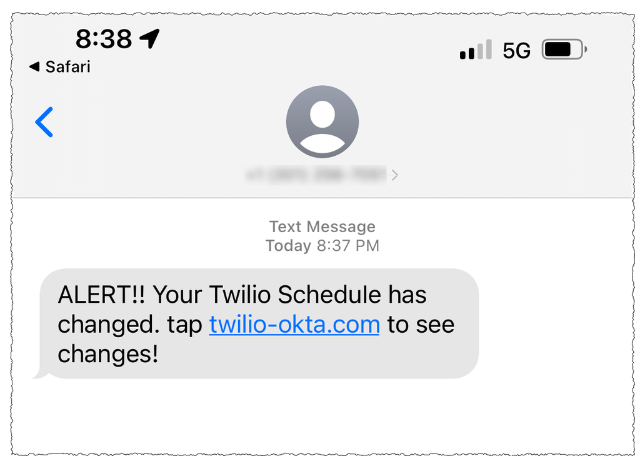
Scattered Spider is a loosely affiliated criminal hacking group whose members have broken into and stolen data from some of the world’s largest technology companies. Buchanan was arrested in Spain last year on a warrant from the FBI, which wanted him in connection with a series of SMS-based phishing attacks in the summer of 2022 that led to intrusions at Twilio, LastPass, DoorDash, Mailchimp, and many other tech firms.

Tyler Buchanan, being escorted by Spanish police at the airport in Palma de Mallorca in June 2024.

As first reported by KrebsOnSecurity, Buchanan (a.k.a. “tylerb”) fled the United Kingdom in February 2023, after a rival cybercrime gang hired thugs to invade his home, assault his mother, and threaten to burn him with a blowtorch unless he gave up the keys to his cryptocurrency wallet. Buchanan was arrested in June 2024 at the airport in Palma de Mallorca while trying to board a flight to Italy. His extradition to the United States was first reported last week by Bloomberg.

Members of Scattered Spider have been tied to the 2023 ransomware attacks against MGM and Caesars casinos in Las Vegas, but it remains unclear whether Buchanan was implicated in that incident. The Justice Department’s complaint against Buchanan makes no mention of the 2023 ransomware attack.

Rather, the investigation into Buchanan appears to center on the SMS phishing campaigns from 2022, and on SIM-swapping attacks that siphoned funds from individual cryptocurrency investors. In a SIM-swapping attack, crooks transfer the target’s phone number to a device they control and intercept any text messages or phone calls to the victim’s device — including one-time passcodes for authentication and password reset links sent via SMS.

In August 2022, KrebsOnSecurity reviewed data harvested in a months-long cybercrime campaign by Scattered Spider involving countless SMS-based phishing attacks against employees at major corporations. The security firm Group-IB called them by a different name — 0ktapus, because the group typically spoofed the identity provider Okta in their phishing messages to employees at targeted firms.

A Scattered Spider/0Ktapus SMS phishing lure sent to Twilio employees in 2022.

The complaint against Buchanan (PDF) says the FBI tied him to the 2022 SMS phishing attacks after discovering the same username and email address was used to register numerous Okta-themed phishing domains seen in the campaign. The domain registrar NameCheap found that less than a month before the phishing spree, the account that registered those domains logged in from an Internet address in the U.K. FBI investigators said the Scottish police told them the address was leased to Buchanan from January 26, 2022 to November 7, 2022.

Authorities seized at least 20 digital devices when they raided Buchanan’s residence, and on one of those devices they found usernames and passwords for employees of three different companies targeted in the phishing campaign.

“The FBI’s investigation to date has gathered evidence showing that Buchanan and his co-conspirators targeted at least 45 companies in the United States and abroad, including Canada, India, and the United Kingdom,” the FBI complaint reads. “One of Buchanan’s devices contained a screenshot of Telegram messages between an account known to be used by Buchanan and other unidentified co-conspirators discussing dividing up the proceeds of SIM swapping.”

U.S. prosecutors allege that records obtained from Discord showed the same U.K. Internet address was used to operate a Discord account that specified a cryptocurrency wallet when asking another user to send funds. The complaint says the publicly available transaction history for that payment address shows approximately 391 bitcoin was transferred in and out of this address between October 2022 and
February 2023; 391 bitcoin is presently worth more than $26 million.

In November 2024, federal prosecutors in Los Angeles unsealed criminal charges against Buchanan and four other alleged Scattered Spider members, including Ahmed Elbadawy, 23, of College Station, Texas; Joel Evans, 25, of Jacksonville, North Carolina; Evans Osiebo, 20, of Dallas; and Noah Urban, 20, of Palm Coast, Florida. KrebsOnSecurity reported last year that another suspected Scattered Spider member — a 17-year-old from the United Kingdom — was arrested as part of a joint investigation with the FBI into the MGM hack.

Mr. Buchanan’s court-appointed attorney did not respond to a request for comment. The accused faces charges of wire fraud conspiracy, conspiracy to obtain information by computer for private financial gain, and aggravated identity theft. Convictions on the latter charge carry a minimum sentence of two years in prison.

Documents from the U.S. District Court for the Central District of California indicate Buchanan is being held without bail pending trial. A preliminary hearing in the case is slated for May 6.


Read More

Scroll to Top