CISA Adds Five Known Exploited Vulnerabilities to Catalog

 ​CISA has added five new vulnerabilities to its Known Exploited Vulnerabilities Catalog, based on evidence of active exploitation.

CVE-2023-20118 Cisco Small Business RV Series Routers Command Injection Vulnerability
CVE-2022-43939 Hitachi Vantara Pentaho BA Server Authorization Bypass Vulnerability
CVE-2022-43769 Hitachi Vantara Pentaho BA Server Special Element Injection Vulnerability
CVE-2018-8639 Microsoft Windows Win32k Improper Resource Shutdown or Release Vulnerability
CVE-2024-4885 Progress WhatsUp Gold Path Traversal Vulnerability

These types of vulnerabilities are frequent attack vectors for malicious cyber actors and pose significant risks to the federal enterprise.
Binding Operational Directive (BOD) 22-01: Reducing the Significant Risk of Known Exploited Vulnerabilities established the Known Exploited Vulnerabilities Catalog as a living list of known Common Vulnerabilities and Exposures (CVEs) that carry significant risk to the federal enterprise. BOD 22-01 requires Federal Civilian Executive Branch (FCEB) agencies to remediate identified vulnerabilities by the due date to protect FCEB networks against active threats. See the BOD 22-01 Fact Sheet for more information.
Although BOD 22-01 only applies to FCEB agencies, CISA strongly urges all organizations to reduce their exposure to cyberattacks by prioritizing timely remediation of Catalog vulnerabilities as part of their vulnerability management practice. CISA will continue to add vulnerabilities to the catalog that meet the specified criteria. 

CISA has added five new vulnerabilities to its Known Exploited Vulnerabilities Catalog, based on evidence of active exploitation.

  • CVE-2023-20118 Cisco Small Business RV Series Routers Command Injection Vulnerability
  • CVE-2022-43939 Hitachi Vantara Pentaho BA Server Authorization Bypass Vulnerability
  • CVE-2022-43769 Hitachi Vantara Pentaho BA Server Special Element Injection Vulnerability
  • CVE-2018-8639 Microsoft Windows Win32k Improper Resource Shutdown or Release Vulnerability
  • CVE-2024-4885 Progress WhatsUp Gold Path Traversal Vulnerability

These types of vulnerabilities are frequent attack vectors for malicious cyber actors and pose significant risks to the federal enterprise.

Binding Operational Directive (BOD) 22-01: Reducing the Significant Risk of Known Exploited Vulnerabilities established the Known Exploited Vulnerabilities Catalog as a living list of known Common Vulnerabilities and Exposures (CVEs) that carry significant risk to the federal enterprise. BOD 22-01 requires Federal Civilian Executive Branch (FCEB) agencies to remediate identified vulnerabilities by the due date to protect FCEB networks against active threats. See the BOD 22-01 Fact Sheet for more information.

Although BOD 22-01 only applies to FCEB agencies, CISA strongly urges all organizations to reduce their exposure to cyberattacks by prioritizing timely remediation of Catalog vulnerabilities as part of their vulnerability management practice. CISA will continue to add vulnerabilities to the catalog that meet the specified criteria.

 Read More

Notorious Malware, Spam Host “Prospero” Moves to Kaspersky Lab

​One of the most notorious providers of abuse-friendly “bulletproof” web hosting for cybercriminals has started routing its operations through networks run by the Russian antivirus and security firm Kaspersky Lab, KrebsOnSecurity has learned. 

One of the most notorious providers of abuse-friendly “bulletproof” web hosting for cybercriminals has started routing its operations through networks run by the Russian antivirus and security firm Kaspersky Lab, KrebsOnSecurity has learned.

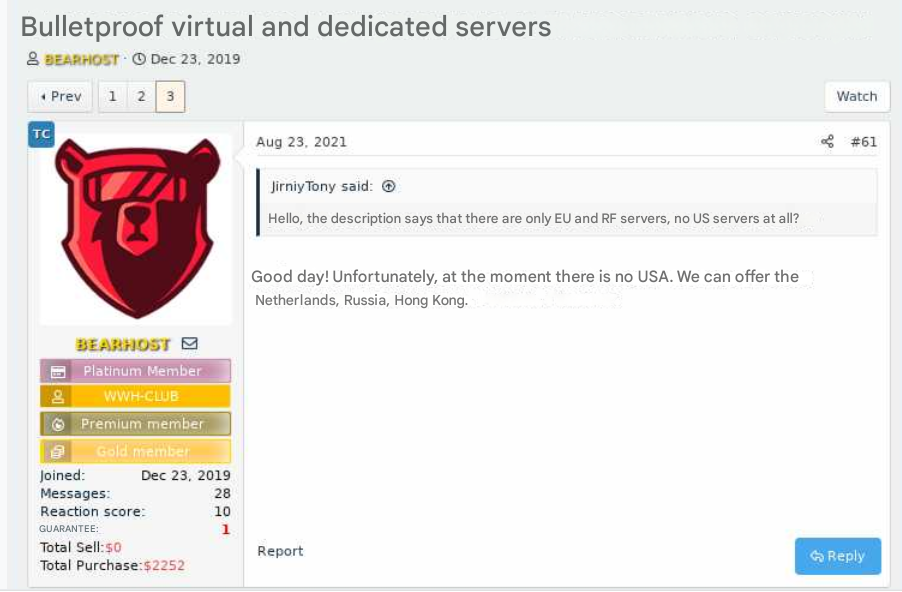
Security experts say the Russia-based service provider Prospero OOO (the triple O is the Russian version of “LLC”) has long been a persistent source of malicious software, botnet controllers, and a torrent of phishing websites. Last year, the French security firm Intrinsec detailed Prospero’s connections to bulletproof services advertised on Russian cybercrime forums under the names Securehost and BEARHOST.

The bulletproof hosting provider BEARHOST. This screenshot has been machine-translated from Russian. Image: Ke-la.com.

Bulletproof hosts are so named when they earn or cultivate a reputation for ignoring legal demands and abuse complaints. And BEARHOST has been cultivating its reputation since at least 2019.

“If you need a server for a botnet, for malware, brute, scan, phishing, fakes and any other tasks, please contact us,” BEARHOST’s ad on one forum advises. “We completely ignore all abuses without exception, including SPAMHAUS and other organizations.”

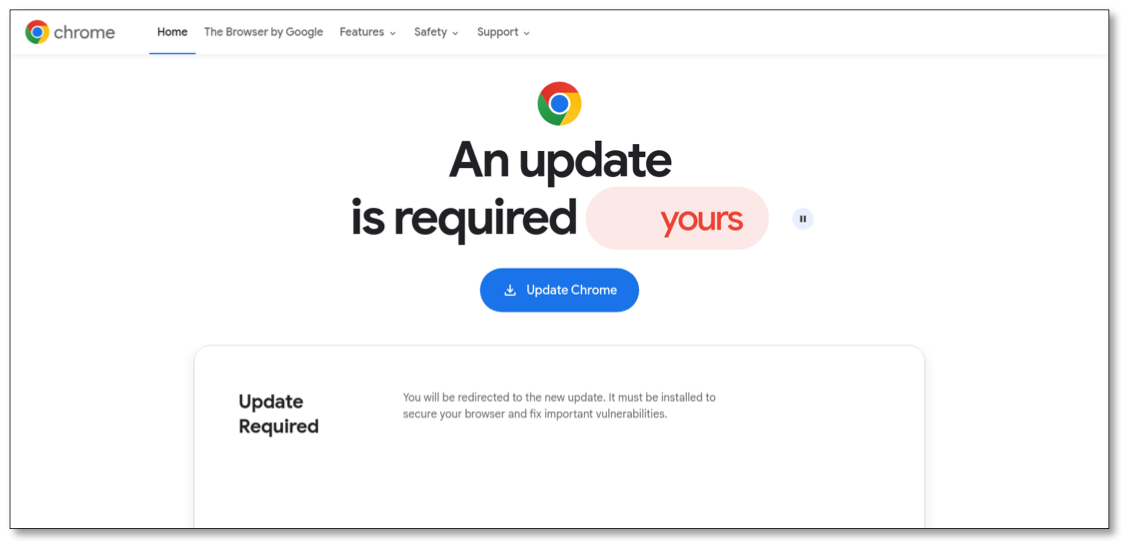
Intrinsec found Prospero has courted some of Russia’s nastiest cybercrime groups, hosting control servers for multiple ransomware gangs over the past two years. Intrinsec said its analysis showed Prospero frequently hosts malware operations such as SocGholish and GootLoader, which are spread primarily via fake browser updates on hacked websites and often lay the groundwork for more serious cyber intrusions — including ransomware.

A fake browser update page pushing mobile malware. Image: Intrinsec.

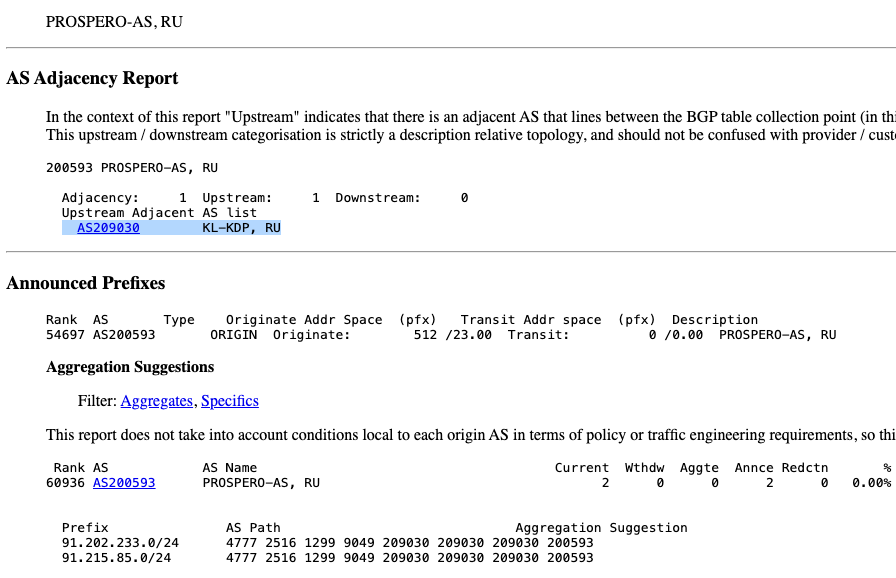
BEARHOST prides itself on the ability to evade blocking by Spamhaus, an organization that many Internet service providers around the world rely on to help identify and block sources of malware and spam. Earlier this week, Spamhaus said it noticed that Prospero was suddenly connecting to the Internet by routing through networks operated by Kaspersky Lab in Moscow.

Kaspersky did not respond to repeated requests for comment.

Kaspersky began selling antivirus and security software in the United States in 2005, and the company’s malware researchers have earned accolades from the security community for many important discoveries over the years. But in September 2017, the Department of Homeland Security (DHS) barred U.S. federal agencies from using Kaspersky software, mandating its removal within 90 days.

Cybersecurity reporter Kim Zetter notes that DHS didn’t cite any specific justification for its ban in 2017, but media reports quoting anonymous government officials referenced two incidents. Zetter wrote:

According to one story, an NSA contractor developing offensive hacking tools for the spy agency had Kaspersky software installed on his home computer where he was developing the tools, and the software detected the source code as malicious code and extracted it from his computer, as antivirus software is designed to do. A second story claimed that Israeli spies caught Russian government hackers using Kaspersky software to search customer systems for files containing U.S. secrets.

Kaspersky denied that anyone used its software to search for secret information on customer machines and said that the tools on the NSA worker’s machine were detected in the same way that all antivirus software detects files it deems suspicious and then quarantines or extracts them for analysis. Once Kaspersky discovered that the code its antivirus software detected on the NSA worker’s machine were not malicious programs but source code in development by the U.S. government for its hacking operations, CEO Eugene Kaspersky says he ordered workers to delete the code.

Last year, the U.S. Commerce Department banned the sale of Kaspersky software in the U.S. effective July 20, 2024. U.S. officials argued the ban was needed because Russian law requires domestic companies to cooperate in all official investigations, and thus the Russian government could force Kaspersky to secretly gather intelligence on its behalf.

Phishing data gathered last year by the Interisle Consulting Group ranked hosting networks by their size and concentration of spambot hosts, and found Prospero had a higher spam score than any other provider by far.

AS209030, owned by Kaspersky Lab, is providing connectivity to the bulletproof host Prospero (AS200593). Image: cidr-report.org.

It remains unclear why Kaspersky is providing transit to Prospero. Doug Madory, director of Internet analysis at Kentik, said routing records show the relationship between Prospero and Kaspersky started at the beginning of December 2024.

Madory said Kaspersky’s network appears to be hosting several financial institutions, including Russia’s largest — Alfa-Bank. Kaspersky sells services to help protect customers from distributed denial-of-service (DDoS) attacks, and Madory said it could be that Prospero is simply purchasing that protection from Kaspersky.

But if that is the case, it doesn’t make the situation any better, said Zach Edwards, a senior threat researcher at the security firm Silent Push.

“In some ways, providing DDoS protection to a well-known bulletproof hosting provider may be even worse than just allowing them to connect to the rest of the Internet over your infrastructure,” Edwards said.


Read More

Dario Health USB-C Blood Glucose Monitoring System Starter Kit Android Application

 ​View CSAF
1. EXECUTIVE SUMMARY

CVSS v4 8.7
ATTENTION: Exploitable remotely/low attack complexity
Vendor: Dario Health
Equipment: USB-C Blood Glucose Monitoring System Starter Kit Android Application, Application Database and Internet-based Server Infrastructure
Vulnerabilities: Exposure of Private Personal Information to an Unauthorized Actor, Improper Output Neutralization For Logs, Storage of Sensitive Data In a Mechanism Without Access Control, Cleartext Transmission of Sensitive Information, Cross-site Scripting (XSS), Sensitive Cookie Without ‘HttpOnly’ Flag, Exposure of Sensitive Information Due To Incompatible Policies

2. RISK EVALUATION
Successful exploitation of these vulnerabilities could allow an attacker to expose information, inject code, manipulate data, or achieve cross-site scripting (XSS), resulting in full session compromise.
3. TECHNICAL DETAILS
3.1 AFFECTED PRODUCTS
The following Dario Health products are affected:

USB-C Blood Glucose Monitoring System Starter Kit Android Applications: Versions 5.8.7.0.36 and prior
Dario Application Database and Internet-based Server Infrastructure: All versions

3.2 VULNERABILITY OVERVIEW
3.2.1 EXPOSURE OF PRIVATE PERSONAL INFORMATION TO AN UNAUTHORIZED ACTOR CWE-359
An attacker could expose cross-user Personal Identifiable Information (PII) and personal health information transmitted to the Android device via the Dario Health application database.
CVE-2025-20060 has been assigned to this vulnerability. A CVSS v3.1 base score of 7.5 has been calculated; the CVSS vector string is (AV:N/AC:L/PR:N/UI:N/S:U/C:H/I:N/A:N).
A CVSS v4 score has also been calculated for CVE-2025-20060. A base score of 8.7 has been calculated; the CVSS vector string is (CVSS4.0/AV:N/AC:L/AT:N/PR:N/UI:N/VC:H/VI:N/VA:N/SC:N/SI:N/SA:N).
3.2.2 IMPROPER OUTPUT NEUTRALIZATION FOR LOGS CWE-117
Unauthenticated log effects metrics gathering incident response efforts and potentially exposes risk of injection attacks (ex log injection).
CVE-2025-23405 has been assigned to this vulnerability. A CVSS v3.1 base score of 5.3 has been calculated; the CVSS vector string is (AV:N/AC:L/PR:N/UI:N/S:U/C:N/I:L/A:N).
A CVSS v4 score has also been calculated for CVE-2025-23405. A base score of 6.9 has been calculated; the CVSS vector string is (CVSS4.0/AV:N/AC:L/AT:N/PR:N/UI:N/VC:N/VI:L/VA:N/SC:N/SI:L/SA:N).
3.2.3 STORAGE OF SENSITIVE DATA IN A MECHANISM WITHOUT ACCESS CONTROL CWE-921
Insecure file retrieval process that facilitates potential for file manipulation to affect product stability and confidentiality, integrity, authenticity, and attestation of stored data.
CVE-2025-24843 has been assigned to this vulnerability. A CVSS v3.1 base score of 5.1 has been calculated; the CVSS vector string is (AV:L/AC:L/PR:N/UI:N/S:U/C:N/I:L/A:L).
A CVSS v4 score has also been calculated for CVE-2025-24843. A base score of 5.1 has been calculated; the CVSS vector string is (CVSS4.0/AV:L/AC:L/AT:N/PR:N/UI:N/VC:N/VI:L/VA:L/SC:N/SI:N/SA:N).
3.2.4 CLEARTEXT TRANSMISSION OF SENSITIVE INFORMATION CWE-319
Lack of encryption in transit for cloud infrastructure facilitating potential for sensitive data manipulation or exposure.
CVE-2025-24849 has been assigned to this vulnerability. A CVSS v3.1 base score of 7.1 has been calculated; the CVSS vector string is (AV:A/AC:H/PR:N/UI:R/S:U/C:H/I:H/A:H).
A CVSS v4 score has also been calculated for CVE-2025-24849. A base score of 7.5 has been calculated; the CVSS vector string is (CVSS4.0/AV:A/AC:H/AT:P/PR:N/UI:P/VC:H/VI:H/VA:H/SC:N/SI:N/SA:N).
3.2.5 IMPROPER NEUTRALIZATION OF INPUT DURING WEB PAGE GENERATION (‘CROSS-SITE SCRIPTING’) CWE-79
The Dario Health portal service application is vulnerable to XSS, which could allow an attacker to obtain sensitive information.
CVE-2025-20049 has been assigned to this vulnerability. A CVSS v3.1 base score of 5.8 has been calculated; the CVSS vector string is (AV:N/AC:H/PR:L/UI:R/S:C/C:H/I:N/A:N).
A CVSS v4 score has also been calculated for CVE-2025-20049. A base score of 7.1 has been calculated; the CVSS vector string is (CVSS4.0/AV:N/AC:H/AT:P/PR:L/UI:A/VC:H/VI:N/VA:N/SC:H/SI:H/SA:H).
3.2.6 SENSITIVE COOKIE WITHOUT ‘HTTPONLY’ FLAG CWE-1004
Cookie policy is observable via built-in browser tools. In the presence of XSS, this could lead to full session compromise.
CVE-2025-24318 has been assigned to this vulnerability. A CVSS v3.1 base score of 6.8 has been calculated; the CVSS vector string is (AV:N/AC:H/PR:N/UI:N/S:C/C:H/I:N/A:N).
A CVSS v4 score has also been calculated for CVE-2025-24318. A base score of 5.9 has been calculated; the CVSS vector string is (CVSS4.0/AV:N/AC:H/AT:P/PR:N/UI:A/VC:H/VI:N/VA:N/SC:N/SI:N/SA:N).
3.2.7 EXPOSURE OF SENSITIVE INFORMATION DUE TO INCOMPATIBLE POLICIES CWE-213
The Dario Health Internet-based server infrastructure is vulnerable due to exposure of development environment details, which could lead to unsafe functionality.
CVE-2025-24316 has been assigned to this vulnerability. A CVSS v3.1 base score of 5.3 has been calculated; the CVSS vector string is (AV:N/AC:L/PR:N/UI:N/S:U/C:L/I:N/A:N).
A CVSS v4 score has also been calculated for CVE-2025-24316. A base score of 6.9 has been calculated; the CVSS vector string is (CVSS4.0/AV:N/AC:L/AT:N/PR:N/UI:N/VC:L/VI:N/VA:N/SC:N/SI:N/SA:N).
3.3 BACKGROUND

CRITICAL INFRASTRUCTURE SECTORS: Healthcare and Public Health
COUNTRIES/AREAS DEPLOYED: Worldwide
COMPANY HEADQUARTERS LOCATION: United States

3.4 RESEARCHER
Noah Cutler and Manuel Del Rio of Accenture reported these vulnerabilities to CISA.
4. MITIGATIONS
Dario Health recommends users update their Dario Health Android mobile application to the latest version. No other actions are required by users.
Dario Health recommends users perform the following mitigations:

Update the application from trusted sources.
Don’t use rooted/jailbroken devices.

Avoid public untrusted networks
For more information contact Dario Health directly.

CISA recommends users take defensive measures to minimize the risk of exploitation of these vulnerabilities, such as:

Minimize network exposure for all control system devices and/or systems, ensuring they are not accessible from the Internet.
Locate control system networks and remote devices behind firewalls and isolating them from business networks.
When remote access is required, use more secure methods, such as Virtual Private Networks (VPNs), recognizing VPNs may have vulnerabilities and should be updated to the most current version available. Also recognize VPN is only as secure as the connected devices.

CISA reminds organizations to perform proper impact analysis and risk assessment prior to deploying defensive measures.
CISA also provides a section for control systems security recommended practices on the ICS webpage on cisa.gov/ics. Several CISA products detailing cyber defense best practices are available for reading and download, including Improving Industrial Control Systems Cybersecurity with Defense-in-Depth Strategies.
CISA encourages organizations to implement recommended cybersecurity strategies for proactive defense of ICS assets.
Additional mitigation guidance and recommended practices are publicly available on the ICS webpage at cisa.gov/ics in the technical information paper, ICS-TIP-12-146-01B–Targeted Cyber Intrusion Detection and Mitigation Strategies.
Organizations observing suspected malicious activity should follow established internal procedures and report findings to CISA for tracking and correlation against other incidents.
CISA also recommends users take the following measures to protect themselves from social engineering attacks:

Do not click web links or open attachments in unsolicited email messages.
Refer to Recognizing and Avoiding Email Scams for more information on avoiding email scams.
Refer to Avoiding Social Engineering and Phishing Attacks for more information on social engineering attacks.

No known public exploitation specifically targeting these vulnerabilities has been reported to CISA at this time.
5. UPDATE HISTORY

February 27, 2025: Initial Publication 

View CSAF

1. EXECUTIVE SUMMARY

  • CVSS v4 8.7
  • ATTENTION: Exploitable remotely/low attack complexity
  • Vendor: Dario Health
  • Equipment: USB-C Blood Glucose Monitoring System Starter Kit Android Application, Application Database and Internet-based Server Infrastructure
  • Vulnerabilities: Exposure of Private Personal Information to an Unauthorized Actor, Improper Output Neutralization For Logs, Storage of Sensitive Data In a Mechanism Without Access Control, Cleartext Transmission of Sensitive Information, Cross-site Scripting (XSS), Sensitive Cookie Without ‘HttpOnly’ Flag, Exposure of Sensitive Information Due To Incompatible Policies

2. RISK EVALUATION

Successful exploitation of these vulnerabilities could allow an attacker to expose information, inject code, manipulate data, or achieve cross-site scripting (XSS), resulting in full session compromise.

3. TECHNICAL DETAILS

3.1 AFFECTED PRODUCTS

The following Dario Health products are affected:

  • USB-C Blood Glucose Monitoring System Starter Kit Android Applications: Versions 5.8.7.0.36 and prior
  • Dario Application Database and Internet-based Server Infrastructure: All versions

3.2 VULNERABILITY OVERVIEW

3.2.1 EXPOSURE OF PRIVATE PERSONAL INFORMATION TO AN UNAUTHORIZED ACTOR CWE-359

An attacker could expose cross-user Personal Identifiable Information (PII) and personal health information transmitted to the Android device via the Dario Health application database.

CVE-2025-20060 has been assigned to this vulnerability. A CVSS v3.1 base score of 7.5 has been calculated; the CVSS vector string is (AV:N/AC:L/PR:N/UI:N/S:U/C:H/I:N/A:N).

A CVSS v4 score has also been calculated for CVE-2025-20060. A base score of 8.7 has been calculated; the CVSS vector string is (CVSS4.0/AV:N/AC:L/AT:N/PR:N/UI:N/VC:H/VI:N/VA:N/SC:N/SI:N/SA:N).

3.2.2 IMPROPER OUTPUT NEUTRALIZATION FOR LOGS CWE-117

Unauthenticated log effects metrics gathering incident response efforts and potentially exposes risk of injection attacks (ex log injection).

CVE-2025-23405 has been assigned to this vulnerability. A CVSS v3.1 base score of 5.3 has been calculated; the CVSS vector string is (AV:N/AC:L/PR:N/UI:N/S:U/C:N/I:L/A:N).

A CVSS v4 score has also been calculated for CVE-2025-23405. A base score of 6.9 has been calculated; the CVSS vector string is (CVSS4.0/AV:N/AC:L/AT:N/PR:N/UI:N/VC:N/VI:L/VA:N/SC:N/SI:L/SA:N).

3.2.3 STORAGE OF SENSITIVE DATA IN A MECHANISM WITHOUT ACCESS CONTROL CWE-921

Insecure file retrieval process that facilitates potential for file manipulation to affect product stability and confidentiality, integrity, authenticity, and attestation of stored data.

CVE-2025-24843 has been assigned to this vulnerability. A CVSS v3.1 base score of 5.1 has been calculated; the CVSS vector string is (AV:L/AC:L/PR:N/UI:N/S:U/C:N/I:L/A:L).

A CVSS v4 score has also been calculated for CVE-2025-24843. A base score of 5.1 has been calculated; the CVSS vector string is (CVSS4.0/AV:L/AC:L/AT:N/PR:N/UI:N/VC:N/VI:L/VA:L/SC:N/SI:N/SA:N).

3.2.4 CLEARTEXT TRANSMISSION OF SENSITIVE INFORMATION CWE-319

Lack of encryption in transit for cloud infrastructure facilitating potential for sensitive data manipulation or exposure.

CVE-2025-24849 has been assigned to this vulnerability. A CVSS v3.1 base score of 7.1 has been calculated; the CVSS vector string is (AV:A/AC:H/PR:N/UI:R/S:U/C:H/I:H/A:H).

A CVSS v4 score has also been calculated for CVE-2025-24849. A base score of 7.5 has been calculated; the CVSS vector string is (CVSS4.0/AV:A/AC:H/AT:P/PR:N/UI:P/VC:H/VI:H/VA:H/SC:N/SI:N/SA:N).

3.2.5 IMPROPER NEUTRALIZATION OF INPUT DURING WEB PAGE GENERATION (‘CROSS-SITE SCRIPTING’) CWE-79

The Dario Health portal service application is vulnerable to XSS, which could allow an attacker to obtain sensitive information.

CVE-2025-20049 has been assigned to this vulnerability. A CVSS v3.1 base score of 5.8 has been calculated; the CVSS vector string is (AV:N/AC:H/PR:L/UI:R/S:C/C:H/I:N/A:N).

A CVSS v4 score has also been calculated for CVE-2025-20049. A base score of 7.1 has been calculated; the CVSS vector string is (CVSS4.0/AV:N/AC:H/AT:P/PR:L/UI:A/VC:H/VI:N/VA:N/SC:H/SI:H/SA:H).

3.2.6 SENSITIVE COOKIE WITHOUT ‘HTTPONLY’ FLAG CWE-1004

Cookie policy is observable via built-in browser tools. In the presence of XSS, this could lead to full session compromise.

CVE-2025-24318 has been assigned to this vulnerability. A CVSS v3.1 base score of 6.8 has been calculated; the CVSS vector string is (AV:N/AC:H/PR:N/UI:N/S:C/C:H/I:N/A:N).

A CVSS v4 score has also been calculated for CVE-2025-24318. A base score of 5.9 has been calculated; the CVSS vector string is (CVSS4.0/AV:N/AC:H/AT:P/PR:N/UI:A/VC:H/VI:N/VA:N/SC:N/SI:N/SA:N).

3.2.7 EXPOSURE OF SENSITIVE INFORMATION DUE TO INCOMPATIBLE POLICIES CWE-213

The Dario Health Internet-based server infrastructure is vulnerable due to exposure of development environment details, which could lead to unsafe functionality.

CVE-2025-24316 has been assigned to this vulnerability. A CVSS v3.1 base score of 5.3 has been calculated; the CVSS vector string is (AV:N/AC:L/PR:N/UI:N/S:U/C:L/I:N/A:N).

A CVSS v4 score has also been calculated for CVE-2025-24316. A base score of 6.9 has been calculated; the CVSS vector string is (CVSS4.0/AV:N/AC:L/AT:N/PR:N/UI:N/VC:L/VI:N/VA:N/SC:N/SI:N/SA:N).

3.3 BACKGROUND

  • CRITICAL INFRASTRUCTURE SECTORS: Healthcare and Public Health
  • COUNTRIES/AREAS DEPLOYED: Worldwide
  • COMPANY HEADQUARTERS LOCATION: United States

3.4 RESEARCHER

Noah Cutler and Manuel Del Rio of Accenture reported these vulnerabilities to CISA.

4. MITIGATIONS

Dario Health recommends users update their Dario Health Android mobile application to the latest version. No other actions are required by users.

Dario Health recommends users perform the following mitigations:

  • Update the application from trusted sources.
  • Don’t use rooted/jailbroken devices.
  • Avoid public untrusted networks

    For more information contact Dario Health directly.

CISA recommends users take defensive measures to minimize the risk of exploitation of these vulnerabilities, such as:

  • Minimize network exposure for all control system devices and/or systems, ensuring they are not accessible from the Internet.
  • Locate control system networks and remote devices behind firewalls and isolating them from business networks.
  • When remote access is required, use more secure methods, such as Virtual Private Networks (VPNs), recognizing VPNs may have vulnerabilities and should be updated to the most current version available. Also recognize VPN is only as secure as the connected devices.

CISA reminds organizations to perform proper impact analysis and risk assessment prior to deploying defensive measures.

CISA also provides a section for control systems security recommended practices on the ICS webpage on cisa.gov/ics. Several CISA products detailing cyber defense best practices are available for reading and download, including Improving Industrial Control Systems Cybersecurity with Defense-in-Depth Strategies.

CISA encourages organizations to implement recommended cybersecurity strategies for proactive defense of ICS assets.

Additional mitigation guidance and recommended practices are publicly available on the ICS webpage at cisa.gov/ics in the technical information paper, ICS-TIP-12-146-01B–Targeted Cyber Intrusion Detection and Mitigation Strategies.

Organizations observing suspected malicious activity should follow established internal procedures and report findings to CISA for tracking and correlation against other incidents.

CISA also recommends users take the following measures to protect themselves from social engineering attacks:

No known public exploitation specifically targeting these vulnerabilities has been reported to CISA at this time.

5. UPDATE HISTORY

  • February 27, 2025: Initial Publication
 Read More

Schneider Electric Communication Modules for Modicon M580 and Quantum Controllers

 ​View CSAF
1. EXECUTIVE SUMMARY

CVSS v3 9.8
ATTENTION: Exploitable remotely/low attack complexity
Vendor: Schneider Electric
Equipment: Communication modules for Modicon M580 and Quantum controllers
Vulnerability: Out-of-bounds Write

2. RISK EVALUATION
Successful exploitation of this vulnerability could allow a stack overflow attack, which could result in loss of confidentiality, integrity, and denial of service of the device.
3. TECHNICAL DETAILS
3.1 AFFECTED PRODUCTS
Schneider Electric reports that the following communication modules for Modicon M580 and Quantum controllers are affected by a vulnerability in VxWorks operating system:

Modicon M580 communication modules BMENOC BMENOC0321: Versions prior to SV1.10
Modicon M580 communication modules BMECRA BMECRA31210: All versions
Modicon M580/Quantum communication modules BMXCRA BMXCRA31200: All versions
Modicon M580/Quantum communication modules BMXCRA BMXCRA31210: All versions
Modicon Quantum communication modules 140CRA 140CRA31908: All versions
Modicon Quantum communication modules 140CRA 140CRA31200: All versions

3.2 VULNERABILITY OVERVIEW
3.2.1 OUT-OF-BOUNDS WRITE CWE-787
A possible stack overflow in dhcp server was discovered in Wind River VxWorks through 6.8.
CVE-2021-29999 has been assigned to this vulnerability. A CVSS v3 base score of 9.8 has been calculated; the CVSS vector string is (CVSS:3.1/AV:N/AC:L/PR:N/UI:N/S:U/C:H/I:H/A:H).
3.3 BACKGROUND

CRITICAL INFRASTRUCTURE SECTORS: Commercial Facilities, Critical Manufacturing, Energy
COUNTRIES/AREAS DEPLOYED: Worldwide
COMPANY HEADQUARTERS LOCATION: France

3.4 RESEARCHER
Schneider Electric reported this vulnerability to CISA.
4. MITIGATIONS
Schneider Electric has identified the following specific remediations and mitigations users can apply to reduce risk:

Modicon M580 communication modules BMENOC BMENOC0321: Version SV1.10 of BMENOC0321 includes a fix for this vulnerability and is available for download here: https://www.se.com/ww/en/product/BMENOC0321/m580- noc-control/
Schneider Electric is establishing a remediation plan for all future versions of BMECRA, BMXCRA and 140CRA that will include a fix for this vulnerability. They will update SEVD-2025-014-03 when the remediation is available. Until then, users should immediately implement a firewall to allow only authorized traffic on 67/UDP and 68/UDP ports to reduce the risk of exploit.

Schneider Electric strongly recommends the following industry cybersecurity best practices.

Locate control and safety system networks and remote devices behind firewalls and isolate them from the business network.
Install physical controls so no unauthorized personnel can access your industrial control and safety systems, components, peripheral equipment, and networks.
Place all controllers in locked cabinets and never leave them in the “Program” mode.
Never connect programming software to any network other than the network intended for that device.
Scan all methods of mobile data exchange with the isolated network such as CDs, USB drives, etc. before use in the terminals or any node connected to these networks.
Never allow mobile devices that have connected to any other network besides the intended network to connect to the safety or control networks without proper sanitation.
Minimize network exposure for all control system devices and systems and ensure that they are not accessible from the Internet.
When remote access is required, use secure methods, such as virtual private networks (VPNs). Recognize that VPNs may have vulnerabilities and should be updated to the most current version available. Also, understand that VPNs are only as secure as the connected devices.

For more information refer to the Schneider Electric Recommended Cybersecurity BestPractices document.
For more information, see Schneider Electric security notification “SEVD-2025-014-03 Wind River VxWorks DHCP server vulnerability”
Additional information about the vulnerability can be found on the Wind River site.
CISA recommends users take defensive measures to minimize the risk of exploitation of this vulnerability. CISA reminds organizations to perform proper impact analysis and risk assessment prior to deploying defensive measures.
CISA also provides a section for control systems security recommended practices on the ICS webpage on cisa.gov. Several CISA products detailing cyber defense best practices are available for reading and download, including Improving Industrial Control Systems Cybersecurity with Defense-in-Depth Strategies.
CISA encourages organizations to implement recommended cybersecurity strategies for proactive defense of ICS assets.
Additional mitigation guidance and recommended practices are publicly available on the ICS webpage at cisa.gov in the technical information paper, ICS-TIP-12-146-01B–Targeted Cyber Intrusion Detection and Mitigation Strategies.
Organizations observing suspected malicious activity should follow established internal procedures and report findings to CISA for tracking and correlation against other incidents.
No known public exploitation specifically targeting this vulnerability has been reported to CISA at this time.
5. UPDATE HISTORY

February 27, 2025: Initial Publication 
View CSAF

1. EXECUTIVE SUMMARY

  • CVSS v3 9.8
  • ATTENTION: Exploitable remotely/low attack complexity
  • Vendor: Schneider Electric
  • Equipment: Communication modules for Modicon M580 and Quantum controllers
  • Vulnerability: Out-of-bounds Write

2. RISK EVALUATION

Successful exploitation of this vulnerability could allow a stack overflow attack, which could result in loss of confidentiality, integrity, and denial of service of the device.

3. TECHNICAL DETAILS

3.1 AFFECTED PRODUCTS

Schneider Electric reports that the following communication modules for Modicon M580 and Quantum controllers are affected by a vulnerability in VxWorks operating system:

  • Modicon M580 communication modules BMENOC BMENOC0321: Versions prior to SV1.10
  • Modicon M580 communication modules BMECRA BMECRA31210: All versions
  • Modicon M580/Quantum communication modules BMXCRA BMXCRA31200: All versions
  • Modicon M580/Quantum communication modules BMXCRA BMXCRA31210: All versions
  • Modicon Quantum communication modules 140CRA 140CRA31908: All versions
  • Modicon Quantum communication modules 140CRA 140CRA31200: All versions

3.2 VULNERABILITY OVERVIEW

3.2.1 OUT-OF-BOUNDS WRITE CWE-787

A possible stack overflow in dhcp server was discovered in Wind River VxWorks through 6.8.

CVE-2021-29999 has been assigned to this vulnerability. A CVSS v3 base score of 9.8 has been calculated; the CVSS vector string is (CVSS:3.1/AV:N/AC:L/PR:N/UI:N/S:U/C:H/I:H/A:H).

3.3 BACKGROUND

  • CRITICAL INFRASTRUCTURE SECTORS: Commercial Facilities, Critical Manufacturing, Energy
  • COUNTRIES/AREAS DEPLOYED: Worldwide
  • COMPANY HEADQUARTERS LOCATION: France

3.4 RESEARCHER

Schneider Electric reported this vulnerability to CISA.

4. MITIGATIONS

Schneider Electric has identified the following specific remediations and mitigations users can apply to reduce risk:

  • Modicon M580 communication modules BMENOC BMENOC0321: Version SV1.10 of BMENOC0321 includes a fix for this vulnerability and is available for download here: https://www.se.com/ww/en/product/BMENOC0321/m580- noc-control/
  • Schneider Electric is establishing a remediation plan for all future versions of BMECRA, BMXCRA and 140CRA that will include a fix for this vulnerability. They will update SEVD-2025-014-03 when the remediation is available. Until then, users should immediately implement a firewall to allow only authorized traffic on 67/UDP and 68/UDP ports to reduce the risk of exploit.

Schneider Electric strongly recommends the following industry cybersecurity best practices.

  • Locate control and safety system networks and remote devices behind firewalls and isolate them from the business network.
  • Install physical controls so no unauthorized personnel can access your industrial control and safety systems, components, peripheral equipment, and networks.
  • Place all controllers in locked cabinets and never leave them in the “Program” mode.
  • Never connect programming software to any network other than the network intended for that device.
  • Scan all methods of mobile data exchange with the isolated network such as CDs, USB drives, etc. before use in the terminals or any node connected to these networks.
  • Never allow mobile devices that have connected to any other network besides the intended network to connect to the safety or control networks without proper sanitation.
  • Minimize network exposure for all control system devices and systems and ensure that they are not accessible from the Internet.
  • When remote access is required, use secure methods, such as virtual private networks (VPNs). Recognize that VPNs may have vulnerabilities and should be updated to the most current version available. Also, understand that VPNs are only as secure as the connected devices.

For more information refer to the Schneider Electric Recommended Cybersecurity Best
Practices document.

For more information, see Schneider Electric security notification “SEVD-2025-014-03 Wind River VxWorks DHCP server vulnerability”

Additional information about the vulnerability can be found on the Wind River site.

CISA recommends users take defensive measures to minimize the risk of exploitation of this vulnerability. CISA reminds organizations to perform proper impact analysis and risk assessment prior to deploying defensive measures.

CISA also provides a section for control systems security recommended practices on the ICS webpage on cisa.gov. Several CISA products detailing cyber defense best practices are available for reading and download, including Improving Industrial Control Systems Cybersecurity with Defense-in-Depth Strategies.

CISA encourages organizations to implement recommended cybersecurity strategies for proactive defense of ICS assets.

Additional mitigation guidance and recommended practices are publicly available on the ICS webpage at cisa.gov in the technical information paper, ICS-TIP-12-146-01B–Targeted Cyber Intrusion Detection and Mitigation Strategies.

Organizations observing suspected malicious activity should follow established internal procedures and report findings to CISA for tracking and correlation against other incidents.

No known public exploitation specifically targeting this vulnerability has been reported to CISA at this time.

5. UPDATE HISTORY

  • February 27, 2025: Initial Publication
 Read More

CISA Releases Two Industrial Control Systems Advisories

 ​CISA released two Industrial Control Systems (ICS) advisories on February 27, 2025. These advisories provide timely information about current security issues, vulnerabilities, and exploits surrounding ICS.

ICSA-25-058-01 Schneider Electric Communication Modules for Modicon M580 and Quantum Controllers 
ICSMA-25-058-01 Dario Health USB-C Blood Glucose Monitoring System Starter Kit Android Application 

CISA encourages users and administrators to review newly released ICS advisories for technical details and mitigations. 

CISA released two Industrial Control Systems (ICS) advisories on February 27, 2025. These advisories provide timely information about current security issues, vulnerabilities, and exploits surrounding ICS.

CISA encourages users and administrators to review newly released ICS advisories for technical details and mitigations.

 Read More

U.S. Soldier Charged in AT&T Hack Searched “Can Hacking Be Treason”

​A U.S. Army soldier who pleaded guilty last week to leaking phone records for high-ranking U.S. government officials searched online for non-extradition countries and for an answer to the question “can hacking be treason?” prosecutors in the case said Wednesday. The government disclosed the details in a court motion to keep the defendant in custody until he is discharged from the military. 

A U.S. Army soldier who pleaded guilty last week to leaking phone records for high-ranking U.S. government officials searched online for non-extradition countries and for an answer to the question “can hacking be treason?” prosecutors in the case said Wednesday. The government disclosed the details in a court motion to keep the defendant in custody until he is discharged from the military.

One of several selfies on the Facebook page of Cameron Wagenius.

Cameron John Wagenius, 20, was arrested near the Army base in Fort Cavazos, Texas on Dec. 20, and charged with two criminal counts of unlawful transfer of confidential phone records. Wagenius was a communications specialist at a U.S. Army base in South Korea, who secretly went by the nickname Kiberphant0m and was part of a trio of criminal hackers that extorted dozens of companies last year over stolen data.

At the end of 2023, malicious hackers learned that many companies had uploaded sensitive customer records to accounts at the cloud data storage service Snowflake that were protected with little more than a username and password (no multi-factor authentication needed). After scouring darknet markets for stolen Snowflake account credentials, the hackers began raiding the data storage repositories used by some of the world’s largest corporations.

Among those was AT&T, which disclosed in July that cybercriminals had stolen personal information and phone and text message records for roughly 110 million people — nearly all of its customers. AT&T reportedly paid a hacker $370,000 to delete stolen phone records. More than 160 other Snowflake customers were relieved of data, including TicketMaster, Lending Tree, Advance Auto Parts and Neiman Marcus.

In several posts to an English-language cybercrime forum in November, Kiberphant0m leaked some of the phone records and threatened to leak them all unless paid a ransom. Prosecutors said that in addition to his public posts on the forum, Wagenius had engaged in multiple direct attempts to extort “Victim-1,” which appears to be a reference to AT&T. The government states that Kiberphant0m privately demanded $500,000 from Victim-1, threatening to release all of the stolen phone records unless he was paid.

On Feb. 19, Wagenius pleaded guilty to two counts of unlawfully transferring confidential phone records, but he did so without the benefit of a plea agreement. In entering the plea, Wagenius’s attorneys had asked the court to allow him to stay with his father pending his sentencing.

But in a response filed today (PDF), prosecutors in Seattle said Wagenius was a flight risk, partly because prior to his arrest he was searching online for how to defect to countries that do not extradite to the United States. According to the government, while Kiberphant0m was extorting AT&T, Wagenius’s searches included:

-“where can i defect the u.s government military which country will not hand me over”
-“U.S. military personnel defecting to Russia”
-“Embassy of Russia – Washington, D.C.”

“As discussed in the government’s sealed filing, the government has uncovered evidence suggesting that the charged conduct was only a small part of Wagenius’ malicious activity,” the government memo states. “On top of this, for more than two weeks in November 2024, Wagenius communicated with an email address he believed belonged to Country-1’s military intelligence service in an attempt to sell stolen information. Days after he apparently finished communicating with Country-1’s military intelligence service, Wagenius Googled, ‘can hacking be treason.’”

Prosecutors told the court investigators also found a screenshot on Wagenius’ laptop that suggested he had over 17,000 files that included passports, driver’s licenses, and other identity cards belonging to victims of a breach, and that in one of his online accounts, the government also found a fake identification document that contained his picture.

“Wagenius should also be detained because he presents a serious risk of flight, has the means and intent to flee, and is aware that he will likely face additional charges,” the Seattle prosecutors asserted.

The court filing says Wagenius is presently in the process of being separated from the Army, but the government has not received confirmation that his discharge has been finalized.

“The government’s understanding is that, until his discharge from the Army is finalized (which is expected to happen in early March), he may only be released directly to the Army,” reads a footnote in the memo. “Until that process is completed, Wagenius’ proposed release to his father should be rejected for this additional reason.”

Wagenius’s interest in defecting to another country in order to escape prosecution mirrors that of his alleged co-conspirator, John Erin Binns, an 25-year-old elusive American man indicted by the Justice Department for a 2021 breach at T-Mobile that exposed the personal information of at least 76.6 million customers.

Binns has since been charged with the Snowflake hack and subsequent extortion activity. He is currently in custody in a Turkish prison. Sources close to the investigation told KrebsOnSecurity that prior to his arrest by Turkish police, Binns visited the Russian embassy in Turkey to inquire about Russian citizenship.

In late November 2024, Canadian authorities arrested a third alleged member of the extortion conspiracy, 25-year-old Connor Riley Moucka of Kitchener, Ontario. The U.S. government has indicted Moucka and Binns, charging them with one count of conspiracy; 10 counts of wire fraud; four counts of computer fraud and abuse; two counts of extortion in relation to computer fraud; and two counts aggravated identity theft.

Less than a month before Wagenius’s arrest, KrebsOnSecurity published a deep dive into Kiberphant0m’s various Telegram and Discord identities over the years, revealing how the owner of the accounts told others they were in the Army and stationed in South Korea.

The maximum penalty Wagenius could face at sentencing includes up to ten years in prison for each count, and fines not to exceed $250,000.


Read More

Rockwell Automation PowerFlex 755

 ​View CSAF
1. EXECUTIVE SUMMARY

CVSS v4 8.7
ATTENTION: Exploitable remotely/Low attack complexity
Vendor: Rockwell Automation
Equipment: PowerFlex 755
Vulnerability: Cleartext Transmission of Sensitive Information

2. RISK EVALUATION
Successful exploitation of this vulnerability could result in exposure of sensitive data.
3. TECHNICAL DETAILS
3.1 AFFECTED PRODUCTS
The following version of PowerFlex 755, a motor application control drive software, is affected:

PowerFlex 755: Versions 16.002.279 and prior

3.2 VULNERABILITY OVERVIEW
3.2.1 CLEARTEXT TRANSMISSION OF SENSITIVE INFORMATION CWE-319
The affected version of the product is vulnerable to credential exposure due to using HTTP, resulting in credentials being sent in clear text. This can allow sensitive data to be sniffed and captured by an attacker.
CVE-2025-0631 has been assigned to this vulnerability. A CVSS v3.1 base score of 7.5 has been calculated; the CVSS vector string is (CVSS:3.1/AV:N/AC:L/PR:N/UI:N/S:U/C:H/I:N/A:N).
A CVSS v4 score has also been calculated for CVE-2025-0631. A base score of 8.7 has been calculated; the CVSS vector string is (CVSS:4.0/AV:N/AC:L/AT:N/PR:N/UI:N/VC:H/VI:N/VA:N/SC:N/SI:N/SA:N).
3.3 BACKGROUND

CRITICAL INFRASTRUCTURE SECTORS: Critical Manufacturing
COUNTRIES/AREAS DEPLOYED: Worldwide
COMPANY HEADQUARTERS LOCATION: United States

3.4 RESEARCHER
Rockwell Automation reported this vulnerability to CISA.
4. MITIGATIONS
Rockwell Automation has provided an updated version of PowerFlex 755 software, v20.3.407, which users are encouraged to apply. For information on how to mitigate security risks on industrial automation control systems, Rockwell Automation also encourages users to implement suggested security best practices to minimize the risk of the vulnerability.
For more information refer to Rockwell Automation’s security advisory.
CISA recommends users take defensive measures to minimize the risk of exploitation of this vulnerability, such as:

Minimize network exposure for all control system devices and/or systems, ensuring they are not accessible from the internet.
Locate control system networks and remote devices behind firewalls and isolating them from business networks.
When remote access is required, use more secure methods, such as Virtual Private Networks (VPNs), recognizing VPNs may have vulnerabilities and should be updated to the most current version available. Also recognize VPN is only as secure as the connected devices.

CISA reminds organizations to perform proper impact analysis and risk assessment prior to deploying defensive measures.
CISA also provides a section for control systems security recommended practices on the ICS webpage on cisa.gov/ics. Several CISA products detailing cyber defense best practices are available for reading and download, including Improving Industrial Control Systems Cybersecurity with Defense-in-Depth Strategies.
CISA encourages organizations to implement recommended cybersecurity strategies for proactive defense of ICS assets.
Additional mitigation guidance and recommended practices are publicly available on the ICS webpage at cisa.gov/ics in the technical information paper, ICS-TIP-12-146-01B–Targeted Cyber Intrusion Detection and Mitigation Strategies.
Organizations observing suspected malicious activity should follow established internal procedures and report findings to CISA for tracking and correlation against other incidents.
CISA also recommends users take the following measures to protect themselves from social engineering attacks:

Do not click web links or open attachments in unsolicited email messages.
Refer to Recognizing and Avoiding Email Scams for more information on avoiding email scams.
Refer to Avoiding Social Engineering and Phishing Attacks for more information on social engineering attacks.

No known public exploitation specifically targeting this vulnerability has been reported to CISA at this time. This vulnerability is not exploitable remotely.
5. UPDATE HISTORY
February 25, 2025: Initial Publication 

View CSAF

1. EXECUTIVE SUMMARY

  • CVSS v4 8.7
  • ATTENTION: Exploitable remotely/Low attack complexity
  • Vendor: Rockwell Automation
  • Equipment: PowerFlex 755
  • Vulnerability: Cleartext Transmission of Sensitive Information

2. RISK EVALUATION

Successful exploitation of this vulnerability could result in exposure of sensitive data.

3. TECHNICAL DETAILS

3.1 AFFECTED PRODUCTS

The following version of PowerFlex 755, a motor application control drive software, is affected:

  • PowerFlex 755: Versions 16.002.279 and prior

3.2 VULNERABILITY OVERVIEW

3.2.1 CLEARTEXT TRANSMISSION OF SENSITIVE INFORMATION CWE-319

The affected version of the product is vulnerable to credential exposure due to using HTTP, resulting in credentials being sent in clear text. This can allow sensitive data to be sniffed and captured by an attacker.

CVE-2025-0631 has been assigned to this vulnerability. A CVSS v3.1 base score of 7.5 has been calculated; the CVSS vector string is (CVSS:3.1/AV:N/AC:L/PR:N/UI:N/S:U/C:H/I:N/A:N).

A CVSS v4 score has also been calculated for CVE-2025-0631. A base score of 8.7 has been calculated; the CVSS vector string is (CVSS:4.0/AV:N/AC:L/AT:N/PR:N/UI:N/VC:H/VI:N/VA:N/SC:N/SI:N/SA:N).

3.3 BACKGROUND

  • CRITICAL INFRASTRUCTURE SECTORS: Critical Manufacturing
  • COUNTRIES/AREAS DEPLOYED: Worldwide
  • COMPANY HEADQUARTERS LOCATION: United States

3.4 RESEARCHER

Rockwell Automation reported this vulnerability to CISA.

4. MITIGATIONS

Rockwell Automation has provided an updated version of PowerFlex 755 software, v20.3.407, which users are encouraged to apply. For information on how to mitigate security risks on industrial automation control systems, Rockwell Automation also encourages users to implement suggested security best practices to minimize the risk of the vulnerability.

For more information refer to Rockwell Automation’s security advisory.

CISA recommends users take defensive measures to minimize the risk of exploitation of this vulnerability, such as:

  • Minimize network exposure for all control system devices and/or systems, ensuring they are not accessible from the internet.
  • Locate control system networks and remote devices behind firewalls and isolating them from business networks.
  • When remote access is required, use more secure methods, such as Virtual Private Networks (VPNs), recognizing VPNs may have vulnerabilities and should be updated to the most current version available. Also recognize VPN is only as secure as the connected devices.

CISA reminds organizations to perform proper impact analysis and risk assessment prior to deploying defensive measures.

CISA also provides a section for control systems security recommended practices on the ICS webpage on cisa.gov/ics. Several CISA products detailing cyber defense best practices are available for reading and download, including Improving Industrial Control Systems Cybersecurity with Defense-in-Depth Strategies.

CISA encourages organizations to implement recommended cybersecurity strategies for proactive defense of ICS assets.

Additional mitigation guidance and recommended practices are publicly available on the ICS webpage at cisa.gov/ics in the technical information paper, ICS-TIP-12-146-01B–Targeted Cyber Intrusion Detection and Mitigation Strategies.

Organizations observing suspected malicious activity should follow established internal procedures and report findings to CISA for tracking and correlation against other incidents.

CISA also recommends users take the following measures to protect themselves from social engineering attacks:

No known public exploitation specifically targeting this vulnerability has been reported to CISA at this time. This vulnerability is not exploitable remotely.

5. UPDATE HISTORY

February 25, 2025: Initial Publication

 Read More

CISA Releases Two Industrial Control Systems Advisories

 ​CISA released two Industrial Control Systems (ICS) advisories on February 25, 2025. These advisories provide timely information about current security issues, vulnerabilities, and exploits surrounding ICS.

ICSA-25-056-01 Rockwell Automation PowerFlex 755 
ICSMA-25-030-01 Contec Health CMS8000 Patient Monitor (Update A) 

CISA encourages users and administrators to review newly released ICS advisories for technical details and mitigations. 

CISA released two Industrial Control Systems (ICS) advisories on February 25, 2025. These advisories provide timely information about current security issues, vulnerabilities, and exploits surrounding ICS.

CISA encourages users and administrators to review newly released ICS advisories for technical details and mitigations.

 Read More

CISA Adds Two Known Exploited Vulnerabilities to Catalog

 ​CISA has added two new vulnerabilities to its Known Exploited Vulnerabilities Catalog, based on evidence of active exploitation.

CVE-2024-49035 Microsoft Partner Center Improper Access Control Vulnerability
CVE-2023-34192 Synacor Zimbra Collaboration Suite (ZCS) Cross-Site Scripting (XSS) Vulnerability

Users and administrators are also encouraged to review the Palo Alto Threat Brief: Operation Lunar Peek related to CVE-2024-0012, the Palo Alto Security Bulletin for CVE-2024-0012, and the Palo Alto Security Bulletin for CVE-2024-9474 for additional information. 
These types of vulnerabilities are frequent attack vectors for malicious cyber actors and pose significant risks to the federal enterprise.
Binding Operational Directive (BOD) 22-01: Reducing the Significant Risk of Known Exploited Vulnerabilities established the Known Exploited Vulnerabilities Catalog as a living list of known Common Vulnerabilities and Exposures (CVEs) that carry significant risk to the federal enterprise. BOD 22-01 requires Federal Civilian Executive Branch (FCEB) agencies to remediate identified vulnerabilities by the due date to protect FCEB networks against active threats. See the BOD 22-01 Fact Sheet for more information.
Although BOD 22-01 only applies to FCEB agencies, CISA strongly urges all organizations to reduce their exposure to cyberattacks by prioritizing timely remediation of Catalog vulnerabilities as part of their vulnerability management practice. CISA will continue to add vulnerabilities to the catalog that meet the specified criteria. 

CISA has added two new vulnerabilities to its Known Exploited Vulnerabilities Catalog, based on evidence of active exploitation.

  • CVE-2024-49035 Microsoft Partner Center Improper Access Control Vulnerability
  • CVE-2023-34192 Synacor Zimbra Collaboration Suite (ZCS) Cross-Site Scripting (XSS) Vulnerability

Users and administrators are also encouraged to review the Palo Alto Threat Brief: Operation Lunar Peek related to CVE-2024-0012, the Palo Alto Security Bulletin for CVE-2024-0012, and the Palo Alto Security Bulletin for CVE-2024-9474 for additional information. 

These types of vulnerabilities are frequent attack vectors for malicious cyber actors and pose significant risks to the federal enterprise.

Binding Operational Directive (BOD) 22-01: Reducing the Significant Risk of Known Exploited Vulnerabilities established the Known Exploited Vulnerabilities Catalog as a living list of known Common Vulnerabilities and Exposures (CVEs) that carry significant risk to the federal enterprise. BOD 22-01 requires Federal Civilian Executive Branch (FCEB) agencies to remediate identified vulnerabilities by the due date to protect FCEB networks against active threats. See the BOD 22-01 Fact Sheet for more information.

Although BOD 22-01 only applies to FCEB agencies, CISA strongly urges all organizations to reduce their exposure to cyberattacks by prioritizing timely remediation of Catalog vulnerabilities as part of their vulnerability management practice. CISA will continue to add vulnerabilities to the catalog that meet the specified criteria.

 Read More

CISA Adds Two Known Exploited Vulnerabilities to Catalog

 ​CISA has added two new vulnerabilities to its Known Exploited Vulnerabilities Catalog, based on evidence of active exploitation.

CVE-2017-3066 Adobe ColdFusion Deserialization Vulnerability
CVE-2024-20953 Oracle Agile Product Lifecycle Management (PLM) Deserialization Vulnerability

These types of vulnerabilities are frequent attack vectors for malicious cyber actors and pose significant risks to the federal enterprise.
Binding Operational Directive (BOD) 22-01: Reducing the Significant Risk of Known Exploited Vulnerabilities established the Known Exploited Vulnerabilities Catalog as a living list of known Common Vulnerabilities and Exposures (CVEs) that carry significant risk to the federal enterprise. BOD 22-01 requires Federal Civilian Executive Branch (FCEB) agencies to remediate identified vulnerabilities by the due date to protect FCEB networks against active threats. See the BOD 22-01 Fact Sheet for more information.
Although BOD 22-01 only applies to FCEB agencies, CISA strongly urges all organizations to reduce their exposure to cyberattacks by prioritizing timely remediation of Catalog vulnerabilities as part of their vulnerability management practice. CISA will continue to add vulnerabilities to the catalog that meet the specified criteria. 

CISA has added two new vulnerabilities to its Known Exploited Vulnerabilities Catalog, based on evidence of active exploitation.

  • CVE-2017-3066 Adobe ColdFusion Deserialization Vulnerability
  • CVE-2024-20953 Oracle Agile Product Lifecycle Management (PLM) Deserialization Vulnerability

These types of vulnerabilities are frequent attack vectors for malicious cyber actors and pose significant risks to the federal enterprise.

Binding Operational Directive (BOD) 22-01: Reducing the Significant Risk of Known Exploited Vulnerabilities established the Known Exploited Vulnerabilities Catalog as a living list of known Common Vulnerabilities and Exposures (CVEs) that carry significant risk to the federal enterprise. BOD 22-01 requires Federal Civilian Executive Branch (FCEB) agencies to remediate identified vulnerabilities by the due date to protect FCEB networks against active threats. See the BOD 22-01 Fact Sheet for more information.

Although BOD 22-01 only applies to FCEB agencies, CISA strongly urges all organizations to reduce their exposure to cyberattacks by prioritizing timely remediation of Catalog vulnerabilities as part of their vulnerability management practice. CISA will continue to add vulnerabilities to the catalog that meet the specified criteria.

 Read More

Scroll to Top