Schneider Electric Modicon M340 and BMXNOE0100/0110, BMXNOR0200H

 ​View CSAF
1. EXECUTIVE SUMMARY

CVSS v3 8.6
ATTENTION: Exploitable remotely/low attack complexity
Vendor: Schneider Electric
Equipment: Modicon M340 and BMXNOE0100/0110, BMXNOR0200H
Vulnerability: Exposure of Sensitive Information to an Unauthorized Actor

2. RISK EVALUATION
Successful exploitation of this vulnerability could cause information disclosure of a restricted web page, modification of a web page, and a denial of service when specific web pages are modified and restricted functions invoked.
3. TECHNICAL DETAILS
3.1 AFFECTED PRODUCTS
The following Schneider Electric products, Modicon M340 and BMXNOE0100/0110, BMXNOR0200H, are affected:

Modicon M340 processors (part numbers BMXP34*): All versions
BMXNOE0100: All versions
BMXNOE0110: All versions
BMXNOR0200H: Versions prior to SV1.70IR26

3.2 VULNERABILITY OVERVIEW
3.2.1 EXPOSURE OF SENSITIVE INFORMATION TO AN UNAUTHORIZED ACTOR CWE-200
The affected products are vulnerable to an exposure of sensitive information to an unauthorized actor vulnerability, which could cause information disclosure of restricted web page, modification of web page, and denial of service when specific web pages are modified and restricted functions invoked.
CVE-2024-12142 has been assigned to this vulnerability. A CVSS v3.1 base score of 8.6 has been calculated; the CVSS vector string is (AV:N/AC:L/PR:N/UI:N/S:U/C:L/I:L/A:H).
3.3 BACKGROUND

CRITICAL INFRASTRUCTURE SECTORS: Commercial Facilities, Critical Manufacturing, Energy
COUNTRIES/AREAS DEPLOYED: France
COMPANY HEADQUARTERS LOCATION: Worldwide

3.4 RESEARCHER
Schneider Electric reported this vulnerability to CISA.
4. MITIGATIONS
Schneider Electric has identified the following specific workarounds and mitigations users can apply to reduce risk:
BMXNOR0200H: Version SV1.70IR26 of BMXNOR0200H includes a fix for this vulnerability and is available for download.
Users should use appropriate patching methodologies when applying these patches to their systems. Schneider Electric strongly recommends the use of back-ups and evaluating the impact of these patches in a testing and development environment, or on an offline infrastructure. Contact Schneider Electric’s Customer Care Center for assistance removing a patch.
Schneider Electric is establishing a remediation plan for all future versions of Modicon M340 processors BMXP34*, BMXNOE0100 and BMXNOE0110 that will include a fix for this vulnerability. They will provide an update when the remediation is available. Until then, users should immediately apply the following mitigations to reduce the risk of exploit:

Set up network segmentation and implement a firewall to block all unauthorized access to FTP Port 21/TCP on the devices.
Disable FTP service via EcoStruxureTM Control Expert. This is disabled by default when a new application is created.
Disable Web server service via EcoStruxureTM Control Expert. This is disabled by default when a new application is created.
Configure the Access Control List following the recommendation on the “Modicon Controllers System Cybersecurity”

Schneider Electric strongly recommends the following industry cybersecurity best practices.

Locate control and safety system networks and remote devices behind firewalls and isolate them from the business network.
Install physical controls so no unauthorized personnel can access your industrial control and safety systems, components, peripheral equipment, and networks.
Place all controllers in locked cabinets and never leave them in the “Program” mode.
Never connect programming software to any network other than the network intended for that device.
Scan all methods of mobile data exchange with the isolated network such as CDs, USB drives, etc. before use in the terminals or any node connected to these networks.
Never allow mobile devices that have connected to any other network besides the intended network to connect to the safety or control networks without proper sanitation.
Minimize network exposure for all control system devices and systems and ensure that they are not accessible from the Internet.
When remote access is required, use secure methods, such as virtual private networks (VPNs). Recognize that VPNs may have vulnerabilities and should be updated to the most current version available. Also, understand that VPNs are only as secure as the connected devices.

For more information refer to the Schneider Electric Recommended Cybersecurity Best Practices document.
For more information, see Schneider Electric security notification “SEVD-2025-014-05 Web Server on Modicon M340 and BMXNOE0100/0110, BMXNOR0200H communication modules”
CISA reminds organizations to perform proper impact analysis and risk assessment prior to deploying defensive measures.
CISA also provides a section for control systems security recommended practices on the ICS webpage on cisa.gov/ics. Several CISA products detailing cyber defense best practices are available for reading and download, including Improving Industrial Control Systems Cybersecurity with Defense-in-Depth Strategies.
CISA encourages organizations to implement recommended cybersecurity strategies for proactive defense of ICS assets.
Additional mitigation guidance and recommended practices are publicly available on the ICS webpage at cisa.gov/ics in the technical information paper, ICS-TIP-12-146-01B–Targeted Cyber Intrusion Detection and Mitigation Strategies.
Organizations observing suspected malicious activity should follow established internal procedures and report findings to CISA for tracking and correlation against other incidents.
No known public exploitation specifically targeting this vulnerability has been reported to CISA at this time.
5. UPDATE HISTORY

February 4, 2025: Initial Publication 
View CSAF

1. EXECUTIVE SUMMARY

  • CVSS v3 8.6
  • ATTENTION: Exploitable remotely/low attack complexity
  • Vendor: Schneider Electric
  • Equipment: Modicon M340 and BMXNOE0100/0110, BMXNOR0200H
  • Vulnerability: Exposure of Sensitive Information to an Unauthorized Actor

2. RISK EVALUATION

Successful exploitation of this vulnerability could cause information disclosure of a restricted web page, modification of a web page, and a denial of service when specific web pages are modified and restricted functions invoked.

3. TECHNICAL DETAILS

3.1 AFFECTED PRODUCTS

The following Schneider Electric products, Modicon M340 and BMXNOE0100/0110, BMXNOR0200H, are affected:

  • Modicon M340 processors (part numbers BMXP34*): All versions
  • BMXNOE0100: All versions
  • BMXNOE0110: All versions
  • BMXNOR0200H: Versions prior to SV1.70IR26

3.2 VULNERABILITY OVERVIEW

3.2.1 EXPOSURE OF SENSITIVE INFORMATION TO AN UNAUTHORIZED ACTOR CWE-200

The affected products are vulnerable to an exposure of sensitive information to an unauthorized actor vulnerability, which could cause information disclosure of restricted web page, modification of web page, and denial of service when specific web pages are modified and restricted functions invoked.

CVE-2024-12142 has been assigned to this vulnerability. A CVSS v3.1 base score of 8.6 has been calculated; the CVSS vector string is (AV:N/AC:L/PR:N/UI:N/S:U/C:L/I:L/A:H).

3.3 BACKGROUND

  • CRITICAL INFRASTRUCTURE SECTORS: Commercial Facilities, Critical Manufacturing, Energy
  • COUNTRIES/AREAS DEPLOYED: France
  • COMPANY HEADQUARTERS LOCATION: Worldwide

3.4 RESEARCHER

Schneider Electric reported this vulnerability to CISA.

4. MITIGATIONS

Schneider Electric has identified the following specific workarounds and mitigations users can apply to reduce risk:

BMXNOR0200H: Version SV1.70IR26 of BMXNOR0200H includes a fix for this vulnerability and is available for download.

Users should use appropriate patching methodologies when applying these patches to their systems. Schneider Electric strongly recommends the use of back-ups and evaluating the impact of these patches in a testing and development environment, or on an offline infrastructure. Contact Schneider Electric’s Customer Care Center for assistance removing a patch.

Schneider Electric is establishing a remediation plan for all future versions of Modicon M340 processors BMXP34*, BMXNOE0100 and BMXNOE0110 that will include a fix for this vulnerability. They will provide an update when the remediation is available. Until then, users should immediately apply the following mitigations to reduce the risk of exploit:

  • Set up network segmentation and implement a firewall to block all unauthorized access to FTP Port 21/TCP on the devices.
  • Disable FTP service via EcoStruxureTM Control Expert. This is disabled by default when a new application is created.
  • Disable Web server service via EcoStruxureTM Control Expert. This is disabled by default when a new application is created.
  • Configure the Access Control List following the recommendation on the “Modicon Controllers System Cybersecurity”

Schneider Electric strongly recommends the following industry cybersecurity best practices.

  • Locate control and safety system networks and remote devices behind firewalls and isolate them from the business network.
  • Install physical controls so no unauthorized personnel can access your industrial control and safety systems, components, peripheral equipment, and networks.
  • Place all controllers in locked cabinets and never leave them in the “Program” mode.
  • Never connect programming software to any network other than the network intended for that device.
  • Scan all methods of mobile data exchange with the isolated network such as CDs, USB drives, etc. before use in the terminals or any node connected to these networks.
  • Never allow mobile devices that have connected to any other network besides the intended network to connect to the safety or control networks without proper sanitation.
  • Minimize network exposure for all control system devices and systems and ensure that they are not accessible from the Internet.
  • When remote access is required, use secure methods, such as virtual private networks (VPNs). Recognize that VPNs may have vulnerabilities and should be updated to the most current version available. Also, understand that VPNs are only as secure as the connected devices.

For more information refer to the Schneider Electric Recommended Cybersecurity Best Practices document.

For more information, see Schneider Electric security notification “SEVD-2025-014-05 Web Server on Modicon M340 and BMXNOE0100/0110, BMXNOR0200H communication modules”

CISA reminds organizations to perform proper impact analysis and risk assessment prior to deploying defensive measures.

CISA also provides a section for control systems security recommended practices on the ICS webpage on cisa.gov/ics. Several CISA products detailing cyber defense best practices are available for reading and download, including Improving Industrial Control Systems Cybersecurity with Defense-in-Depth Strategies.

CISA encourages organizations to implement recommended cybersecurity strategies for proactive defense of ICS assets.

Additional mitigation guidance and recommended practices are publicly available on the ICS webpage at cisa.gov/ics in the technical information paper, ICS-TIP-12-146-01B–Targeted Cyber Intrusion Detection and Mitigation Strategies.

Organizations observing suspected malicious activity should follow established internal procedures and report findings to CISA for tracking and correlation against other incidents.

No known public exploitation specifically targeting this vulnerability has been reported to CISA at this time.

5. UPDATE HISTORY

  • February 4, 2025: Initial Publication

 Read More

Schneider Electric Web Designer for Modicon

 ​View CSAF
1. EXECUTIVE SUMMARY

CVSS v3 7.8
ATTENTION: Low attack complexity
Vendor: Schneider Electric
Equipment: Web Designer for Modicon
Vulnerability: Improper Restriction of XML External Entity Reference

2. RISK EVALUATION
Successful exploitation of this vulnerability could result in information disclosure, workstation integrity and potential remote code execution on the compromised computer.
3. TECHNICAL DETAILS
3.1 AFFECTED PRODUCTS
The following versions of Web Designer for Modicon are affected:

Web Designer for BMXNOR0200H: All versions
Web Designer for BMXNOE0110(H): All versions
Web Designer for BMENOC0311(C): All versions
Web Designer for BMENOC0321(C): All versions

3.2 VULNERABILITY OVERVIEW
3.2.1 IMPROPER RESTRICTION OF XML EXTERNAL ENTITY REFERENCE CWE-611
The affected product is vulnerable to an improper restriction of XML external entity reference vulnerability that could cause information disclosure, impacts to workstation integrity, and potential remote code execution on the compromised computer when a specifically crafted XML file is imported in the Web Designer configuration tool.
CVE-2024-12476 has been assigned to this vulnerability. A CVSS v3.1 base score of 7.8 has been calculated; the CVSS vector string is (AV:L/AC:L/PR:N/UI:R/S:U/C:H/I:H/A:H).
3.3 BACKGROUND

CRITICAL INFRASTRUCTURE SECTORS: Commercial Facilities, Energy, Food and Agriculture, Government Facilities, Transportation Systems, Water and Wastewater Systems
COUNTRIES/AREAS DEPLOYED: Worldwide
COMPANY HEADQUARTERS LOCATION: France

3.4 RESEARCHER
Jin Huang of ADLab of Venustech reported this vulnerability Schneider Electric.
4. MITIGATIONS
Web Designer tool project file is based on XML language with specific parameters. To ensure the integrity of this file please follow the recommendations below:

Encrypt project file (XML configuration file) when stored and restrict the access to only trusted users.
When exchanging files over the network, use secure communication protocols.
Only open project files received from a trusted source.
Compute a hash of the project files and regularly check the consistency of this hash to verify the integrity before usage.

To ensure you are informed of all updates, including details on affected products and remediation plans, subscribe to Schneider Electric’s security notification service here: https://www.se.com/ww/en/work/support/cybersecurity/security-notifications.jsp
Schneider Electric strongly recommends the following industry cybersecurity best practices.

Locate control and safety system networks and remote devices behind firewalls and isolate them from the business network.
Install physical controls so no unauthorized personnel can access your industrial control and safety systems, components, peripheral equipment, and networks.
Place all controllers in locked cabinets and never leave them in the “Program” mode.
Never connect programming software to any network other than the network intended for that device.
Scan all methods of mobile data exchange with the isolated network such as CDs, USB drives, etc. before use in the terminals or any node connected to these networks.
Never allow mobile devices that have connected to any other network besides the intended network to connect to the safety or control networks without proper sanitation.
Minimize network exposure for all control system devices and systems and ensure that they are not accessible from the Internet.
When remote access is required, use secure methods, such as Virtual Private Networks (VPNs). Recognize that VPNs may have their own vulnerabilities and should be updated to the most current version available. Also, understand that VPNs are only as secure as the connected devices.

For more information refer to the Schneider Electric Recommended Cybersecurity Best Practices document.
For more information, see Schneider Electric security notification “SEVD-2025-014-04 Web Server on Modicon M340 and BMXNOE0100/0110, BMXNOR0200H communication modules”
CISA reminds organizations to perform proper impact analysis and risk assessment prior to deploying defensive measures.
CISA also provides a section for control systems security recommended practices on the ICS webpage on cisa.gov/ics. Several CISA products detailing cyber defense best practices are available for reading and download, including Improving Industrial Control Systems Cybersecurity with Defense-in-Depth Strategies.
CISA encourages organizations to implement recommended cybersecurity strategies for proactive defense of ICS assets.
Additional mitigation guidance and recommended practices are publicly available on the ICS webpage at cisa.gov/ics in the technical information paper, ICS-TIP-12-146-01B–Targeted Cyber Intrusion Detection and Mitigation Strategies.
Organizations observing suspected malicious activity should follow established internal procedures and report findings to CISA for tracking and correlation against other incidents.
CISA also recommends users take the following measures to protect themselves from social engineering attacks:

Do not click web links or open attachments in unsolicited email messages.
Refer to Recognizing and Avoiding Email Scams for more information on avoiding email scams.
Refer to Avoiding Social Engineering and Phishing Attacks for more information on social engineering attacks.

No known public exploitation specifically targeting this vulnerability has been reported to CISA at this time. This vulnerability is not exploitable remotely.
5. UPDATE HISTORY

February 4, 2025: Initial Publication 

View CSAF

1. EXECUTIVE SUMMARY

  • CVSS v3 7.8
  • ATTENTION: Low attack complexity
  • Vendor: Schneider Electric
  • Equipment: Web Designer for Modicon
  • Vulnerability: Improper Restriction of XML External Entity Reference

2. RISK EVALUATION

Successful exploitation of this vulnerability could result in information disclosure, workstation integrity and potential remote code execution on the compromised computer.

3. TECHNICAL DETAILS

3.1 AFFECTED PRODUCTS

The following versions of Web Designer for Modicon are affected:

  • Web Designer for BMXNOR0200H: All versions
  • Web Designer for BMXNOE0110(H): All versions
  • Web Designer for BMENOC0311(C): All versions
  • Web Designer for BMENOC0321(C): All versions

3.2 VULNERABILITY OVERVIEW

3.2.1 IMPROPER RESTRICTION OF XML EXTERNAL ENTITY REFERENCE CWE-611

The affected product is vulnerable to an improper restriction of XML external entity reference vulnerability that could cause information disclosure, impacts to workstation integrity, and potential remote code execution on the compromised computer when a specifically crafted XML file is imported in the Web Designer configuration tool.

CVE-2024-12476 has been assigned to this vulnerability. A CVSS v3.1 base score of 7.8 has been calculated; the CVSS vector string is (AV:L/AC:L/PR:N/UI:R/S:U/C:H/I:H/A:H).

3.3 BACKGROUND

  • CRITICAL INFRASTRUCTURE SECTORS: Commercial Facilities, Energy, Food and Agriculture, Government Facilities, Transportation Systems, Water and Wastewater Systems
  • COUNTRIES/AREAS DEPLOYED: Worldwide
  • COMPANY HEADQUARTERS LOCATION: France

3.4 RESEARCHER

Jin Huang of ADLab of Venustech reported this vulnerability Schneider Electric.

4. MITIGATIONS

Web Designer tool project file is based on XML language with specific parameters. To ensure the integrity of this file please follow the recommendations below:

  • Encrypt project file (XML configuration file) when stored and restrict the access to only trusted users.
  • When exchanging files over the network, use secure communication protocols.
  • Only open project files received from a trusted source.
  • Compute a hash of the project files and regularly check the consistency of this hash to verify the integrity before usage.

To ensure you are informed of all updates, including details on affected products and remediation plans, subscribe to Schneider Electric’s security notification service here: https://www.se.com/ww/en/work/support/cybersecurity/security-notifications.jsp

Schneider Electric strongly recommends the following industry cybersecurity best practices.

  • Locate control and safety system networks and remote devices behind firewalls and isolate them from the business network.
  • Install physical controls so no unauthorized personnel can access your industrial control and safety systems, components, peripheral equipment, and networks.
  • Place all controllers in locked cabinets and never leave them in the “Program” mode.
  • Never connect programming software to any network other than the network intended for that device.
  • Scan all methods of mobile data exchange with the isolated network such as CDs, USB drives, etc. before use in the terminals or any node connected to these networks.
  • Never allow mobile devices that have connected to any other network besides the intended network to connect to the safety or control networks without proper sanitation.
  • Minimize network exposure for all control system devices and systems and ensure that they are not accessible from the Internet.
  • When remote access is required, use secure methods, such as Virtual Private Networks (VPNs). Recognize that VPNs may have their own vulnerabilities and should be updated to the most current version available. Also, understand that VPNs are only as secure as the connected devices.

For more information refer to the Schneider Electric Recommended Cybersecurity Best Practices document.

For more information, see Schneider Electric security notification “SEVD-2025-014-04 Web Server on Modicon M340 and BMXNOE0100/0110, BMXNOR0200H communication modules”

CISA reminds organizations to perform proper impact analysis and risk assessment prior to deploying defensive measures.

CISA also provides a section for control systems security recommended practices on the ICS webpage on cisa.gov/ics. Several CISA products detailing cyber defense best practices are available for reading and download, including Improving Industrial Control Systems Cybersecurity with Defense-in-Depth Strategies.

CISA encourages organizations to implement recommended cybersecurity strategies for proactive defense of ICS assets.

Additional mitigation guidance and recommended practices are publicly available on the ICS webpage at cisa.gov/ics in the technical information paper, ICS-TIP-12-146-01B–Targeted Cyber Intrusion Detection and Mitigation Strategies.

Organizations observing suspected malicious activity should follow established internal procedures and report findings to CISA for tracking and correlation against other incidents.

CISA also recommends users take the following measures to protect themselves from social engineering attacks:

No known public exploitation specifically targeting this vulnerability has been reported to CISA at this time. This vulnerability is not exploitable remotely.

5. UPDATE HISTORY

  • February 4, 2025: Initial Publication

 Read More

Schneider Electric Pro-face GP-Pro EX and Remote HMI

 ​View CSAF
1. EXECUTIVE SUMMARY

CVSS v4 6.1
ATTENTION: Exploitable remotely
Vendor: Schneider Electric
Equipment: Pro-face GP-Pro EX and Remote HMI
Vulnerability: Improper Enforcement of Message Integrity During Transmission in a Communication Channel

2. RISK EVALUATION
Successful exploitation of this vulnerability could allow man-in-the-middle attacks, resulting in information disclosure, integrity issues, and operational failures.
3. TECHNICAL DETAILS
3.1 AFFECTED PRODUCTS
The following versions of Pro-face GP-Pro EX and Remote HMI are affected:

Pro-face GP-Pro EX: All versions
Pro-face Remote HMI: All versions

3.2 VULNERABILITY OVERVIEW
3.2.1 IMPROPER ENFORCEMENT OF MESSAGE INTEGRITY DURING TRANSMISSION IN A COMMUNICATION CHANNEL CWE-924
The affected products are vulnerable to an improper enforcement of message integrity during transmission in a communication channel vulnerability that could cause partial loss of confidentiality, loss of integrity, and availability of the HMI when attacker performs man-in-the-middle attack by intercepting the communication.
CVE-2024-12399 has been assigned to this vulnerability. A CVSS v3.1 base score of 7.1 has been calculated; the CVSS vector string is (AV:N/AC:H/PR:N/UI:R/S:U/C:L/I:H/A:H).
A CVSS v4 score has also been calculated for CVE-2024-12399. A base score of 6.1 has been calculated; the CVSS vector string is (CVSS:4.0/AV:N/AC:H/AT:N/PR:N/UI:P/VC:L/VI:H/VA:H/SC:N/SI:N/SA:N).
3.3 BACKGROUND

CRITICAL INFRASTRUCTURE SECTORS: Energy
COUNTRIES/AREAS DEPLOYED: Worldwide
COMPANY HEADQUARTERS LOCATION: France

3.4 RESEARCHER
Haichuan Xu from the Georgia Institute of Technology reported this vulnerability to Schneider Electric.
4. MITIGATIONS
Schneider Electric is establishing a remediation plan for all future versions of Pro-face GP-Pro EX and Pro-face Remote HMI that will include a fix for this vulnerability. Schneider Electric will provide an update when the remediation is available. Until then, users should immediately apply the following mitigations to reduce the risk of exploit:
For users requiring the use of Pro-face Remote HMI, Schneider Electric recommends using following mitigations:

Use of Pro-face Connect solution or any other VPN solutions for securing the remote access by encrypting the communication between Pro-face Remote HMI and Pro-face GP-ProEX.
Always connect the products to only trusted networks and follow the Pro-face Cybersecurity Guidelines.
Set up a connection password. For more details refer to the GP-Pro EX V4.0 Reference Manual in section “Remote Viewer – Pro-face Remote HMI”.

For users not using the Pro-face Remote HMI, Schneider Electric recommends using following mitigations to reduce the risk of exploit:

Disabling the Pro-face Remote HMI feature (deactivated by default). For more details refer to the GP-Pro EX V4.0 Reference Manual section “Pro-face Remote HMI Settings.”

Schneider Electric strongly recommends the following industry cybersecurity best practices.

Locate control and safety system networks and remote devices behind firewalls and isolate them from the business network.
Install physical controls so no unauthorized personnel can access your industrial control and safety systems, components, peripheral equipment, and networks.
Place all controllers in locked cabinets and never leave them in the “Program” mode.
Never connect programming software to any network other than the network intended for that device.
Scan all methods of mobile data exchange with the isolated network such as CDs, USB drives, etc. before use in the terminals or any node connected to these networks.
Never allow mobile devices that have connected to any other network besides the intended network to connect to the safety or control networks without proper sanitation.
Minimize network exposure for all control system devices and systems and ensure that they are not accessible from the Internet.
When remote access is required, use secure methods, such as virtual private networks (VPNs). Recognize that VPNs may have vulnerabilities and should be updated to the most current version available. Also, understand that VPNs are only as secure as the connected devices.

For more information refer to the Schneider Electric Recommended Cybersecurity Best Practices document.
For more information, see Schneider Electric security notification “SEVD-2025-014-02 Schneider Electric Security Notification Pro-face GP-Pro EX and Remote HMI”
CISA reminds organizations to perform proper impact analysis and risk assessment prior to deploying defensive measures.
CISA also provides a section for control systems security recommended practices on the ICS webpage on cisa.gov/ics. Several CISA products detailing cyber defense best practices are available for reading and download, including Improving Industrial Control Systems Cybersecurity with Defense-in-Depth Strategies.
CISA encourages organizations to implement recommended cybersecurity strategies for proactive defense of ICS assets.
Additional mitigation guidance and recommended practices are publicly available on the ICS webpage at cisa.gov/ics in the technical information paper, ICS-TIP-12-146-01B–Targeted Cyber Intrusion Detection and Mitigation Strategies.
Organizations observing suspected malicious activity should follow established internal procedures and report findings to CISA for tracking and correlation against other incidents.
CISA also recommends users take the following measures to protect themselves from social engineering attacks:

Do not click web links or open attachments in unsolicited email messages.
Refer to Recognizing and Avoiding Email Scams for more information on avoiding email scams.
Refer to Avoiding Social Engineering and Phishing Attacks for more information on social engineering attacks.

No known public exploitation specifically targeting this vulnerability has been reported to CISA at this time.
5. UPDATE HISTORY

February 4, 2025: Initial Publication 

View CSAF

1. EXECUTIVE SUMMARY

  • CVSS v4 6.1
  • ATTENTION: Exploitable remotely
  • Vendor: Schneider Electric
  • Equipment: Pro-face GP-Pro EX and Remote HMI
  • Vulnerability: Improper Enforcement of Message Integrity During Transmission in a Communication Channel

2. RISK EVALUATION

Successful exploitation of this vulnerability could allow man-in-the-middle attacks, resulting in information disclosure, integrity issues, and operational failures.

3. TECHNICAL DETAILS

3.1 AFFECTED PRODUCTS

The following versions of Pro-face GP-Pro EX and Remote HMI are affected:

  • Pro-face GP-Pro EX: All versions
  • Pro-face Remote HMI: All versions

3.2 VULNERABILITY OVERVIEW

3.2.1 IMPROPER ENFORCEMENT OF MESSAGE INTEGRITY DURING TRANSMISSION IN A COMMUNICATION CHANNEL CWE-924

The affected products are vulnerable to an improper enforcement of message integrity during transmission in a communication channel vulnerability that could cause partial loss of confidentiality, loss of integrity, and availability of the HMI when attacker performs man-in-the-middle attack by intercepting the communication.

CVE-2024-12399 has been assigned to this vulnerability. A CVSS v3.1 base score of 7.1 has been calculated; the CVSS vector string is (AV:N/AC:H/PR:N/UI:R/S:U/C:L/I:H/A:H).

A CVSS v4 score has also been calculated for CVE-2024-12399. A base score of 6.1 has been calculated; the CVSS vector string is (CVSS:4.0/AV:N/AC:H/AT:N/PR:N/UI:P/VC:L/VI:H/VA:H/SC:N/SI:N/SA:N).

3.3 BACKGROUND

  • CRITICAL INFRASTRUCTURE SECTORS: Energy
  • COUNTRIES/AREAS DEPLOYED: Worldwide
  • COMPANY HEADQUARTERS LOCATION: France

3.4 RESEARCHER

Haichuan Xu from the Georgia Institute of Technology reported this vulnerability to Schneider Electric.

4. MITIGATIONS

Schneider Electric is establishing a remediation plan for all future versions of Pro-face GP-Pro EX and Pro-face Remote HMI that will include a fix for this vulnerability. Schneider Electric will provide an update when the remediation is available. Until then, users should immediately apply the following mitigations to reduce the risk of exploit:

For users requiring the use of Pro-face Remote HMI, Schneider Electric recommends using following mitigations:

For users not using the Pro-face Remote HMI, Schneider Electric recommends using following mitigations to reduce the risk of exploit:

  • Disabling the Pro-face Remote HMI feature (deactivated by default). For more details refer to the GP-Pro EX V4.0 Reference Manual section “Pro-face Remote HMI Settings.”

Schneider Electric strongly recommends the following industry cybersecurity best practices.

  • Locate control and safety system networks and remote devices behind firewalls and isolate them from the business network.
  • Install physical controls so no unauthorized personnel can access your industrial control and safety systems, components, peripheral equipment, and networks.
  • Place all controllers in locked cabinets and never leave them in the “Program” mode.
  • Never connect programming software to any network other than the network intended for that device.
  • Scan all methods of mobile data exchange with the isolated network such as CDs, USB drives, etc. before use in the terminals or any node connected to these networks.
  • Never allow mobile devices that have connected to any other network besides the intended network to connect to the safety or control networks without proper sanitation.
  • Minimize network exposure for all control system devices and systems and ensure that they are not accessible from the Internet.
  • When remote access is required, use secure methods, such as virtual private networks (VPNs). Recognize that VPNs may have vulnerabilities and should be updated to the most current version available. Also, understand that VPNs are only as secure as the connected devices.

For more information refer to the Schneider Electric Recommended Cybersecurity Best Practices document.

For more information, see Schneider Electric security notification “SEVD-2025-014-02 Schneider Electric Security Notification Pro-face GP-Pro EX and Remote HMI”

CISA reminds organizations to perform proper impact analysis and risk assessment prior to deploying defensive measures.

CISA also provides a section for control systems security recommended practices on the ICS webpage on cisa.gov/ics. Several CISA products detailing cyber defense best practices are available for reading and download, including Improving Industrial Control Systems Cybersecurity with Defense-in-Depth Strategies.

CISA encourages organizations to implement recommended cybersecurity strategies for proactive defense of ICS assets.

Additional mitigation guidance and recommended practices are publicly available on the ICS webpage at cisa.gov/ics in the technical information paper, ICS-TIP-12-146-01B–Targeted Cyber Intrusion Detection and Mitigation Strategies.

Organizations observing suspected malicious activity should follow established internal procedures and report findings to CISA for tracking and correlation against other incidents.

CISA also recommends users take the following measures to protect themselves from social engineering attacks:

No known public exploitation specifically targeting this vulnerability has been reported to CISA at this time.

5. UPDATE HISTORY

  • February 4, 2025: Initial Publication

 Read More

AutomationDirect C-more EA9 HMI

 ​View CSAF
1. EXECUTIVE SUMMARY

CVSS v4 9.3
ATTENTION: Exploitable remotely/low attack complexity
Vendor: AutomationDirect
Equipment: C-more EA9 HMI
Vulnerability: Buffer Copy without Checking Size of Input (‘Classic Buffer Overflow’)

2. RISK EVALUATION
Successful exploitation of this vulnerability could allow an attacker to cause a denial-of-service condition or achieve remote code execution on the affected device.
3. TECHNICAL DETAILS
3.1 AFFECTED PRODUCTS
The following Automation Direct products are affected:

C-more EA9 HMI EA9-T6CL: v6.79 and prior
C-more EA9 HMI EA9-T7CL-R: v6.79 and prior
C-more EA9 HMI EA9-T7CL: v6.79 and prior
C-more EA9 HMI EA9-T8CL: v6.79 and prior
C-more EA9 HMI EA9-T10CL: v6.79 and prior
C-more EA9 HMI EA9-T10WCL: v6.79 and prior
C-more EA9 HMI EA9-T12CL: v6.79 and prior
C-more EA9 HMI EA9-T15CL-R: v6.79 and prior
C-more EA9 HMI EA9-T15CL: v6.79 and prior
C-more EA9 HMI EA9-RHMI: v6.79 and prior

3.2 VULNERABILITY OVERVIEW
3.2.1 Buffer Copy without Checking Size of Input (‘Classic Buffer Overflow’) CWE-120
AutomationDirect C-more EA9 HMI contains a function with bounds checks that can be skipped, which could result in an attacker abusing the function to cause a denial-of-service condition or achieving remote code execution on the affected device.
CVE-2025-0960 has been assigned to this vulnerability. A CVSS v3.1 base score of 9.8 has been calculated; the CVSS vector string is (AV:N/AC:L/PR:N/UI:N/S:U/C:H/I:H/A:H).
A CVSS v4 score has also been calculated for CVE-2025-0960. A base score of 9.3 has been calculated; the CVSS vector string is (AV:N/AC:L/AT:N/PR:N/UI:N/VC:H/VI:H/VA:H/SC:N/SI:N/SA:N).
3.3 BACKGROUND

CRITICAL INFRASTRUCTURE SECTORS: Critical Manufacturing
COUNTRIES/AREAS DEPLOYED: Worldwide
COMPANY HEADQUARTERS LOCATION: United States

3.4 RESEARCHER
Sharon Brizinov of Claroty Team82 reported this vulnerability to CISA.
4. MITIGATIONS
AutomationDirect recommends that users update C-MORE EA9 HMI software and firmware to V6.80.
If an immediate update is not feasible, AutomationDirect recommends considering the following interim steps until the programming software can be updated:

Isolate the HMI Workstation: Disconnect the HMI from external networks (e.g., internet or corporate LAN) to limit exposure to external threats.
Use dedicated, secure internal networks or air-gapped systems for communication with programmable devices.
Control Access: Restrict physical and logical access to the HMI to authorized personnel only.
Implement Whitelisting: Use application whitelisting to allow only pre-approved and trusted software to execute on the HMI. Block untrusted or unauthorized applications.
Apply Endpoint Security Measures: Use antivirus or endpoint detection and response (EDR) tools to monitor for and mitigate threats. Ensure that host-based firewalls are properly configured to block unauthorized access.
Monitor and Log Activity: Enable logging and monitoring of system activities to detect potential anomalies or unauthorized actions. Regularly review logs for suspicious activity.
Use Secure Backup and Recovery: Regularly back up the workstation and its configurations to a secure location. Test recovery procedures to ensure minimal downtime in the event of an incident.
Conduct Regular Risk Assessments: Continuously assess the risks posed by the outdated software and adjust mitigation measures as necessary.

For more information, please see the AutomationDirect security advisory.
CISA recommends users take defensive measures to minimize the risk of exploitation of this vulnerability, such as:

When remote access is required, use more secure methods, such as Virtual Private Networks (VPNs), recognizing VPNs may have vulnerabilities and should be updated to the most current version available. Also recognize VPN is only as secure as the connected devices.

CISA reminds organizations to perform proper impact analysis and risk assessment prior to deploying defensive measures.
CISA also provides a section for control systems security recommended practices on the ICS webpage on cisa.gov/ics. Several CISA products detailing cyber defense best practices are available for reading and download, including Improving Industrial Control Systems Cybersecurity with Defense-in-Depth Strategies.
CISA encourages organizations to implement recommended cybersecurity strategies for proactive defense of ICS assets.
Additional mitigation guidance and recommended practices are publicly available on the ICS webpage at cisa.gov/ics in the technical information paper, ICS-TIP-12-146-01B–Targeted Cyber Intrusion Detection and Mitigation Strategies.
Organizations observing suspected malicious activity should follow established internal procedures and report findings to CISA for tracking and correlation against other incidents.
No known public exploitation specifically targeting this vulnerability has been reported to CISA at this time.
5. UPDATE HISTORY

February 4, 2025: Initial Publication 

View CSAF

1. EXECUTIVE SUMMARY

  • CVSS v4 9.3
  • ATTENTION: Exploitable remotely/low attack complexity
  • Vendor: AutomationDirect
  • Equipment: C-more EA9 HMI
  • Vulnerability: Buffer Copy without Checking Size of Input (‘Classic Buffer Overflow’)

2. RISK EVALUATION

Successful exploitation of this vulnerability could allow an attacker to cause a denial-of-service condition or achieve remote code execution on the affected device.

3. TECHNICAL DETAILS

3.1 AFFECTED PRODUCTS

The following Automation Direct products are affected:

  • C-more EA9 HMI EA9-T6CL: v6.79 and prior
  • C-more EA9 HMI EA9-T7CL-R: v6.79 and prior
  • C-more EA9 HMI EA9-T7CL: v6.79 and prior
  • C-more EA9 HMI EA9-T8CL: v6.79 and prior
  • C-more EA9 HMI EA9-T10CL: v6.79 and prior
  • C-more EA9 HMI EA9-T10WCL: v6.79 and prior
  • C-more EA9 HMI EA9-T12CL: v6.79 and prior
  • C-more EA9 HMI EA9-T15CL-R: v6.79 and prior
  • C-more EA9 HMI EA9-T15CL: v6.79 and prior
  • C-more EA9 HMI EA9-RHMI: v6.79 and prior

3.2 VULNERABILITY OVERVIEW

3.2.1 Buffer Copy without Checking Size of Input (‘Classic Buffer Overflow’) CWE-120

AutomationDirect C-more EA9 HMI contains a function with bounds checks that can be skipped, which could result in an attacker abusing the function to cause a denial-of-service condition or achieving remote code execution on the affected device.

CVE-2025-0960 has been assigned to this vulnerability. A CVSS v3.1 base score of 9.8 has been calculated; the CVSS vector string is (AV:N/AC:L/PR:N/UI:N/S:U/C:H/I:H/A:H).

A CVSS v4 score has also been calculated for CVE-2025-0960. A base score of 9.3 has been calculated; the CVSS vector string is (AV:N/AC:L/AT:N/PR:N/UI:N/VC:H/VI:H/VA:H/SC:N/SI:N/SA:N).

3.3 BACKGROUND

  • CRITICAL INFRASTRUCTURE SECTORS: Critical Manufacturing
  • COUNTRIES/AREAS DEPLOYED: Worldwide
  • COMPANY HEADQUARTERS LOCATION: United States

3.4 RESEARCHER

Sharon Brizinov of Claroty Team82 reported this vulnerability to CISA.

4. MITIGATIONS

AutomationDirect recommends that users update C-MORE EA9 HMI software and firmware to V6.80.

If an immediate update is not feasible, AutomationDirect recommends considering the following interim steps until the programming software can be updated:

  • Isolate the HMI Workstation: Disconnect the HMI from external networks (e.g., internet or corporate LAN) to limit exposure to external threats.
  • Use dedicated, secure internal networks or air-gapped systems for communication with programmable devices.
  • Control Access: Restrict physical and logical access to the HMI to authorized personnel only.
  • Implement Whitelisting: Use application whitelisting to allow only pre-approved and trusted software to execute on the HMI. Block untrusted or unauthorized applications.
  • Apply Endpoint Security Measures: Use antivirus or endpoint detection and response (EDR) tools to monitor for and mitigate threats. Ensure that host-based firewalls are properly configured to block unauthorized access.
  • Monitor and Log Activity: Enable logging and monitoring of system activities to detect potential anomalies or unauthorized actions. Regularly review logs for suspicious activity.
  • Use Secure Backup and Recovery: Regularly back up the workstation and its configurations to a secure location. Test recovery procedures to ensure minimal downtime in the event of an incident.
  • Conduct Regular Risk Assessments: Continuously assess the risks posed by the outdated software and adjust mitigation measures as necessary.

For more information, please see the AutomationDirect security advisory.

CISA recommends users take defensive measures to minimize the risk of exploitation of this vulnerability, such as:

  • When remote access is required, use more secure methods, such as Virtual Private Networks (VPNs), recognizing VPNs may have vulnerabilities and should be updated to the most current version available. Also recognize VPN is only as secure as the connected devices.

CISA reminds organizations to perform proper impact analysis and risk assessment prior to deploying defensive measures.

CISA also provides a section for control systems security recommended practices on the ICS webpage on cisa.gov/ics. Several CISA products detailing cyber defense best practices are available for reading and download, including Improving Industrial Control Systems Cybersecurity with Defense-in-Depth Strategies.

CISA encourages organizations to implement recommended cybersecurity strategies for proactive defense of ICS assets.

Additional mitigation guidance and recommended practices are publicly available on the ICS webpage at cisa.gov/ics in the technical information paper, ICS-TIP-12-146-01B–Targeted Cyber Intrusion Detection and Mitigation Strategies.

Organizations observing suspected malicious activity should follow established internal procedures and report findings to CISA for tracking and correlation against other incidents.

No known public exploitation specifically targeting this vulnerability has been reported to CISA at this time.

5. UPDATE HISTORY

  • February 4, 2025: Initial Publication

 Read More

FBI, Dutch Police Disrupt ‘Manipulaters’ Phishing Gang

​The FBI and authorities in The Netherlands this week seized a number of servers and domains for a hugely popular spam and malware dissemination service operating out of Pakistan. The proprietors of the service, who use the collective nickname “The Manipulaters,” have been the subject of three stories published here since 2015. The FBI said the main clientele are organized crime groups that try to trick victim companies into making payments to a third party. 

The FBI and authorities in The Netherlands this week seized dozens of servers and domains for a hugely popular spam and malware dissemination service operating out of Pakistan. The proprietors of the service, who use the collective nickname “The Manipulaters,” have been the subject of three stories published here since 2015. The FBI said the main clientele are organized crime groups that try to trick victim companies into making payments to a third party.

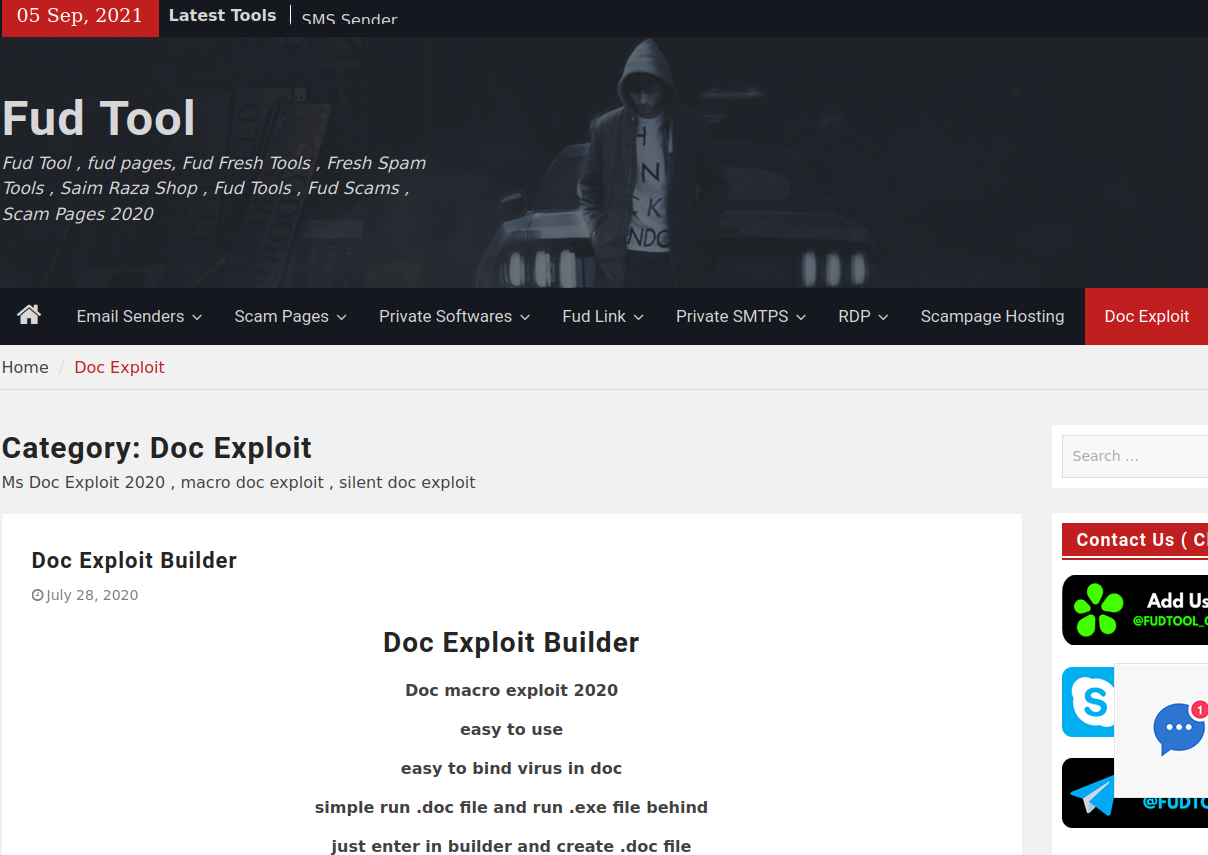
One of several current Fudtools sites run by the principals of The Manipulators.

On January 29, the FBI and the Dutch national police seized the technical infrastructure for a cybercrime service marketed under the brands Heartsender, Fudpage and Fudtools (and many other “fud” variations). The “fud” bit stands for “Fully Un-Detectable,” and it refers to cybercrime resources that will evade detection by security tools like antivirus software or anti-spam appliances.

The Dutch authorities said 39 servers and domains abroad were seized, and that the servers contained millions of records from victims worldwide — including at least 100,000 records pertaining to Dutch citizens.

A statement from the U.S. Department of Justice refers to the cybercrime group as Saim Raza, after a pseudonym The Manipulaters communally used to promote their spam, malware and phishing services on social media.

“The Saim Raza-run websites operated as marketplaces that advertised and facilitated the sale of tools such as phishing kits, scam pages and email extractors often used to build and maintain fraud operations,” the DOJ explained.

The core Manipulaters product is Heartsender, a spam delivery service whose homepage openly advertised phishing kits targeting users of various Internet companies, including Microsoft 365YahooAOLIntuitiCloud and ID.me, to name a few.

The government says transnational organized crime groups that purchased these services primarily used them to run business email compromise (BEC) schemes, wherein the cybercrime actors tricked victim companies into making payments to a third party.

“Those payments would instead be redirected to a financial account the perpetrators controlled, resulting in significant losses to victims,” the DOJ wrote. “These tools were also used to acquire victim user credentials and utilize those credentials to further these fraudulent schemes. The seizure of these domains is intended to disrupt the ongoing activity of these groups and stop the proliferation of these tools within the cybercriminal community.”

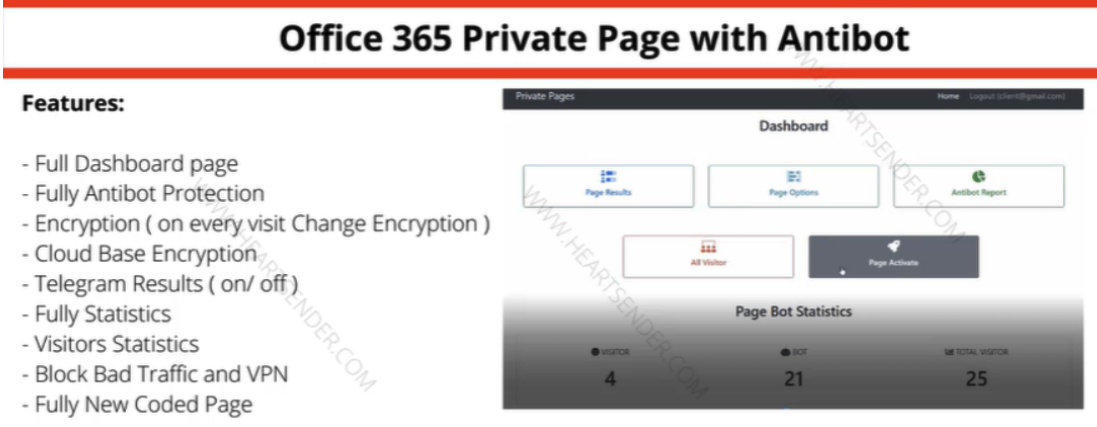
Manipulaters advertisement for “Office 365 Private Page with Antibot” phishing kit sold via Heartsender. “Antibot” refers to functionality that attempts to evade automated detection techniques, keeping a phish deployed and accessible as long as possible. Image: DomainTools.

KrebsOnSecurity first wrote about The Manipulaters in May 2015, mainly because their ads at the time were blanketing a number of popular cybercrime forums, and because they were fairly open and brazen about what they were doing — even who they were in real life.

We caught up with The Manipulaters again in 2021, with a story that found the core employees had started a web coding company in Lahore called WeCodeSolutions — presumably as a way to account for their considerable Heartsender income. That piece examined how WeCodeSolutions employees had all doxed themselves on Facebook by posting pictures from company parties each year featuring a large cake with the words FudCo written in icing.

A follow-up story last year about The Manipulaters prompted messages from various WeCodeSolutions employees who pleaded with this publication to remove stories about them. The Saim Raza identity told KrebsOnSecurity they were recently released from jail after being arrested and charged by local police, although they declined to elaborate on the charges.

The Manipulaters never seemed to care much about protecting their own identities, so it’s not surprising that they were unable or unwilling to protect their own customers. In an analysis released last year, DomainTools.com found the web-hosted version of Heartsender leaked an extraordinary amount of user information to unauthenticated users, including customer credentials and email records from Heartsender employees.

Almost every year since their founding, The Manipulaters have posted a picture of a FudCo cake from a company party celebrating its anniversary.

DomainTools also uncovered evidence that the computers used by The Manipulaters were all infected with the same password-stealing malware, and that vast numbers of credentials were stolen from the group and sold online.

“Ironically, the Manipulaters may create more short-term risk to their own customers than law enforcement,” DomainTools wrote. “The data table ‘User Feedbacks’ (sic) exposes what appear to be customer authentication tokens, user identifiers, and even a customer support request that exposes root-level SMTP credentials–all visible by an unauthenticated user on a Manipulaters-controlled domain.”

Police in The Netherlands said the investigation into the owners and customers of the service is ongoing.

“The Cybercrime Team is on the trail of a number of buyers of the tools,” the Dutch national police said. “Presumably, these buyers also include Dutch nationals. The investigation into the makers and buyers of this phishing software has not yet been completed with the seizure of the servers and domains.”

U.S. authorities this week also joined law enforcement in Australia, France, Greece, Italy, Romania, Spain in seizing a number of domains for several long-running cybercrime forums and services, including Cracked and Nulled. According to a statement from the European police agency Europol, the two communities attracted more than 10 million users in total.

Other domains seized as part of “Operation Talent” included Sellix, an e-commerce platform that was frequently used by cybercrime forum members to buy and sell illicit goods and services.


Read More

CISA Releases Eight Industrial Control Systems Advisories

 ​CISA released eight Industrial Control Systems (ICS) advisories on January 30, 2025. These advisories provide timely information about current security issues, vulnerabilities, and exploits surrounding ICS.

ICSA-25-030-01 Hitachi Energy UNEM
ICSA-25-030-02 New Rock Technologies Cloud Connected Devices
ICSA-25-030-03 Schneider Electric System Monitor Application in Harmony and Pro-face PS5000 Legacy Industrial PCs
ICSA-25-030-04 Rockwell Automation KEPServer
ICSA-25-030-05 Rockwell Automation FactoryTalk AssetCentre 
ICSMA-25-030-01 Contec Health CMS8000 Patient Monitor  
ICSA-24-135-04 Mitsubishi Electric Multiple FA Engineering Software Products (Update B)
ICSMA-22-244-01 Contec Health CMS8000 Patient Monitor (Update A)

CISA encourages users and administrators to review newly released ICS advisories for technical details and mitigations. 

CISA released eight Industrial Control Systems (ICS) advisories on January 30, 2025. These advisories provide timely information about current security issues, vulnerabilities, and exploits surrounding ICS.

CISA encourages users and administrators to review newly released ICS advisories for technical details and mitigations.

 Read More

CISA Releases Fact Sheet Detailing Embedded Backdoor Function of Contec CMS8000 Firmware

 ​CISA released a fact sheet, [Contec CMS8000 Contains a Backdoor], detailing an analysis of three firmware package versions of the Contec CMS8000, a patient monitor used by the U.S. Healthcare and Public Health (HPH) sector. Analysts discovered that an embedded backdoor function with a hard-coded IP address, CWE – 912: Hidden Functionality (CVE-2025-0626), and functionality that enables patient data spillage, CWE – 359: Exposure of Private Personal Information to an Unauthorized Actor (CVE-2025-0683), exists in all versions analyzed.
Please note the Contec CMS8000 may be re-labeled and sold by resellers. For a list of known re-labeled devices, please refer to FDA’s safety communication, Cybersecurity Vulnerabilities with Certain Patient Monitors from Contec and Epsimed: FDA Safety Communication.
Contec Medical Systems, the company which manufactures this monitor as well as other medical device and healthcare solutions, is headquartered in Qinhuangdao, China. The Contec CMS8000 is used in medical settings across the U.S. and European Union to provide continuous monitoring of a patient’s vital signs—tracking electrocardiogram, heart rate, blood oxygen saturation, non-invasive blood pressure, temperature, and respiration rate. CISA assesses that inclusion of this backdoor in the firmware of the patient monitor can create conditions which may allow remote code execution and device modification with the ability to alter its configuration. This introduces risk to patient safety as a malfunctioning patient monitor could lead to an improper response to patient vital signs.
CISA strongly urges HPH sector organizations review the fact sheet and implement FDA’s mitigations. Visit CISA’s Healthcare and Public Health Cybersecurity page to learn more about how to help improve cybersecurity within the HPH sector. For more information and guidance on protection against the most common and impactful threats, tactics, techniques, and procedures, visit CISA’s Cross-Sector Cybersecurity Performance Goals. 

CISA released a fact sheet, [Contec CMS8000 Contains a Backdoor], detailing an analysis of three firmware package versions of the Contec CMS8000, a patient monitor used by the U.S. Healthcare and Public Health (HPH) sector. Analysts discovered that an embedded backdoor function with a hard-coded IP address, CWE – 912: Hidden Functionality (CVE-2025-0626), and functionality that enables patient data spillage, CWE – 359: Exposure of Private Personal Information to an Unauthorized Actor (CVE-2025-0683), exists in all versions analyzed.

Please note the Contec CMS8000 may be re-labeled and sold by resellers. For a list of known re-labeled devices, please refer to FDA’s safety communication, Cybersecurity Vulnerabilities with Certain Patient Monitors from Contec and Epsimed: FDA Safety Communication.

Contec Medical Systems, the company which manufactures this monitor as well as other medical device and healthcare solutions, is headquartered in Qinhuangdao, China. The Contec CMS8000 is used in medical settings across the U.S. and European Union to provide continuous monitoring of a patient’s vital signs—tracking electrocardiogram, heart rate, blood oxygen saturation, non-invasive blood pressure, temperature, and respiration rate. CISA assesses that inclusion of this backdoor in the firmware of the patient monitor can create conditions which may allow remote code execution and device modification with the ability to alter its configuration. This introduces risk to patient safety as a malfunctioning patient monitor could lead to an improper response to patient vital signs.

CISA strongly urges HPH sector organizations review the fact sheet and implement FDA’s mitigations. Visit CISA’s Healthcare and Public Health Cybersecurity page to learn more about how to help improve cybersecurity within the HPH sector. For more information and guidance on protection against the most common and impactful threats, tactics, techniques, and procedures, visit CISA’s Cross-Sector Cybersecurity Performance Goals.

 Read More

Rockwell Automation FactoryTalk AssetCentre

 ​View CSAF
1. EXECUTIVE SUMMARY

CVSS v4 9.3
ATTENTION: Exploitable remotely/low attack complexity
Vendor: Rockwell Automation
Equipment: FactoryTalk AssetCentre
Vulnerabilities: Inadequate Encryption Strength, Insufficiently Protected Credentials

2. RISK EVALUATION
Successful exploitation of these vulnerabilities could allow an attacker to extract passwords, access, credentials, or impersonate other users.
3. TECHNICAL DETAILS
3.1 AFFECTED PRODUCTS
The following versions of Rockwell Automation FactoryTalk AssetCentre are affected:

FactoryTalk AssetCentre: All versions prior to V15.00.001

3.2 Vulnerability Overview
3.2.1 INADEQUATE ENCRYPTION STRENGTH CWE-326
An encryption vulnerability exists in all versions prior to V15.00.001 of FactoryTalk AssetCentre. The vulnerability exists due to a weak encryption methodology and could allow a threat actor to extract passwords belonging to other users of the application.
CVE-2025-0477 has been assigned to this vulnerability. A CVSS v3.1 base score of 9.8 has been calculated; the CVSS vector string is (AV:N/AC:L/PR:N/UI:N/S:U/C:H/I:H/A:H).
A CVSS v4 score has also been calculated for CVE-2025-0477. A base score of 9.3 has been calculated; the CVSS vector string is (AV:N/AC:L/AT:N/PR:N/UI:N/VC:H/VI:H/VA:H/SC:N/SI:N/SA:N).
3.2.2 INSUFFICIENTLY PROTECTED CREDENTIALS CWE-522
A data exposure vulnerability exists in all versions prior to V15.00.001 of FactoryTalk AssetCentre. The vulnerability exists due to storing credentials in the configuration file of EventLogAttachmentExtractor, ArchiveExtractor, LogCleanUp, or ArchiveLogCleanUp packages.
CVE-2025-0497 has been assigned to this vulnerability. A CVSS v3.1 base score of 7.0 has been calculated; the CVSS vector string is (AV:L/AC:H/PR:L/UI:N/S:U/C:H/I:H/A:H).
A CVSS v4 score has also been calculated for CVE-2025-0497. A base score of 7.3 has been calculated; the CVSS vector string is (AV:L/AC:H/AT:N/PR:L/UI:N/VC:H/VI:H/VA:H/SC:N/SI:N/SA:N).
3.2.3 INSUFFICIENTLY PROTECTED CREDENTIALS CWE-522
A data exposure vulnerability exists in all versions prior to V15.00.001 of FactoryTalk AssetCentre. The vulnerability exists due to insecure storage of FactoryTalk Security user tokens which could allow a threat actor to steal a token and, impersonate another user.
CVE-2025-0498 has been assigned to this vulnerability. A CVSS v3.1 base score of 7.8 has been calculated; the CVSS vector string is (AV:L/AC:L/PR:N/UI:R/S:U/C:H/I:H/A:H).
A CVSS v4 score has also been calculated for CVE-2025-0498. A base score of 7.0 has been calculated; the CVSS vector string is (AV:L/AC:L/AT:N/PR:L/UI:P/VC:H/VI:H/VA:H/SC:N/SI:N/SA:N).
3.3 BACKGROUND

CRITICAL INFRASTRUCTURE SECTORS: Critical Manufacturing
COUNTRIES/AREAS DEPLOYED: Worldwide
COMPANY HEADQUARTERS LOCATION: United States

3.4 RESEARCHER
Nestlé – Alban Avdiji reported these vulnerabilities to Rockwell Automation.
4. MITIGATIONS
Rockwell Automation recommends users follow the following mitigations:

For CVE-2025-0477: Update FactoryTalk AssetCentre to v15.00.01 or later. The encrypted data is stored in a table in the database. Control access to the database by non-essential users.
For CVE-2025-0497: Update FactoryTalk AssetCentre to v15.00.01 or later. Apply patches to correct legacy versions: To apply the patch for LogCleanUp or ArchiveLogCleanUp, download and install the Rockwell Automation January 2025 monthly patch rollup, or later. To apply patches for EventLogAttachmentExtractor or ArchiveExtractor, locate the article BF31148, download the patch files and follow the instructions. Restrict physical access to the machine to authorized users.
For CVE-2025-0498: Update FactoryTalk AssetCentre to v15.00.01 or later. Apply patches to correct legacy versions: To apply the patch for download and install the Rockwell Automation January 2025 monthly patch rollup, or later. Restrict physical access to the machine to authorized users.

For information on how to mitigate security risks on industrial automation control systems, Rockwell Automation encourages users to implement their suggested security best practices to minimize the risk of the vulnerability.
For more information about this issue, please see the advisory on the Rockwell Automation security page.
CISA recommends users take defensive measures to minimize the risk of exploitation of these vulnerabilities, such as:

Minimize network exposure for all control system devices and/or systems, ensuring they are not accessible from the internet.
Locate control system networks and remote devices behind firewalls and isolating them from business networks.
When remote access is required, use more secure methods, such as Virtual Private Networks (VPNs), recognizing VPNs may have vulnerabilities and should be updated to the most current version available. Also recognize VPN is only as secure as the connected devices.

CISA reminds organizations to perform proper impact analysis and risk assessment prior to deploying defensive measures.
CISA also provides a section for control systems security recommended practices on the ICS webpage on cisa.gov/ics. Several CISA products detailing cyber defense best practices are available for reading and download, including Improving Industrial Control Systems Cybersecurity with Defense-in-Depth Strategies.
CISA encourages organizations to implement recommended cybersecurity strategies for proactive defense of ICS assets.
Additional mitigation guidance and recommended practices are publicly available on the ICS webpage at cisa.gov/ics in the technical information paper, ICS-TIP-12-146-01B–Targeted Cyber Intrusion Detection and Mitigation Strategies.
Organizations observing suspected malicious activity should follow established internal procedures and report findings to CISA for tracking and correlation against other incidents.
CISA also recommends users take the following measures to protect themselves from social engineering attacks:

Do not click web links or open attachments in unsolicited email messages.
Refer to Recognizing and Avoiding Email Scams for more information on avoiding email scams.
Refer to Avoiding Social Engineering and Phishing Attacks for more information on social engineering attacks.

No known public exploitation specifically targeting these vulnerabilities has been reported to CISA at this time.
5. UPDATE HISTORY

January 30, 2025: Initial Publication 

View CSAF

1. EXECUTIVE SUMMARY

  • CVSS v4 9.3
  • ATTENTION: Exploitable remotely/low attack complexity
  • Vendor: Rockwell Automation
  • Equipment: FactoryTalk AssetCentre
  • Vulnerabilities: Inadequate Encryption Strength, Insufficiently Protected Credentials

2. RISK EVALUATION

Successful exploitation of these vulnerabilities could allow an attacker to extract passwords, access, credentials, or impersonate other users.

3. TECHNICAL DETAILS

3.1 AFFECTED PRODUCTS

The following versions of Rockwell Automation FactoryTalk AssetCentre are affected:

  • FactoryTalk AssetCentre: All versions prior to V15.00.001

3.2 Vulnerability Overview

3.2.1 INADEQUATE ENCRYPTION STRENGTH CWE-326

An encryption vulnerability exists in all versions prior to V15.00.001 of FactoryTalk AssetCentre. The vulnerability exists due to a weak encryption methodology and could allow a threat actor to extract passwords belonging to other users of the application.

CVE-2025-0477 has been assigned to this vulnerability. A CVSS v3.1 base score of 9.8 has been calculated; the CVSS vector string is (AV:N/AC:L/PR:N/UI:N/S:U/C:H/I:H/A:H).

A CVSS v4 score has also been calculated for CVE-2025-0477. A base score of 9.3 has been calculated; the CVSS vector string is (AV:N/AC:L/AT:N/PR:N/UI:N/VC:H/VI:H/VA:H/SC:N/SI:N/SA:N).

3.2.2 INSUFFICIENTLY PROTECTED CREDENTIALS CWE-522

A data exposure vulnerability exists in all versions prior to V15.00.001 of FactoryTalk AssetCentre. The vulnerability exists due to storing credentials in the configuration file of EventLogAttachmentExtractor, ArchiveExtractor, LogCleanUp, or ArchiveLogCleanUp packages.

CVE-2025-0497 has been assigned to this vulnerability. A CVSS v3.1 base score of 7.0 has been calculated; the CVSS vector string is (AV:L/AC:H/PR:L/UI:N/S:U/C:H/I:H/A:H).

A CVSS v4 score has also been calculated for CVE-2025-0497. A base score of 7.3 has been calculated; the CVSS vector string is (AV:L/AC:H/AT:N/PR:L/UI:N/VC:H/VI:H/VA:H/SC:N/SI:N/SA:N).

3.2.3 INSUFFICIENTLY PROTECTED CREDENTIALS CWE-522

A data exposure vulnerability exists in all versions prior to V15.00.001 of FactoryTalk AssetCentre. The vulnerability exists due to insecure storage of FactoryTalk Security user tokens which could allow a threat actor to steal a token and, impersonate another user.

CVE-2025-0498 has been assigned to this vulnerability. A CVSS v3.1 base score of 7.8 has been calculated; the CVSS vector string is (AV:L/AC:L/PR:N/UI:R/S:U/C:H/I:H/A:H).

A CVSS v4 score has also been calculated for CVE-2025-0498. A base score of 7.0 has been calculated; the CVSS vector string is (AV:L/AC:L/AT:N/PR:L/UI:P/VC:H/VI:H/VA:H/SC:N/SI:N/SA:N).

3.3 BACKGROUND

  • CRITICAL INFRASTRUCTURE SECTORS: Critical Manufacturing
  • COUNTRIES/AREAS DEPLOYED: Worldwide
  • COMPANY HEADQUARTERS LOCATION: United States

3.4 RESEARCHER

Nestlé – Alban Avdiji reported these vulnerabilities to Rockwell Automation.

4. MITIGATIONS

Rockwell Automation recommends users follow the following mitigations:

  • For CVE-2025-0477: Update FactoryTalk AssetCentre to v15.00.01 or later. The encrypted data is stored in a table in the database. Control access to the database by non-essential users.
  • For CVE-2025-0497: Update FactoryTalk AssetCentre to v15.00.01 or later. Apply patches to correct legacy versions: To apply the patch for LogCleanUp or ArchiveLogCleanUp, download and install the Rockwell Automation January 2025 monthly patch rollup, or later. To apply patches for EventLogAttachmentExtractor or ArchiveExtractor, locate the article BF31148, download the patch files and follow the instructions. Restrict physical access to the machine to authorized users.
  • For CVE-2025-0498: Update FactoryTalk AssetCentre to v15.00.01 or later. Apply patches to correct legacy versions: To apply the patch for download and install the Rockwell Automation January 2025 monthly patch rollup, or later. Restrict physical access to the machine to authorized users.

For information on how to mitigate security risks on industrial automation control systems, Rockwell Automation encourages users to implement their suggested security best practices to minimize the risk of the vulnerability.

For more information about this issue, please see the advisory on the Rockwell Automation security page.

CISA recommends users take defensive measures to minimize the risk of exploitation of these vulnerabilities, such as:

  • Minimize network exposure for all control system devices and/or systems, ensuring they are not accessible from the internet.
  • Locate control system networks and remote devices behind firewalls and isolating them from business networks.
  • When remote access is required, use more secure methods, such as Virtual Private Networks (VPNs), recognizing VPNs may have vulnerabilities and should be updated to the most current version available. Also recognize VPN is only as secure as the connected devices.

CISA reminds organizations to perform proper impact analysis and risk assessment prior to deploying defensive measures.

CISA also provides a section for control systems security recommended practices on the ICS webpage on cisa.gov/ics. Several CISA products detailing cyber defense best practices are available for reading and download, including Improving Industrial Control Systems Cybersecurity with Defense-in-Depth Strategies.

CISA encourages organizations to implement recommended cybersecurity strategies for proactive defense of ICS assets.

Additional mitigation guidance and recommended practices are publicly available on the ICS webpage at cisa.gov/ics in the technical information paper, ICS-TIP-12-146-01B–Targeted Cyber Intrusion Detection and Mitigation Strategies.

Organizations observing suspected malicious activity should follow established internal procedures and report findings to CISA for tracking and correlation against other incidents.

CISA also recommends users take the following measures to protect themselves from social engineering attacks:

No known public exploitation specifically targeting these vulnerabilities has been reported to CISA at this time.

5. UPDATE HISTORY

  • January 30, 2025: Initial Publication

 Read More

Rockwell Automation KEPServer

 ​View CSAF
1. EXECUTIVE SUMMARY

CVSS v3 7.5
ATTENTION: Exploitable remotely/low attack complexity
Vendor: Rockwell Automation
Equipment: KEPServer
Vulnerability: Uncontrolled Resource Consumption

2. RISK EVALUATION
Successful exploitation of this vulnerability could cause the device to crash.
3. TECHNICAL DETAILS
3.1 AFFECTED PRODUCTS
The following versions of Rockwell Automation’s KEPServer are affected:

KEPServer: Versions 6.0 to 6.14.263

3.2 Vulnerability Overview
3.2.1 Uncontrolled Resource Consumption CWE-400
KEPServerEX Versions 6.0 to 6.14.263 are vulnerable to being made to read a recursively defined object that leads to uncontrolled resource consumption. KEPServerEX uses OPC UA, a protocol which defines various object types that can be nested to create complex arrays. It does not implement a check to see if such an object is recursively defined, so an attack could send a maliciously created message that the decoder would try to decode until the stack overflowed and the device crashed.
CVE-2023-3825 has been assigned to this vulnerability. A CVSS v3.1 base score of 7.5 has been calculated; the CVSS vector string is (AV:N/AC:L/PR:N/UI:N/S:U/C:N/I:N/A:H).
3.3 BACKGROUND

CRITICAL INFRASTRUCTURE SECTORS: Critical Manufacturing
COUNTRIES/AREAS DEPLOYED: Worldwide
COMPANY HEADQUARTERS LOCATION: United States

3.4 RESEARCHER
Rockwell Automation reported this vulnerability to CISA.
4. MITIGATIONS
Rockwell automation recommends that users upgrade to KEPServer Version 6.15 or higher.
Rockwell Automation also encourages users using the affected software to apply the following risk mitigations, if possible.

For information on how to mitigate Security Risks on industrial automation control systems, Rockwell Automation encourages users to implement our suggested security best practices to minimize the risk of the vulnerability.Users can use Stakeholder-Specific Vulnerability Categorization to generate more environment-specific prioritization.

CISA recommends users take defensive measures to minimize the risk of exploitation of this vulnerability, such as:

Minimize network exposure for all control system devices and/or systems, ensuring they are not accessible from the Internet.
Locate control system networks and remote devices behind firewalls and isolating them from business networks.
When remote access is required, use more secure methods, such as Virtual Private Networks (VPNs), recognizing VPNs may have vulnerabilities and should be updated to the most current version available. Also recognize VPN is only as secure as the connected devices.

CISA reminds organizations to perform proper impact analysis and risk assessment prior to deploying defensive measures.
CISA also provides a section for control systems security recommended practices on the ICS webpage on cisa.gov/ics. Several CISA products detailing cyber defense best practices are available for reading and download, including Improving Industrial Control Systems Cybersecurity with Defense-in-Depth Strategies.
CISA encourages organizations to implement recommended cybersecurity strategies for proactive defense of ICS assets.
Additional mitigation guidance and recommended practices are publicly available on the ICS webpage at cisa.gov/ics in the technical information paper, ICS-TIP-12-146-01B–Targeted Cyber Intrusion Detection and Mitigation Strategies.
Organizations observing suspected malicious activity should follow established internal procedures and report findings to CISA for tracking and correlation against other incidents.
CISA also recommends users take the following measures to protect themselves from social engineering attacks:

Do not click web links or open attachments in unsolicited email messages.
Refer to Recognizing and Avoiding Email Scams for more information on avoiding email scams.
Refer to Avoiding Social Engineering and Phishing Attacks for more information on social engineering attacks.

No known public exploitation specifically targeting this vulnerability has been reported to CISA at this time.
5. UPDATE HISTORY

January 30, 2025: Initial Publication 

View CSAF

1. EXECUTIVE SUMMARY

  • CVSS v3 7.5
  • ATTENTION: Exploitable remotely/low attack complexity
  • Vendor: Rockwell Automation
  • Equipment: KEPServer
  • Vulnerability: Uncontrolled Resource Consumption

2. RISK EVALUATION

Successful exploitation of this vulnerability could cause the device to crash.

3. TECHNICAL DETAILS

3.1 AFFECTED PRODUCTS

The following versions of Rockwell Automation’s KEPServer are affected:

  • KEPServer: Versions 6.0 to 6.14.263

3.2 Vulnerability Overview

3.2.1 Uncontrolled Resource Consumption CWE-400

KEPServerEX Versions 6.0 to 6.14.263 are vulnerable to being made to read a recursively defined object that leads to uncontrolled resource consumption. KEPServerEX uses OPC UA, a protocol which defines various object types that can be nested to create complex arrays. It does not implement a check to see if such an object is recursively defined, so an attack could send a maliciously created message that the decoder would try to decode until the stack overflowed and the device crashed.

CVE-2023-3825 has been assigned to this vulnerability. A CVSS v3.1 base score of 7.5 has been calculated; the CVSS vector string is (AV:N/AC:L/PR:N/UI:N/S:U/C:N/I:N/A:H).

3.3 BACKGROUND

  • CRITICAL INFRASTRUCTURE SECTORS: Critical Manufacturing
  • COUNTRIES/AREAS DEPLOYED: Worldwide
  • COMPANY HEADQUARTERS LOCATION: United States

3.4 RESEARCHER

Rockwell Automation reported this vulnerability to CISA.

4. MITIGATIONS

Rockwell automation recommends that users upgrade to KEPServer Version 6.15 or higher.

Rockwell Automation also encourages users using the affected software to apply the following risk mitigations, if possible.

CISA recommends users take defensive measures to minimize the risk of exploitation of this vulnerability, such as:

  • Minimize network exposure for all control system devices and/or systems, ensuring they are not accessible from the Internet.
  • Locate control system networks and remote devices behind firewalls and isolating them from business networks.
  • When remote access is required, use more secure methods, such as Virtual Private Networks (VPNs), recognizing VPNs may have vulnerabilities and should be updated to the most current version available. Also recognize VPN is only as secure as the connected devices.

CISA reminds organizations to perform proper impact analysis and risk assessment prior to deploying defensive measures.

CISA also provides a section for control systems security recommended practices on the ICS webpage on cisa.gov/ics. Several CISA products detailing cyber defense best practices are available for reading and download, including Improving Industrial Control Systems Cybersecurity with Defense-in-Depth Strategies.

CISA encourages organizations to implement recommended cybersecurity strategies for proactive defense of ICS assets.

Additional mitigation guidance and recommended practices are publicly available on the ICS webpage at cisa.gov/ics in the technical information paper, ICS-TIP-12-146-01B–Targeted Cyber Intrusion Detection and Mitigation Strategies.

Organizations observing suspected malicious activity should follow established internal procedures and report findings to CISA for tracking and correlation against other incidents.

CISA also recommends users take the following measures to protect themselves from social engineering attacks:

No known public exploitation specifically targeting this vulnerability has been reported to CISA at this time.

5. UPDATE HISTORY

  • January 30, 2025: Initial Publication

 Read More

Contec Health CMS8000 Patient Monitor

 ​View CSAF
1. EXECUTIVE SUMMARY

CVSS v4 9.3
ATTENTION: Exploitable remotely/low attack complexity
Vendor: Contec Health
Equipment: CMS8000 Patient Monitor
Vulnerabilities: Out-of-bounds Write, Hidden Functionality (Backdoor), Privacy Leakage

2. RISK EVALUATION
Successful exploitation of these vulnerabilities could allow an attacker to remotely send specially formatted UDP requests or connect to an unknown external network that would allow them to write arbitrary data, resulting in remote code execution. The device may also leak patient information and sensor data to the same unknown external network. Simultaneous exploitation of all vulnerable devices on a shared network is possible.
The Food and Drug Administration (FDA) has released a safety communication in connection with these vulnerabilities.
CISA has released an additional Fact Sheet for CVE-2025-0626 and CVE-2025-0683.
3. TECHNICAL DETAILS
3.1 AFFECTED PRODUCTS
The following Contec Health products are affected:

CMS8000 Patient Monitor: Firmware version smart3250-2.6.27-wlan2.1.7.cramfs
CMS8000 Patient Monitor: Firmware version CMS7.820.075.08/0.74(0.75)
CMS8000 Patient Monitor: Firmware version CMS7.820.120.01/0.93(0.95)
CMS8000 Patient Monitor: All versions (CVE-2025-0626, CVE-2025-0683)

3.2 Vulnerability Overview
3.2.1 OUT-OF-BOUNDS WRITE CWE-787
The affected product is vulnerable to an out-of-bounds write, which could allow an attacker to send specially formatted UDP requests in order to write arbitrary data. This could result in remote code execution.
CVE-2024-12248 has been assigned to this vulnerability. A CVSS v3.1 base score of 9.8 has been calculated; the CVSS vector string is (AV:N/AC:L/PR:N/UI:N/S:U/C:H/I:H/A:H).
A CVSS v4 score has also been calculated for CVE-2024-12248. A base score of 9.3 has been calculated; the CVSS vector string is (CVSS:4.0/AV:N/AC:L/AT:N/PR:N/UI:N/VC:H/VI:H/VA:H/SC:N/SI:N/SA:N).
3.2.2 HIDDEN FUNCTIONALITY (BACKDOOR) CWE-912
The affected product sends out remote access requests to a hard-coded IP address, bypassing existing device network settings to do so. This could serve as a backdoor and lead to a malicious actor being able to upload and overwrite files on the device.
CVE-2025-0626 has been assigned to this vulnerability. A CVSS v3.1 base score of 7.5 has been calculated; the CVSS vector string is (AV:N/AC:H/PR:N/UI:R/S:U/C:H/I:H/A:H).
A CVSS v4 score has also been calculated for CVE-2025-0626. A base score of 7.7 has been calculated; the CVSS vector string is (CVSS:4.0/AV:N/AC:L/AT:P/PR:N/UI:P/VC:H/VI:H/VA:H/SC:N/SI:N/SA:N).
3.2.3 EXPOSURE OF PRIVATE PERSONAL INFORMATION TO AN UNAUTHORIZED ACTOR (PRIVACY LEAKAGE) CWE-359
In its default configuration, the affected product transmits plain-text patient data to a hard-coded public IP address when a patient is hooked up to the monitor. This could lead to a leakage of confidential patient data to any device with that IP address or an attacker in a machine-in-the-middle scenario.
CVE-2025-0683 has been assigned to this vulnerability. A CVSS v3.1 base score of 5.9 has been calculated; the CVSS vector string is (AV:N/AC:H/PR:N/UI:N/S:U/C:H/I:N/A:N).
A CVSS v4 score has also been calculated for CVE-2025-0683. A base score of 8.2 has been calculated; the CVSS vector string is (CVSS:4.0/AV:N/AC:L/AT:P/PR:N/UI:N/VC:H/VI:N/VA:N/SC:N/SI:N/SA:N).
3.3 BACKGROUND

CRITICAL INFRASTRUCTURE SECTORS: Healthcare and Public Health
COUNTRIES/AREAS DEPLOYED: Worldwide
COMPANY HEADQUARTERS LOCATION: China

3.4 RESEARCHER
An anonymous researcher reported these vulnerabilities to CISA.
4. MITIGATIONS
Per FDA recommendation, CISA recommends users remove any Contec CMS8000 devices from their networks.
Please note that this device may be re-labeled and sold by resellers. For a list of known re-labeled devices, please refer to FDA’s safety communication.
CISA recommends users take defensive measures to minimize the risk of exploitation of these vulnerabilities, such as:

Minimize network exposure for all control system devices and/or systems, ensuring they are not accessible from the internet.
Locate control system networks and remote devices behind firewalls and isolating them from business networks. Update firewall rules to prevent access to potentially affected devices.
If network connected, ensure all medical devices are on a separate, low privilege subnet.
Only use trusted manufacturers for safety critical systems.

CISA reminds organizations to perform proper impact analysis and risk assessment prior to deploying defensive measures.
CISA also provides a section for control systems security recommended practices on the ICS webpage on cisa.gov/ics. Several CISA products detailing cyber defense best practices are available for reading and download, including Improving Industrial Control Systems Cybersecurity with Defense-in-Depth Strategies.
CISA encourages organizations to implement recommended cybersecurity strategies for proactive defense of ICS assets.
Additional mitigation guidance and recommended practices are publicly available on the ICS webpage at cisa.gov/ics in the technical information paper, ICS-TIP-12-146-01B–Targeted Cyber Intrusion Detection and Mitigation Strategies.
Organizations observing suspected malicious activity should follow established internal procedures and report findings to CISA for tracking and correlation against other incidents.
No known public exploitation specifically targeting these vulnerabilities has been reported to CISA at this time.
5. UPDATE HISTORY

January 30, 2025: Initial Publication 

View CSAF

1. EXECUTIVE SUMMARY

  • CVSS v4 9.3
  • ATTENTION: Exploitable remotely/low attack complexity
  • Vendor: Contec Health
  • Equipment: CMS8000 Patient Monitor
  • Vulnerabilities: Out-of-bounds Write, Hidden Functionality (Backdoor), Privacy Leakage

2. RISK EVALUATION

Successful exploitation of these vulnerabilities could allow an attacker to remotely send specially formatted UDP requests or connect to an unknown external network that would allow them to write arbitrary data, resulting in remote code execution. The device may also leak patient information and sensor data to the same unknown external network. Simultaneous exploitation of all vulnerable devices on a shared network is possible.

The Food and Drug Administration (FDA) has released a safety communication in connection with these vulnerabilities.

CISA has released an additional Fact Sheet for CVE-2025-0626 and CVE-2025-0683.

3. TECHNICAL DETAILS

3.1 AFFECTED PRODUCTS

The following Contec Health products are affected:

  • CMS8000 Patient Monitor: Firmware version smart3250-2.6.27-wlan2.1.7.cramfs
  • CMS8000 Patient Monitor: Firmware version CMS7.820.075.08/0.74(0.75)
  • CMS8000 Patient Monitor: Firmware version CMS7.820.120.01/0.93(0.95)
  • CMS8000 Patient Monitor: All versions (CVE-2025-0626, CVE-2025-0683)

3.2 Vulnerability Overview

3.2.1 OUT-OF-BOUNDS WRITE CWE-787

The affected product is vulnerable to an out-of-bounds write, which could allow an attacker to send specially formatted UDP requests in order to write arbitrary data. This could result in remote code execution.

CVE-2024-12248 has been assigned to this vulnerability. A CVSS v3.1 base score of 9.8 has been calculated; the CVSS vector string is (AV:N/AC:L/PR:N/UI:N/S:U/C:H/I:H/A:H).

A CVSS v4 score has also been calculated for CVE-2024-12248. A base score of 9.3 has been calculated; the CVSS vector string is (CVSS:4.0/AV:N/AC:L/AT:N/PR:N/UI:N/VC:H/VI:H/VA:H/SC:N/SI:N/SA:N).

3.2.2 HIDDEN FUNCTIONALITY (BACKDOOR) CWE-912

The affected product sends out remote access requests to a hard-coded IP address, bypassing existing device network settings to do so. This could serve as a backdoor and lead to a malicious actor being able to upload and overwrite files on the device.

CVE-2025-0626 has been assigned to this vulnerability. A CVSS v3.1 base score of 7.5 has been calculated; the CVSS vector string is (AV:N/AC:H/PR:N/UI:R/S:U/C:H/I:H/A:H).

A CVSS v4 score has also been calculated for CVE-2025-0626. A base score of 7.7 has been calculated; the CVSS vector string is (CVSS:4.0/AV:N/AC:L/AT:P/PR:N/UI:P/VC:H/VI:H/VA:H/SC:N/SI:N/SA:N).

3.2.3 EXPOSURE OF PRIVATE PERSONAL INFORMATION TO AN UNAUTHORIZED ACTOR (PRIVACY LEAKAGE) CWE-359

In its default configuration, the affected product transmits plain-text patient data to a hard-coded public IP address when a patient is hooked up to the monitor. This could lead to a leakage of confidential patient data to any device with that IP address or an attacker in a machine-in-the-middle scenario.

CVE-2025-0683 has been assigned to this vulnerability. A CVSS v3.1 base score of 5.9 has been calculated; the CVSS vector string is (AV:N/AC:H/PR:N/UI:N/S:U/C:H/I:N/A:N).

A CVSS v4 score has also been calculated for CVE-2025-0683. A base score of 8.2 has been calculated; the CVSS vector string is (CVSS:4.0/AV:N/AC:L/AT:P/PR:N/UI:N/VC:H/VI:N/VA:N/SC:N/SI:N/SA:N).

3.3 BACKGROUND

  • CRITICAL INFRASTRUCTURE SECTORS: Healthcare and Public Health
  • COUNTRIES/AREAS DEPLOYED: Worldwide
  • COMPANY HEADQUARTERS LOCATION: China

3.4 RESEARCHER

An anonymous researcher reported these vulnerabilities to CISA.

4. MITIGATIONS

Per FDA recommendation, CISA recommends users remove any Contec CMS8000 devices from their networks.

Please note that this device may be re-labeled and sold by resellers. For a list of known re-labeled devices, please refer to FDA’s safety communication.

CISA recommends users take defensive measures to minimize the risk of exploitation of these vulnerabilities, such as:

  • Minimize network exposure for all control system devices and/or systems, ensuring they are not accessible from the internet.
  • Locate control system networks and remote devices behind firewalls and isolating them from business networks. Update firewall rules to prevent access to potentially affected devices.
  • If network connected, ensure all medical devices are on a separate, low privilege subnet.
  • Only use trusted manufacturers for safety critical systems.

CISA reminds organizations to perform proper impact analysis and risk assessment prior to deploying defensive measures.

CISA also provides a section for control systems security recommended practices on the ICS webpage on cisa.gov/ics. Several CISA products detailing cyber defense best practices are available for reading and download, including Improving Industrial Control Systems Cybersecurity with Defense-in-Depth Strategies.

CISA encourages organizations to implement recommended cybersecurity strategies for proactive defense of ICS assets.

Additional mitigation guidance and recommended practices are publicly available on the ICS webpage at cisa.gov/ics in the technical information paper, ICS-TIP-12-146-01B–Targeted Cyber Intrusion Detection and Mitigation Strategies.

Organizations observing suspected malicious activity should follow established internal procedures and report findings to CISA for tracking and correlation against other incidents.

No known public exploitation specifically targeting these vulnerabilities has been reported to CISA at this time.

5. UPDATE HISTORY

  • January 30, 2025: Initial Publication

 Read More

Scroll to Top