New Leak Shows Business Side of China’s APT Menace

​A new data leak that appears to have come from one of China’s top private cybersecurity firms provides a rare glimpse into the commercial side of China’s many state-sponsored hacking groups. Experts say the leak illustrates how Chinese government agencies increasingly are contracting out foreign espionage campaigns to the nation’s burgeoning and highly competitive cybersecurity industry. 

A new data leak that appears to have come from one of China’s top private cybersecurity firms provides a rare glimpse into the commercial side of China’s many state-sponsored hacking groups. Experts say the leak illustrates how Chinese government agencies increasingly are contracting out foreign espionage campaigns to the nation’s burgeoning and highly competitive cybersecurity industry.

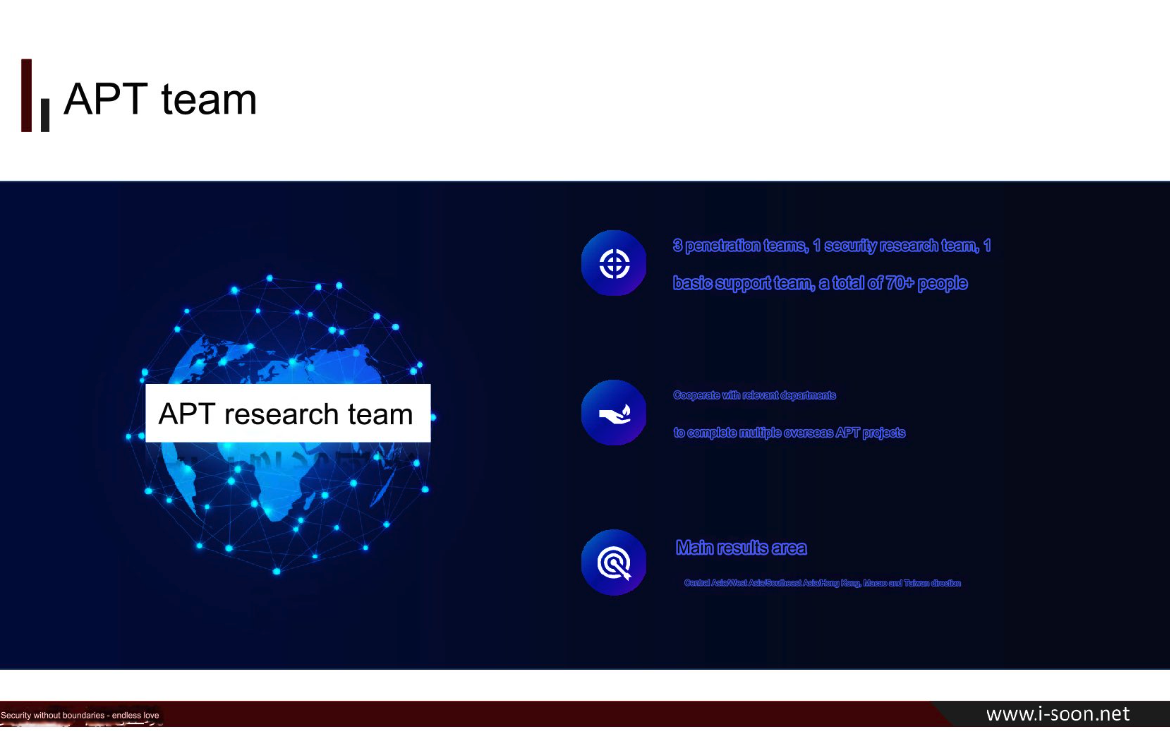
A marketing slide deck promoting i-SOON’s Advanced Persistent Threat (APT) capabilities.

A large cache of more than 500 documents published to GitHub last week indicate the records come from i-SOON, a technology company headquartered in Shanghai that is perhaps best known for providing cybersecurity training courses throughout China. But the leaked documents, which include candid employee chat conversations and images, show a less public side of i-SOON, one that frequently initiates and sustains cyberespionage campaigns commissioned by various Chinese government agencies.

The leaked documents suggest i-SOON employees were responsible for a raft of cyber intrusions over many years, infiltrating government systems in the United Kingdom and countries throughout Asia. Although the cache does not include raw data stolen from cyber espionage targets, it features numerous documents listing the level of access gained and the types of data exposed in each intrusion.

Security experts who reviewed the leaked data say they believe the information is legitimate, and that i-SOON works closely with China’s Ministry of Public Security and the military. In 2021, the Sichuan provincial government named i-SOON as one of “the top 30 information security companies.”

“The leak provides some of the most concrete details seen publicly to date, revealing the maturing nature of China’s cyber espionage ecosystem,” said Dakota Cary, a China-focused consultant at the security firm SentinelOne. “It shows explicitly how government targeting requirements drive a competitive marketplace of independent contractor hackers-for-hire.”

Mei Danowski is a former intelligence analyst and China expert who now writes about her research in a Substack publication called Natto Thoughts. Danowski said i-SOON has achieved the highest secrecy classification that a non-state-owned company can receive, which qualifies the company to conduct classified research and development related to state security.

i-SOON’s “business services” webpage states that the company’s offerings include public security, anti-fraud, blockchain forensics, enterprise security solutions, and training. Danowski said that in 2013, i-SOON established a department for research on developing new APT network penetration methods.

APT stands for Advanced Persistent Threat, a term that generally refers to state-sponsored hacking groups. Indeed, among the documents apparently leaked from i-SOON is a sales pitch slide boldly highlighting the hacking prowess of the company’s “APT research team” (see screenshot above).

i-SOON CEO Wu Haibo, in 2011. Image: nattothoughts.substack.com.

The leaked documents included a lengthy chat conversation between the company’s founders, who repeatedly discuss flagging sales and the need to secure more employees and government contracts. Danowski said the CEO of i-SOON, Wu Haibo (“Shutdown” in the leaked chats) is a well-known first-generation red hacker or “Honker,” and an early member of Green Army — the very first Chinese hacktivist group founded in 1997. Mr. Haibo has not yet responded to a request for comment.

In October 2023, Danowski detailed how i-SOON became embroiled in a software development contract dispute when it was sued by a competing Chinese cybersecurity company called Chengdu 404. In September 2020, the U.S. Department of Justice unsealed indictments against multiple Chengdu 404 employees, charging that the company was a facade that hid more than a decade’s worth of cyber intrusions attributed to a threat actor group known as “APT 41.”

Danowski said the existence of this legal dispute suggests that Chengdu 404 and i-SOON have or at one time had a business relationship, and that one company likely served as a subcontractor to the other.

“From what they chat about we can see this is a very competitive industry, where companies in this space are constantly poaching each others’ employees and tools,” Danowski said. “The infosec industry is always trying to distinguish [the work] of one APT group from another. But that’s getting harder to do.”

It remains unclear if i-SOON’s work has earned it a unique APT designation. But Will Thomas, a cyber threat intelligence researcher at Equinix, found an Internet address in the leaked data that corresponds to a domain flagged in a 2019 Citizen Lab report about one-click mobile phone exploits that were being used to target groups in Tibet. The 2019 report referred to the threat actor behind those attacks as an APT group called Poison Carp.

Several images and chat records in the data leak suggest i-SOON’s clients periodically gave the company a list of targets they wanted to infiltrate, but sometimes employees confused the instructions. One screenshot shows a conversation in which an employee tells his boss they’ve just hacked one of the universities on their latest list, only to be told that the victim in question was not actually listed as a desired target.

The leaked chats show i-SOON continuously tried to recruit new talent by hosting a series of hacking competitions across China. It also performed charity work, and sought to engage employees and sustain morale with various team-building events.

However, the chats include multiple conversations between employees commiserating over long hours and low pay. The overall tone of the discussions indicates employee morale was quite low and that the workplace environment was fairly toxic. In several of the conversations, i-SOON employees openly discuss with their bosses how much money they just lost gambling online with their mobile phones while at work.

Danowski believes the i-SOON data was probably leaked by one of those disgruntled employees.

“This was released the first working day after the Chinese New Year,” Danowski said. “Definitely whoever did this planned it, because you can’t get all this information all at once.”

SentinelOne’s Cary said he came to the same conclusion, noting that the Protonmail account tied to the GitHub profile that published the records was registered a month before the leak, on January 15, 2024.

China’s much vaunted Great Firewall not only lets the government control and limit what citizens can access online, but this distributed spying apparatus allows authorities to block data on Chinese citizens and companies from ever leaving the country.

As a result, China enjoys a remarkable information asymmetry vis-a-vis virtually all other industrialized nations. Which is why this apparent data leak from i-SOON is such a rare find for Western security researchers.

“I was so excited to see this,” Cary said. “Every day I hope for data leaks coming out of China.”

That information asymmetry is at the heart of the Chinese government’s cyberwarfare goals, according to a 2023 analysis by Margin Research performed on behalf of the Defense Advanced Research Projects Agency (DARPA).

“In the area of cyberwarfare, the western governments see cyberspace as a ‘fifth domain’ of warfare,” the Margin study observed. “The Chinese, however, look at cyberspace in the broader context of information space. The ultimate objective is, not ‘control’ of cyberspace, but control of information, a vision that dominates China’s cyber operations.”

The National Cybersecurity Strategy issued by the White House last year singles out China as the biggest cyber threat to U.S. interests. While the United States government does contract certain aspects of its cyber operations to companies in the private sector, it does not follow China’s example in promoting the wholesale theft of state and corporate secrets for the commercial benefit of its own private industries.

Dave Aitel, a co-author of the Margin Research report and former computer scientist at the U.S. National Security Agency, said it’s nice to see that Chinese cybersecurity firms have to deal with all of the same contracting headaches facing U.S. companies seeking work with the federal government.

“This leak just shows there’s layers of contractors all the way down,” Aitel said. “It’s pretty fun to see the Chinese version of it.”
 

Read More

U.S. Internet Leaked Years of Internal, Customer Emails

​The Minnesota-based Internet provider U.S. Internet Corp. has a business unit called Securence, which specializes in providing filtered, secure email services to businesses, educational institutions and government agencies worldwide. But until it was notified last week, U.S. Internet was publishing more than a decade’s worth of its internal email — and that of thousands of Securence clients — in plain text out on the Internet and just a click away for anyone with a Web browser. 

The Minnesota-based Internet provider U.S. Internet Corp. has a business unit called Securence, which specializes in providing filtered, secure email services to businesses, educational institutions and government agencies worldwide. But until it was notified last week, U.S. Internet was publishing more than a decade’s worth of its internal email — and that of thousands of Securence clients — in plain text out on the Internet and just a click away for anyone with a Web browser.

Headquartered in Minnetonka, Minn., U.S. Internet is a regional ISP that provides fiber and wireless Internet service. The ISP’s Securence division bills itself “a leading provider of email filtering and management software that includes email protection and security services for small business, enterprise, educational and government institutions worldwide.”

U.S. Internet/Securence says your email is secure. Nothing could be further from the truth.

Roughly a week ago, KrebsOnSecurity was contacted by Hold Security, a Milwaukee-based cybersecurity firm. Hold Security founder Alex Holden said his researchers had unearthed a public link to a U.S. Internet email server listing more than 6,500 domain names, each with its own clickable link.

A tiny portion of the more than 6,500 customers who trusted U.S. Internet with their email.

Drilling down into those individual domain links revealed inboxes for each employee or user of these exposed websites. Some of the exposed emails dated back to 2008; others were as recent as the present day.

Securence counts among its customers dozens of state and local governments, including: nc.gov — the official website of North Carolina; stillwatermn.gov, the website for the city of Stillwater, Minn.; and cityoffrederickmd.gov, the website for the government of Frederick, Md.

Incredibly, included in this giant index of U.S. Internet customer emails were the internal messages for every current and former employee of U.S. Internet and its subsidiary USI Wireless. Since that index also included the messages of U.S. Internet’s CEO Travis Carter, KrebsOnSecurity forwarded one of Mr. Carter’s own recent emails to him, along with a request to understand how exactly the company managed to screw things up so spectacularly.

Individual inboxes of U.S. Wireless employees were published in clear text on the Internet. The timestamps listed do not appear to be accurate somehow. For example, the timestamp for Mr. Carter’s inbox reads August 2009, but clicking that inbox revealed messages as recent as Feb. 10, 2024.

Within minutes of that notification, U.S. Internet pulled all of the published inboxes offline. Mr. Carter responded and said his team was investigating how it happened. In the same breath, the CEO asked if KrebsOnSecurity does security consulting for hire (I do not).

[Author’s note: Perhaps Mr. Carter was frantically casting about for any expertise he could find in a tough moment. But I found the request personally offensive, because I couldn’t shake the notion that maybe the company was hoping it could buy my silence.]

Earlier this week, Mr. Carter replied with a highly technical explanation that ultimately did little to explain why or how so many internal and customer inboxes were published in plain text on the Internet.

“The feedback from my team was a issue with the Ansible playbook that controls the Nginx configuration for our IMAP servers,” Carter said, noting that this incorrect configuration was put in place by a former employee and never caught. U.S. Internet has not shared how long these messages were exposed.

“The rest of the platform and other backend services are being audited to verify the Ansible playbooks are correct,” Carter said.

Holden said he also discovered that hackers have been abusing a Securence link scrubbing and anti-spam service called Url-Shield to create links that look benign but instead redirect visitors to hacked and malicious websites.

“The bad guys modify the malicious link reporting into redirects to their own malicious sites,” Holden said. “That’s how the bad guys drive traffic to their sites and increase search engine rankings.”

For example, clicking the Securence link shown in the screenshot directly above leads one to a website that tries to trick visitors into allowing site notifications by couching the request as a CAPTCHA request designed to separate humans from bots. After approving the deceptive CAPTCHA/notification request, the link forwards the visitor to a Russian internationalized domain name (рпроаг[.]рф).

The link to this malicious and deceptive website was created using Securence’s link-scrubbing service. Notification pop-ups were blocked when this site tried to disguise a prompt for accepting notifications as a form of CAPTCHA.

U.S. Internet has not responded to questions about how long it has been exposing all of its internal and customer emails, or when the errant configuration changes were made. The company also still has not disclosed the incident on its website. The last press release on the site dates back to March 2020.

KrebsOnSecurity has been writing about data breaches for nearly two decades, but this one easily takes the cake in terms of the level of incompetence needed to make such a huge mistake unnoticed. I’m not sure what the proper response from authorities or regulators should be to this incident, but it’s clear that U.S. Internet should not be allowed to manage anyone’s email unless and until it can demonstrate more transparency, and prove that it has radically revamped its security.


Read More

Arrests in $400M SIM-Swap Tied to Heist at FTX?

​Three Americans were charged this week with stealing more than $400 million in a November 2022 SIM-swapping attack. The U.S. government did not name the victim organization, but there is every indication that the money was stolen from the now-defunct cryptocurrency exchange FTX, which had just filed for bankruptcy on that same day. 

Three Americans were charged this week with stealing more than $400 million in a November 2022 SIM-swapping attack. The U.S. government did not name the victim organization, but there is every indication that the money was stolen from the now-defunct cryptocurrency exchange FTX, which had just filed for bankruptcy on that same day.

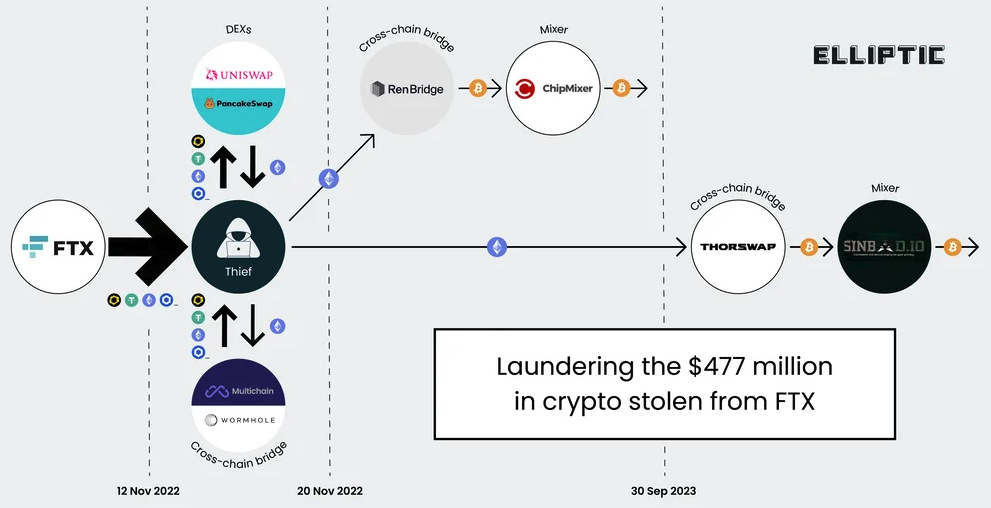
A graphic illustrating the flow of more than $400 million in cryptocurrencies stolen from FTX on Nov. 11-12, 2022. Image: Elliptic.co.

An indictment unsealed this week and first reported on by Ars Technica alleges that Chicago man Robert Powell, a.k.a. “R,” “R$” and “ElSwapo1,” was the ringleader of a SIM-swapping group called the “Powell SIM Swapping Crew.” Colorado resident Emily “Em” Hernandez allegedly helped the group gain access to victim devices in service of SIM-swapping attacks between March 2021 and April 2023. Indiana resident Carter Rohn, a.k.a. “Carti,” and “Punslayer,” allegedly assisted in compromising devices.

In a SIM-swapping attack, the crooks transfer the target’s phone number to a device they control, allowing them to intercept any text messages or phone calls sent to the victim, including one-time passcodes for authentication or password reset links sent via SMS.

The indictment states that the perpetrators in this heist stole the $400 million in cryptocurrencies on Nov. 11, 2022 after they SIM-swapped an AT&T customer by impersonating them at a retail store using a fake ID. However, the document refers to the victim in this case only by the name “Victim 1.”

Wired’s Andy Greenberg recently wrote about FTX’s all-night race to stop a $1 billion crypto heist that occurred on the evening of November 11:

“FTX’s staff had already endured one of the worst days in the company’s short life. What had recently been one of the world’s top cryptocurrency exchanges, valued at $32 billion only 10 months earlier, had just declared bankruptcy. Executives had, after an extended struggle, persuaded the company’s CEO, Sam Bankman-Fried, to hand over the reins to John Ray III, a new chief executive now tasked with shepherding the company through a nightmarish thicket of debts, many of which it seemed to have no means to pay.”

“FTX had, it seemed, hit rock bottom. Until someone—a thief or thieves who have yet to be identified—chose that particular moment to make things far worse. That Friday evening, exhausted FTX staffers began to see mysterious outflows of the company’s cryptocurrency, publicly captured on the Etherscan website that tracks the Ethereum blockchain, representing hundreds of millions of dollars worth of crypto being stolen in real time.”

The indictment says the $400 million was stolen over several hours between November 11 and 12, 2022. Tom Robinson, co-founder of the blockchain intelligence firm Elliptic, said the attackers in the FTX heist began to drain FTX wallets on the evening of Nov. 11, 2022 local time, and continuing until the 12th of November.

Robinson said Elliptic is not aware of any other crypto heists of that magnitude occurring on that date.

“We put the value of the cryptoassets stolen at $477 million,” Robinson said. “The FTX administrators have reported overall losses due to “unauthorized third-party transfers” of $413 million – the discrepancy is likely due to subsequent seizure and return of some of the stolen assets. Either way, it’s certainly over $400 million, and we are not aware of any other thefts from crypto exchanges on this scale, on this date.”

The SIM-swappers allegedly responsible for the $400 million crypto theft are all U.S. residents. But there are some indications they had help from organized cybercriminals based in Russia. In October 2023, Elliptic released a report that found the money stolen from FTX had been laundered through exchanges with ties to criminal groups based in Russia.

“A Russia-linked actor seems a stronger possibility,” Elliptic wrote. “Of the stolen assets that can be traced through ChipMixer, significant amounts are combined with funds from Russia-linked criminal groups, including ransomware gangs and darknet markets, before being sent to exchanges. This points to the involvement of a broker or other intermediary with a nexus in Russia.”

Nick Bax, director of analytics at the cryptocurrency wallet recovery firm Unciphered, said the flow of stolen FTX funds looks more like what his team has seen from groups based in Eastern Europe and Russian than anything they’ve witnessed from US-based SIM-swappers.

“I was a bit surprised by this development but it seems to be consistent with reports from CISA [the Cybersecurity and Infrastructure Security Agency] and others that “Scattered Spider” has worked with [ransomware] groups like ALPHV/BlackCat,” Bax said.

CISA’s alert on Scattered Spider says they are a cybercriminal group that targets large companies and their contracted information technology (IT) help desks.

“Scattered Spider threat actors, per trusted third parties, have typically engaged in data theft for extortion and have also been known to utilize BlackCat/ALPHV ransomware alongside their usual TTPs,” CISA said, referring to the group’s signature “Tactics, Techniques an Procedures.”

Nick Bax, posting on Twitter/X in Nov 2022 about his research on the $400 million FTX heist.

Earlier this week, KrebsOnSecurity published a story noting that a Florida man recently charged with being part of a SIM-swapping conspiracy is thought to be a key member of Scattered Spider, a hacking group also known as 0ktapus. That group has been blamed for a string of cyber intrusions at major U.S. technology companies during the summer of 2022.

Financial claims involving FTX’s bankruptcy proceedings are being handled by the financial and risk consulting giant Kroll. In August 2023, Kroll suffered its own breach after a Kroll employee was SIM-swapped. According to Kroll, the thieves stole user information for multiple cryptocurrency platforms that rely on Kroll services to handle bankruptcy proceedings.

KrebsOnSecurity sought comment for this story from Kroll, the FBI, the prosecuting attorneys, and Sullivan & Cromwell, the law firm handling the FTX bankruptcy. This story will be updated in the event any of them respond.

Attorneys for Mr. Powell said they do not know who Victim 1 is in the indictment, as the government hasn’t shared that information yet. Powell’s next court date is a detention hearing on Feb. 2, 2024.

Update, Feb. 3, 12:19 p.m. ET: The FBI declined a request to comment.


Read More

Fla. Man Charged in SIM-Swapping Spree is Key Suspect in Hacker Groups Oktapus, Scattered Spider

​On Jan. 9, 2024, U.S. authorities arrested a 19-year-old Florida man charged with wire fraud, aggravated identity theft, and conspiring with others to use SIM-swapping to steal cryptocurrency. Sources close to the investigation tell KrebsOnSecurity the accused was a key member of a criminal hacking group blamed for a string of cyber intrusions at major U.S. technology companies during the summer of 2022. 

On Jan. 9, 2024, U.S. authorities arrested a 19-year-old Florida man charged with wire fraud, aggravated identity theft, and conspiring with others to use SIM-swapping to steal cryptocurrency. Sources close to the investigation tell KrebsOnSecurity the accused was a key member of a criminal hacking group blamed for a string of cyber intrusions at major U.S. technology companies during the summer of 2022.

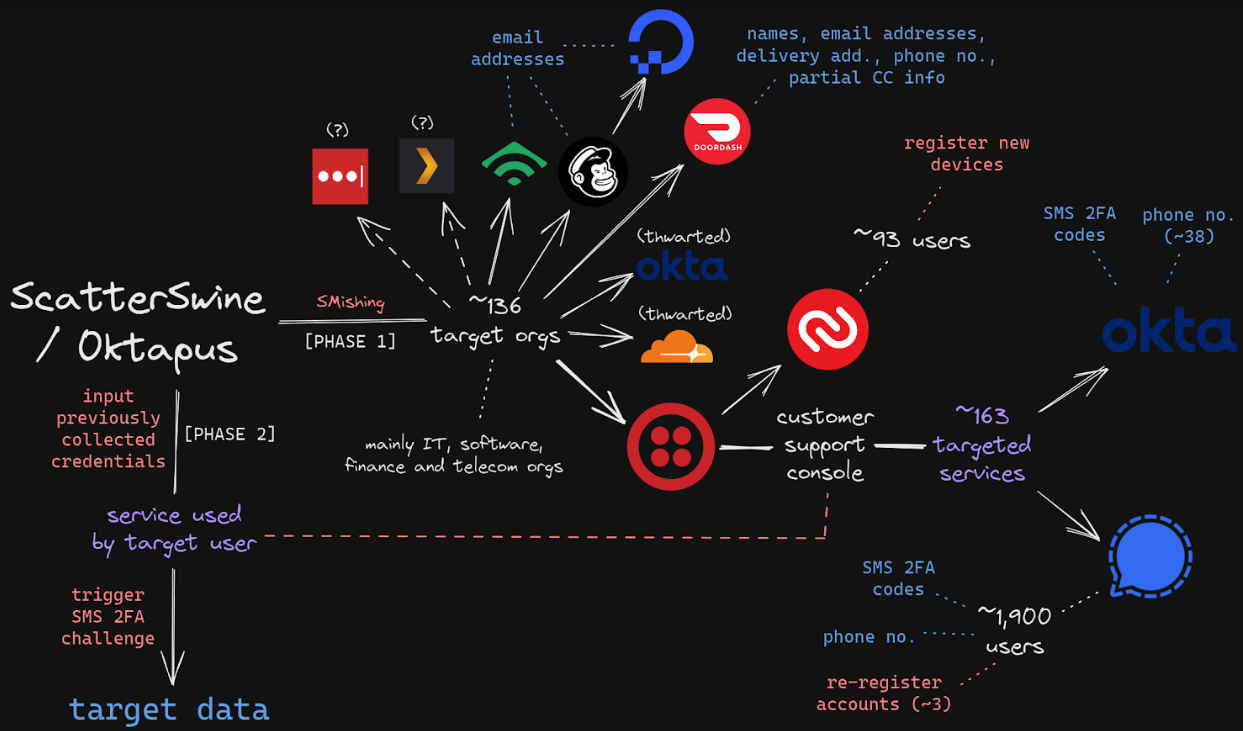
A graphic depicting how 0ktapus leveraged one victim to attack another. Image credit: Amitai Cohen of Wiz.

Prosecutors say Noah Michael Urban of Palm Coast, Fla., stole at least $800,000 from at least five victims between August 2022 and March 2023. In each attack, the victims saw their email and financial accounts compromised after suffering an unauthorized SIM-swap, wherein attackers transferred each victim’s mobile phone number to a new device that they controlled.

The government says Urban went by the aliases “Sosa” and “King Bob,” among others. Multiple trusted sources told KrebsOnSecurity that Sosa/King Bob was a core member of a hacking group behind the 2022 breach at Twilio, a company that provides services for making and receiving text messages and phone calls. Twilio disclosed in Aug. 2022 that an intrusion had exposed a “limited number” of Twilio customer accounts through a sophisticated social engineering attack designed to steal employee credentials.

Shortly after that disclosure, the security firm Group-IB published a report linking the attackers behind the Twilio intrusion to separate breaches at more than 130 organizations, including LastPass, DoorDash, Mailchimp, and Plex. Multiple security firms soon assigned the hacking group the nickname “Scattered Spider.”

Group-IB dubbed the gang by a different name — 0ktapus — which was a nod to how the criminal group phished employees for credentials. The missives asked users to click a link and log in at a phishing page that mimicked their employer’s Okta authentication page. Those who submitted credentials were then prompted to provide the one-time password needed for multi-factor authentication.

A booking photo of Noah Michael Urban released by the Volusia County Sheriff.

0ktapus used newly-registered domains that often included the name of the targeted company, and sent text messages urging employees to click on links to these domains to view information about a pending change in their work schedule. The phishing sites used a Telegram instant message bot to forward any submitted credentials in real-time, allowing the attackers to use the phished username, password and one-time code to log in as that employee at the real employer website.

0ktapus often leveraged information or access gained in one breach to perpetrate another. As documented by Group-IB, the group pivoted from its access to Twilio to attack at least 163 of its customers. Among those was the encrypted messaging app Signal, which said the breach could have let attackers re-register the phone number on another device for about 1,900 users.

Also in August 2022, several employees at email delivery firm Mailchimp provided their remote access credentials to this phishing group. According to an Aug. 12 blog post, the attackers used their access to Mailchimp employee accounts to steal data from 214 customers involved in cryptocurrency and finance.

On August 25, 2022, the password manager service LastPass disclosed a breach in which attackers stole some source code and proprietary LastPass technical information, and weeks later LastPass said an investigation revealed no customer data or password vaults were accessed.

However, on November 30, 2022 LastPass disclosed a far more serious breach that the company said leveraged data stolen in the August breach. LastPass said criminal hackers had stolen encrypted copies of some password vaults, as well as other personal information.

In February 2023, LastPass disclosed that the intrusion involved a highly complex, targeted attack against a DevOps engineer who was one of only four LastPass employees with access to the corporate vault. In that incident, the attackers exploited a security vulnerability in a Plex media server that the employee was running on his home network, and succeeded in installing malicious software that stole passwords and other authentication credentials. The vulnerability exploited by the intruders was patched back in 2020, but the employee never updated his Plex software.

As it happens, Plex announced its own data breach one day before LastPass disclosed its initial August intrusion. On August 24, 2022, Plex’s security team urged users to reset their passwords, saying an intruder had accessed customer emails, usernames and encrypted passwords.

KING BOB’S GRAILS

A review of thousands of messages that Sosa and King Bob posted to several public forums and Discord servers over the past two years shows that the person behind these identities was mainly focused on two things: Sim-swapping, and trading in stolen, unreleased rap music recordings from popular artists.

Indeed, those messages show Sosa/King Bob was obsessed with finding new “grails,” the slang term used in some cybercrime discussion channels to describe recordings from popular artists that have never been officially released. It stands to reason that King Bob was SIM-swapping important people in the music industry to obtain these files, although there is little to support this conclusion from the public chat records available.

“I got the most music in the com,” King Bob bragged in a Discord server in November 2022. “I got thousands of grails.”

King Bob’s chats show he was particularly enamored of stealing the unreleased works of his favorite artists — Lil Uzi Vert, Playboi Carti, and Juice Wrld. When another Discord user asked if he has Eminem grails, King Bob said he was unsure.

“I have two folders,” King Bob explained. “One with Uzi, Carti, Juicewrld. And then I have ‘every other artist.’ Every other artist is unorganized as fuck and has thousands of random shit.”

King Bob’s posts on Discord show he quickly became a celebrity on Leaked[.]cx, one of most active forums for trading, buying and selling unreleased music from popular artists. The more grails that users share with the Leaked[.]cx community, the more their status and access on the forum grows.

The last cache of Leaked dot cx indexed by the archive.org on Jan. 11, 2024.

And King Bob shared a large number of his purloined tunes with this community. Still others he tried to sell. It’s unclear how many of those sales were ever consummated, but it is not unusual for a prized grail to sell for anywhere from $5,000 to $20,000.

In mid-January 2024, several Leaked[.]cx regulars began complaining that they hadn’t seen King Bob in a while and were really missing his grails. On or around Jan. 11, the same day the Justice Department unsealed the indictment against Urban, Leaked[.]cx started blocking people who were trying to visit the site from the United States.

Days later, frustrated Leaked[.]cx users speculated about what could be the cause of the blockage.

“Probs blocked as part of king bob investigation i think?,” wrote the user “Plsdontarrest.” “Doubt he only hacked US artists/ppl which is why it’s happening in multiple countries.”

FORESHADOWING

On Sept. 21, 2022, KrebsOnSecurity told the story of a “Foreshadow,” the nickname chosen by a Florida teenager who was working for a SIM-swapping crew when he was abducted, beaten and held for a $200,000 ransom. A rival SIM-swapping group claimed that Foreshadow and his associates had robbed them of their fair share of the profits from a recent SIM-swap.

In a video released by his abductors on Telegram, a bloodied, battered Foreshadow was made to say they would kill him unless the ransom was paid.

As I wrote in that story, Foreshadow appears to have served as a “holder” — a term used to describe a low-level member of any SIM-swapping group who agrees to carry out the riskiest and least rewarding role of the crime: Physically keeping and managing the various mobile devices and SIM cards that are used in SIM-swapping scams.

KrebsOnSecurity has since learned that Foreshadow was a holder for a particularly active SIM-swapper who went by “Elijah,” which was another nickname that prosecutors say Urban used.

Shortly after Foreshadow’s hostage video began circulating on Telegram and Discord, multiple known actors in the SIM-swapping space told everyone in the channels to delete any previous messages with Foreshadow, claiming he was fully cooperating with the FBI.

This was not the first time Sosa and his crew were hit with violent attacks from rival SIM-swapping groups. In early 2022, a video surfaced on a popular cybercrime channel purporting to show attackers hurling a brick through a window at an address that matches the spacious and upscale home of Urban’s parents in Sanford, Fl.

“Brickings” are among the “violence-as-a-service” offerings broadly available on many cybercrime channels. SIM-swapping and adjacent cybercrime channels are replete with job offers for in-person assignments and tasks that can be found if one searches for posts titled, “If you live near,” or “IRL job” — short for “in real life” job.

A number of these classified ads are in service of performing brickings, where someone is hired to visit a specific address and toss a brick through the target’s window. Other typical IRL job offers involve tire slashings and even drive-by shootings.

THE COM

Sosa was known to be a top member of the broader cybercriminal community online known as “The Com,” wherein hackers boast loudly about high-profile exploits and hacks that almost invariably begin with social engineering — tricking people over the phone, email or SMS into giving away credentials that allow remote access to corporate internal networks.

Sosa also was active in a particularly destructive group of accomplished criminal SIM-swappers known as “Star Fraud.” Cyberscoop’s AJ Vicens reported last year that individuals within Star Fraud were likely involved in the high-profile Caesars Entertainment an MGM Resorts extortion attacks.

“ALPHV, an established ransomware-as-a-service operation thought to be based in Russia and linked to attacks on dozens of entities, claimed responsibility for Caesars and MGM attacks in a note posted to its website earlier this month,” Vicens wrote. “Experts had said the attacks were the work of a group tracked variously as UNC 3944 or Scattered Spider, which has been described as an affiliate working with ALPHV made up of people in the United States and Britain who excel at social engineering.”

In February 2023, KrebsOnSecurity published data taken from the Telegram channels for Star Fraud and two other SIM-swapping groups showing these crooks focused on SIM-swapping T-Mobile customers, and that they collectively claimed access to T-Mobile on 100 separate occasions over a 7-month period in 2022.

The SIM-swapping groups were able to switch targeted phone numbers to another device on demand because they constantly phished T-Mobile employees into giving up credentials to employee-only tools. In each of those cases the goal was the same: Phish T-Mobile employees for access to internal company tools, and then convert that access into a cybercrime service that could be hired to divert any T-Mobile user’s text messages and phone calls to another device.

Allison Nixon, chief research officer at the New York cybersecurity consultancy Unit 221B, said the increasing brazenness of many Com members is a function of how long it has taken federal authorities to go after guys like Sosa.

“These incidents show what happens when it takes too long for cybercriminals to get arrested,” Nixon said. “If governments fail to prioritize this source of threat, violence originating from the Internet will affect regular people.”

NO FIXED ADDRESS

The Daytona Beach News-Journal reports that Urban was arrested Jan. 9 and his trial is scheduled to begin in the trial term starting March 4 in Jacksonville. The publication said the judge overseeing Urban’s case denied bail because the defendant was a strong flight risk.

At Urban’s arraignment, it emerged that he had no fixed address and had been using an alias to stay at an Airbnb. The judge reportedly said that when a search warrant was executed at Urban’s residence, the defendant was downloading programs to delete computer files.

What’s more, the judge explained, despite telling authorities in May that he would not have any more contact with his co-conspirators and would not engage in cryptocurrency transactions, he did so anyway.

Urban entered a plea of not guilty. Urban’s court-appointed attorney said her client would have no comment at this time.

Prosecutors charged Urban with eight counts of wire fraud, one count of conspiracy to commit wire fraud, and five counts of aggravated identity theft. According to the government, if convicted Urban faces up to 20 years in federal prison on each wire fraud charge. He also faces a minimum mandatory penalty of two years in prison for the aggravated identity offenses, which will run consecutive to any other prison sentence imposed.


Read More

Who is Alleged Medibank Hacker Aleksandr Ermakov?

​Authorities in Australia, the United Kingdom and the United States this week levied financial sanctions against a Russian man accused of stealing data on nearly 10 million customers of the Australian health insurance giant Medibank. 33-year-old Aleksandr Ermakov allegedly stole and leaked the Medibank data while working with one of Russia’s most destructive ransomware groups, but little more is shared about the accused. Here’s a closer look at the activities of Mr. Ermakov’s alleged hacker handles. 

Authorities in Australia, the United Kingdom and the United States this week levied financial sanctions against a Russian man accused of stealing data on nearly 10 million customers of the Australian health insurance giant Medibank. 33-year-old Aleksandr Ermakov allegedly stole and leaked the Medibank data while working with one of Russia’s most destructive ransomware groups, but little more is shared about the accused. Here’s a closer look at the activities of Mr. Ermakov’s alleged hacker handles.

Aleksandr Ermakov, 33, of Russia. Image: Australian Department of Foreign Affairs and Trade.

The allegations against Ermakov mark the first time Australia has sanctioned a cybercriminal. The documents released by the Australian government included multiple photos of Mr. Ermakov, and it was clear they wanted to send a message that this was personal.

It’s not hard to see why. The attackers who broke into Medibank in October 2022 stole 9.7 million records on current and former Medibank customers. When the company refused to pay a $10 million ransom demand, the hackers selectively leaked highly sensitive health records, including those tied to abortions, HIV and alcohol abuse.

The U.S. government says Ermakov and the other actors behind the Medibank hack are believed to be linked to the Russia-backed cybercrime gang REvil.

“REvil was among the most notorious cybercrime gangs in the world until July 2021 when they disappeared. REvil is a ransomware-as-a-service (RaaS) operation and generally motivated by financial gain,” a statement from the U.S. Department of the Treasury reads. “REvil ransomware has been deployed on approximately 175,000 computers worldwide, with at least $200 million paid in ransom.”

The sanctions say Ermakov went by multiple aliases on Russian cybercrime forums, including GustaveDore, JimJones, and Blade Runner. A search on the handle GustaveDore at the cyber intelligence platform Intel 471 shows this user created a ransomware affiliate program in November 2021 called Sugar (a.k.a. Encoded01), which focused on targeting single computers and end-users instead of corporations.

An ad for the ransomware-as-a-service program Sugar posted by GustaveDore warns readers against sharing information with security researchers, law enforcement, or “friends of Krebs.”

In November 2020, Intel 471 analysts concluded that GustaveDore’s alias JimJones “was using and operating several different ransomware strains, including a private undisclosed strain and one developed by the REvil gang.”

In 2020, GustaveDore advertised on several Russian discussion forums that he was part of a Russian technology firm called Shtazi, which could be hired for computer programming, web development, and “reputation management.” Shtazi’s website remains in operation today.

A Google-translated version of Shtazi dot ru. Image: Archive.org.

The third result when one searches for shtazi[.]ru in Google is an Instagram post from a user named Mikhail Borisovich Shefel, who promotes Shtazi’s services as if it were also his business. If this name sounds familiar, it’s because in December 2023 KrebsOnSecurity identified Mr. Shefel as “Rescator,” the cybercriminal identity tied to tens of millions of payment cards that were stolen in 2013 and 2014 from big box retailers Target and Home Depot, among others.

How close was the connection between GustaveDore and Mr. Shefel? The Treasury Department’s sanctions page says Ermakov used the email address ae.ermak@yandex.ru. A search for this email at DomainTools.com shows it was used to register just one domain name: millioner1[.]com. DomainTools further finds that a phone number tied to Mr. Shefel (79856696666) was used to register two domains: millioner[.]pw, and shtazi[.]net.

The December 2023 story here that outed Mr. Shefel as Rescator noted that Shefel recently changed his last name to “Lenin” and had launched a service called Lenin[.]biz that sells physical USSR-era Ruble notes bearing the image of Vladimir Lenin, the founding father of the Soviet Union. The Instagram account for Mr. Shefel includes images of stacked USSR-era Ruble notes, as well as multiple links to Shtazi.

The Instagram account of Mikhail Borisovich Shefel, aka MikeMike aka Rescator.

Intel 471’s research revealed Ermakov was affiliated in some way with REvil because the stolen Medibank data was published on a blog that had one time been controlled by REvil affiliates who carried out attacks and paid an affiliate fee to the gang.

But by the time of the Medibank hack, the REvil group had mostly scattered after a series of high-profile attacks led to the group being disrupted by law enforcement. In November 2021, Europol announced it arrested seven REvil affiliates who collectively made more than $230 million worth of ransom demands since 2019. At the same time, U.S. authorities unsealed two indictments against a pair of accused REvil cybercriminals.

“The posting of Medibank’s data on that blog, however, indicated a connection with that group, although the connection wasn’t clear at the time,” Intel 471 wrote. “This makes sense in retrospect, as Ermakov’s group had also been a REvil affiliate.”

It is easy to dismiss sanctions like these as ineffective, because as long as Mr. Ermakov remains in Russia he has little to fear of arrest. However, his alleged role as an apparent top member of REvil paints a target on him as someone who likely possesses large sums of cryptocurrency, said Patrick Gray, the Australian co-host and founder of the security news podcast Risky Business.

“I’ve seen a few people poo-poohing the sanctions…but the sanctions component is actually less important than the doxing component,” Gray said. “Because this guy’s life just got a lot more complicated. He’s probably going to have to pay some bribes to stay out of trouble. Every single criminal in Russia now knows he is a vulnerable 33 year old with an absolute ton of bitcoin. So this is not a happy time for him.”


Read More

Using Google Search to Find Software Can Be Risky

​Google continues to struggle with cybercriminals running malicious ads on its search platform to trick people into downloading booby-trapped copies of popular free software applications. The malicious ads, which appear above organic search results and often precede links to legitimate sources of the same software, can make searching for software on Google a dicey affair. 

Google continues to struggle with cybercriminals running malicious ads on its search platform to trick people into downloading booby-trapped copies of popular free software applications. The malicious ads, which appear above organic search results and often precede links to legitimate sources of the same software, can make searching for software on Google a dicey affair.

Google says keeping users safe is a top priority, and that the company has a team of thousands working around the clock to create and enforce their abuse policies. And by most accounts, the threat from bad ads leading to backdoored software has subsided significantly compared to a year ago.

But cybercrooks are constantly figuring out ingenious ways to fly beneath Google’s anti-abuse radar, and new examples of bad ads leading to malware are still too common.

For example, a Google search earlier this week for the free graphic design program FreeCAD produced the following result, which shows that a “Sponsored” ad at the top of the search results is advertising the software available from freecad-us[.]org. Although this website claims to be the official FreeCAD website, that honor belongs to the result directly below — the legitimate freecad.org.

How do we know freecad-us[.]org is malicious? A review at DomainTools.com show this domain is the newest (registered Jan. 19, 2024) of more than 200 domains at the Internet address 93.190.143[.]252 that are confusingly similar to popular software titles, including dashlane-project[.]com, filezillasoft[.]com, keepermanager[.]com, and libreofficeproject[.]com.

Some of the domains at this Netherlands host appear to be little more than software review websites that steal content from established information sources in the IT world, including Gartner, PCWorld, Slashdot and TechRadar.

Other domains at 93.190.143[.]252 do serve actual software downloads, but none of them are likely to be malicious if one visits the sites through direct navigation. If one visits openai-project[.]org and downloads a copy of the popular Windows desktop management application Rainmeter, for example, the file that is downloaded has the same exact file signature as the real Rainmeter installer available from rainmeter.net.

But this is only a ruse, says Tom Hegel, principal threat researcher at the security firm Sentinel One. Hegel has been tracking these malicious domains for more than a year, and he said the seemingly benign software download sites will periodically turn evil, swapping out legitimate copies of popular software titles with backdoored versions that will allow cybercriminals to remotely commander the systems.

“They’re using automation to pull in fake content, and they’re rotating in and out of hosting malware,” Hegel said, noting that the malicious downloads may only be offered to visitors who come from specific geographic locations, like the United States. “In the malicious ad campaigns we’ve seen tied to this group, they would wait until the domains gain legitimacy on the search engines, and then flip the page for a day or so and then flip back.”

In February 2023, Hegel co-authored a report on this same network, which Sentinel One has dubbed MalVirt (a play on “malvertising”). They concluded that the surge in malicious ads spoofing various software products was directly responsible for a surge in malware infections from infostealer trojans like IcedID, Redline Stealer, Formbook and AuroraStealer.

Hegel noted that the spike in malicious software-themed ads came not long after Microsoft started blocking by default Office macros in documents downloaded from the Internet. He said the volume of the current malicious ad campaigns from this group appears to be relatively low compared to a year ago.

“It appears to be same campaign continuing,” Hegel said. “Last January, every Google search for ‘Autocad’ led to something bad. Now, it’s like they’re paying Google to get one out of every dozen of searches. My guess it’s still continuing because of the up-and-down [of the] domains hosting malware and then looking legitimate.”

Several of the websites at this Netherlands host (93.190.143[.]252) are currently blocked by Google’s Safebrowsing technology, and labeled with a conspicuous red warning saying the website will try to foist malware on visitors who ignore the warning and continue.

But it remains a mystery why Google has not similarly blocked more than 240+ other domains at this same host, or else removed them from its search index entirely. Especially considering there is nothing else but these domains hosted at that Netherlands IP address, and because they have all remained at that address for the past year.

In response to questions from KrebsOnSecurity, Google said maintaining a safe ads ecosystem and keeping malware off of its platforms is a priority across Google.

“Bad actors often employ sophisticated measures to conceal their identities and evade our policies and enforcement, sometimes showing Google one thing and users something else,” Google said in a written statement. “We’ve reviewed the ads in question, removed those that violated our policies, and suspended the associated accounts. We’ll continue to monitor and apply our protections.”

Google says it removed 5.2 billion ads in 2022, and restricted more than 4.3 billion ads and suspended over 6.7 million advertiser accounts. The company’s latest ad safety report says Google in 2022 blocked or removed 1.36 billion advertisements for violating its abuse policies.

Some of the domains referenced in this story were included in Sentinel One’s February 2023 report, but dozens more have been added since, such as those spoofing the official download sites for Corel Draw, Github Desktop, Roboform and Teamviewer.

This October 2023 report on the FreeCAD user forum came from a user who reported downloading a copy of the software from freecadsoft[.]com after seeing the site promoted at the top of a Google search result for “freecad.” Almost a month later, another FreeCAD user reported getting stung by the same scam.

“This got me,” FreeCAD forum user “Matterform” wrote on Nov. 19, 2023. “Please leave a report with Google so it can flag it. They paid Google for sponsored posts.”

Sentinel One’s report didn’t delve into the “who” behind this ongoing MalVirt campaign, and there are precious few clues that point to attribution. All of the domains in question were registered through webnic.cc, and several of them display a placeholder page saying the site is ready for content. Viewing the HTML source of these placeholder pages shows many of the hidden comments in the code are in Cyrillic.

Trying to track the crooks using Google’s Ad Transparency tools didn’t lead far. The ad transparency record for the malicious ad featuring freecad-us[.]org (in the screenshot above) shows that the advertising account used to pay for the ad has only run one previous ad through Google search: It advertised a wedding photography website in New Zealand.

The apparent owner of that photography website did not respond to requests for comment, but it’s also likely his Google advertising account was hacked and used to run these malicious ads.


Read More

Canadian Man Stuck in Triangle of E-Commerce Fraud

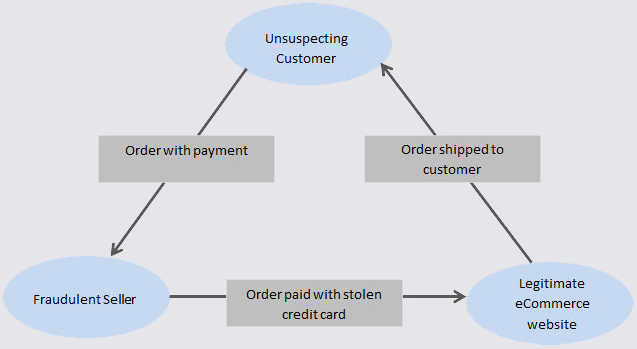
​A Canadian man who says he’s been falsely charged with orchestrating a complex e-commerce scam is seeking to clear his name. His case appears to involve “triangulation fraud,” which occurs when a consumer purchases something online — from a seller on Amazon or eBay, for example — but the seller doesn’t actually own the item for sale. Instead, the seller purchases the item from an online retailer using stolen payment card data. In this scam, the unwitting buyer pays the scammer and receives what they ordered, and very often the only party left to dispute the transaction is the owner of the stolen payment card. 

A Canadian man who says he’s been falsely charged with orchestrating a complex e-commerce scam is seeking to clear his name. His case appears to involve “triangulation fraud,” which occurs when a consumer purchases something online — from a seller on Amazon or eBay, for example — but the seller doesn’t actually own the item for sale. Instead, the seller purchases the item from an online retailer using stolen payment card data. In this scam, the unwitting buyer pays the scammer and receives what they ordered, and very often the only party left to dispute the transaction is the owner of the stolen payment card.

Triangulation fraud. Image: eBay Enterprise.

Timothy Barker, 56, was until recently a Band Manager at Duncan’s First Nation, a First Nation in northwestern Alberta, Canada. A Band Manager is responsible for overseeing the delivery of all Band programs, including community health services, education, housing, social assistance, and administration.

Barker told KrebsOnSecurity that during the week of March 31, 2023 he and the director of the Band’s daycare program discussed the need to purchase items for the community before the program’s budget expired for the year.

“There was a rush to purchase items on the Fiscal Year 2023 timeline as the year ended on March 31,” Barker recalled.

Barker said he bought seven “Step2 All Around Playtime Patio with Canopy” sets from a seller on Amazon.ca, using his payment card on file to pay nearly $2,000 for the items.

On the morning of April 7, Barker’s Facebook account received several nasty messages from an Ontario woman he’d never met. She demanded to know why he’d hacked her Walmart account and used it to buy things that were being shipped to his residence. Barker shared a follow-up message from the woman, who later apologized for losing her temper.

One of several messages from the Ontario woman whose Walmart account was used to purchase the goods that Barker ordered from Amazon.

“If this is not the person who did this to me, I’m sorry, I’m pissed,” the lady from Ontario said. “This order is being delivered April 14th to the address above. If not you, then someone who has the same name. Now I feel foolish.”

On April 12, 2023, before the Amazon purchases had even arrived at his home, Barker received a call from an investigator with the Royal Canadian Mounted Police (RCMP), who said Barker urgently needed to come down to the local RCMP office for an interview related to “an investigation.” Barker said the officer wouldn’t elaborate at the time on the nature of the investigation, and that he told the officer he was in Halifax for several days but could meet after his return home.

According to Barker, the investigator visited his home anyway the following day and began questioning his wife, asking about his whereabouts, his work, and when he might return home.

On April 14, six boxes arrived to partially fulfill his Amazon order; another box was delayed, and the Amazon.ca seller he’d purchased from said the remaining box was expected to ship the following week. Barker said he was confused because all six boxes came from Walmart instead of Amazon, and the shipping labels had his name and address on them but carried a contact phone number in Mexico.

Three days later, the investigator called again, demanding he submit to an interview.

“He then asked where my wife was and what her name is,” Barker said. “He wanted to know her itinerary for the day. I am now alarmed and frightened — this doesn’t feel right.”

Barker said he inquired with a local attorney about a consultation, but that the RCMP investigator showed up at his house before he could speak to the lawyer. The investigator began taking pictures of the boxes from his Amazon order.

“The [investigator] derisively asked why would anyone order so many play sets?” Barker said. “I started to give the very logical answer that we are helping families improve their children’s home life and learning for toddlers when he cut me off and gave the little speech about giving a statement after my arrest. He finally told me that he believes that I used someone’s credit card in Ontario to purchase the Walmart products.”

Eager to clear his name, Barker said he shared with the police copies of his credit card bills and purchase history at Amazon. But on April 21, the investigator called again to say he was coming to arrest Barker for theft.

“He said that if I was home at five o’clock then he would serve the papers at the house and it would go easy and I wouldn’t have to go to the station,” Barker recalled. “If I wasn’t home, then he would send a search team to locate me and drag me to the station. He said he would kick the door down if I didn’t answer my phone. He said he had every right to break our door down.”

Barker said he briefly conferred with an attorney about how to handle the arrest. Later that evening, the RCMP arrived with five squad cars and six officers.

“I asked if handcuffs were necessary – there is no danger of violence,” Barker said. “I was going to cooperate. His response was to turn me around and cuff me. He walked me outside and stood me beside the car for a full 4 or 5 minutes in full view of all the neighbors.”

Barker believes he and the Ontario woman are both victims of triangulation fraud, and that someone likely hacked the Ontario woman’s Walmart account and added his name and address as a recipient.

But he says he has since lost his job as a result of the arrest, and now he can’t find new employment because he has a criminal record. Barker’s former employer — Duncan’s First Nation — did not respond to requests for comment.

“In Canada, a criminal record is not a record of conviction, it’s a record of charges and that’s why I can’t work now,” Barker said. “Potential employers never find out what the nature of it is, they just find out that I have a criminal arrest record.”

Barker said that right after his arrest, the RCMP called the Ontario woman and told her they’d solved the crime and arrested the perpetrator.

“They even told her my employer had put me on administrative leave,” he said. “Surely, they’re not allowed to do that.”

Contacted by KrebsOnSecurity, the woman whose Walmart account was used to fraudulently purchase the child play sets said she’s not convinced this was a case of triangulation fraud. She declined to elaborate on why she believed this, other than to say the police told her Barker was a bad guy.

“I don’t think triangulation fraud was used in this case,” she said. “My actual Walmart.ca account was hacked and an order was placed on my account, using my credit card. The only thing Mr. Barker did was to order the item to be delivered to his address in Alberta.”

Barker shared with this author all of the documentation he gave to the RCMP, including screenshots of his Amazon.ca account showing that the items in dispute were sold by a seller named “Adavio,” and that the merchant behind this name was based in Turkey.

That Adavio account belongs to a young computer engineering student and “SEO expert” based in Adana, Turkey who did not respond to requests for comment.

Amazon.ca said it conducted an investigation and found that Mr. Barker never filed a complaint about the seller or transaction in question. The company noted that Adavio currently has a feedback rating of 4.5 stars out of 5.

“Amazon works hard to provide customers with a great experience and it’s our commitment to go above and beyond to make things right for customers,” Amazon.ca said in a written statement. “If a customer has an issue with an order, they may flag to Amazon through our Customer Service page.”

Barker said when he went to file a complaint with Amazon last year he could no longer find the Adavio account on the website, and that the site didn’t have a category for the type of complaint he wanted to file.

When he first approached KrebsOnSecurity about his plight last summer, Barker said he didn’t want any media attention to derail the chances of having his day in court, and confronting the RCMP investigator with evidence proving that he was being wrongfully prosecuted and maligned.

But a week before his court date arrived at the end of November 2023, prosecutors announced the charges against him would be stayed, meaning they had no immediate plans to prosecute the case further but that the investigation could still be reopened at some point in the future.

The RCMP declined to comment for this story, other than to confirm they had issued a stay of proceedings in the case.

Barker says the stay has left him in legal limbo — denying him the ability to clear his name, while giving the RCMP a free pass for a botched investigation. He says he has considered suing the investigating officer for defamation, but has been told by his attorney that the bar for success in such cases against the government is extremely high.

“I’m a 56-year-old law-abiding citizen, and I haven’t broken any laws,” Barker said, wondering aloud who would be stupid enough to use someone else’s credit card and have the stolen items shipped directly to their home.

“Their putting a stay on the proceedings without giving any evidence or explanation allows them to cover up bad police work,” he said. “It’s all so stupid.”

Triangulation fraud is hardly a new thing. KrebsOnSecurity first wrote about it from an e-commerce vendor’s perspective in 2015, but the scam predates that story by many years and is now a well-understood problem. The Canadian authorities should either let Mr. Barker have his day in court, or drop the charges altogether.


Read More

E-Crime Rapper ‘Punchmade Dev’ Debuts Card Shop

​The rapper and social media personality Punchmade Dev is perhaps best known for his flashy videos singing the praises of a cybercrime lifestyle. With memorable hits such as “Internet Swiping” and “Million Dollar Criminal” earning millions of views, Punchmade has leveraged his considerable following to peddle tutorials on how to commit financial crimes online. But until recently, there wasn’t much to support a conclusion that Punchmade was actually doing the cybercrime things he promotes in his songs. 

The rapper and social media personality Punchmade Dev is perhaps best known for his flashy videos singing the praises of a cybercrime lifestyle. With memorable hits such as “Internet Swiping” and “Million Dollar Criminal” earning millions of views, Punchmade has leveraged his considerable following to peddle tutorials on how to commit financial crimes online. But until recently, there wasn’t much to support a conclusion that Punchmade was actually doing the cybercrime things he promotes in his songs.

Images from Punchmade Dev’s Twitter/X account show him displaying bags of cash and wearing a functional diamond-crusted payment card skimmer.

Punchmade Dev’s most controversial mix — a rap called “Wire Fraud Tutorial” — was taken down by Youtube last summer for violating the site’s rules. Punchmade shared on social media that the video’s removal was prompted by YouTube receiving a legal process request from law enforcement officials.

The 24-year-old rapper told reporters he wasn’t instructing people how to conduct wire fraud, but instead informing his fans on how to avoid being victims of wire fraud. However, this is difficult to discern from listening to the song, which sounds very much like a step-by-step tutorial on how to commit wire fraud.

“Listen up, I’m finna show y’all how to hit a bank,” Wire Fraud Tutorial begins. “Just pay attention, this is a quick way to jug in any state. First you wanna get a bank log from a trusted site. Do your research because the information must be right.”

And even though we’re talking about an individual who regularly appears in videos wearing a half-million dollars worth of custom jewelry draped around his arm and neck (including the functional diamond-encrusted payment card skimming device pictured above), there’s never been much evidence that Punchmade was actually involved in committing cybercrimes himself. Even his most vocal critics acknowledged that the whole persona could just be savvy marketing.

That changed recently when Punchmade’s various video and social media accounts began promoting a new web shop that is selling stolen payment cards and identity data, as well as hacked financial accounts and software for producing counterfeit checks.

Punchmade Dev’s shop.

The official Punchmadedev account on Instagram links to many of the aforementioned rap videos and tutorials on cybercriming, as well as to Punchmadedev’s other profiles and websites. Among them is mainpage[.]me/punchmade, which includes the following information for “Punchmade Empire ®

-212,961 subscribers

#1 source on Telegram

Contact: @whopunchmade

24/7 shop: https://punchmade[.]atshop[.]io

Visiting that @whopunchmade Telegram channel shows this user is promoting punchmade[.]atshop[.]io, which is currently selling hacked bank accounts and payment cards with high balances.

Clicking “purchase” on the C@sh App offering, for example, shows that for $80 the buyer will receive logins to Cash App accounts with balances between $3,000 and $5,000. “If you buy this item you’ll get my full support on discord/telegram if there is a problem!,” the site promises. Purchases can be made in cryptocurrencies, and checking out prompts one to continue payment at Coinbase.com.

Another item for sale, “Fullz + Linkable CC,” promises “ID Front + Back, SSN with 700+ Credit Score, and Linkable CC” or credit card. That also can be had for $80 in crypto.

WHO IS PUNCHMADE DEV?

Punchmade has fashioned his public persona around a collection of custom-made, diamond-covered necklaces that are as outlandish and gaudy as they are revelatory. My favorite shot from one of Punchmade’s videos features at least three of these monstrosities: One appears to be a boring old diamond and gold covered bitcoin, but the other two necklaces tell us something about where Punchmade is from:

Notice the University of Kentucky logo, and the Lexington, Ky skyline.

One of them includes the logo and mascot of the University of Kentucky. The other, an enormous diamond studded skyline, appears to have been designed based on the skyline in Lexington, Ky:

The “About” page on Punchmade Dev’s Spotify profile describes him as “an American artist, rapper, musician, producer, director, entrepreneur, actor and investor.” “Punchmade Dev is best known for his creative ways to use technology, video gaming, and social media to build a fan base,” the profile continues.

The profile explains that he launched his own record label in 2021 called Punchmade Records, where he produces his own instrumentals and edits his own music videos.

A search on companies that include the name “punchmade” at the website of the Kentucky Secretary of State brings up just one record: OBN Group LLC, in Lexington, Ky. This November 2021 record includes a Certificate of Assumed Name, which shows that Punchmade LLC is the assumed name of OBN Group LLC.

The president of OBN Group LLC is listed as Devon Turner. A search on the Secretary of State website for other businesses tied to Devon Turner reveals just one other record: A now-defunct entity called DevTakeFlightBeats Inc.

The breach tracking service Constella Intelligence finds that Devon Turner from Lexington, Ky. used the email address obndevpayments@gmail.com. A lookup on this email at DomainTools.com shows it was used to register the domain foreverpunchmade[.]com, which is registered to a Devon Turner in Lexington, Ky. A copy of this site at archive.org indicates it once sold Punchmade Dev-branded t-shirts and other merchandise.

Mr. Turner did not respond to multiple requests for comment.

Searching online for Devon Turner and “Punchmade” brings up a video from @brainjuiceofficial, a YouTube channel that focuses on social media celebrities. @Brainjuiceofficial says Turner was born in October 2000, the oldest child of a single mother of five whose husband was not in the picture.

Devon Turner, a.k.a. “Punchmade Dev,” in an undated photo.

The video says the six-foot five Turner played basketball, track and football in high school, but that he gradually became obsessed with playing the video game NBA 2K17 and building a following of people watching him play the game competitively online.

According to this brief documentary, Turner previously streamed his NBA 2K17 videos on a YouTube channel called DevTakeFlight, although he originally went by the nickname OBN Dev.

“Things may eventually catch up to Devon if he isn’t careful,” @Brainjuiceofficial observed, noting that Turner has been shot at before, and also robbed at an ATM while flexing a bunch of cash for a picture and wearing $500k in jewelry. “Although you have a lot of people that are into what you do, there are a lot of people waiting for you to slip up.”


Read More

Here’s Some Bitcoin: Oh, and You’ve Been Served!

​A California man who lost $100,000 in a 2021 SIM-swapping attack is suing the unknown holder of a cryptocurrency wallet that harbors his stolen funds. The case is thought to be the first in which a federal court has recognized… Read More » 

A California man who lost $100,000 in a 2021 SIM-swapping attack is suing the unknown holder of a cryptocurrency wallet that harbors his stolen funds. The case is thought to be the first in which a federal court has recognized the use of information included in a bitcoin transaction — such as a link to a civil claim filed in federal court — as reasonably likely to provide notice of the lawsuit to the defendant. Experts say the development could make it easier for victims of crypto heists to recover stolen funds through the courts without having to wait years for law enforcement to take notice or help.

Ryan Dellone, a healthcare worker in Fresno, Calif., asserts that thieves stole his bitcoin on Dec. 14, 2021, by executing an unauthorized SIM-swap that involved an employee at his mobile phone provider who switched Dellone’s phone number over to a new device the attackers controlled.

Dellone says the crooks then used his phone number to break into his account at Coinbase and siphon roughly $100,000 worth of cryptocurrencies. Coinbase is also named as a defendant in the lawsuit, which alleges the company ignored multiple red flags, and that it should have detected and stopped the theft. Coinbase did not respond to requests for comment.

Working with experts who track the flow of funds stolen in cryptocurrency heists, Dellone’s lawyer Ethan Mora identified a bitcoin wallet that was the ultimate destination of his client’s stolen crypto. Mora says his client has since been made aware that the bitcoin address in question is embroiled in an ongoing federal investigation into a cryptocurrency theft ring.

Mora said it’s unclear if the bitcoin address that holds his client’s stolen money is being held by the government or by the anonymous hackers. Nevertheless, he is pursuing a novel legal strategy that allows his client to serve notice of the civil suit to that bitcoin address — and potentially win a default judgment to seize his client’s funds within — without knowing the identity of his attackers or anything about the account holder.

In a civil lawsuit seeking monetary damages, a default judgment is usually entered on behalf of the plaintiff if the defendant fails to respond to the complaint within a specified time. Assuming that the cybercriminals who stole the money don’t dispute Dellone’s claim, experts say the money could be seized by cryptocurrency exchanges if the thieves ever tried to move it or spend it.

The U.S. courts have generally held that if you’re going to sue someone, you have to provide some kind of meaningful and timely communication about that lawsuit to the defendant in a way that is reasonably likely to provide them notice.

Not so long ago, you had track down your defendant and hire someone to physically serve them with a copy of the court papers. But legal experts say the courts have evolved their thinking in recent years about what constitutes meaningful service, and now allow notification via email.

On Dec. 14, 2023, a federal judge in the Eastern District of California granted Dellone permission to serve notice of his lawsuit directly to the suspected hackers’ bitcoin address — using a short message that was attached to roughly $100 worth of bitcoin Mora sent to the address.

Bitcoin transactions are public record, and each transaction can be sent along with an optional short message. The message uses what’s known as an “OP RETURN,” or an instruction of the Bitcoin scripting language that allows users to attach metadata to a transaction — and thus save it on the blockchain.

In the $100 bitcoin transaction Mora sent to the disputed bitcoin address, the OP RETURN message read: “OSERVICE – SUMMONS, COMPLAINT U.S. Dist. E.D. Cal. LINK: t.ly/123cv01408_service,” which is a short link to a copy of the lawsuit hosted on Google Drive.

“The courts are adapting to the new style of service of process,” said Mark Rasch, a former federal prosecutor at the U.S. Department of Justice. “And that’s helpful and useful and necessary.”

Rasch said Mora’s strategy could force the government to divulge information about their case, or else explain to a judge why the plaintiff shouldn’t be able to recover their stolen funds without further delay. Rasch said it could be that Dellone’s stolen crypto was seized as part of a government asset forfeiture, but that either way there is no reason Uncle Sam should hold some cybercrime victims’ life savings indefinitely.

“The government doesn’t need the crypto as evidence, but in a forfeiture action the money goes to the government,” Rasch said. “But it was never the government’s money, and that doesn’t help the victim. The government should be providing information to the victims of cryptocurrency theft so that their attorneys can go get the money back themselves.”

Nick Bax is a security researcher who specializes in tracing the labyrinthine activity of criminals trying to use cryptocurrency exchanges and other financial instruments to launder the proceeds of cybercrime. Bax said Mora’s method could allow more victims to stake legitimate legal claims to their stolen funds.

“If you get a default judgment against a bitcoin address, for example, and then down the road that bitcoin gets sent to an exchange that complies with or abides by U.S. court orders, then it’s yours,” Bax said. “I’ve seen funds with a court order on them get frozen by the exchanges that decided it made sense to comply with orders from a U.S. federal court.”

Bax’s research was featured in a Sept. 2023 story here about how experts now believe it’s likely hackers are cracking open some of the password vaults stolen in the 2022 data breach at LastPass.

“I’ve talked to a lot victims who have had life-changing amounts of money being seized and would like that money back,” Bax said. “A big goal here is just making civil cases more efficient. Because then people can help themselves and they don’t need to rely solely on law enforcement with its limited resources. And that’s really the goal: To scale this and make it economically viable.”

While Dellone’s lawsuit may be the first time anyone has obtained approval from a federal judge to use bitcoin to notify another party of a civil action, the technique has been used in several recent unrelated cases involving other cryptocurrencies, including Ethereum and NFTs.

The law firm DLAPiper writes that in November 2022, the U.S. District Court for the Southern District of Florida “authorized service of a lawsuit seeking the recovery of stolen digital assets by way of a non-fungible token or NFT containing the text of the complaint and summons, as well as a hyperlink to a website created by the plaintiffs containing all pleadings and orders in the action.”

In approving Dellone’s request for service via bitcoin transaction, the judge overseeing the case cited a recent New York Superior Court ruling in a John Doe case brought by victims seeking to unmask the crooks behind a $1.3 million cyberheist.

In the New York case, the state trial court found it was acceptable for the plaintiffs to serve notice of the suit via cryptocurrency transactions because the defendants regularly used the Blockchain address to which the tokens were sent, and had recently done so. Also, the New York court found that because the account in question contained a significant sum of money, it was unlikely to be abandoned or forgotten.

“Thus the court inferred the defendants were likely to access the account in the future,” wrote Judge Helena M. March-Kuchta, for the Eastern District of California, summarizing the New York case. “Finally, the plaintiff had no alternative means of contacting these unknown defendants.”

Experts say regardless of the reason for a cryptocurrency theft or loss — whether it’s from a romance scam or a straight-up digital mugging — it’s important for victims to file an official report both with their local police and with the FBI’s Internet Crime Complaint Center (ic3.gov). The IC3 collects reports on cybercrime and sometimes bundles victim reports into cases for DOJ/FBI prosecutors and investigators.

The hard truth is that most victims will never see their stolen funds again. But sometimes federal investigators win minor victories and manage to seize or freeze crypto assets that are known to be associated with specific crimes and criminals. In those cases, the government will eventually make an effort to find, contact and in some cases remunerate known victims.

It might take many years for this process to unfold. But if and when they do make that effort, federal investigators are likely to focus their energies and attention responding to victims who staked a claim and can support it with documentation.

But have no illusions that any of this is likely to happen in a timeframe that is meaningful to victims in the short run. For example, in 2013 the U.S. government seized the assets of the virtual currency Liberty Reserve, massively disrupting a major vehicle for laundering the proceeds of cybercrime and other illegal activities.

When the government offered remuneration to Liberty Reserve account holders who wished to make a financial loss claim and supply supporting documentation, KrebsOnSecurity filed a claim. There wasn’t money much in my Liberty Reserve account; I simply wanted to know how long it would take for federal investigators to follow up on my claim, or indeed if they would at all.

In 2020 KrebsOnSecurity was contacted by an investigator with the U.S. Internal Revenue Service (IRS) who was seeking to discuss my claim. The investigator said they would have called sooner, but that it had taken that long for the IRS to gain legal access to the funds seized in the 2013 Liberty Reserve takedown.


Read More

Fat Patch Tuesday, February 2024 Edition

​Microsoft Corp. today pushed software updates to plug more than 70 security holes in its Windows operating systems and related products, including two zero-day vulnerabilities that are already being exploited in active attacks. 

Microsoft Corp. today pushed software updates to plug more than 70 security holes in its Windows operating systems and related products, including two zero-day vulnerabilities that are already being exploited in active attacks.

Top of the heap on this Fat Patch Tuesday is CVE-2024-21412, a “security feature bypass” in the way Windows handles Internet Shortcut Files that Microsoft says is being targeted in active exploits. Redmond’s advisory for this bug says an attacker would need to convince or trick a user into opening a malicious shortcut file.

Researchers at Trend Micro have tied the ongoing exploitation of CVE-2024-21412 to an advanced persistent threat group dubbed “Water Hydra,” which they say has being using the vulnerability to execute a malicious Microsoft Installer File (.msi) that in turn unloads a remote access trojan (RAT) onto infected Windows systems.

The other zero-day flaw is CVE-2024-21351, another security feature bypass — this one in the built-in Windows SmartScreen component that tries to screen out potentially malicious files downloaded from the Web. Kevin Breen at Immersive Labs says it’s important to note that this vulnerability alone is not enough for an attacker to compromise a user’s workstation, and instead would likely be used in conjunction with something like a spear phishing attack that delivers a malicious file.

Satnam Narang, senior staff research engineer at Tenable, said this is the fifth vulnerability in Windows SmartScreen patched since 2022 and all five have been exploited in the wild as zero-days. They include CVE-2022-44698 in December 2022, CVE-2023-24880 in March 2023, CVE-2023-32049 in July 2023 and CVE-2023-36025 in November 2023.

Narang called special attention to CVE-2024-21410, an “elevation of privilege” bug in Microsoft Exchange Server that Microsoft says is likely to be exploited by attackers. Attacks on this flaw would lead to the disclosure of NTLM hashes, which could be leveraged as part of an NTLM relay or “pass the hash” attack, which lets an attacker masquerade as a legitimate user without ever having to log in.

“We know that flaws that can disclose sensitive information like NTLM hashes are very valuable to attackers,” Narang said. “A Russian-based threat actor leveraged a similar vulnerability to carry out attacks – CVE-2023-23397 is an Elevation of Privilege vulnerability in Microsoft Outlook patched in March 2023.”

Microsoft notes that prior to its Exchange Server 2019 Cumulative Update 14 (CU14), a security feature called Extended Protection for Authentication (EPA), which provides NTLM credential relay protections, was not enabled by default.

“Going forward, CU14 enables this by default on Exchange servers, which is why it is important to upgrade,” Narang said.

Rapid7’s lead software engineer Adam Barnett highlighted CVE-2024-21413, a critical remote code execution bug in Microsoft Office that could be exploited just by viewing a specially-crafted message in the Outlook Preview pane.

“Microsoft Office typically shields users from a variety of attacks by opening files with Mark of the Web in Protected View, which means Office will render the document without fetching potentially malicious external resources,” Barnett said. “CVE-2024-21413 is a critical RCE vulnerability in Office which allows an attacker to cause a file to open in editing mode as though the user had agreed to trust the file.”

Barnett stressed that administrators responsible for Office 2016 installations who apply patches outside of Microsoft Update should note the advisory lists no fewer than five separate patches which must be installed to achieve remediation of CVE-2024-21413; individual update knowledge base (KB) articles further note that partially-patched Office installations will be blocked from starting until the correct combination of patches has been installed.

It’s a good idea for Windows end-users to stay current with security updates from Microsoft, which can quickly pile up otherwise. That doesn’t mean you have to install them on Patch Tuesday. Indeed, waiting a day or three before updating is a sane response, given that sometimes updates go awry and usually within a few days Microsoft has fixed any issues with its patches. It’s also smart to back up your data and/or image your Windows drive before applying new updates.

For a more detailed breakdown of the individual flaws addressed by Microsoft today, check out the SANS Internet Storm Center’s list. For those admins responsible for maintaining larger Windows environments, it often pays to keep an eye on Askwoody.com, which frequently points out when specific Microsoft updates are creating problems for a number of users.


Read More

Scroll to Top