KrebsOnSecurity in New ‘Most Wanted’ HBO Max Series

​A new documentary series about cybercrime airing next month on HBO Max features interviews with Yours Truly. The four-part series follows the exploits of Julius Kivimäki, a prolific Finnish hacker recently convicted of leaking tens of thousands of patient records from an online psychotherapy practice while attempting to extort the clinic and its patients. 

A new documentary series about cybercrime airing next month on HBO Max features interviews with Yours Truly. The four-part series follows the exploits of Julius Kivimäki, a prolific Finnish hacker recently convicted of leaking tens of thousands of patient records from an online psychotherapy practice while attempting to extort the clinic and its patients.

The documentary, “Most Wanted: Teen Hacker,” explores the 27-year-old Kivimäki’s lengthy and increasingly destructive career, one that was marked by cyber attacks designed to result in real-world physical impacts on their targets.

By the age of 14, Kivimäki had fallen in with a group of criminal hackers who were mass-compromising websites and milking them for customer payment card data. Kivimäki and his friends enjoyed harassing and terrorizing others by “swatting” their homes — calling in fake hostage situations or bomb threats at a target’s address in the hopes of triggering a heavily-armed police response to that location.

On Dec. 26, 2014, Kivimäki and fellow members of a group of online hooligans calling themselves the Lizard Squad launched a massive distributed denial-of-service (DDoS) attack against the Sony Playstation and Microsoft Xbox Live platforms, preventing millions of users from playing with their shiny new gaming rigs the day after Christmas. The Lizard Squad later acknowledged that the stunt was planned to call attention to their new DDoS-for-hire service, which came online and started selling subscriptions shortly after the attack.

Finnish investigators said Kivimäki also was responsible for a 2014 bomb threat against former Sony Online Entertainment President John Smedley that grounded an American Airlines plane. That incident was widely reported to have started with a Twitter post from the Lizard Squad, after Smedley mentioned some upcoming travel plans online. But according to Smedley and Finnish investigators, the bomb threat started with a phone call from Kivimäki.

Julius “Zeekill” Kivimaki, in December 2014.

The creaky wheels of justice seemed to be catching up with Kivimäki in mid-2015, when a Finnish court found him guilty of more than 50,000 cybercrimes, including data breaches, payment fraud, and operating a global botnet of hacked computers. Unfortunately, the defendant was 17 at the time, and received little more than a slap on the wrist: A two-year suspended sentence and a small fine.

Kivimäki immediately bragged online about the lenient sentencing, posting on Twitter that he was an “untouchable hacker god.” I wrote a column in 2015 lamenting his laughable punishment because it was clear even then that this was a person who enjoyed watching other people suffer, and who seemed utterly incapable of remorse about any of it. It was also abundantly clear to everyone who investigated his crimes that he wasn’t going to quit unless someone made him stop.

In response to some of my early reporting that mentioned Kivimäki, one reader shared that they had been dealing with non-stop harassment and abuse from Kivimäki for years, including swatting incidents, unwanted deliveries and subscriptions, emails to her friends and co-workers, as well as threatening phonecalls and texts at all hours of the night. The reader, who spoke on condition of anonymity, shared that Kivimäki at one point confided that he had no reason whatsoever for harassing her — that she was picked at random and that it was just something he did for laughs.

Five years after Kivimäki’s conviction, the Vastaamo Psychotherapy Center in Finland became the target of blackmail when a tormentor identified as “ransom_man” demanded payment of 40 bitcoins (~450,000 euros at the time) in return for a promise not to publish highly sensitive therapy session notes Vastaamo had exposed online.

Ransom_man, a.k.a. Kivimäki, announced on the dark web that he would start publishing 100 patient profiles every 24 hours. When Vastaamo declined to pay, ransom_man shifted to extorting individual patients. According to Finnish police, some 22,000 victims reported extortion attempts targeting them personally, targeted emails that threatened to publish their therapy notes online unless paid a 500 euro ransom.

In October 2022, Finnish authorities charged Kivimäki with extorting Vastaamo and its patients. But by that time he was on the run from the law and living it up across Europe, spending lavishly on fancy cars, apartments and a hard-partying lifestyle.

In February 2023, Kivimäki was arrested in France after authorities there responded to a domestic disturbance call and found the defendant sleeping off a hangover on the couch of a woman he’d met the night before. The French police grew suspicious when the 6′ 3″ blonde, green-eyed man presented an ID that stated he was of Romanian nationality.

A redacted copy of an ID Kivimaki gave to French authorities claiming he was from Romania.

In April 2024, Kivimäki was sentenced to more than six years in prison after being convicted of extorting Vastaamo and its patients.

The documentary is directed by the award-winning Finnish producer and director Sami Kieski and co-written by Joni Soila. According to an August 6 press release, the four 43-minute episodes will drop weekly on Fridays throughout September across Europe, the U.S, Latin America, Australia and South-East Asia.


Read More

Who Got Arrested in the Raid on the XSS Crime Forum?

​On July 22, 2025, the European police agency Europol said a long-running investigation led by the French Police resulted in the arrest of a 38-year-old administrator of XSS, a Russian-language cybercrime forum with more than 50,000 members. The action has triggered an ongoing frenzy of speculation and panic among XSS denizens about the identity of the unnamed suspect, but the consensus is that he is a pivotal figure in the crime forum scene who goes by the hacker handle “Toha.” Here’s a deep dive on what’s knowable about Toha, and a short stab at who got nabbed. 

On July 22, 2025, the European police agency Europol said a long-running investigation led by the French Police resulted in the arrest of a 38-year-old administrator of XSS, a Russian-language cybercrime forum with more than 50,000 members. The action has triggered an ongoing frenzy of speculation and panic among XSS denizens about the identity of the unnamed suspect, but the consensus is that he is a pivotal figure in the crime forum scene who goes by the hacker handle “Toha.” Here’s a deep dive on what’s knowable about Toha, and a short stab at who got nabbed.
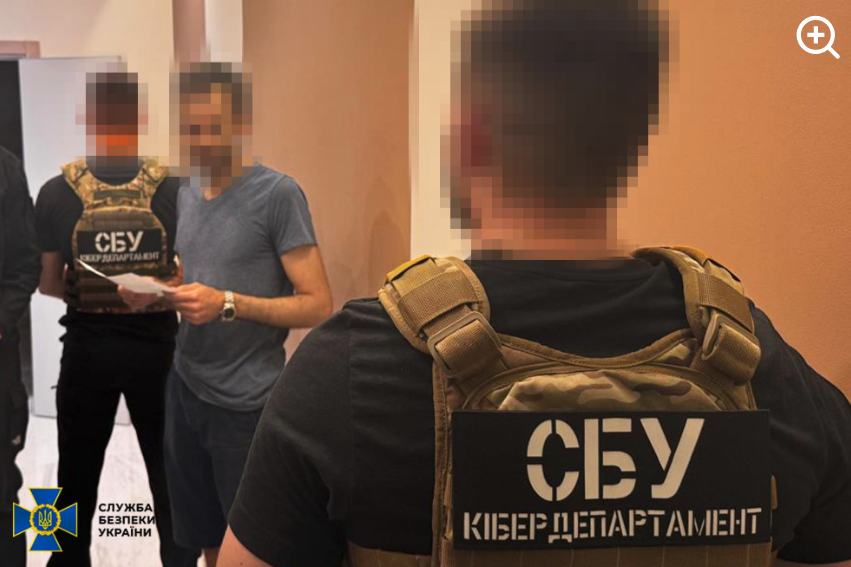
An unnamed 38-year-old man was arrested in Kiev last month on suspicion of administering the cybercrime forum XSS. Image: ssu.gov.ua.

Europol did not name the accused, but published partially obscured photos of him from the raid on his residence in Kiev. The police agency said the suspect acted as a trusted third party — arbitrating disputes between criminals — and guaranteeing the security of transactions on XSS. A statement from Ukraine’s SBU security service said XSS counted among its members many cybercriminals from various ransomware groups, including REvil, LockBit, Conti, and Qiliin.

Since the Europol announcement, the XSS forum resurfaced at a new address on the deep web (reachable only via the anonymity network Tor). But from reviewing the recent posts, there appears to be little consensus among longtime members about the identity of the now-detained XSS administrator.

The most frequent comment regarding the arrest was a message of solidarity and support for Toha, the handle chosen by the longtime administrator of XSS and several other major Russian forums. Toha’s accounts on other forums have been silent since the raid.

Europol said the suspect has enjoyed a nearly 20-year career in cybercrime, which roughly lines up with Toha’s history. In 2005, Toha was a founding member of the Russian-speaking forum Hack-All. That is, until it got massively hacked a few months after its debut. In 2006, Toha rebranded the forum to exploit[.]in, which would go on to draw tens of thousands of members, including an eventual Who’s-Who of wanted cybercriminals.

Toha announced in 2018 that he was selling the Exploit forum, prompting rampant speculation on the forums that the buyer was secretly a Russian or Ukrainian government entity or front person. However, those suspicions were unsupported by evidence, and Toha vehemently denied the forum had been given over to authorities.

One of the oldest Russian-language cybercrime forums was DaMaGeLaB, which operated from 2004 to 2017, when its administrator “Ar3s” was arrested. In 2018, a partial backup of the DaMaGeLaB forum was reincarnated as xss[.]is, with Toha as its stated administrator.

CROSS-SITE GRIFTING

Clues about Toha’s early presence on the Internet — from ~2004 to 2010 — are available in the archives of Intel 471, a cyber intelligence firm that tracks forum activity. Intel 471 shows Toha used the same email address across multiple forum accounts, including at Exploit, Antichat, Carder[.]su and inattack[.]ru.

DomainTools.com finds Toha’s email address — toschka2003@yandex.ru — was used to register at least a dozen domain names — most of them from the mid- to late 2000s. Apart from exploit[.]in and a domain called ixyq[.]com, the other domains registered to that email address end in .ua, the top-level domain for Ukraine (e.g. deleted.org[.]ua, lj.com[.]ua, and blogspot.org[.]ua).
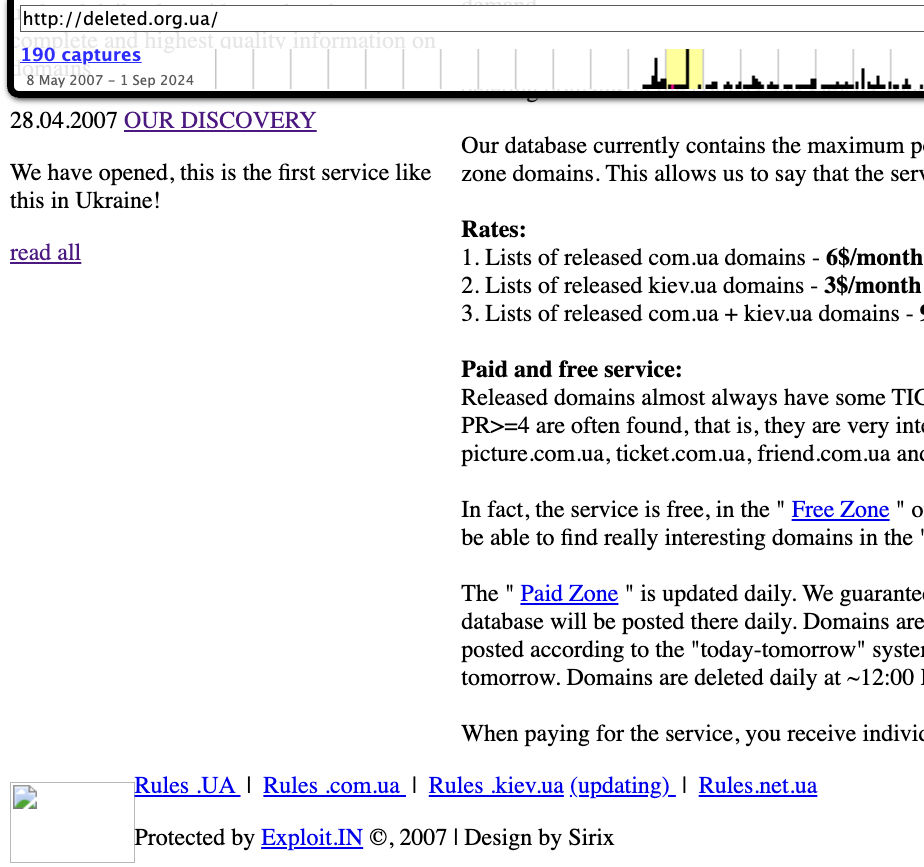
A 2008 snapshot of a domain registered to toschka2003@yandex.ru and to Anton Medvedovsky in Kiev. Note the message at the bottom left, “Protected by Exploit,in.” Image: archive.org.

Nearly all of the domains registered to toschka2003@yandex.ru contain the name Anton Medvedovskiy in the registration records, except for the aforementioned ixyq[.]com, which is registered to the name Yuriy Avdeev in Moscow.

This Avdeev surname came up in a lengthy conversation with Lockbitsupp, the leader of the rapacious and destructive ransomware affiliate group Lockbit. The conversation took place in February 2024, when Lockbitsupp asked for help identifying Toha’s real-life identity.
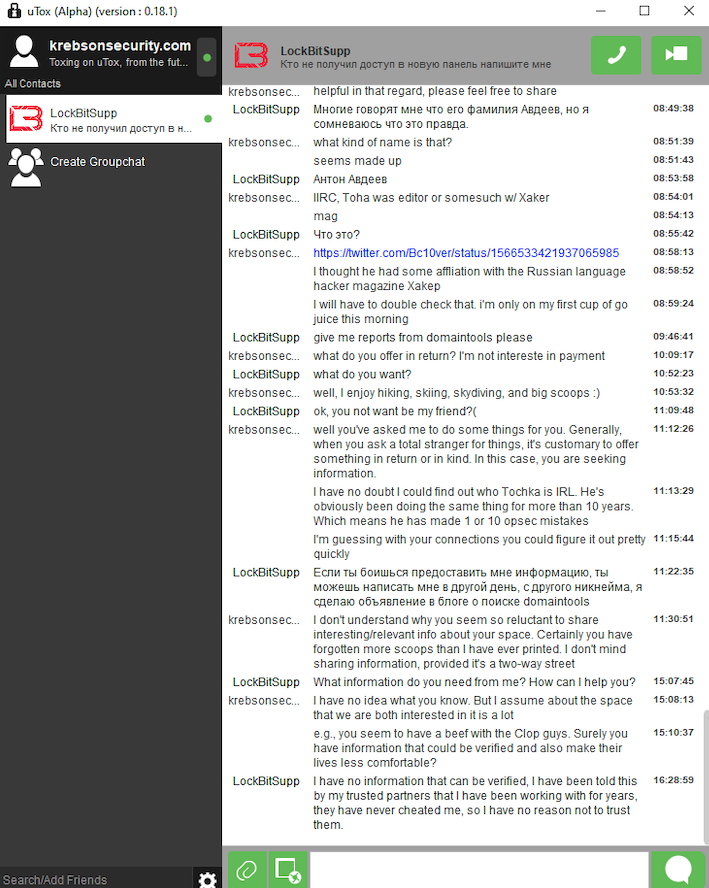
In early 2024, the leader of the Lockbit ransomware group — Lockbitsupp — asked for help investigating the identity of the XSS administrator Toha, which he claimed was a Russian man named Anton Avdeev.

Lockbitsupp didn’t share why he wanted Toha’s details, but he maintained that Toha’s real name was Anton Avdeev. I declined to help Lockbitsupp in whatever revenge he was planning on Toha, but his question made me curious to look deeper.

It appears Lockbitsupp’s query was based on a now-deleted Twitter post from 2022, when a user by the name “3xp0rt” asserted that Toha was a Russian man named Anton Viktorovich Avdeev, born October 27, 1983.

Searching the web for Toha’s email address toschka2003@yandex.ru reveals a 2010 sales thread on the forum bmwclub.ru where a user named Honeypo was selling a 2007 BMW X5. The ad listed the contact person as Anton Avdeev and gave the contact phone number 9588693.
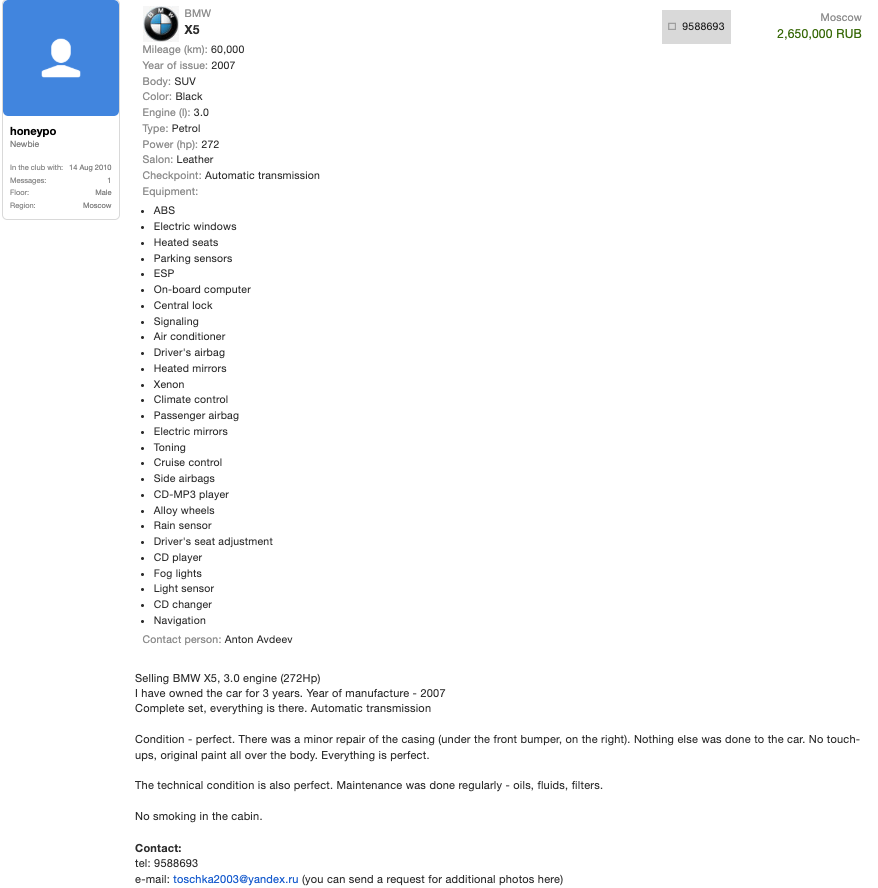
A search on the phone number 9588693 in the breach tracking service Constella Intelligence finds plenty of official Russian government records with this number, date of birth and the name Anton Viktorovich Avdeev. For example, hacked Russian government records show this person has a Russian tax ID and SIN (Social Security number), and that they were flagged for traffic violations on several occasions by Moscow police; in 2004, 2006, 2009, and 2014.

Astute readers may have noticed by now that the ages of Mr. Avdeev (45) and the XSS admin arrested this month (38) are quite a bit off. This would seem to suggest that the person arrested is someone other than Mr. Avdeev, who did not respond to requests for comment.

A FLY ON THE WALL

For further insight on this question, KrebsOnSecurity sought comments from Sergeii Vovnenko, a former cybercriminal from Ukraine who is now running the security startup paranoidlab.com. I reached out to Vovnenko because for several years beginning around 2010 he was the owner and operator of thesecure[.]biz, an encrypted “Jabber” instant messaging server that Europol said was operated by the suspect arrested in Kiev. Thesecure[.]biz grew quite popular among many of the top Russian-speaking cybercriminals because it scrupulously kept few records of its users’ activity, and its administrator was always a trusted member of the community.

The reason I know this historic tidbit is that in 2013, Vovnenko — using the hacker nicknames “Fly,” and “Flycracker” — hatched a plan to have a gram of heroin purchased off of the Silk Road darknet market and shipped to our home in Northern Virginia. The scheme was to spoof a call from one of our neighbors to the local police, saying this guy Krebs down the street was a druggie who was having narcotics delivered to his home.

I happened to be lurking on Flycracker’s private cybercrime forum when his heroin-framing plan was carried out, and called the police myself before the smack eventually arrived in the U.S. Mail. Vovnenko was later arrested for unrelated cybercrime activities, extradited to the United States, convicted, and deported after a 16-month stay in the U.S. prison system [on several occasions, he has expressed heartfelt apologies for the incident, and we have since buried the hatchet].

Vovnenko said he purchased a device for cloning credit cards from Toha in 2009, and that Toha shipped the item from Russia. Vovnenko explained that he (Flycracker) was the owner and operator of thesecure[.]biz from 2010 until his arrest in 2014.

Vovnenko believes thesecure[.]biz was stolen while he was in jail, either by Toha and/or an XSS administrator who went by the nicknames N0klos and Sonic.

“When I was in jail, [the] admin of xss.is stole that domain, or probably N0klos bought XSS from Toha or vice versa,” Vovnenko said of the Jabber domain. “Nobody from [the forums] spoke with me after my jailtime, so I can only guess what really happened.”

N0klos was the owner and administrator of an early Russian-language cybercrime forum known as Darklife[.]ws. However, N0kl0s also appears to be a lifelong Russian resident, and in any case seems to have vanished from Russian cybercrime forums several years ago.

Asked whether he believes Toha was the XSS administrator who was arrested this month in Ukraine, Vovnenko maintained that Toha is Russian, and that “the French cops took the wrong guy.”

WHO IS TOHA?

So who did the Ukrainian police arrest in response to the investigation by the French authorities? It seems plausible that the BMW ad invoking Toha’s email address and the name and phone number of a Russian citizen was simply misdirection on Toha’s part — intended to confuse and throw off investigators. Perhaps this even explains the Avdeev surname surfacing in the registration records from one of Toha’s domains.

But sometimes the simplest answer is the correct one. “Toha” is a common Slavic nickname for someone with the first name “Anton,” and that matches the name in the registration records for more than a dozen domains tied to Toha’s toschka2003@yandex.ru email address: Anton Medvedovskiy.

Constella Intelligence finds there is an Anton Gannadievich Medvedovskiy living in Kiev who will be 38 years old in December. This individual owns the email address itsmail@i.ua, as well an an Airbnb account featuring a profile photo of a man with roughly the same hairline as the suspect in the blurred photos released by the Ukrainian police. Mr. Medvedovskiy did not respond to a request for comment.

My take on the takedown is that the Ukrainian authorities likely arrested Medvedovskiy. Toha shared on DaMaGeLab in 2005 that he had recently finished the 11th grade and was studying at a university — a time when Mevedovskiy would have been around 18 years old. On Dec. 11, 2006, fellow Exploit members wished Toha a happy birthday. Records exposed in a 2022 hack at the Ukrainian public services portal diia.gov.ua show that Mr. Medvedovskiy’s birthday is Dec. 11, 1987.

The law enforcement action and resulting confusion about the identity of the detained has thrown the Russian cybercrime forum scene into disarray in recent weeks, with lengthy and heated arguments about XSS’s future spooling out across the forums.

XSS relaunched on a new Tor address shortly after the authorities plastered their seizure notice on the forum’s  homepage, but all of the trusted moderators from the old forum were dismissed without explanation. Existing members saw their forum account balances drop to zero, and were asked to plunk down a deposit to register at the new forum. The new XSS “admin” said they were in contact with the previous owners and that the changes were to help rebuild security and trust within the community.

However, the new admin’s assurances appear to have done little to assuage the worst fears of the forum’s erstwhile members, most of whom seem to be keeping their distance from the relaunched site for now.

Indeed, if there is one common understanding amid all of these discussions about the seizure of XSS, it is that Ukrainian and French authorities now have several years worth of private messages between XSS forum users, as well as contact rosters and other user data linked to the seized Jabber server.

“The myth of the ‘trusted person’ is shattered,” the user “GordonBellford” cautioned on Aug. 3 in an Exploit forum thread that spans dozens of pages. “The forum is run by strangers. They got everything. Two years of Jabber server logs. Full backup and forum database.”

GordonBellford continued:

And the scariest thing is: this data array is not just an archive. It is material for analysis that has ALREADY BEEN DONE . With the help of modern tools, they see everything:

Graphs of your contacts and activity.
Relationships between nicknames, emails, password hashes and Jabber ID.
Timestamps, IP addresses and digital fingerprints.
Your unique writing style, phraseology, punctuation, consistency of grammatical errors, and even typical typos that will link your accounts on different platforms.

They are not looking for a needle in a haystack. They simply sifted the haystack through the AI sieve and got ready-made dossiers.

 

Read More

Scammers Unleash Flood of Slick Online Gaming Sites

​Fraudsters are flooding Discord and other social media platforms with ads for hundreds of polished online gaming and wagering websites that lure people with free credits and eventually abscond with any cryptocurrency funds deposited by players. Here’s a closer look at the social engineering tactics and remarkable traits of this sprawling network of more than 1,200 scam sites. 

Fraudsters are flooding Discord and other social media platforms with ads for hundreds of polished online gaming and wagering websites that lure people with free credits and eventually abscond with any cryptocurrency funds deposited by players. Here’s a closer look at the social engineering tactics and remarkable traits of this sprawling network of more than 1,200 scam sites.

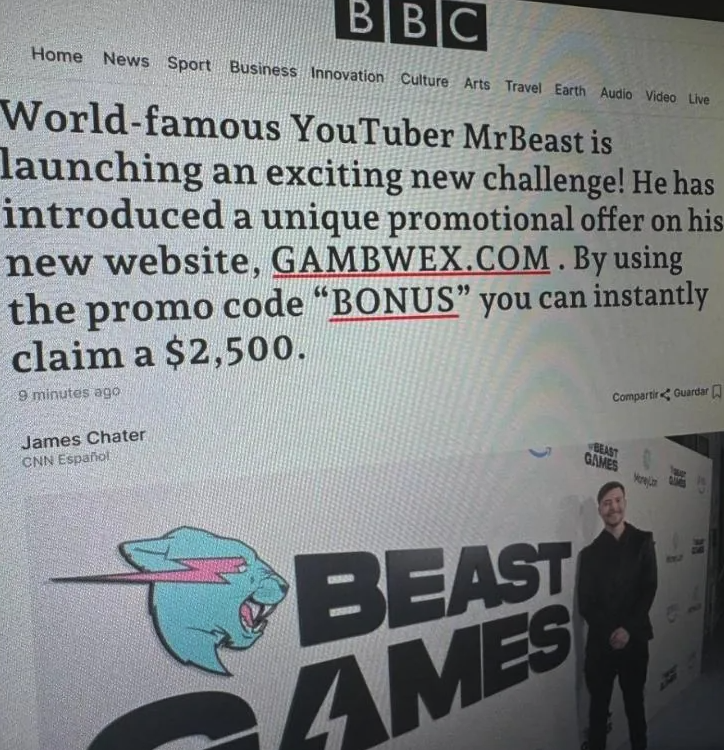
The scam begins with deceptive ads posted on social media that claim the wagering sites are working in partnership with popular social media personalities, such as Mr. Beast, who recently launched a gaming business called Beast Games. The ads invariably state that by using a supplied “promo code,” interested players can claim a $2,500 credit on the advertised gaming website.

An ad posted to a Discord channel for a scam gambling website that the proprietors falsely claim was operating in collaboration with the Internet personality Mr. Beast. Image: Reddit.com.

The gaming sites all require users to create a free account to claim their $2,500 credit, which they can use to play any number of extremely polished video games that ask users to bet on each action. At the scam website gamblerbeast[.]com, for example, visitors can pick from dozens of games like B-Ball Blitz, in which you play a basketball pro who is taking shots from the free throw line against a single opponent, and you bet on your ability to sink each shot.

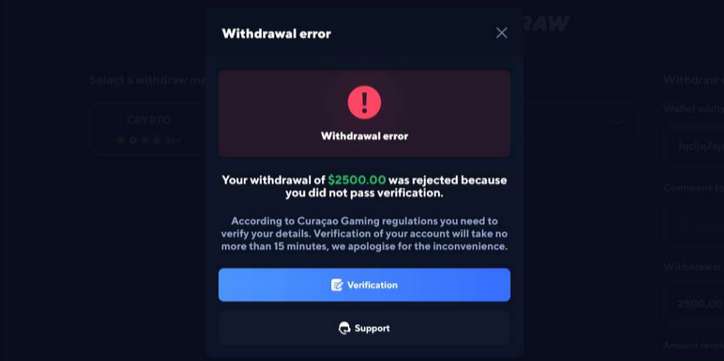
The financial part of this scam begins when users try to cash out any “winnings.” At that point, the gaming site will reject the request and prompt the user to make a “verification deposit” of cryptocurrency — typically around $100 — before any money can be distributed. Those who deposit cryptocurrency funds are soon asked for additional payments.

However, any “winnings” displayed by these gaming sites are a complete fantasy, and players who deposit cryptocurrency funds will never see that money again. Compounding the problem, victims likely will soon be peppered with come-ons from “recovery experts” who peddle dubious claims on social media networks about being able to retrieve funds lost to such scams.

KrebsOnSecurity first learned about this network of phony betting sites from a Discord user who asked to be identified only by their screen name: “Thereallo” is a 17-year-old developer who operates multiple Discord servers and said they began digging deeper after users started complaining of being inundated with misleading spam messages promoting the sites.

“We were being spammed relentlessly by these scam posts from compromised or purchased [Discord] accounts,” Thereallo said. “I got frustrated with just banning and deleting, so I started to investigate the infrastructure behind the scam messages. This is not a one-off site, it’s a scalable criminal enterprise with a clear playbook, technical fingerprints, and financial infrastructure.”

After comparing the code on the gaming sites promoted via spam messages, Thereallo found they all invoked the same API key for an online chatbot that appears to be in limited use or else is custom-made. Indeed, a scan for that API key at the threat hunting platform Silent Push reveals at least 1,270 recently-registered and active domains whose names all invoke some type of gaming or wagering theme.

The “verification deposit” stage of the scam requires the user to deposit cryptocurrency in order to withdraw their “winnings.”

Thereallo said the operators of this scam empire appear to generate a unique Bitcoin wallet for each gaming domain they deploy.

“This is a decoy wallet,” Thereallo explained. “Once the victim deposits funds, they are never able to withdraw any money. Any attempts to contact the ‘Live Support’ are handled by a combination of AI and human operators who eventually block the user. The chat system is self-hosted, making it difficult to report to third-party service providers.”

Thereallo discovered another feature common to all of these scam gambling sites [hereafter referred to simply as “scambling” sites]: If you register at one of them and then very quickly try to register at a sister property of theirs from the same Internet address and device, the registration request is denied at the second site.

“I registered on one site, then hopped to another to register again,” Thereallo said. Instead, the second site returned an error stating that a new account couldn’t be created for another 10 minutes.

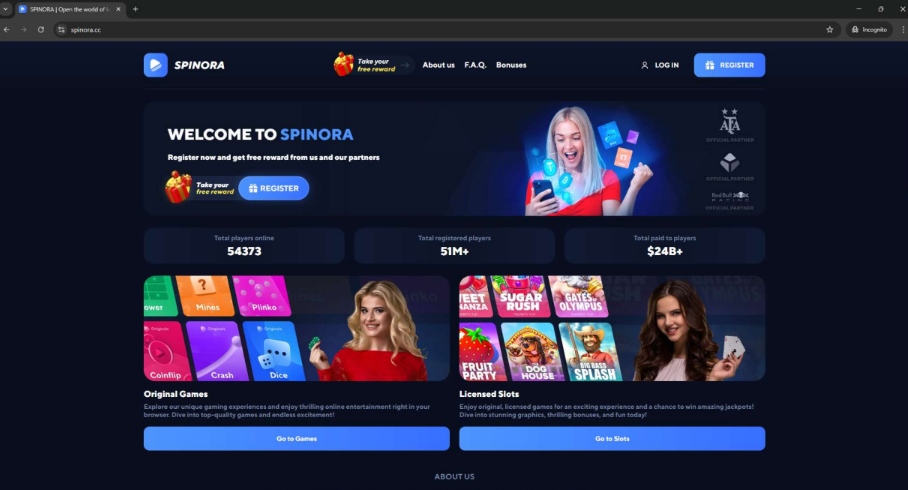
The scam gaming site spinora dot cc shares the same chatbot API as more than 1,200 similar fake gaming sites.

“They’re tracking my VPN IP across their entire network,” Thereallo explained. “My password manager also proved it. It tried to use my dummy email on a site I had never visited, and the site told me the account already existed. So it’s definitely one entity running a single platform with 1,200+ different domain names as front-ends. This explains how their support works, a central pool of agents handling all the sites. It also explains why they’re so strict about not giving out wallet addresses; it’s a network-wide policy.”

In many ways, these scambling sites borrow from the playbook of “pig butchering” schemes, a rampant and far more elaborate crime in which people are gradually lured by flirtatious strangers online into investing in fraudulent cryptocurrency trading platforms.

Pig butchering scams are typically powered by people in Asia who have been kidnapped and threatened with physical harm or worse unless they sit in a cubicle and scam Westerners on the Internet all day. In contrast, these scambling sites tend to steal far less money from individual victims, but their cookie-cutter nature and automated support components may enable their operators to extract payments from a large number of people in far less time, and with considerably less risk and up-front investment.

Silent Push’s Zach Edwards said the proprietors of this scambling empire are spending big money to make the sites look and feel like some fancy new type of casino.

“That’s a very odd type of pig butchering network and not like what we typically see, with much lower investments in the sites and lures,” Edwards said.

Here is a list of all domains that Silent Push found were using the scambling network’s chat API.


Read More

Phishers Target Aviation Execs to Scam Customers

​KrebsOnSecurity recently heard from a reader whose boss’s email account got phished and was used to trick one of the company’s customers into sending a large payment to scammers. An investigation into the attacker’s infrastructure points to a long-running Nigerian cybercrime group that is actively targeting established companies in the transportation and aviation industries. 

KrebsOnSecurity recently heard from a reader whose boss’s email account got phished and was used to trick one of the company’s customers into sending a large payment to scammers. An investigation into the attacker’s infrastructure points to a long-running Nigerian cybercrime ring that is actively targeting established companies in the transportation and aviation industries.

Image: Shutterstock, Mr. Teerapon Tiuekhom.

A reader who works in the transportation industry sent a tip about a recent successful phishing campaign that tricked an executive at the company into entering their credentials at a fake Microsoft 365 login page. From there, the attackers quickly mined the executive’s inbox for past communications about invoices, copying and modifying some of those messages with new invoice demands that were sent to some of the company’s customers and partners.

Speaking on condition of anonymity, the reader said the resulting phishing emails to customers came from a newly registered domain name that was remarkably similar to their employer’s domain, and that at least one of their customers fell for the ruse and paid a phony invoice. They said the attackers had spun up a look-alike domain just a few hours after the executive’s inbox credentials were phished, and that the scam resulted in a customer suffering a six-figure financial loss.

The reader also shared that the email addresses in the registration records for the imposter domain — roomservice801@gmail.com — is tied to many such phishing domains. Indeed, a search on this email address at DomainTools.com finds it is associated with at least 240 domains registered in 2024 or 2025. Virtually all of them mimic legitimate domains for companies in the aerospace and transportation industries worldwide.

An Internet search for this email address reveals a humorous blog post from 2020 on the Russian forum hackware[.]ru, which found roomservice801@gmail.com was tied to a phishing attack that used the lure of phony invoices to trick the recipient into logging in at a fake Microsoft login page. We’ll come back to this research in a moment.

JUSTY JOHN

DomainTools shows that some of the early domains registered to roomservice801@gmail.com in 2016 include other useful information. For example, the WHOIS records for alhhomaidhicentre[.]biz reference the technical contact of “Justy John” and the email address justyjohn50@yahoo.com.

A search at DomainTools found justyjohn50@yahoo.com has been registering one-off phishing domains since at least 2012. At this point, I was convinced that some security company surely had already published an analysis of this particular threat group, but I didn’t yet have enough information to draw any solid conclusions.

DomainTools says the Justy John email address is tied to more than two dozen domains registered since 2012, but we can find hundreds more phishing domains and related email addresses simply by pivoting on details in the registration records for these Justy John domains. For example, the street address used by the Justy John domain axisupdate[.]net — 7902 Pelleaux Road in Knoxville, TN — also appears in the registration records for accountauthenticate[.]com, acctlogin[.]biz, and loginaccount[.]biz, all of which at one point included the email address rsmith60646@gmail.com.

That Rsmith Gmail address is connected to the 2012 phishing domain alibala[.]biz (one character off of the Chinese e-commerce giant alibaba.com, with a different top-level domain of .biz). A search in DomainTools on the phone number in those domain records — 1.7736491613 — reveals even more phishing domains as well as the Nigerian phone number “2348062918302” and the email address michsmith59@gmail.com.

DomainTools shows michsmith59@gmail.com appears in the registration records for the domain seltrock[.]com, which was used in the phishing attack documented in the 2020 Russian blog post mentioned earlier. At this point, we are just two steps away from identifying the threat actor group.

The same Nigerian phone number shows up in dozens of domain registrations that reference the email address sebastinekelly69@gmail.com, including 26i3[.]net, costamere[.]com, danagruop[.]us, and dividrilling[.]com. A Web search on any of those domains finds they were indexed in an “indicator of compromise” list on GitHub maintained by Palo Alto NetworksUnit 42 research team.

SILVERTERRIER

According to Unit 42, the domains are the handiwork of a vast cybercrime group based in Nigeria that it dubbed “SilverTerrier” back in 2014. In an October 2021 report, Palo Alto said SilverTerrier excels at so-called “business e-mail compromise” or BEC scams, which target legitimate business email accounts through social engineering or computer intrusion activities. BEC criminals use that access to initiate or redirect the transfer of business funds for personal gain.

Palo Alto says SilverTerrier encompasses hundreds of BEC fraudsters, some of whom have been arrested in various international law enforcement operations by Interpol. In 2022, Interpol and the Nigeria Police Force arrested 11 alleged SilverTerrier members, including a prominent SilverTerrier leader who’d been flaunting his wealth on social media for years. Unfortunately, the lure of easy money, endemic poverty and corruption, and low barriers to entry for cybercrime in Nigeria conspire to provide a constant stream of new recruits.

BEC scams were the 7th most reported crime tracked by the FBI’s Internet Crime Complaint Center (IC3) in 2024, generating more than 21,000 complaints. However, BEC scams were the second most costly form of cybercrime reported to the feds last year, with nearly $2.8 billion in claimed losses. In its 2025 Fraud and Control Survey Report, the Association for Financial Professionals found 63 percent of organizations experienced a BEC last year.

Poking at some of the email addresses that spool out from this research reveals a number of Facebook accounts for people residing in Nigeria or in the United Arab Emirates, many of whom do not appear to have tried to mask their real-life identities. Palo Alto’s Unit 42 researchers reached a similar conclusion, noting that although a small subset of these crooks went to great lengths to conceal their identities, it was usually simple to learn their identities on social media accounts and the major messaging services.

Palo Alto said BEC actors have become far more organized over time, and that while it remains easy to find actors working as a group, the practice of using one phone number, email address or alias to register malicious infrastructure in support of multiple actors has made it far more time consuming (but not impossible) for cybersecurity and law enforcement organizations to sort out which actors committed specific crimes.

“We continue to find that SilverTerrier actors, regardless of geographical location, are often connected through only a few degrees of separation on social media platforms,” the researchers wrote.

FINANCIAL FRAUD KILL CHAIN

Palo Alto has published a useful list of recommendations that organizations can adopt to minimize the incidence and impact of BEC attacks. Many of those tips are prophylactic, such as conducting regular employee security training and reviewing network security policies.

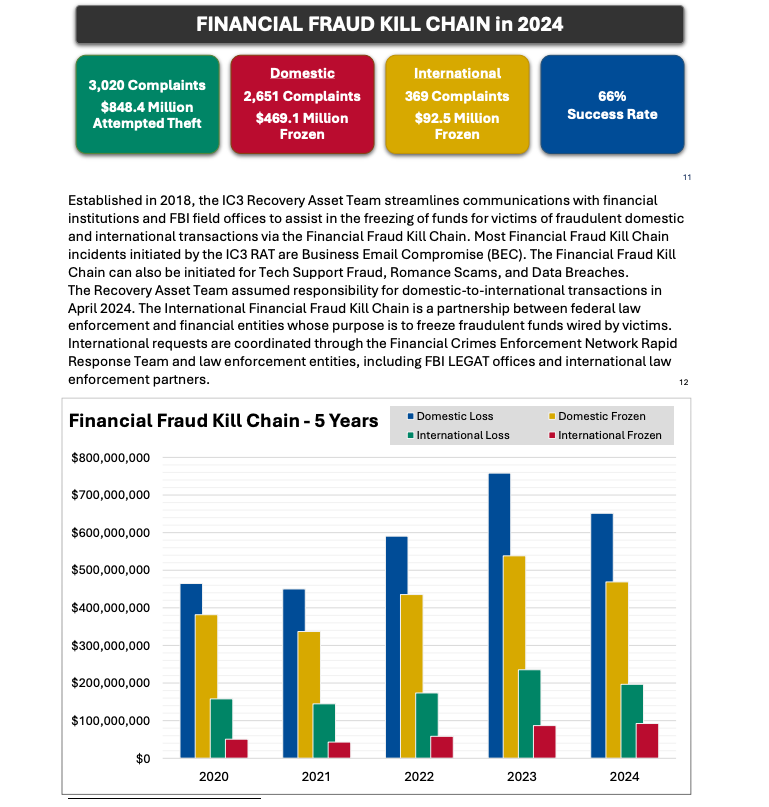
But one recommendation — getting familiar with a process known as the “financial fraud kill chain” or FFKC — bears specific mention because it offers the single best hope for BEC victims who are seeking to claw back payments made to fraudsters, and yet far too many victims don’t know it exists until it is too late.

Image: ic3.gov.

As explained in this FBI primer, the International Financial Fraud Kill Chain is a partnership between federal law enforcement and financial entities whose purpose is to freeze fraudulent funds wired by victims. According to the FBI, viable victim complaints filed with ic3.gov promptly after a fraudulent transfer (generally less than 72 hours) will be automatically triaged by the Financial Crimes Enforcement Network (FinCEN).

The FBI noted in its IC3 annual report (PDF) that the FFKC had a 66 percent success rate in 2024. Viable ic3.gov complaints involve losses of at least $50,000, and include all records from the victim or victim bank, as well as a completed FFKC form (provided by FinCEN) containing victim information, recipient information, bank names, account numbers, location, SWIFT, and any additional information.


Read More

Microsoft Fix Targets Attacks on SharePoint Zero-Day

​On Sunday, July 20, Microsoft Corp. issued an emergency security update for a vulnerability in SharePoint Server that is actively being exploited to compromise vulnerable organizations. The patch comes amid reports that malicious hackers have used the Sharepoint flaw to breach U.S. federal and state agencies, universities, and energy companies. 

On Sunday, July 20, Microsoft Corp. issued an emergency security update for a vulnerability in SharePoint Server that is actively being exploited to compromise vulnerable organizations. The patch comes amid reports that malicious hackers have used the Sharepoint flaw to breach U.S. federal and state agencies, universities, and energy companies.

Image: Shutterstock, by Ascannio.

In an advisory about the SharePoint security hole, a.k.a. CVE-2025-53770, Microsoft said it is aware of active attacks targeting on-premises SharePoint Server customers and exploiting vulnerabilities that were only partially addressed by the July 8, 2025 security update.

The Cybersecurity & Infrastructure Security Agency (CISA) concurred, saying CVE-2025-53770 is a variant on a flaw Microsoft patched earlier this month (CVE-2025-49706). Microsoft notes the weakness applies only to SharePoint Servers that organizations use in-house, and that SharePoint Online and Microsoft 365 are not affected.

The Washington Post reported on Sunday that the U.S. government and partners in Canada and Australia are investigating the hack of SharePoint servers, which provide a platform for sharing and managing documents. The Post reports at least two U.S. federal agencies have seen their servers breached via the SharePoint vulnerability.

According to CISA, attackers exploiting the newly-discovered flaw are retrofitting compromised servers with a backdoor dubbed “ToolShell” that provides unauthenticated, remote access to systems. CISA said ToolShell enables attackers to fully access SharePoint content — including file systems and internal configurations — and execute code over the network.

Researchers at Eye Security said they first spotted large-scale exploitation of the SharePoint flaw on July 18, 2025, and soon found dozens of separate servers compromised by the bug and infected with ToolShell. In a blog post, the researchers said the attacks sought to steal SharePoint server ASP.NET machine keys.

“These keys can be used to facilitate further attacks, even at a later date,” Eye Security warned. “It is critical that affected servers rotate SharePoint server ASP.NET machine keys and restart IIS on all SharePoint servers. Patching alone is not enough. We strongly advise defenders not to wait for a vendor fix before taking action. This threat is already operational and spreading rapidly.”

Microsoft’s advisory says the company has issued updates for SharePoint Server Subscription Edition and SharePoint Server 2019, but that it is still working on updates for supported versions of SharePoint 2019 and SharePoint 2016.

CISA advises vulnerable organizations to enable the anti-malware scan interface (AMSI) in SharePoint, to deploy Microsoft Defender AV on all SharePoint servers, and to disconnect affected products from the public-facing Internet until an official patch is available.

The security firm Rapid7 notes that Microsoft has described CVE-2025-53770 as related to a previous vulnerability — CVE-2025-49704, patched earlier this month — and that CVE-2025-49704 was part of an exploit chain demonstrated at the Pwn2Own hacking competition in May 2025. That exploit chain invoked a second SharePoint weakness — CVE-2025-49706 — which Microsoft unsuccessfully tried to fix in this month’s Patch Tuesday.

Microsoft also has issued a patch for a related SharePoint vulnerability — CVE-2025-53771; Microsoft says there are no signs of active attacks on CVE-2025-53771, and that the patch is to provide more robust protections than the update for CVE-2025-49706.

This is a rapidly developing story. Any updates will be noted with timestamps.


Read More

Poor Passwords Tattle on AI Hiring Bot Maker Paradox.ai

​Security researchers recently revealed that the personal information of millions of people who applied for jobs at McDonald’s was exposed after they guessed the password (“123456”) for the fast food chain’s account at Paradox.ai, a company that makes artificial intelligence based hiring chatbots used by many Fortune 500 companies. Paradox.ai said the security oversight was an isolated incident that did not affect its other customers, but recent security breaches involving its employees in Vietnam tell a more nuanced story. 

Security researchers recently revealed that the personal information of millions of people who applied for jobs at McDonald’s was exposed after they guessed the password (“123456”) for the fast food chain’s account at Paradox.ai, a company that makes artificial intelligence based hiring chatbots used by many Fortune 500 companies. Paradox.ai said the security oversight was an isolated incident that did not affect its other customers, but recent security breaches involving its employees in Vietnam tell a more nuanced story.

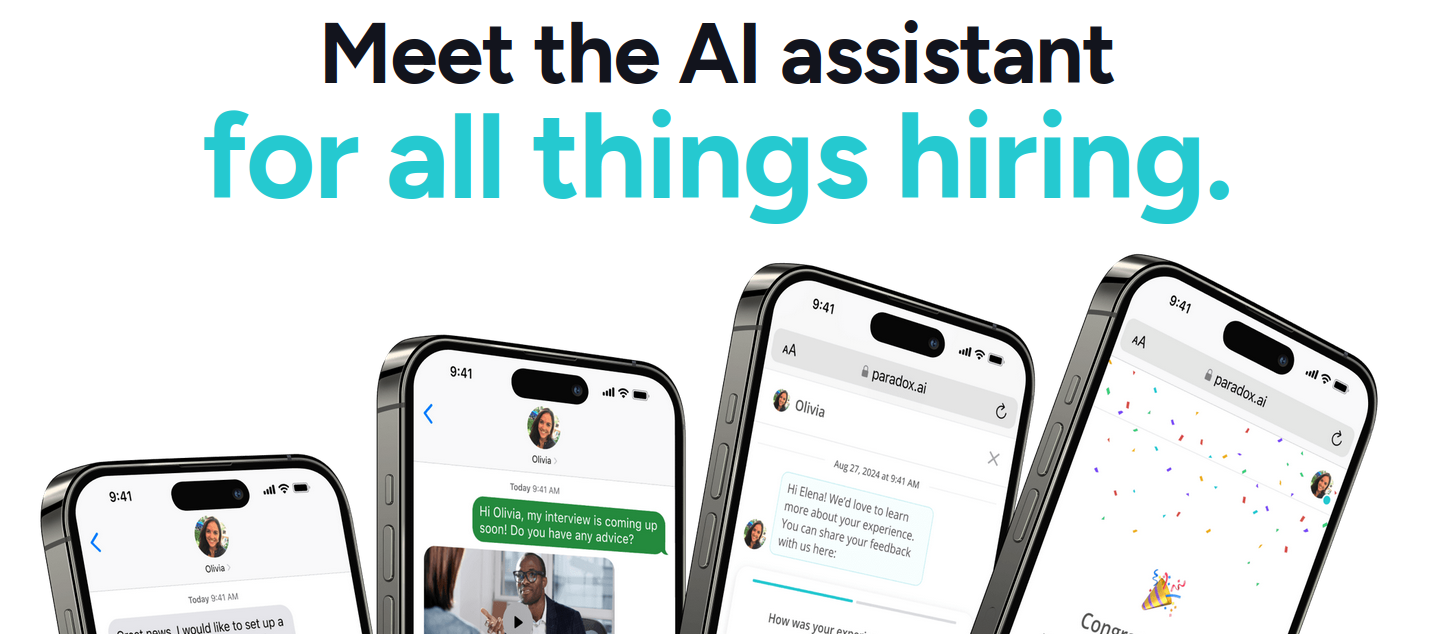
A screenshot of the paradox.ai homepage showing its AI hiring chatbot “Olivia” interacting with potential hires.

Earlier this month, security researchers Ian Carroll and Sam Curry wrote about simple methods they found to access the backend of the AI chatbot platform on McHire.com, the McDonald’s website that many of its franchisees use to screen job applicants. As first reported by Wired, the researchers discovered that the weak password used by Paradox exposed 64 million records, including applicants’ names, email addresses and phone numbers.

Paradox.ai acknowledged the researchers’ findings but said the company’s other client instances were not affected, and that no sensitive information — such as Social Security numbers — was exposed.

“We are confident, based on our records, this test account was not accessed by any third party other than the security researchers,” the company wrote in a July 9 blog post. “It had not been logged into since 2019 and frankly, should have been decommissioned. We want to be very clear that while the researchers may have briefly had access to the system containing all chat interactions (NOT job applications), they only viewed and downloaded five chats in total that had candidate information within. Again, at no point was any data leaked online or made public.”

However, a review of stolen password data gathered by multiple breach-tracking services shows that at the end of June 2025, a Paradox.ai administrator in Vietnam suffered a malware compromise on their device that stole usernames and passwords for a variety of internal and third-party online services. The results were not pretty.

The password data from the Paradox.ai developer was stolen by a malware strain known as “Nexus Stealer,” a form grabber and password stealer that is sold on cybercrime forums. The information snarfed by stealers like Nexus is often recovered and indexed by data leak aggregator services like Intelligence X, which reports that the malware on the Paradox.ai developer’s device exposed hundreds of mostly poor and recycled passwords (using the same base password but slightly different characters at the end).

Those purloined credentials show the developer in question at one point used the same seven-digit password to log in to Paradox.ai accounts for a number of Fortune 500 firms listed as customers on the company’s website, including Aramark, Lockheed Martin, Lowes, and Pepsi.

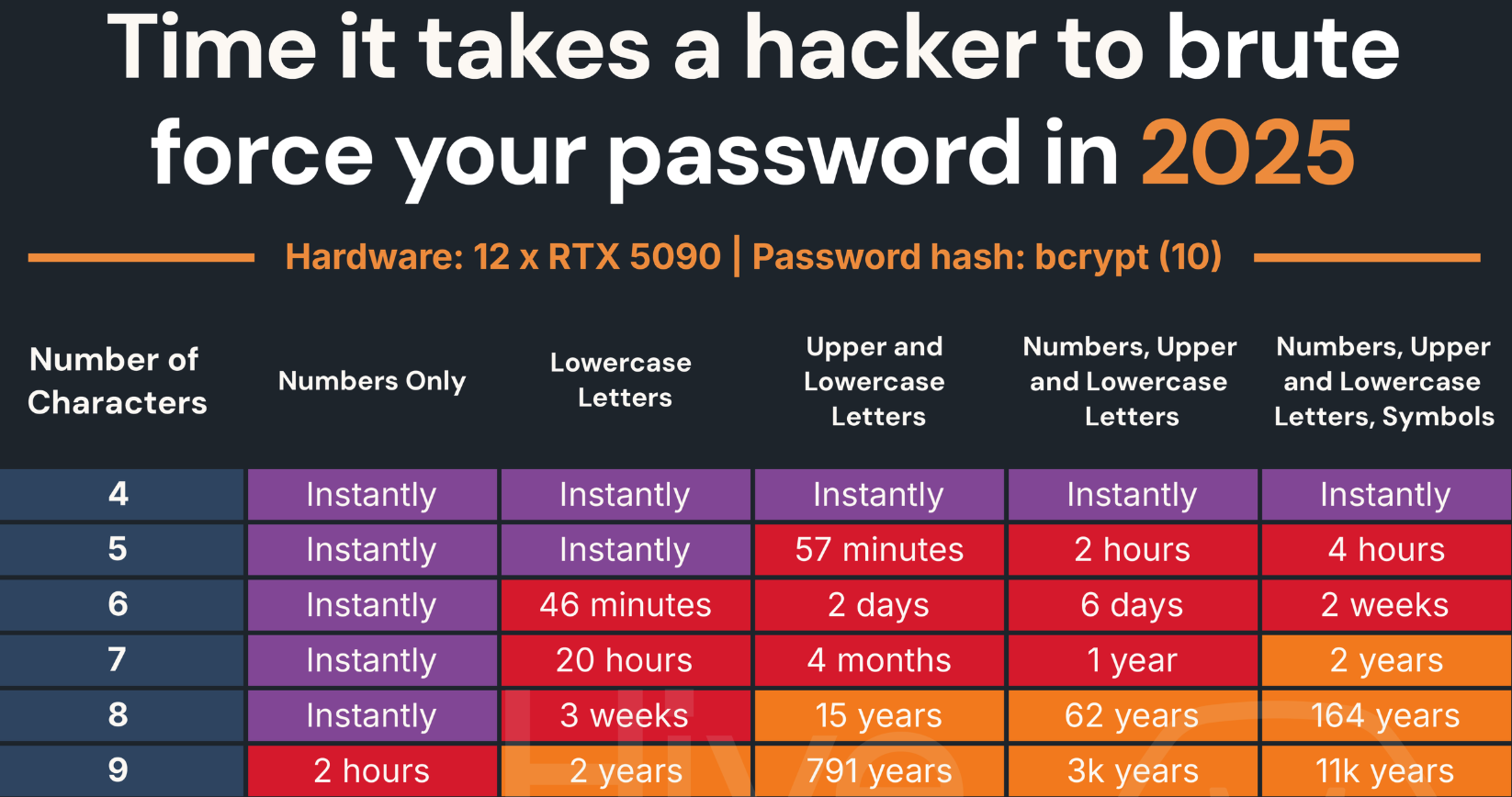
Seven-character passwords, particularly those consisting entirely of numerals, are highly vulnerable to “brute-force” attacks that can try a large number of possible password combinations in quick succession. According to a much-referenced password strength guide maintained by Hive Systems, modern password-cracking systems can work out a seven number password more or less instantly.

Image: hivesystems.com.

In response to questions from KrebsOnSecurity, Paradox.ai confirmed that the password data was recently stolen by a malware infection on the personal device of a longtime Paradox developer based in Vietnam, and said the company was made aware of the compromise shortly after it happened. Paradox maintains that few of the exposed passwords were still valid, and that a majority of them were present on the employee’s personal device only because he had migrated the contents of a password manager from an old computer.

Paradox also pointed out that it has been requiring single sign-on (SSO) authentication since 2020 that enforces multi-factor authentication for its partners. Still, a review of the exposed passwords shows they included the Vietnamese administrator’s credentials to the company’s SSO platform — paradoxai.okta.com. The password for that account ended in 202506 — possibly a reference to the month of June 2025 — and the digital cookie left behind after a successful Okta login with those credentials says it was valid until December 2025.

Also exposed were the administrator’s credentials and authentication cookies for an account at Atlassian, a platform made for software development and project management. The expiration date for that authentication token likewise was December 2025.

Infostealer infections are among the leading causes of data breaches and ransomware attacks today, and they result in the theft of stored passwords and any credentials the victim types into a browser. Most infostealer malware also will siphon authentication cookies stored on the victim’s device, and depending on how those tokens are configured thieves may be able to use them to bypass login prompts and/or multi-factor authentication.

Quite often these infostealer infections will open a backdoor on the victim’s device that allows attackers to access the infected machine remotely. Indeed, it appears that remote access to the Paradox administrator’s compromised device was offered for sale recently.

In February 2019, Paradox.ai announced it had successfully completed audits for two fairly comprehensive security standards (ISO 27001 and SOC 2 Type II). Meanwhile, the company’s security disclosure this month says the test account with the atrocious 123456 username and password was last accessed in 2019, but somehow missed in their annual penetration tests. So how did it manage to pass such stringent security audits with these practices in place?

Paradox.ai told KrebsOnSecurity that at the time of the 2019 audit, the company’s various contractors were not held to the same security standards the company practices internally. Paradox emphasized that this has changed, and that it has updated its security and password requirements multiple times since then.

It is unclear how the Paradox developer in Vietnam infected his computer with malware, but a closer review finds a Windows device for another Paradox.ai employee from Vietnam was compromised by similar data-stealing malware at the end of 2024 (that compromise included the victim’s GitHub credentials). In the case of both employees, the stolen credential data includes Web browser logs that indicate the victims repeatedly downloaded pirated movies and television shows, which are often bundled with malware disguised as a video codec needed to view the pirated content.


Read More

DOGE Denizen Marko Elez Leaked API Key for xAI

​Marko Elez, a 25-year-old employee at Elon Musk’s Department of Government Efficiency (DOGE), has been granted access to sensitive databases at the U.S. Social Security Administration, the Treasury and Justice departments, and the Department of Homeland Security. So it should fill all Americans with a deep sense of confidence to learn that Mr. Elez over the weekend inadvertently published a private key that allowed anyone to interact directly with more than four dozen large language models (LLMs) developed by Musk’s artificial intelligence company xAI. 

Marko Elez, a 25-year-old employee at Elon Musk’s Department of Government Efficiency (DOGE), has been granted access to sensitive databases at the U.S. Social Security Administration, the Treasury and Justice departments, and the Department of Homeland Security. So it should fill all Americans with a deep sense of confidence to learn that Mr. Elez over the weekend inadvertently published a private key that allowed anyone to interact directly with more than four dozen large language models (LLMs) developed by Musk’s artificial intelligence company xAI.

Image: Shutterstock, @sdx15.

On July 13, Mr. Elez committed a code script to GitHub called “agent.py” that included a private application programming interface (API) key for xAI. The inclusion of the private key was first flagged by GitGuardian, a company that specializes in detecting and remediating exposed secrets in public and proprietary environments. GitGuardian’s systems constantly scan GitHub and other code repositories for exposed API keys, and fire off automated alerts to affected users.

Philippe Caturegli, “chief hacking officer” at the security consultancy Seralys, said the exposed API key allowed access to at least 52 different LLMs used by xAI. The most recent LLM in the list was called “grok-4-0709” and was created on July 9, 2025.

Grok, the generative AI chatbot developed by xAI and integrated into Twitter/X, relies on these and other LLMs (a query to Grok before publication shows Grok currently uses Grok-3, which was launched in Feburary 2025). Earlier today, xAI announced that the Department of Defense will begin using Grok as part of a contract worth up to $200 million. The contract award came less than a week after Grok began spewing antisemitic rants and invoking Adolf Hitler.

Mr. Elez did not respond to a request for comment. The code repository containing the private xAI key was removed shortly after Caturegli notified Elez via email. However, Caturegli said the exposed API key still works and has not yet been revoked.

“If a developer can’t keep an API key private, it raises questions about how they’re handling far more sensitive government information behind closed doors,” Caturegli told KrebsOnSecurity.

Prior to joining DOGE, Marko Elez worked for a number of Musk’s companies. His DOGE career began at the Department of the Treasury, and a legal battle over DOGE’s access to Treasury databases showed Elez was sending unencrypted personal information in violation of the agency’s policies.

While still at Treasury, Elez resigned after The Wall Street Journal linked him to social media posts that advocated racism and eugenics. When Vice President J.D. Vance lobbied for Elez to be rehired, President Trump agreed and Musk reinstated him.

Since his re-hiring as a DOGE employee, Elez has been granted access to databases at one federal agency after another. TechCrunch reported in February 2025 that he was working at the Social Security Administration. In March, Business Insider found Elez was part of a DOGE detachment assigned to the Department of Labor.

Marko Elez, in a photo from a social media profile.

In April, The New York Times reported that Elez held positions at the U.S. Customs and Border Protection and the Immigration and Customs Enforcement (ICE) bureaus, as well as the Department of Homeland Security. The Washington Post later reported that Elez, while serving as a DOGE advisor at the Department of Justice, had gained access to the Executive Office for Immigration Review’s Courts and Appeals System (EACS).

Elez is not the first DOGE worker to publish internal API keys for xAI: In May, KrebsOnSecurity detailed how another DOGE employee leaked a private xAI key on GitHub for two months, exposing LLMs that were custom made for working with internal data from Musk’s companies, including SpaceX, Tesla and Twitter/X.

Caturegli said it’s difficult to trust someone with access to confidential government systems when they can’t even manage the basics of operational security.

“One leak is a mistake,” he said. “But when the same type of sensitive key gets exposed again and again, it’s not just bad luck, it’s a sign of deeper negligence and a broken security culture.”


Read More

UK Charges Four in ‘Scattered Spider’ Ransom Group

​Authorities in the United Kingdom this week arrested four alleged members of “Scattered Spider,” a prolific data theft and extortion group whose recent victims include multiple airlines and the U.K. retail chain Marks & Spencer. 

Authorities in the United Kingdom this week arrested four alleged members of “Scattered Spider,” a prolific data theft and extortion group whose recent victims include multiple airlines and the U.K. retail chain Marks & Spencer.

Scattered Spider is the name given to an English-speaking cybercrime group known for using social engineering tactics to break into companies and steal data for ransom, often impersonating employees or contractors to deceive IT help desks into granting access. The FBI warned last month that Scattered Spider had recently shifted to targeting companies in the retail and airline sectors.

The U.K.’s National Crime Agency (NCA) declined verify the names of those arrested, saying only that they included two males aged 19, another aged 17, and 20-year-old female. The NCA said the defendants were charged in cyberattacks against Marks & Spencer, the U.K. retailer Harrods, and the British food retailer Co-op Group.

KrebsOnSecurity has learned the identities of the two 19-year-old suspects. Multiple sources close to the investigation said those arrested include Owen David Flowers, a U.K. man alleged to have been involved in the cyber intrusion and ransomware attack that shut down several MGM Casino properties in September 2023. Those same sources said the woman arrested is or recently was in a relationship with Flowers.

Sources told KrebsOnSecurity that Flowers, who allegedly went by the hacker handles “bo764,” “Holy,” and “Nazi,” was the group member who anonymously gave interviews to the media in the days after the MGM hack. His real name was omitted from a September 2024 story about the group because he was not yet charged in that incident.

The bigger fish netted as part of the Scattered Spider dragnet is Thalha Jubair, a U.K. man whose alleged exploits under various monikers have been well-documented in stories on this site. Jubair is believed to have used the nickname “Earth2Star,” which corresponds to a founding member of the cybercrime-focused Telegram channel “Star Fraud Chat.”

In 2023, KrebsOnSecurity published an investigation into the work of three different SIM-swapping groups that phished credentials from T-Mobile employees and used that access to offer a service whereby any T-Mobile phone number could be swapped to a new device. Star Chat was by far the most active and consequential of the three SIM-swapping groups, who collectively broke into T-Mobile’s network more than 100 times in the second half of 2022.

Jubair allegedly used the handles “Earth2Star” and “Star Ace,” and was a core member of a prolific SIM-swapping group operating in 2022. Star Ace posted this image to the Star Fraud chat channel on Telegram, and it lists various prices for SIM-swaps.

Sources tell KrebsOnSecurity that Jubair also was a core member of the LAPSUS$ cybercrime group that broke into dozens of technology companies in 2022, stealing source code and other internal data from tech giants including Microsoft, Nvidia, Okta, Rockstar Games, Samsung, T-Mobile, and Uber.

In April 2022, KrebsOnSecurity published internal chat records from LAPSUS$, and those chats indicated Jubair was using the nicknames Amtrak and Asyntax. At one point in the chats, Amtrak told the LAPSUS$ group leader not to share T-Mobile’s logo in images sent to the group because he’d been previously busted for SIM-swapping and his parents would suspect he was back at it again.

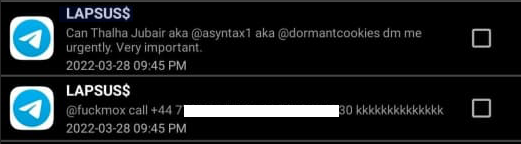
As shown in those chats, the leader of LAPSUS$ eventually decided to betray Amtrak by posting his real name, phone number, and other hacker handles into a public chat room on Telegram.

In March 2022, the leader of the LAPSUS$ data extortion group exposed Thalha Jubair’s name and hacker handles in a public chat room on Telegram.

That story about the leaked LAPSUS$ chats connected Amtrak/Asyntax/Jubair to the identity “Everlynn,” the founder of a cybercriminal service that sold fraudulent “emergency data requests” targeting the major social media and email providers. In such schemes, the hackers compromise email accounts tied to police departments and government agencies, and then send unauthorized demands for subscriber data while claiming the information being requested can’t wait for a court order because it relates to an urgent matter of life and death.

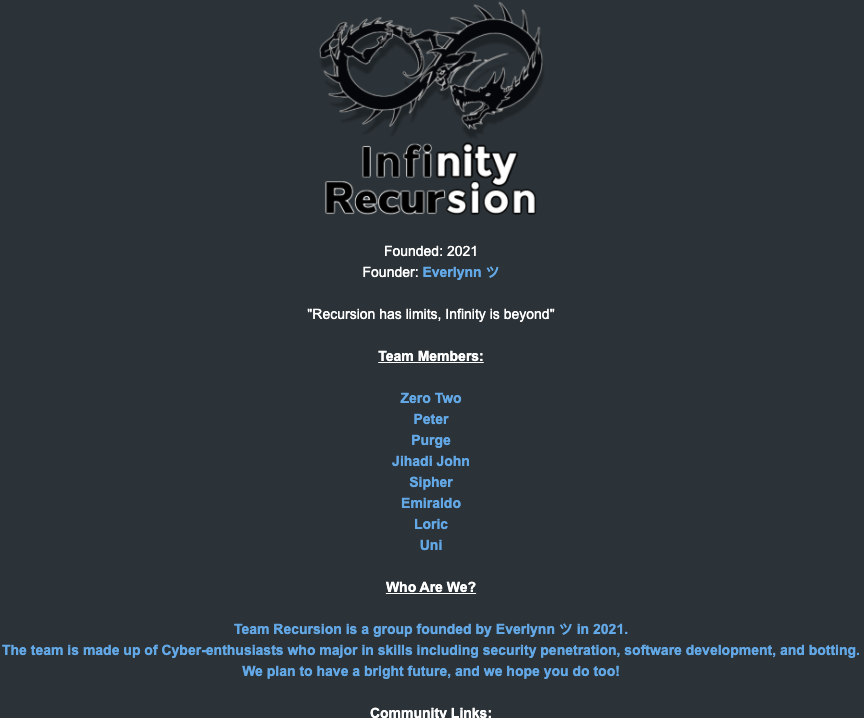
The roster of the now-defunct “Infinity Recursion” hacking team, from which some member of LAPSUS$ hail.

Sources say Jubair also used the nickname “Operator,” and that until recently he was the administrator of the Doxbin, a long-running and highly toxic online community that is used to “dox” or post deeply personal information on people. In May 2024, several popular cybercrime channels on Telegram ridiculed Operator after it was revealed that he’d staged his own kidnapping in a botched plan to throw off law enforcement investigators.

In November 2024, U.S. authorities charged five men aged 20 to 25 in connection with the Scattered Spider group, which has long relied on recruiting minors to carry out its most risky activities. Indeed, many of the group’s core members were recruited from online gaming platforms like Roblox and Minecraft in their early teens, and have been perfecting their social engineering tactics for years.

“There is a clear pattern that some of the most depraved threat actors first joined cybercrime gangs at an exceptionally young age,” said Allison Nixon, chief research officer at the New York based security firm Unit 221B. “Cybercriminals arrested at 15 or younger need serious intervention and monitoring to prevent a years long massive escalation.”


Read More

Microsoft Patch Tuesday, July 2025 Edition

​Microsoft today released updates to fix at least 137 security vulnerabilities in its Windows operating systems and supported software. None of the weaknesses addressed this month are known to be actively exploited, but 14 of the flaws earned Microsoft’s most-dire “critical” rating, meaning they could be exploited to seize control over vulnerable Windows PCs with little or no help from users. 

Microsoft today released updates to fix at least 137 security vulnerabilities in its Windows operating systems and supported software. None of the weaknesses addressed this month are known to be actively exploited, but 14 of the flaws earned Microsoft’s most-dire “critical” rating, meaning they could be exploited to seize control over vulnerable Windows PCs with little or no help from users.

While not listed as critical, CVE-2025-49719 is a publicly disclosed information disclosure vulnerability, with all versions as far back as SQL Server 2016 receiving patches. Microsoft rates CVE-2025-49719 as less likely to be exploited, but the availability of proof-of-concept code for this flaw means its patch should probably be a priority for affected enterprises.

Mike Walters, co-founder of Action1, said CVE-2025-49719 can be exploited without authentication, and that many third-party applications depend on SQL server and the affected drivers — potentially introducing a supply-chain risk that extends beyond direct SQL Server users.

“The potential exposure of sensitive information makes this a high-priority concern for organizations handling valuable or regulated data,” Walters said. “The comprehensive nature of the affected versions, spanning multiple SQL Server releases from 2016 through 2022, indicates a fundamental issue in how SQL Server handles memory management and input validation.”

Adam Barnett at Rapid7 notes that today is the end of the road for SQL Server 2012, meaning there will be no future security patches even for critical vulnerabilities, even if you’re willing to pay Microsoft for the privilege.

Barnett also called attention to CVE-2025-47981, a vulnerability with a CVSS score of 9.8 (10 being the worst), a remote code execution bug in the way Windows servers and clients negotiate to discover mutually supported authentication mechanisms. This pre-authentication vulnerability affects any Windows client machine running Windows 10 1607 or above, and all current versions of Windows Server. Microsoft considers it more likely that attackers will exploit this flaw.

Microsoft also patched at least four critical, remote code execution flaws in Office (CVE-2025-49695, CVE-2025-49696, CVE-2025-49697, CVE-2025-49702). The first two are both rated by Microsoft as having a higher likelihood of exploitation, do not require user interaction, and can be triggered through the Preview Pane.

Two more high severity bugs include CVE-2025-49740 (CVSS 8.8) and CVE-2025-47178 (CVSS 8.0); the former is a weakness that could allow malicious files to bypass screening by Microsoft Defender SmartScreen, a built-in feature of Windows that tries to block untrusted downloads and malicious sites.

CVE-2025-47178 involves a remote code execution flaw in Microsoft Configuration Manager, an enterprise tool for managing, deploying, and securing computers, servers, and devices across a network. Ben Hopkins at Immersive Labs said this bug requires very low privileges to exploit, and that it is possible for a user or attacker with a read-only access role to exploit it.

“Exploiting this vulnerability allows an attacker to execute arbitrary SQL queries as the privileged SMS service account in Microsoft Configuration Manager,” Hopkins said. “This access can be used to manipulate deployments, push malicious software or scripts to all managed devices, alter configurations, steal sensitive data, and potentially escalate to full operating system code execution across the enterprise, giving the attacker broad control over the entire IT environment.”

Separately, Adobe has released security updates for a broad range of software, including After Effects, Adobe Audition, Illustrator, FrameMaker, and ColdFusion.

The SANS Internet Storm Center has a breakdown of each individual patch, indexed by severity. If you’re responsible for administering a number of Windows systems, it may be worth keeping an eye on AskWoody for the lowdown on any potentially wonky updates (considering the large number of vulnerabilities and Windows components addressed this month).

If you’re a Windows home user, please consider backing up your data and/or drive before installing any patches, and drop a note in the comments if you encounter any problems with these updates.


Read More

Big Tech’s Mixed Response to U.S. Treasury Sanctions

​In May 2025, the U.S. government sanctioned a Chinese national for operating a cloud provider linked to the majority of virtual currency investment scam websites reported to the FBI. But more than a month later, the accused continues to openly operate accounts at a slew of American tech companies, including Facebook, Github, LinkedIn, PayPal and Twitter/X. 

In May 2025, the U.S. government sanctioned a Chinese national for operating a cloud provider linked to the majority of virtual currency investment scam websites reported to the FBI. But a new report finds the accused continues to operate a slew of established accounts at American tech companies — including Facebook, Github, PayPal and Twitter/X.

On May 29, the U.S. Department of the Treasury announced economic sanctions against Funnull Technology Inc., a Philippines-based company alleged to provide infrastructure for hundreds of thousands of websites involved in virtual currency investment scams known as “pig butchering.” In January 2025, KrebsOnSecurity detailed how Funnull was designed as a content delivery network that catered to foreign cybercriminals seeking to route their traffic through U.S.-based cloud providers.

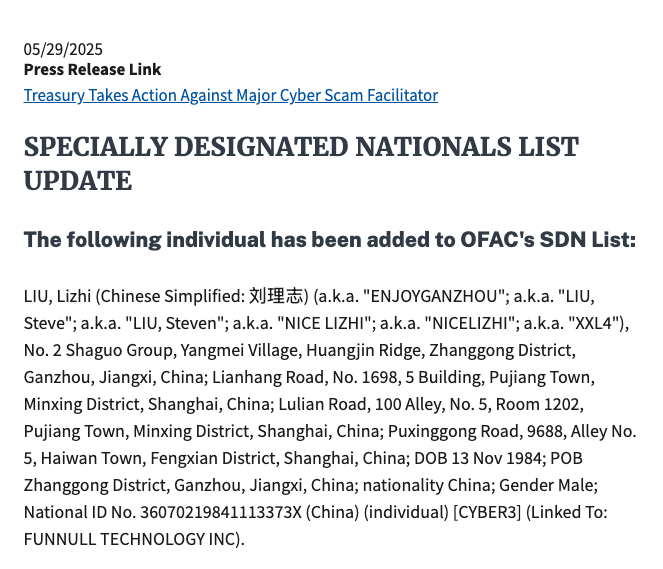
The Treasury also sanctioned Funnull’s alleged operator, a 40-year-old Chinese national named Liu “Steve” Lizhi. The government says Funnull directly facilitated financial schemes resulting in more than $200 million in financial losses by Americans, and that the company’s operations were linked to the majority of pig butchering scams reported to the FBI.

It is generally illegal for U.S. companies or individuals to transact with people sanctioned by the Treasury. However, as Mr. Lizhi’s case makes clear, just because someone is sanctioned doesn’t necessarily mean big tech companies are going to suspend their online accounts.

The government says Lizhi was born November 13, 1984, and used the nicknames “XXL4” and “Nice Lizhi.” Nevertheless, Steve Liu’s 17-year-old account on LinkedIn (in the name “Liulizhi”) had hundreds of followers (Lizhi’s LinkedIn profile helpfully confirms his birthday) until quite recently: The account was deleted this morning, just hours after KrebsOnSecurity sought comment from LinkedIn.

Mr. Lizhi’s LinkedIn account was suspended sometime in the last 24 hours, after KrebsOnSecurity sought comment from LinkedIn.

In an emailed response, a LinkedIn spokesperson said the company’s “Prohibited countries policy” states that LinkedIn “does not sell, license, support or otherwise make available its Premium accounts or other paid products and services to individuals and companies sanctioned by the U.S. government.” LinkedIn declined to say whether the profile in question was a premium or free account.

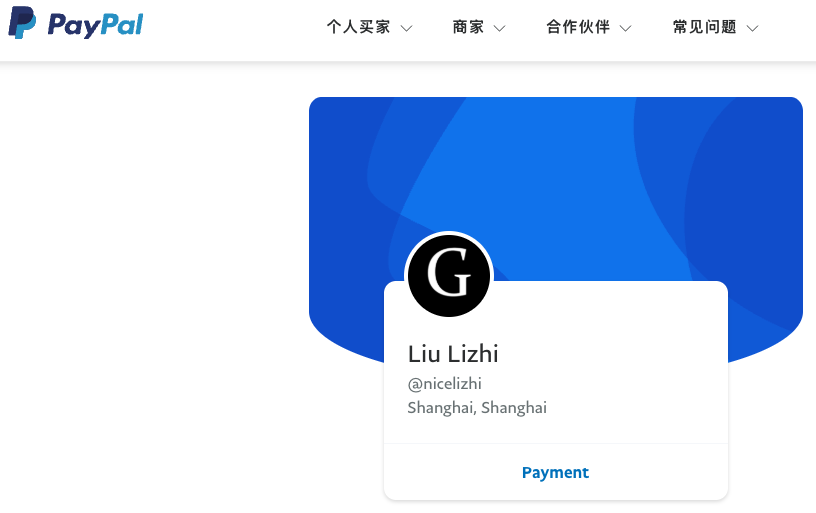
Mr. Lizhi also maintains a working PayPal account under the name Liu Lizhi and username “@nicelizhi,” another nickname listed in the Treasury sanctions. PayPal did not respond to a request for comment. A 15-year-old Twitter/X account named “Lizhi” that links to Mr. Lizhi’s personal domain remains active, although it has few followers and hasn’t posted in years.

These accounts and many others were flagged by the security firm Silent Push, which has been tracking Funnull’s operations for the past year and calling out U.S. cloud providers like Amazon and Microsoft for failing to more quickly sever ties with the company.

Liu Lizhi’s PayPal account.

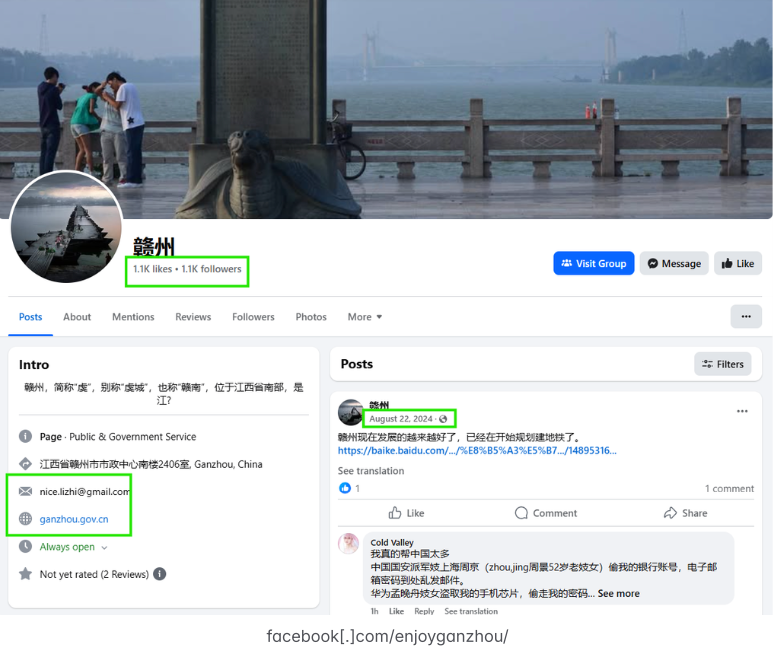
In a report released today, Silent Push found Lizhi still operates numerous Facebook accounts and groups, including a private Facebook account under the name Liu Lizhi. Another active Facebook account clearly connected to Lizhi is a tourism page for Ganzhou, China called “EnjoyGanzhou” that was named in the Treasury Department sanctions.

“This guy is the technical administrator for the infrastructure that is hosting a majority of scams targeting people in the United States, and hundreds of millions have been lost based on the websites he’s been hosting,” said Zach Edwards, senior threat researcher at Silent Push. “It’s crazy that the vast majority of big tech companies haven’t done anything to cut ties with this guy.”

The FBI says it received nearly 150,000 complaints last year involving digital assets and $9.3 billion in losses — a 66 percent increase from the previous year. Investment scams were the top crypto-related crimes reported, with $5.8 billion in losses.

In a statement, a Meta spokesperson said the company continuously takes steps to meet its legal obligations, but that sanctions laws are complex and varied.

“Sanctions are often targeted in nature and don’t always prohibit people from having a presence on our platform,” the statement reads. “Whether specific activity is restricted by sanctions or Meta’s Terms and Policies depends on the specific facts.”

Attempts to reach Mr. Lizhi via his primary email addresses at Hotmail and Gmail bounced as undeliverable. Likewise, his 14-year-old YouTube channel appears to have been taken down recently.

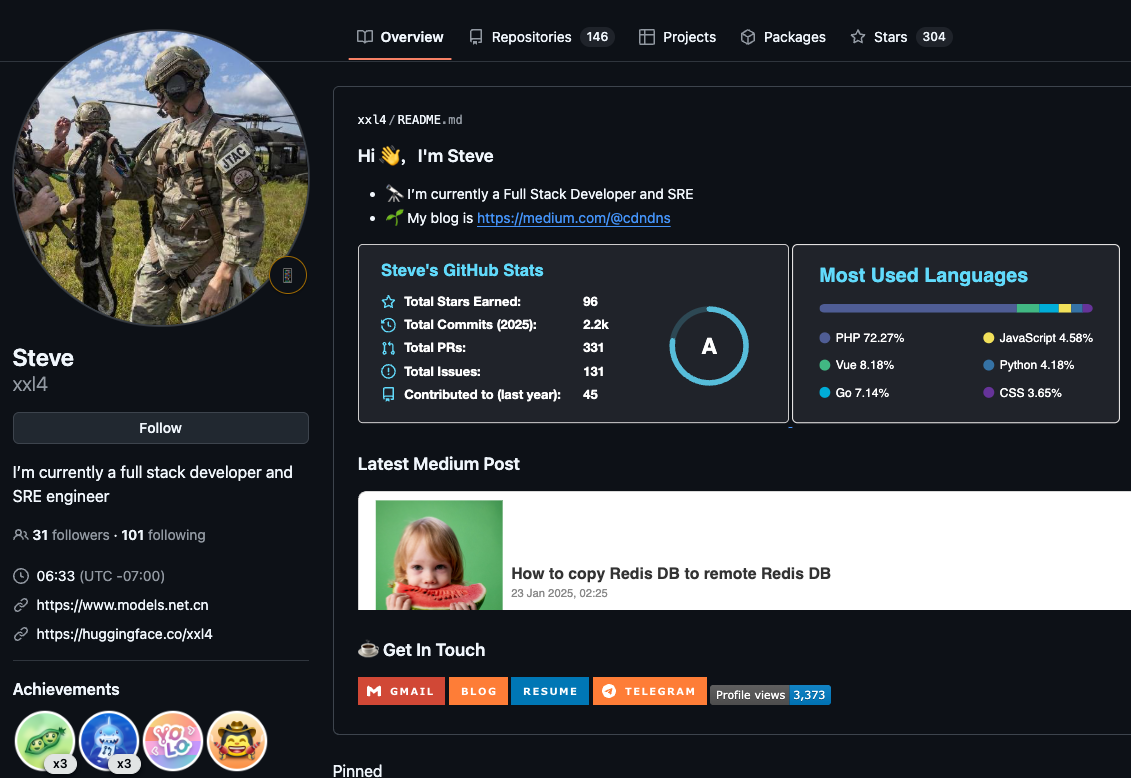
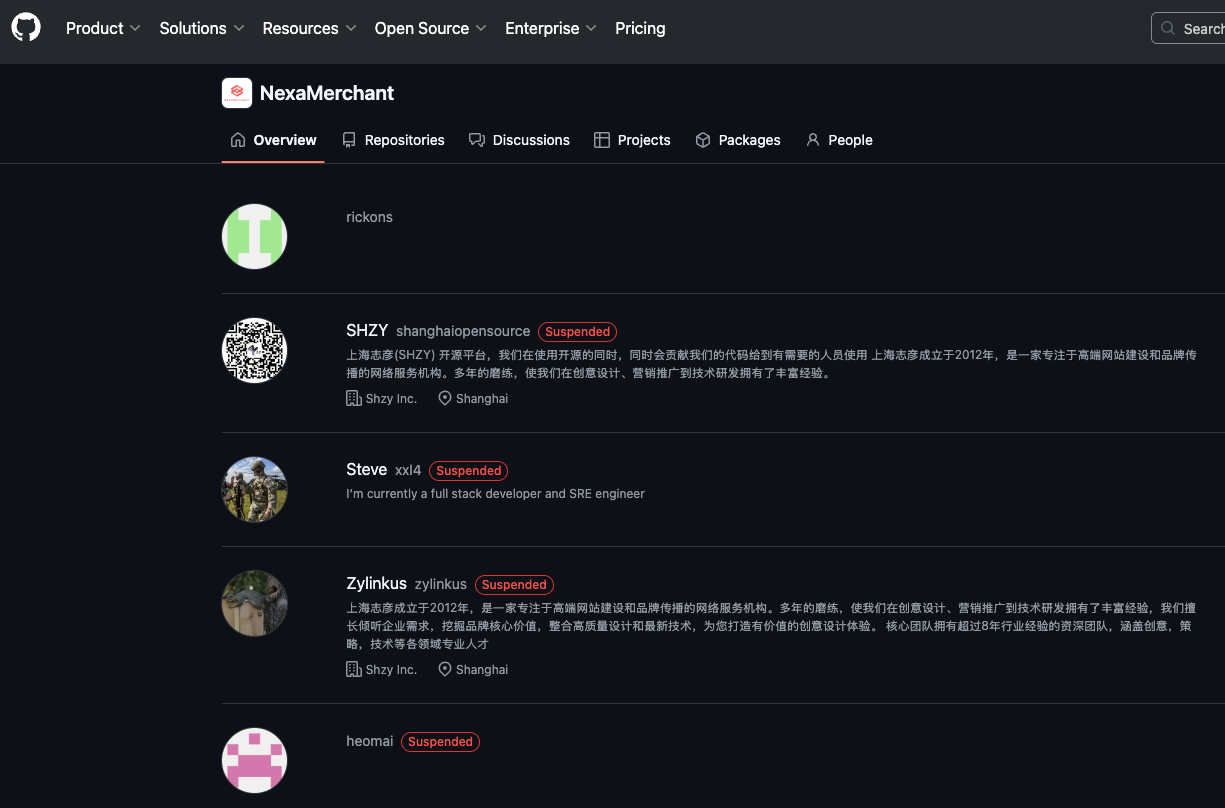
However, anyone interested in viewing or using Mr. Lizhi’s 146 computer code repositories will have no problem finding active GitHub accounts for him, including one registered under the NiceLizhi and XXL4 nicknames mentioned in the Treasury sanctions.

One of multiple active GitHub profiles used by Liu “Steve” Lizhi, who uses the nickname XXL4 (a moniker listed in the Treasury sanctions for Mr. Lizhi).

Mr. Lizhi also operates a GitHub page for an open source e-commerce platform called NexaMerchant, which advertises itself as a payment gateway working with numerous American financial institutions. Interestingly, this profile’s “followers” page shows several other accounts that appear to be Mr. Lizhi’s. All of the account’s followers are tagged as “suspended,” even though that suspended message does not display when one visits those individual profiles.

In response to questions, GitHub said it has a process in place to identify when users and customers are Specially Designated Nationals or other denied or blocked parties, but that it locks those accounts instead of removing them. According to its policy, GitHub takes care that users and customers aren’t impacted beyond what is required by law.

All of the follower accounts for the XXL4 GitHub account appear to be Mr. Lizhi’s, and have been suspended by GitHub, but their code is still accessible.

“This includes keeping public repositories, including those for open source projects, available and accessible to support personal communications involving developers in sanctioned regions,” the policy states. “This also means GitHub will advocate for developers in sanctioned regions to enjoy greater access to the platform and full access to the global open source community.”

Edwards said it’s great that GitHub has a process for handling sanctioned accounts, but that the process doesn’t seem to communicate risk in a transparent way, noting that the only indicator on the locked accounts is the message, “This repository has been archived by the owner. It is not read-only.”

“It’s an odd message that doesn’t communicate, ‘This is a sanctioned entity, don’t fork this code or use it in a production environment’,” Edwards said.

Mark Rasch is a former federal cybercrime prosecutor who now serves as counsel for the New York City based security consulting firm Unit 221B. Rasch said when Treasury’s Office of Foreign Assets Control (OFAC) sanctions a person or entity, it then becomes illegal for businesses or organizations to transact with the sanctioned party.

Rasch said financial institutions have very mature systems for severing accounts tied to people who become subject to OFAC sanctions, but that tech companies may be far less proactive — particularly with free accounts.

“Banks have established ways of checking [U.S. government sanctions lists] for sanctioned entities, but tech companies don’t necessarily do a good job with that, especially for services that you can just click and sign up for,” Rasch said. “It’s potentially a risk and liability for the tech companies involved, but only to the extent OFAC is willing to enforce it.”

Liu Lizhi operates numerous active Facebook accounts and groups, including this one for an entity specified in the OFAC sanctions: The “Enjoy Ganzhou” tourism page for Ganzhou, China. Image: Silent Push.

In July 2024, Funnull purchased the domain polyfill[.]io, the longtime home of a legitimate open source project that allowed websites to ensure that devices using legacy browsers could still render content in newer formats. After the Polyfill domain changed hands, at least 384,000 websites were caught in a supply-chain attack that redirected visitors to malicious sites. According to the Treasury, Funnull used the code to redirect people to scam websites and online gambling sites, some of which were linked to Chinese criminal money laundering operations.

The U.S. government says Funnull provides domain names for websites on its purchased IP addresses, using domain generation algorithms (DGAs) — programs that generate large numbers of similar but unique names for websites — and that it sells web design templates to cybercriminals.

“These services not only make it easier for cybercriminals to impersonate trusted brands when creating scam websites, but also allow them to quickly change to different domain names and IP addresses when legitimate providers attempt to take the websites down,” reads a Treasury statement.

Meanwhile, Funnull appears to be morphing nearly all aspects of its business in the wake of the sanctions, Edwards said.

“Whereas before they might have used 60 DGA domains to hide and bounce their traffic, we’re seeing far more now,” he said. “They’re trying to make their infrastructure harder to track and more complicated, so for now they’re not going away but more just changing what they’re doing. And a lot more organizations should be holding their feet to the fire.”


Read More

Scroll to Top