CISA Adds One Known Exploited Vulnerability to Catalog

 ​CISA has added one new vulnerability to its Known Exploited Vulnerabilities Catalog, based on evidence of active exploitation.

CVE-2024-29824 Ivanti Endpoint Manager (EPM) SQL Injection Vulnerability

These types of vulnerabilities are frequent attack vectors for malicious cyber actors and pose significant risks to the federal enterprise.
Binding Operational Directive (BOD) 22-01: Reducing the Significant Risk of Known Exploited Vulnerabilities established the Known Exploited Vulnerabilities Catalog as a living list of known Common Vulnerabilities and Exposures (CVEs) that carry significant risk to the federal enterprise. BOD 22-01 requires Federal Civilian Executive Branch (FCEB) agencies to remediate identified vulnerabilities by the due date to protect FCEB networks against active threats. See the BOD 22-01 Fact Sheet for more information.
Although BOD 22-01 only applies to FCEB agencies, CISA strongly urges all organizations to reduce their exposure to cyberattacks by prioritizing timely remediation of Catalog vulnerabilities as part of their vulnerability management practice. CISA will continue to add vulnerabilities to the catalog that meet the specified criteria. 

CISA has added one new vulnerability to its Known Exploited Vulnerabilities Catalog, based on evidence of active exploitation.

CVE-2024-29824 Ivanti Endpoint Manager (EPM) SQL Injection Vulnerability

These types of vulnerabilities are frequent attack vectors for malicious cyber actors and pose significant risks to the federal enterprise.

Binding Operational Directive (BOD) 22-01: Reducing the Significant Risk of Known Exploited Vulnerabilities established the Known Exploited Vulnerabilities Catalog as a living list of known Common Vulnerabilities and Exposures (CVEs) that carry significant risk to the federal enterprise. BOD 22-01 requires Federal Civilian Executive Branch (FCEB) agencies to remediate identified vulnerabilities by the due date to protect FCEB networks against active threats. See the BOD 22-01 Fact Sheet for more information.

Although BOD 22-01 only applies to FCEB agencies, CISA strongly urges all organizations to reduce their exposure to cyberattacks by prioritizing timely remediation of Catalog vulnerabilities as part of their vulnerability management practice. CISA will continue to add vulnerabilities to the catalog that meet the specified criteria.

 Read More

ASD’s ACSC, CISA, FBI, NSA, and International Partners Release Guidance on Principles of OT Cybersecurity for Critical Infrastructure Organizations

 ​Today, the Australian Signals Directorate’s Australian Cyber Security Centre (ASD’s ACSC)—in partnership with CISA, U.S. government and international partners—released the guide Principles of Operational Technology Cybersecurity. This guidance provides critical information on how to create and maintain a safe, secure operational technology (OT) environment.
The six principles outlined in this guide are intended to aid organizations in identifying how business decisions may adversely impact the cybersecurity of OT and the specific risks associated with those decisions. Filtering decisions that impact the security of OT will enhance the comprehensive decision-making that promotes security and business continuity.
CISA encourages critical infrastructure organizations review the best practices and implement recommended actions which can help ensure the proper cybersecurity controls are in place to reduce residual risk in OT decisions.
For more information on OT cybersecurity, review our Industrial Control Systems page and the Joint Cybersecurity Advisory Immediate Actions to Reduce Exposure Across Operational Technologies and Control Systems to help critical infrastructure organizations manage and enhance their OT cybersecurity. 

Today, the Australian Signals Directorate’s Australian Cyber Security Centre (ASD’s ACSC)—in partnership with CISA, U.S. government and international partners—released the guide Principles of Operational Technology Cybersecurity. This guidance provides critical information on how to create and maintain a safe, secure operational technology (OT) environment.

The six principles outlined in this guide are intended to aid organizations in identifying how business decisions may adversely impact the cybersecurity of OT and the specific risks associated with those decisions. Filtering decisions that impact the security of OT will enhance the comprehensive decision-making that promotes security and business continuity.

CISA encourages critical infrastructure organizations review the best practices and implement recommended actions which can help ensure the proper cybersecurity controls are in place to reduce residual risk in OT decisions.

For more information on OT cybersecurity, review our Industrial Control Systems page and the Joint Cybersecurity Advisory Immediate Actions to Reduce Exposure Across Operational Technologies and Control Systems to help critical infrastructure organizations manage and enhance their OT cybersecurity.

 Read More

CISA Releases Two Industrial Control Systems Advisories

 ​CISA released two Industrial Control Systems (ICS) advisories on October 1, 2024. These advisories provide timely information about current security issues, vulnerabilities, and exploits surrounding ICS.

ICSA-24-275-01 Optigo Networks ONS-S8 Spectra Aggregation Switch
ICSA-24-275-02 Mitsubishi Electric MELSEC iQ-F FX5-OPC

CISA encourages users and administrators to review newly released ICS advisories for technical details and mitigations. 

CISA released two Industrial Control Systems (ICS) advisories on October 1, 2024. These advisories provide timely information about current security issues, vulnerabilities, and exploits surrounding ICS.

ICSA-24-275-01 Optigo Networks ONS-S8 Spectra Aggregation Switch
ICSA-24-275-02 Mitsubishi Electric MELSEC iQ-F FX5-OPC

CISA encourages users and administrators to review newly released ICS advisories for technical details and mitigations.

 Read More

Optigo Networks ONS-S8 Spectra Aggregation Switch

 ​View CSAF
1. EXECUTIVE SUMMARY

CVSS v4 9.3
ATTENTION: Exploitable remotely/Low attack complexity
Vendor: Optigo Networks
Equipment: ONS-S8 – Spectra Aggregation Switch
Vulnerabilities: Improper Control of Filename for Include/Require Statement in PHP Program (‘PHP Remote File Inclusion’), Weak Authentication

2. RISK EVALUATION
Successful exploitation of these vulnerabilities could allow an attacker to achieve remote code execution, arbitrary file upload, or bypass authentication.
3. TECHNICAL DETAILS
3.1 AFFECTED PRODUCTS
The following versions of ONS-S8 – Spectra Aggregation Switch, an OT network management device, are affected:

ONS-S8 – Spectra Aggregation Switch: 1.3.7 and prior

3.2 Vulnerability Overview
3.2.1 IMPROPER CONTROL OF FILENAME FOR INCLUDE/REQUIRE STATEMENT IN PHP PROGRAM (‘PHP REMOTE FILE INCLUSION’) CWE-98
The web service for ONS-S8 – Spectra Aggregation Switch includes functions which do not properly validate user input, allowing an attacker to traverse directories, bypass authentication, and execute remote code.
CVE-2024-41925 has been assigned to this vulnerability. A CVSS v3 base score of 9.8 has been calculated; the CVSS vector string is (AV:N/AC:L/PR:N/UI:N/S:U/C:H/I:H/A:H).
A CVSS v4 score has also been calculated for CVE-2024-41925. A base score of 9.3 has been calculated; the CVSS vector string is (AV:N/AC:L/AT:N/PR:N/UI:N/VC:H/VI:H/VA:H/SC:N/SI:N/SA:N).
3.2.2 WEAK AUTHENTICATION CWE-1390
The web server for ONS-S8 – Spectra Aggregation Switch includes an incomplete authentication process, which can lead to an attacker authenticating without a password.
CVE-2024-45367 has been assigned to this vulnerability. A CVSS v3 base score of 9.1 has been calculated; the CVSS vector string is (AV:N/AC:L/PR:N/UI:N/S:U/C:H/I:H/A:N).
A CVSS v4 score has also been calculated for CVE-2024-45367. A base score of 9.3 has been calculated; the CVSS vector string is (AV:N/AC:L/AT:N/PR:N/UI:N/VC:H/VI:H/VA:N/SC:N/SI:N/SA:N).
3.3 BACKGROUND

CRITICAL INFRASTRUCTURE SECTORS: Critical Manufacturing
COUNTRIES/AREAS DEPLOYED: Worldwide
COMPANY HEADQUARTERS LOCATION: Canada

3.4 RESEARCHER
Claroty Team82 reported this vulnerability to CISA.
4. MITIGATIONS
Optigo Networks recommends users always use a unique management VLAN for the port on the ONS-S8 that is used to connect to OneView.
Optigo Networks also recommends users implement at least one of the following additional mitigations:

Use a dedicated NIC on the BMS computer and exclusively this computer for connecting to OneView to manage your OT network configuration.
Set up a router firewall with a white list for the devices permitted to access OneView.
Connect to OneView via secure VPN.

CISA recommends users take defensive measures to minimize the risk of exploitation of these vulnerabilities. CISA reminds organizations to perform proper impact analysis and risk assessment prior to deploying defensive measures.
CISA also provides a section for control systems security recommended practices on the ICS webpage on cisa.gov/ics. Several CISA products detailing cyber defense best practices are available for reading and download, including Improving Industrial Control Systems Cybersecurity with Defense-in-Depth Strategies.
CISA encourages organizations to implement recommended cybersecurity strategies for proactive defense of ICS assets.
Additional mitigation guidance and recommended practices are publicly available on the ICS webpage at cisa.gov/ics in the technical information paper, ICS-TIP-12-146-01B–Targeted Cyber Intrusion Detection and Mitigation Strategies.
Organizations observing suspected malicious activity should follow established internal procedures and report findings to CISA for tracking and correlation against other incidents.
No known public exploitation specifically targeting these vulnerabilities has been reported to CISA at this time.
5. UPDATE HISTORY

October 1, 2024: Initial Publication 

View CSAF

1. EXECUTIVE SUMMARY

CVSS v4 9.3
ATTENTION: Exploitable remotely/Low attack complexity
Vendor: Optigo Networks
Equipment: ONS-S8 – Spectra Aggregation Switch
Vulnerabilities: Improper Control of Filename for Include/Require Statement in PHP Program (‘PHP Remote File Inclusion’), Weak Authentication

2. RISK EVALUATION

Successful exploitation of these vulnerabilities could allow an attacker to achieve remote code execution, arbitrary file upload, or bypass authentication.

3. TECHNICAL DETAILS

3.1 AFFECTED PRODUCTS

The following versions of ONS-S8 – Spectra Aggregation Switch, an OT network management device, are affected:

ONS-S8 – Spectra Aggregation Switch: 1.3.7 and prior

3.2 Vulnerability Overview

3.2.1 IMPROPER CONTROL OF FILENAME FOR INCLUDE/REQUIRE STATEMENT IN PHP PROGRAM (‘PHP REMOTE FILE INCLUSION’) CWE-98

The web service for ONS-S8 – Spectra Aggregation Switch includes functions which do not properly validate user input, allowing an attacker to traverse directories, bypass authentication, and execute remote code.

CVE-2024-41925 has been assigned to this vulnerability. A CVSS v3 base score of 9.8 has been calculated; the CVSS vector string is (AV:N/AC:L/PR:N/UI:N/S:U/C:H/I:H/A:H).

A CVSS v4 score has also been calculated for CVE-2024-41925. A base score of 9.3 has been calculated; the CVSS vector string is (AV:N/AC:L/AT:N/PR:N/UI:N/VC:H/VI:H/VA:H/SC:N/SI:N/SA:N).

3.2.2 WEAK AUTHENTICATION CWE-1390

The web server for ONS-S8 – Spectra Aggregation Switch includes an incomplete authentication process, which can lead to an attacker authenticating without a password.

CVE-2024-45367 has been assigned to this vulnerability. A CVSS v3 base score of 9.1 has been calculated; the CVSS vector string is (AV:N/AC:L/PR:N/UI:N/S:U/C:H/I:H/A:N).

A CVSS v4 score has also been calculated for CVE-2024-45367. A base score of 9.3 has been calculated; the CVSS vector string is (AV:N/AC:L/AT:N/PR:N/UI:N/VC:H/VI:H/VA:N/SC:N/SI:N/SA:N).

3.3 BACKGROUND

CRITICAL INFRASTRUCTURE SECTORS: Critical Manufacturing
COUNTRIES/AREAS DEPLOYED: Worldwide
COMPANY HEADQUARTERS LOCATION: Canada

3.4 RESEARCHER

Claroty Team82 reported this vulnerability to CISA.

4. MITIGATIONS

Optigo Networks recommends users always use a unique management VLAN for the port on the ONS-S8 that is used to connect to OneView.

Optigo Networks also recommends users implement at least one of the following additional mitigations:

Use a dedicated NIC on the BMS computer and exclusively this computer for connecting to OneView to manage your OT network configuration.
Set up a router firewall with a white list for the devices permitted to access OneView.
Connect to OneView via secure VPN.

CISA recommends users take defensive measures to minimize the risk of exploitation of these vulnerabilities. CISA reminds organizations to perform proper impact analysis and risk assessment prior to deploying defensive measures.

CISA also provides a section for control systems security recommended practices on the ICS webpage on cisa.gov/ics. Several CISA products detailing cyber defense best practices are available for reading and download, including Improving Industrial Control Systems Cybersecurity with Defense-in-Depth Strategies.

CISA encourages organizations to implement recommended cybersecurity strategies for proactive defense of ICS assets.

Additional mitigation guidance and recommended practices are publicly available on the ICS webpage at cisa.gov/ics in the technical information paper, ICS-TIP-12-146-01B–Targeted Cyber Intrusion Detection and Mitigation Strategies.

Organizations observing suspected malicious activity should follow established internal procedures and report findings to CISA for tracking and correlation against other incidents.

No known public exploitation specifically targeting these vulnerabilities has been reported to CISA at this time.

5. UPDATE HISTORY

October 1, 2024: Initial Publication
 Read More

Mitsubishi Electric MELSEC iQ-F FX5-OPC

 ​View CSAF
1. EXECUTIVE SUMMARY

CVSS v3 7.5
ATTENTION: Exploitable remotely/low attack complexity
Vendor: Mitsubishi Electric
Equipment: MELSEC iQ-F FX5-OPC
Vulnerability: NULL Pointer Dereference

2. RISK EVALUATION
Successful exploitation of this vulnerability could allow a remote attacker to cause a Denial-of-Service (DoS) condition on the product by getting a legitimate user to import a specially crafted PKCS#12 format certificate.
3. TECHNICAL DETAILS
3.1 AFFECTED PRODUCTS
The following Mitsubishi Electric products are affected:

MELSEC iQ-F FX5-OPC: All versions

3.2 Vulnerability Overview
3.2.1 NULL POINTER DEREFERENCE CWE-476
A Denial-of-Service (DoS) vulnerability due to NULL Pointer Dereference when processing PKCS#12 format certificate exists in OpenSSL installed on MELSEC iQ-F OPC UA Unit. Because OpenSSL does not correctly check if a certain field in the PKCS#12 format certificate is NULL, a NULL pointer dereference occurs when the field is NULL, causing the product to enter a Denial-of-Service condition.
CVE-2024-0727 has been assigned to this vulnerability. A CVSS v3.1 base score of 7.5 has been calculated; the CVSS vector string is (AV:N/AC:L/PR:N/UI:N/S:U/C:N/I:N/A:H).
3.3 BACKGROUND

CRITICAL INFRASTRUCTURE SECTORS: Critical Manufacturing
COUNTRIES/AREAS DEPLOYED: Worldwide
COMPANY HEADQUARTERS LOCATION: Japan

3.4 RESEARCHER
Mitsubishi Electric reported this vulnerability to CISA.
4. MITIGATIONS
Mitsubishi Electric recommends users take the following mitigations to minimize the risk of exploiting this vulnerability:

Use within a LAN and block access from untrusted networks and hosts through firewalls.
Restrict physical access to the product, as well as to computers and network devices located within the same network as the product.
Use a firewall or virtual private network (VPN), etc. to prevent unauthorized access when Internet access is required.
Use IP filter function to block access from untrusted hosts. For details on the IP filter function, please refer to the following manual. MELSEC iQ-F FX5 OPC UA Module User’s Manual “4.4 IP Filter”
Do not import untrusted certificates.

For additional details, see Mitsubishi Electric advisory.
CISA recommends users take defensive measures to minimize the risk of exploitation of this vulnerability, such as:

Minimize network exposure for all control system devices and/or systems, ensuring they are not accessible from the internet.

CISA reminds organizations to perform proper impact analysis and risk assessment prior to deploying defensive measures.
CISA also provides a section for control systems security recommended practices on the ICS webpage on cisa.gov/ics. Several CISA products detailing cyber defense best practices are available for reading and download, including Improving Industrial Control Systems Cybersecurity with Defense-in-Depth Strategies.
CISA encourages organizations to implement recommended cybersecurity strategies for proactive defense of ICS assets.
Additional mitigation guidance and recommended practices are publicly available on the ICS webpage at cisa.gov/ics in the technical information paper, ICS-TIP-12-146-01B–Targeted Cyber Intrusion Detection and Mitigation Strategies.
Organizations observing suspected malicious activity should follow established internal procedures and report findings to CISA for tracking and correlation against other incidents.
No known public exploitation specifically targeting this vulnerability has been reported to CISA at this time.
5. UPDATE HISTORY

October 1, 2024: Initial Publication 

View CSAF

1. EXECUTIVE SUMMARY

CVSS v3 7.5
ATTENTION: Exploitable remotely/low attack complexity
Vendor: Mitsubishi Electric
Equipment: MELSEC iQ-F FX5-OPC
Vulnerability: NULL Pointer Dereference

2. RISK EVALUATION

Successful exploitation of this vulnerability could allow a remote attacker to cause a Denial-of-Service (DoS) condition on the product by getting a legitimate user to import a specially crafted PKCS#12 format certificate.

3. TECHNICAL DETAILS

3.1 AFFECTED PRODUCTS

The following Mitsubishi Electric products are affected:

MELSEC iQ-F FX5-OPC: All versions

3.2 Vulnerability Overview

3.2.1 NULL POINTER DEREFERENCE CWE-476

A Denial-of-Service (DoS) vulnerability due to NULL Pointer Dereference when processing PKCS#12 format certificate exists in OpenSSL installed on MELSEC iQ-F OPC UA Unit. Because OpenSSL does not correctly check if a certain field in the PKCS#12 format certificate is NULL, a NULL pointer dereference occurs when the field is NULL, causing the product to enter a Denial-of-Service condition.

CVE-2024-0727 has been assigned to this vulnerability. A CVSS v3.1 base score of 7.5 has been calculated; the CVSS vector string is (AV:N/AC:L/PR:N/UI:N/S:U/C:N/I:N/A:H).

3.3 BACKGROUND

CRITICAL INFRASTRUCTURE SECTORS: Critical Manufacturing
COUNTRIES/AREAS DEPLOYED: Worldwide
COMPANY HEADQUARTERS LOCATION: Japan

3.4 RESEARCHER

Mitsubishi Electric reported this vulnerability to CISA.

4. MITIGATIONS

Mitsubishi Electric recommends users take the following mitigations to minimize the risk of exploiting this vulnerability:

Use within a LAN and block access from untrusted networks and hosts through firewalls.
Restrict physical access to the product, as well as to computers and network devices located within the same network as the product.
Use a firewall or virtual private network (VPN), etc. to prevent unauthorized access when Internet access is required.
Use IP filter function to block access from untrusted hosts. For details on the IP filter function, please refer to the following manual. MELSEC iQ-F FX5 OPC UA Module User’s Manual “4.4 IP Filter”
Do not import untrusted certificates.

For additional details, see Mitsubishi Electric advisory.

CISA recommends users take defensive measures to minimize the risk of exploitation of this vulnerability, such as:

Minimize network exposure for all control system devices and/or systems, ensuring they are not accessible from the internet.

CISA reminds organizations to perform proper impact analysis and risk assessment prior to deploying defensive measures.

CISA also provides a section for control systems security recommended practices on the ICS webpage on cisa.gov/ics. Several CISA products detailing cyber defense best practices are available for reading and download, including Improving Industrial Control Systems Cybersecurity with Defense-in-Depth Strategies.

CISA encourages organizations to implement recommended cybersecurity strategies for proactive defense of ICS assets.

Additional mitigation guidance and recommended practices are publicly available on the ICS webpage at cisa.gov/ics in the technical information paper, ICS-TIP-12-146-01B–Targeted Cyber Intrusion Detection and Mitigation Strategies.

Organizations observing suspected malicious activity should follow established internal procedures and report findings to CISA for tracking and correlation against other incidents.

No known public exploitation specifically targeting this vulnerability has been reported to CISA at this time.

5. UPDATE HISTORY

October 1, 2024: Initial Publication
 Read More

Crooked Cops, Stolen Laptops & the Ghost of UGNazi

​A California man accused of failing to pay taxes on tens of millions of dollars allegedly earned from cybercrime also paid local police officers hundreds of thousands of dollars to help him extort, intimidate and silence rivals and former business partners, a new indictment charges. KrebsOnSecurity has learned that many of the man’s alleged targets were members of UGNazi, a hacker group behind multiple high-profile breaches and cyberattacks back in 2012. 

A California man accused of failing to pay taxes on tens of millions of dollars allegedly earned from cybercrime also paid local police officers hundreds of thousands of dollars to help him extort, intimidate and silence rivals and former business partners, a new indictment charges. KrebsOnSecurity has learned that many of the man’s alleged targets were members of UGNazi, a hacker group behind multiple high-profile breaches and cyberattacks back in 2012.

A photo released by the government allegedly showing Iza posing with several LASD officers on his payroll.

An indictment (PDF) unsealed last week said the Federal Bureau of Investigation (FBI) has been investigating Los Angeles resident Adam Iza. Also known as “Assad Faiq” and “The Godfather,” Iza is the 30-something founder of a cryptocurrency investment platform called Zort that advertised the ability to make smart trades based on artificial intelligence technology.

But the feds say investors in Zort soon lost their shorts, after Iza and his girlfriend began spending those investments on Lamborghinis, expensive jewelry, vacations, a $28 million home in Bel Air, even cosmetic surgery to extend the length of his legs.

The indictment states the FBI started looking at Iza after receiving multiple reports that he had on his payroll several active deputies with the Los Angeles Sheriff’s Department (LASD). Iza’s attorney did not immediately respond to requests for comment.

The complaint cites a letter from an attorney for a victim referenced only as “E.Z.,” who was seeking help related to an extortion and robbery allegedly committed by Iza. The government says that in March 2022, three men showed up at E.Z.’s home, and tried to steal his laptop in an effort to gain access to E.Z. cryptocurrency holdings online. A police report referenced in the complaint says three intruders were scared off when E.Z. fired several handgun rounds in the direction of his assailants.

The FBI later obtained a copy of a search warrant executed by LASD deputies in January 2022 for GPS location information on a phone belonging to E.Z., which shows an LASD deputy unlawfully added E.Z.’s mobile number to a list of those associated with an unrelated firearms investigation.

“Damn my guy actually filed the warrant,” Iza allegedly texted someone after the location warrant was entered. “That’s some serious shit to do for someone….risking a 24 years career. I pay him 280k a month for complete resources. They’re active-duty.”

The FBI alleges LASD officers had on several previous occasions tried to kidnap and extort E.Z. at Iza’s behest. The complaint references a November 2021 incident wherein Iza and E.Z. were in a car together when Iza asked to stop and get snacks at a convenience store. While they were still standing next to the car, a van with several armed LASD deputies showed up and tried to force E.Z. to hand over his phone. E.Z. escaped unharmed, and alerted 911.

E.Z. appears to be short for Enzo Zelocchi, a self-described “actor” who was featured in an ABC News story about a home invasion in Los Angeles around that same time, in which Zelocchi is quoted as saying at least two men tried to rob him at gunpoint (we’ll revisit Zelocchi’s acting credits in a moment).

One of many self portraits published on the Instagram account of Enzo Zelocchi.

The indictment makes frequent references to a co-conspirator of Iza (“CC-1”) — his girlfriend at the time — who allegedly helped Iza run his businesses and spend the millions plunked down by Zort investors. We know what E.Z. stands for because Iza’s girlfriend then was a woman named Iris Au, and in November 2022 she sued Zelocchi for allegedly stealing Iza’s laptop.

Iza’s indictment says he also harassed a man identified only as T.W., and refers to T.W. as one of two Americans currently incarcerated in the Philippines for murder. In December 2018, a then 21-year-0ld Troy Woody Jr. was arrested in Manilla after he was spotted dumping the body of his dead girlfriend Tomi Masters into a local river.

Woody is accused of murdering Masters with the help of his best friend and roommate at the time: Mir Islam, a.k.a. “JoshTheGod,” referred to in the Iza complaint as “M.I.” Islam and Woody were both core members of UGNazi, a hacker collective that sprang up in 2012 and claimed credit for hacking and attacking a number of high-profile websites.

In June 2016, Islam was sentenced to a year in prison for an impressive array of crimes, including stalking people online and posting their personal data on the Internet. Islam also pleaded guilty to reporting dozens of phony bomb threats and fake hostage situations at the homes of celebrities and public officials (Islam participated in a swatting attack against this author in 2013).

Troy Woody Jr. (left) and Mir Islam, are currently in prison in the Philippines for murder.

In December 2022, Troy Woody Jr. sued Iza, Zelocchi and Zort, alleging (PDF) Iza and Zelocchi were involved in a 2018 home invasion at his residence, wherein Woody claimed his assailants stole laptops and phones containing more than $200 million in cryptocurrencies.

Woody’s complaint states that Masters also was present during his 2018 home invasion, as was another core UGNazi member: Eric “CosmoTheGod” Taylor. CosmoTheGod rocketed to Internet infamy in 2013 when he and a number of other hackers set up the Web site exposed[dot]su, which published the address, Social Security numbers and other personal information of public figures, including the former First Lady Michelle Obama, the then-director of the FBI and the U.S. attorney general. The group also swatted many of the people they doxed.

Exposed was built with the help of identity information obtained and/or stolen from ssndob dot ru.

In 2017, Taylor was sentenced to three years probation for participating in multiple swatting attacks, including the one against my home in 2013.

Iza’s indictment says the FBI interviewed Woody in Manilla where he is currently incarcerated, and learned that Iza has been harassing him about passwords that would unlock access to cryptocurrencies. The FBI’s complaint leaves open the question of how Woody and Islam got the phones in the first place, but the implication is that Iza may have instigated the harassment by having mobile phones smuggled to the prisoners.

The government suggests its case against Iza was made possible in part thanks to Iza’s propensity for ripping off people who worked for him. The indictment cites information provided by a private investigator identified only as “K.C.,” who said Iza hired him to surveil Zelocchi but ultimately refused to pay him for much of the work.

K.C. stands for Kenneth Childs, who in 2022 sued Iris Au and Zort (PDF) for theft by deception and commercial disparagement, after it became clear his private eye services were being used as part of a scheme by the Zort founders to intimidate and extort others. Childs’ complaint says Iza ultimately clawed back tens of thousands of dollars in payments he’d previously made as part of their contract.

The government also included evidence provided by an associate of Iza’s — named only as “R.C.” — who was hired to throw a party at Iza’s home. According to the feds, Iza paid the associate $50,000 to craft the event to his liking, but on the day of the party Iza allegedly told R.C. he was unhappy with the event and demanded half of his money back.

When R.C. balked, Iza allegedly surrounded the man with armed LASD officers, who then extracted the payment by seizing his phone. The indictment claims Iza kept R.C.’s phone and spent the remainder of his bank balance.

A photo Iza allegedly sent to Tassilo Heinrich immediately after Heinrich’s arrest on unsubstantiated drug charges.

The FBI said that after the incident at the party, Iza had his bribed sheriff deputies to pull R.C. over and arrest him on phony drug charges. The complaint includes a photo of R.C. being handcuffed by the police, which the feds say Iza sent to R.C. in order to intimidate him even further. The drug charges were later dismissed for lack of evidence.

The government alleges Iza and Au paid the LASD officers using Zelle transfers from accounts tied to two different entities incorporated by one or both of them: Dream Agency and Rise Agency. The complaint further alleges that these two entities were the beneficiaries of a business that sold hacked and phished Facebook advertising accounts, and bribed Facebook employees to unblock ads that violated its terms of service.

The complaint says Iza ran this business with another individual identified only as “T.H.,” and that at some point T.H. had some personal problems and checked himself into rehab. T.H. told the FBI that Iza responded by stealing his laptop and turning his associate in to the government.

KrebsOnSecurity has learned that T.H. in this case is Tassilo Heinrich, a man indicted in 2022 for hacking into the e-commerce platform Shopify, and leaking the user database for Ledger, a company that makes hardware wallets for storing cryptocurrencies.

Heinrich pleaded guilty in 2022 and was sentenced to time served, three years of supervised release, and ordered to pay restitution to Shopify. Upon his release from custody, Heinrich told the FBI that Iza was still using his account at the public screenshot service Gyazo to document communications regarding his alleged bribing of LASD officers.

Prosecutors say Iza and Au portrayed themselves as glamorous and wealthy individuals who were successful social media influencers, but that most of that was a carefully crafted facade designed to attract investment from cryptocurrency enthusiasts. Meanwhile, the U.K. tabloids reported this summer that Au was dating Davide Sanclimenti, the 2022 co-winner on the dating reality show Love Island.

Au was featured on the July 2024 cover of “Womenpreneur Middle East.”

Recall that we promised to revisit Mr. Zelocchi’s claimed acting credits. Despite being briefly listed on the Internet Movie Data Base (imdb.com) as the most awarded science fiction actor of all time, it’s not clear whether Mr. Zelocchi has starred in any real movies.

Earlier this year, an Internet sleuth on Youtube showed that even though Zelocchi’s IMDB profile has him earning more awards than most other actors on the platform (here he is holding a Youtube top viewership award), Zelocchi is probably better known as the director of the movie once rated the absolute worst sci-fi flick on IMDB: A 2015 work called “Angel’s Apocalypse.” Most of the video shorts on Zelocchi’s Instagram page appear to be short clips, some of which look more like a commercial for men’s cologne than a clip from a real movie.

A Reddit post from a year ago calling attention to Zelocchi’s sci-fi film Angel’s Apocalypse somehow earning more audience votes than any other movie in the same genre.

In many ways, the crimes described in this indictment and the various related civil lawsuits would prefigure a disturbing new trend within English-speaking cybercrime communities that has bubbled up in the past few years: The emergence of “violence-as-as-service” offerings that allow cybercriminals to anonymously extort and intimidate their rivals.

Found on certain Telegram channels are solicitations for IRL or “In Real Life” jobs, wherein people hire themselves out as willing to commit a variety of physical attacks in their local geographic area, such as slashing tires, firebombing a home, or tossing a brick through someone’s window.

Many of the cybercriminals in this community have stolen tens of millions of dollars worth of cryptocurrency, and can easily afford to bribe police officers. KrebsOnSecurity would expect to see more of this in the future as young, crypto-rich cybercriminals seek to corrupt people in authority to their advantage.


Read More

CISA’s VDP Platform 2023 Annual Report Showcases Success

 ​Today, the Cybersecurity and Infrastructure Security Agency (CISA) released its Vulnerability Disclosure Policy (VDP) Platform 2023 Annual Report, highlighting the service’s remarkable success in 2023, its second full year of operation. Throughout 2023, CISA focused on advocating for the increased agency adoption of the VDP Platform, supporting federal civilian executive branch (FCEB) agencies in identifying vulnerabilities in their systems, and engaging the public security researcher community.
Public security researchers play a vital role in securing our federal government’s networks. As part of CISA’s persistent and ongoing collaboration with the public security researcher community, CISA issued Binding Operational Directive (BOD) 20-01 in 2020, which requires every FCEB agency to establish a VDP. These VDPs follow industry and community best practices, including giving authorization to participating public security researchers and committing to not pursue legal action for good-faith research. 
CISA’s VDP Platform complements BOD 20-01 by giving FCEB agencies an easy way to establish a VDP and to engage with public security researchers. CISA appreciates the contributions by thousands of public security researchers to date and looks forward to continuing to further broaden this collaboration in the future.
To learn more about the VDP Platform, please visit the Vulnerability Disclosure Policy (VDP) Platform webpage and view the VDP 101 video on CISA’s YouTube channel. 

Today, the Cybersecurity and Infrastructure Security Agency (CISA) released its Vulnerability Disclosure Policy (VDP) Platform 2023 Annual Report, highlighting the service’s remarkable success in 2023, its second full year of operation. Throughout 2023, CISA focused on advocating for the increased agency adoption of the VDP Platform, supporting federal civilian executive branch (FCEB) agencies in identifying vulnerabilities in their systems, and engaging the public security researcher community.

Public security researchers play a vital role in securing our federal government’s networks. As part of CISA’s persistent and ongoing collaboration with the public security researcher community, CISA issued Binding Operational Directive (BOD) 20-01 in 2020, which requires every FCEB agency to establish a VDP. These VDPs follow industry and community best practices, including giving authorization to participating public security researchers and committing to not pursue legal action for good-faith research. 

CISA’s VDP Platform complements BOD 20-01 by giving FCEB agencies an easy way to establish a VDP and to engage with public security researchers. CISA appreciates the contributions by thousands of public security researchers to date and looks forward to continuing to further broaden this collaboration in the future.

To learn more about the VDP Platform, please visit the Vulnerability Disclosure Policy (VDP) Platform webpage and view the VDP 101 video on CISA’s YouTube channel.

 Read More

CISA Adds Four Known Exploited Vulnerabilities to Catalog

 ​CISA has added four new vulnerabilities to its Known Exploited Vulnerabilities Catalog, based on evidence of active exploitation.

CVE-2023-25280 D-Link DIR-820 Router OS Command Injection Vulnerability
CVE-2020-15415 DrayTek Multiple Vigor Routers OS Command Injection Vulnerability
CVE-2021-4043 Motion Spell GPAC Null Pointer Dereference Vulnerability
CVE-2019-0344 SAP Commerce Cloud Deserialization of Untrusted Data Vulnerability

These types of vulnerabilities are frequent attack vectors for malicious cyber actors and pose significant risks to the federal enterprise.
Binding Operational Directive (BOD) 22-01: Reducing the Significant Risk of Known Exploited Vulnerabilities established the Known Exploited Vulnerabilities Catalog as a living list of known Common Vulnerabilities and Exposures (CVEs) that carry significant risk to the federal enterprise. BOD 22-01 requires Federal Civilian Executive Branch (FCEB) agencies to remediate identified vulnerabilities by the due date to protect FCEB networks against active threats. See the BOD 22-01 Fact Sheet for more information.
Although BOD 22-01 only applies to FCEB agencies, CISA strongly urges all organizations to reduce their exposure to cyberattacks by prioritizing timely remediation of Catalog vulnerabilities as part of their vulnerability management practice. CISA will continue to add vulnerabilities to the catalog that meet the specified criteria. 

CISA has added four new vulnerabilities to its Known Exploited Vulnerabilities Catalog, based on evidence of active exploitation.

CVE-2023-25280 D-Link DIR-820 Router OS Command Injection Vulnerability
CVE-2020-15415 DrayTek Multiple Vigor Routers OS Command Injection Vulnerability
CVE-2021-4043 Motion Spell GPAC Null Pointer Dereference Vulnerability
CVE-2019-0344 SAP Commerce Cloud Deserialization of Untrusted Data Vulnerability

These types of vulnerabilities are frequent attack vectors for malicious cyber actors and pose significant risks to the federal enterprise.

Binding Operational Directive (BOD) 22-01: Reducing the Significant Risk of Known Exploited Vulnerabilities established the Known Exploited Vulnerabilities Catalog as a living list of known Common Vulnerabilities and Exposures (CVEs) that carry significant risk to the federal enterprise. BOD 22-01 requires Federal Civilian Executive Branch (FCEB) agencies to remediate identified vulnerabilities by the due date to protect FCEB networks against active threats. See the BOD 22-01 Fact Sheet for more information.

Although BOD 22-01 only applies to FCEB agencies, CISA strongly urges all organizations to reduce their exposure to cyberattacks by prioritizing timely remediation of Catalog vulnerabilities as part of their vulnerability management practice. CISA will continue to add vulnerabilities to the catalog that meet the specified criteria.

 Read More

Cisco Releases Security Updates for IOS and IOS XE Software

 ​Cisco released its September 2024 Semiannual Cisco IOS and IOS XE Software Security Advisory Bundled Publication to address vulnerabilities in IOS and IOS XE. A cyber threat actor could exploit some of these vulnerabilities to take control of an affected system.  

CISA encourages users and administrators to review the following and apply the necessary updates: 

September 2024 Semiannual Cisco IOS and IOS XE Software Security Advisory Bundled Publication 

Cisco released its September 2024 Semiannual Cisco IOS and IOS XE Software Security Advisory Bundled Publication to address vulnerabilities in IOS and IOS XE. A cyber threat actor could exploit some of these vulnerabilities to take control of an affected system.  

CISA encourages users and administrators to review the following and apply the necessary updates: 

 Read More

U.S. Indicts 2 Top Russian Hackers, Sanctions Cryptex

​The United States today unveiled sanctions and indictments against the alleged proprietor of Joker’s Stash, a now-defunct cybercrime store that peddled tens of millions of payment cards stolen in some of the largest data breaches of the past decade. The government also indicted a top Russian cybercriminal known as Taleon, whose cryptocurrency exchange Cryptex has evolved into one of Russia’s most active money laundering networks. 

The United States today unveiled sanctions and indictments against the alleged proprietor of Joker’s Stash, a now-defunct cybercrime store that peddled tens of millions of payment cards stolen in some of the largest data breaches of the past decade. The government also indicted and sanctioned a top Russian cybercriminal known as Taleon, whose cryptocurrency exchange Cryptex has evolved into one of Russia’s most active money laundering networks.

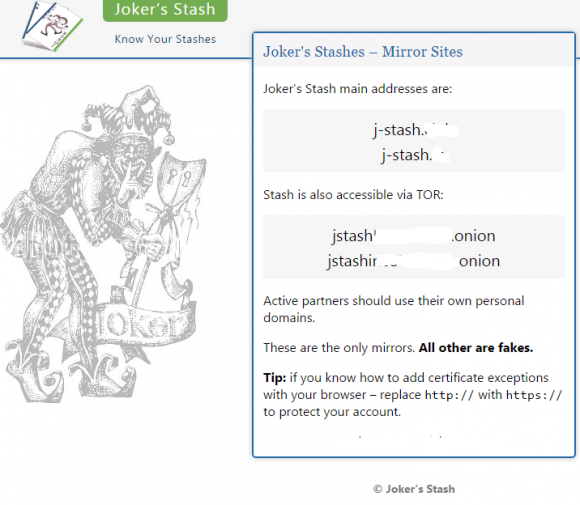
A 2016 screen shot of the Joker’s Stash homepage. The links have been redacted.

The U.S. Department of Justice (DOJ) today unsealed an indictment against a 38-year-old man from Novosibirsk, Russia for allegedly operating Joker’s Stash, an extremely successful carding shop that came online in late 2014. Joker’s sold cards stolen in a steady drip of breaches at U.S. retailers, including Saks Fifth Avenue, Lord and TaylorBebe StoresHilton HotelsJason’s DeliWhole FoodsChipotleWawaSonic Drive-In, the Hy-Vee supermarket chainBuca Di Beppo, and Dickey’s BBQ.

The government believes the brains behind Joker’s Stash is Timur Kamilevich Shakhmametov, an individual who is listed in Russian incorporation documents as the owner of Arpa Plus, a Novosibirsk company that makes mobile games.

Early in his career (circa 2000) Shakhmametov was known as “v1pee” and was the founder of the Russian hacker group nerf[.]ru, which periodically published hacking tools and exploits for software vulnerabilities.

The Russian hacker group Nerf as described in a March 2006 article in the Russian hacker magazine xakep.ru.

By 2004, v1pee had adopted the moniker “Vega” on the exclusive Russian language hacking forum Mazafaka, where this user became one of the more reliable vendors of stolen payment cards.

In the years that followed, Vega would cement his reputation as a top carder on other forums, including Verified, DirectConnection, and Carder[.]pro.

Vega also became known as someone who had the inside track on “unlimited cashouts,” a globally coordinated cybercrime scheme in which crooks hack a bank or payment card processor and use cloned cards at cash machines to rapidly withdraw millions of dollars in just a few hours.

“Hi, there is work on d+p, unlimited,” Vega wrote in a private message to another user on Verified in Dec. 2012, referring to “dumps and PINs,” the slang term for stolen debit cards with the corresponding PINs that would allow ATM withdrawals.

This batch of some five million cards put up for sale Sept. 26, 2017 on the now-defunct carding site Joker’s Stash has been tied to a breach at Sonic Drive-In.

Joker’s Stash came online in the wake of several enormous card breaches at retailers like Target and Home Depot, and the resulting glut of inventory had depressed prices for stolen cards. But Joker’s would distinguish itself by catering to high-roller customers — essentially street gangs in the United States that would purchase thousands of stolen payment cards in one go.

Faced with a buyer’s market, Joker’s Stash set themselves apart by focusing on loyalty programs, frequent buyer discounts, money-back guarantees, and just plain good customer service. Big spenders were given access to the most freshly hacked payment cards, and were offered the ability to get free replacement cards if any turned out to be duds.

Joker’s Stash also was unique because it claimed to sell only payment cards that its own hackers had stolen directly from merchants. At the time, card shops typically resold payment cards that were stolen and supplied by many third-party hackers of unknown reliability or reputation.

In January 2021, Joker’s Stash announced it was closing up shop, after European authorities seized a number of servers for the fraud store, and its proprietor came down with the Coronavirus.

Prosecutors allege Joker’s Stash earned revenues of at least $280 million, but possibly more than $1 billion (the broad range is a consequence of several variables, including the rapid fluctuation in the price of bitcoin and the stolen goods they were peddling).

TALEON

The proprietors of Joker’s Stash may have sold tens of millions of stolen payment cards, but Taleon is by far the bigger fish in this law enforcement action because his various cryptocurrency and cash exchanges have allegedly helped to move billions of dollars into and out of Russia over the past 20 years.

An indictment unsealed today names Taleon as Sergey Sergeevich Ivanov, 44, of Saint Petersburg, Russia. The government says Ivanov, who likely changed his surname from Omelnitskii at some point, laundered money for Joker’s Stash, among many other cybercrime stores.

In a statement today, the Treasury Department said Ivanov has laundered hundreds of millions of dollars’ worth of virtual currency for ransomware actors, initial access brokers, darknet marketplace vendors, and other criminal actors for approximately the last 20 years.

First appearing on Mazafaka in the early 2000s, Taleon was known on the forums as someone who could reliably move large amounts of physical cash. Sources familiar with the investigation said Taleon’s service emerged as one of the few remaining domestic cash delivery services still operating after Russia invaded Ukraine in Feb. 2022.

Taleon set up his service to facilitate transfers between Moscow, St. Petersburg and financial institutions in the West. Taleon’s private messages on some hacker forums have been leaked over the years and indexed by the cyber intelligence platform Intel 471. Those messages indicate Taleon worked on many of the same ATM cashouts as Vegas, so it’s clear the two had an established business relationship well before Joker’s Stash came into being.

Sometime around 2013, Taleon launched a partnership with a money transfer business called pm2btc[.]me. PM2BTC allowed customers to convert funds from the virtual currency Perfect Money (PM) into bitcoin, and then have the balance (minus a processing fee) available on a physical debit card that could be used at ATMs, for shopping online, or at retail stores.

A screenshot of a website reviewing PM2BTC.

The U.S. government itself set things in motion for Taleon’s nascent cryptocurrency exchange business in 2013 after the DOJ levied money laundering charges against the proprietors of Liberty Reserve, one of the largest virtual currencies in operation at the time.  Liberty Reserve was heavily used by cybercriminals of all stripes. The government said the service had more than a million users worldwide, and laundered in excess of $6 billion in suspected criminal proceeds.

In the days following the takedown of Liberty Reserve, KrebsOnSecurity ran a story that examined discussions across multiple top Russian cybercrime forums about where crooks could feel safe parking their stolen funds. The answer involved Bitcoin, but also Taleon’s new service.

UAPS

Part of the appeal of Taleon’s exchange was that it gave its vetted customers an “application programming interface” or API that made it simple for dodgy online shops selling stolen goods and cybercrime services to accept cryptocurrency deposits from their customers, and to manage payouts to any suppliers and affiliates.

This API is synonymous with a service Taleon and friends operate in the background called UAPS, short for “Universal Anonymous Payment System.” UAPS has gone by several other names including “Pinpays,” and in October 2014 it landed Joker’s Stash as its first big client.

A source with knowledge of the investigation told KrebsOnSecurity that Taleon is a pilot who owns and flies around in his own helicopter.

Ivanov appears to have little to no social media presence, but the 40-year-old woman he lives with in St. Petersburg does, and she has a photo on her Vktontake page that shows the two of them in 2019 flying over Lake Ladoga, a large body of water directly north of St. Petersburg.

Sergey “Taleon” Ivanov (right) in 2019 in his helicopter with the woman he lives with, flying over a lake north of St. Petersburg, Russia.

BRIANS CLUB

In late 2015, a major competitor to Joker’s Stash emerged using UAPS for its back-end payments: BriansClub. BriansClub sullies this author’s name, photos and reputation to peddle millions of credit and debit cards stolen from merchants in the United States and around the world.

An ad for BriansClub has been using my name and likeness for years to peddle millions of stolen credit cards.

In 2019, someone hacked BriansClub and relieved the fraud shop of more than 26 million stolen payment cards — an estimated one-third of the 87 million payment card accounts that were on sale across all underground shops at that time. An anonymous source shared that card data with KrebsOnSecurity, which ultimately shared it with a consortium of financial institutions that issued most of the cards.

After that incident, the administrator of BriansClub changed the site’s login page so that it featured a copy of my phone bill, Social Security card, and a link to my full credit report [to this day, random cybercriminals confuse Yours Truly with the proprietor of BriansClub].

Alex Holden is founder of the Milwaukee-based cybersecurity firm Hold Security. Holden has long maintained visibility into cryptocurrency transactions made by BriansClub.

Holden said those records show BriansClub sells tens of thousands of dollars worth of stolen credit cards every day, and that in the last two years alone the BriansClub administrator has removed more than $242 million worth of cryptocurrency revenue from the UAPS platform.

The BriansClub login page, as it looked from late 2019 until recently.

Passive domain name system (DNS) records show that in its early days BriansClub shared a server in Lithuania along with just a handful of other domains, including secure.pinpays[.]com, the crime forum Verified, and a slew of carding shops operating under the banner Rescator.

As KrebsOnSecurity detailed in December 2023, the Rescator shops were directly involved in some of the largest payment card breaches of the past decade. Those include the 2013 breach at Target and the 2014 breach at Home Depot, intrusions that exposed more than 100 million payment card records.

CRYPTEX

In early 2018, Taleon and the proprietors of UAPS launched a cryptocurrency exchange called Cryptex[.]net that has emerged as a major mover of ill-gotten crypto coins.

Taleon reminds UAPS customers they will enjoy 0% commission and no “know your customer” (KYC) requirements “on our exchange Cryptex.”

Cryptex has been associated with quite a few ransomware transactions, including the largest known ransomware payment to date. In February 2024, a Fortune 50 ransomware victim paid a record $75 million ransom to a Russian cybercrime group that calls themselves the Dark Angels. A source with knowledge of the investigation said an analysis of that payment shows roughly half of it was processed through Cryptex.

That source provided a screen shot of Cryptex’s sending and receiving exposure as viewed by Chainalysis, a company the U.S. government and many cryptocurrency exchanges rely on to flag transactions associated with suspected money laundering, ransomware payouts, or facilitating payments for darknet websites.

Chainalysis finds that Cryptex has received more than $1.6 billion since its inception, and that this amount is roughly equal to its sending exposure (although the total number of outflows is nearly half of the inflows).

The graphic indicates a great deal of money flowing into Cryptex — roughly a quarter of it — is coming from bitcoin ATMs around the world. Experts say most of those ATM inflows to Cryptex are bitcoin ATM cash deposits from customers of carding websites like BriansClub and Jokers Stash.

A screenshot of Chainalysis’s summary of illicit activity on Cryptex since the exchange’s inception in 2018.

The indictments released today do not definitively connect Taleon to Cryptex. However, PM2BTC (which teamed up with Taleon to launch UAPS and Pinpays) and Cryptex have now been sanctioned by the U.S. Department of the Treasury.

Treasury’s Financial Crimes Enforcement Network (FinCEN) levied sanctions today against PM2BTC under a powerful new “Section 9714” authority included in the Combating Russian Money Laundering Act, changes enacted in 2022 to make it easier to target financial entities involved in laundering money for Russia.

Treasury first used this authority last year against Bitzlato, a cryptocurrency exchange operating in Russia that became a money laundering conduit for ransomware attackers and dark market dealers.

THE LAUNDROMAT

An investigation into the corporate entities behind UAPS and Cryptex reveals an organization incorporated in 2012 in Scotland called Orbest Investments LP. Records from the United Kingdom’s business registry show the owners of Orbest Investments are two entities: CS Proxy Solutions CY, and RM Everton Ltd.

Public business records further reveal that CS Proxy Solutions and RM Everton are co-owners of Progate Solutions, a holding company that featured prominently in a June 2017 report from Bellingcat and Transparency International (PDF) on money laundering networks tied to the Kremlin.

“Law enforcement agencies believe that the total amount laundered through this process could be as high as US$80 billion,” the joint report reads. “Although it is not clear where all of this money came from, investigators claim it includes significant amounts of money that were diverted from the Russian treasury and state contracts.”

Their story built on reporting published earlier that year by the Organized Crime and Corruption Project (OCCRP) and Novaya Gazeta, which found that at least US$20.8 billion was secretly moved out of Russia between 2010 and 2014 through a vast money laundering machine comprising over 5,000 legal entities known as “The Laundromat.”

Image: occrp.org

“Using company records, reporters tracked the names of some clients after executives refused to give them out,” the OCCRP report explains. “They found the heavy users of the scheme were rich and powerful Russians who had made their fortunes from dealing with the Russian state.”

Rich Sanders is a blockchain analyst and investigator who advises the law enforcement and intelligence community. Sanders just returned from a three-week sojourn through Ukraine, traveling with Ukrainian soldiers while mapping out dodgy Russian crypto exchanges that are laundering money for narcotics networks operating in the region. Sanders said today’s sanctions by the Treasury Department will likely have an immediate impact on Cryptex and its customers.

“Whenever an entity is sanctioned, the implications on-chain are immense,” Sanders told KrebsOnSecurity. “Regardless of whether an exchange is actually compliant or just virtue signals it, it is the case across the board that exchanges will pay attention to these sanctions.”

“This action shows these payment processors for illicit platforms will get attention eventually,” Sanders continued. “Even if it took way too long in this case, Cryptex knew the majority of their volume was problematic, knew why it was problematic, and did it anyway. And this should be a wake up call for other exchanges that know full well that most of their volume is problematic.”


 

Read More

Scroll to Top