This Windows PowerShell Phish Has Scary Potential

​Many GitHub users this week received a novel phishing email warning of critical security holes in their code. Those who clicked the link for details were asked to distinguish themselves from bots by pressing a combination of keyboard keys that causes Microsoft Windows to download password-stealing malware. While it’s unlikely that many programmers fell for this scam, it’s notable because less targeted versions of it are likely to be far more successful against the average Windows user. 

Many GitHub users this week received a novel phishing email warning of critical security holes in their code. Those who clicked the link for details were asked to distinguish themselves from bots by pressing a combination of keyboard keys that causes Microsoft Windows to download password-stealing malware. While it’s unlikely that many programmers fell for this scam, it’s notable because less targeted versions of it are likely to be far more successful against the average Windows user.

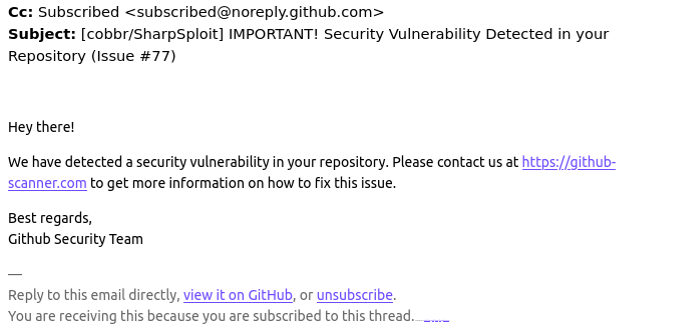
A reader named Chris shared an email he received this week that spoofed GitHub’s security team and warned: “Hey there! We have detected a security vulnerability in your repository. Please contact us at https://github-scanner[.]com to get more information on how to fix this issue.”

Visiting that link generates a web page that asks the visitor to “Verify You Are Human” by solving an unusual CAPTCHA.

This malware attack pretends to be a CAPTCHA intended to separate humans from bots.

Clicking the “I’m not a robot” button generates a pop-up message asking the user to take three sequential steps to prove their humanity. Step 1 involves simultaneously pressing the keyboard key with the Windows icon and the letter “R,” which opens a Windows “Run” prompt that will execute any specified program that is already installed on the system.

Executing this series of keypresses prompts the built-in Windows Powershell to download password-stealing malware.

Step 2 asks the user to press the “Control” key and the letter “V” at the same time, which pastes malicious code from the site’s virtual clipboard.

Step 3 — pressing the “Enter” key — causes Windows to launch a PowerShell command, and then fetch and execute a malicious file from github-scanner[.]com called “l6e.exe.”

PowerShell is a powerful, cross-platform automation tool built into Windows that is designed to make it simpler for administrators to automate tasks on a PC or across multiple computers on the same network.

According to an analysis at the malware scanning service Virustotal.com, the malicious file downloaded by the pasted text is called Lumma Stealer, and it’s designed to snarf any credentials stored on the victim’s PC.

This phishing campaign may not have fooled many programmers, who no doubt natively understand that pressing the Windows and “R” keys will open up a “Run” prompt, or that Ctrl-V will dump the contents of the clipboard.

But I bet the same approach would work just fine to trick some of my less tech-savvy friends and relatives into running malware on their PCs. I’d also bet none of these people have ever heard of PowerShell, let alone had occasion to intentionally launch a PowerShell terminal.

Given those realities, it would be nice if there were a simple way to disable or at least heavily restrict PowerShell for normal end users for whom it could become more of a liability.

However, Microsoft strongly advises against nixing PowerShell because some core system processes and tasks may not function properly without it. What’s more, doing so requires tinkering with sensitive settings in the Windows registry, which can be a dicey undertaking even for the learned.

Still, it wouldn’t hurt to share this article with the Windows users in your life who fit the less-savvy profile. Because this particular scam has a great deal of room for growth and creativity.


Read More

CISA Adds One Known Exploited Vulnerability to Catalog

 ​CISA has added one new vulnerability to its Known Exploited Vulnerabilities Catalog, based on evidence of active exploitation.

CVE-2024-8963 Ivanti Cloud Services Appliance (CSA) Path Traversal Vulnerability

These types of vulnerabilities are frequent attack vectors for malicious cyber actors and pose significant risks to the federal enterprise.
Binding Operational Directive (BOD) 22-01: Reducing the Significant Risk of Known Exploited Vulnerabilities established the Known Exploited Vulnerabilities Catalog as a living list of known Common Vulnerabilities and Exposures (CVEs) that carry significant risk to the federal enterprise. BOD 22-01 requires Federal Civilian Executive Branch (FCEB) agencies to remediate identified vulnerabilities by the due date to protect FCEB networks against active threats. See the BOD 22-01 Fact Sheet for more information.
Although BOD 22-01 only applies to FCEB agencies, CISA strongly urges all organizations to reduce their exposure to cyberattacks by prioritizing timely remediation of Catalog vulnerabilities as part of their vulnerability management practice. CISA will continue to add vulnerabilities to the catalog that meet the specified criteria. 

CISA has added one new vulnerability to its Known Exploited Vulnerabilities Catalog, based on evidence of active exploitation.

CVE-2024-8963 Ivanti Cloud Services Appliance (CSA) Path Traversal Vulnerability

These types of vulnerabilities are frequent attack vectors for malicious cyber actors and pose significant risks to the federal enterprise.

Binding Operational Directive (BOD) 22-01: Reducing the Significant Risk of Known Exploited Vulnerabilities established the Known Exploited Vulnerabilities Catalog as a living list of known Common Vulnerabilities and Exposures (CVEs) that carry significant risk to the federal enterprise. BOD 22-01 requires Federal Civilian Executive Branch (FCEB) agencies to remediate identified vulnerabilities by the due date to protect FCEB networks against active threats. See the BOD 22-01 Fact Sheet for more information.

Although BOD 22-01 only applies to FCEB agencies, CISA strongly urges all organizations to reduce their exposure to cyberattacks by prioritizing timely remediation of Catalog vulnerabilities as part of their vulnerability management practice. CISA will continue to add vulnerabilities to the catalog that meet the specified criteria.

 Read More

Ivanti Releases Admin Bypass Security Update for Cloud Services Appliance

 ​Ivanti has released a security update to address an admin bypass vulnerability (CVE-2024-8963) affecting Ivanti Cloud Services Appliance (CSA) version 4.6.  A cyber threat actor could exploit this vulnerability in conjunction with CVE-2024-8190–detailed in a Sept. 13 Ivanti security advisory–to take control of an affected system. This vulnerability impacts all versions prior to patch 519.
Ivanti has confirmed limited exploitation and recommends that users upgrade to CSA version 5.0, as version 4.6 is end-of-life and no longer supported. CISA urges users and administrators review the Ivanti security advisory and apply the necessary updates. 
Note: CISA has added CVE-2024-8963 to its Known Exploited Vulnerabilities Catalog, which, per Binding Operational Directive (BOD) 22-01: Reducing the Significant Risk of Known Exploited Vulnerabilities, requires Federal Civilian Executive Branch (FCEB) agencies to remediate identified vulnerabilities by the specified due date to protect FCEB networks against active threats.    

Ivanti has released a security update to address an admin bypass vulnerability (CVE-2024-8963) affecting Ivanti Cloud Services Appliance (CSA) version 4.6.  A cyber threat actor could exploit this vulnerability in conjunction with CVE-2024-8190–detailed in a Sept. 13 Ivanti security advisory–to take control of an affected system. This vulnerability impacts all versions prior to patch 519.

Ivanti has confirmed limited exploitation and recommends that users upgrade to CSA version 5.0, as version 4.6 is end-of-life and no longer supported. CISA urges users and administrators review the Ivanti security advisory and apply the necessary updates. 

Note: CISA has added CVE-2024-8963 to its Known Exploited Vulnerabilities Catalog, which, per Binding Operational Directive (BOD) 22-01: Reducing the Significant Risk of Known Exploited Vulnerabilities, requires Federal Civilian Executive Branch (FCEB) agencies to remediate identified vulnerabilities by the specified due date to protect FCEB networks against active threats.  
 

 Read More

VMware Releases Security Advisory for VMware Cloud Foundation and vCenter Server

 ​VMware released a security advisory addressing vulnerabilities in the VMware Cloud Foundation and the vCenter Server. A cyber threat actor could exploit one of these vulnerabilities to take control of an affected system.
CISA encourages users and administrators to review the following VMware security advisory and apply the necessary updates:

VCDSA24968 

VMware released a security advisory addressing vulnerabilities in the VMware Cloud Foundation and the vCenter Server. A cyber threat actor could exploit one of these vulnerabilities to take control of an affected system.

CISA encourages users and administrators to review the following VMware security advisory and apply the necessary updates:

VCDSA24968
 Read More

MegaSys Computer Technologies Telenium Online Web Application

 ​View CSAF
1. EXECUTIVE SUMMARY

CVSS v4 9.3
ATTENTION: Exploitable remotely/low attack complexity
Vendor: MegaSys Computer Technologies
Equipment: Telenium Online Web Application
Vulnerability: Improper Input Validation

2. RISK EVALUATION
Successful exploitation of this vulnerability could allow an attacker to inject arbitrary Perl code through a crafted HTTP request, leading to remote code execution on the server.
3. TECHNICAL DETAILS
3.1 AFFECTED PRODUCTS
The following MegaSys Computer Technologies products are affected:

Telenium Online Web Application: versions 8.3 and prior

3.2 Vulnerability Overview
3.2.1 IMPROPER INPUT VALIDATION CWE-20
Telenium Online Web Application is vulnerable due to a Perl script that is called to load the login page. Due to improper input validation, an attacker can inject arbitrary Perl code through a crafted HTTP request, leading to remote code execution on the server.
CVE-2024-6404 has been assigned to this vulnerability. A CVSS v3.1 base score of 9.8 has been calculated; the CVSS vector string is (AV:N/AC:L/PR:N/UI:N/S:U/C:H/I:H/A:H).
A CVSS v4 score has also been calculated for CVE-2024-6404. A base score of 9.3 has been calculated; the CVSS vector string is (CVSS4.0/AV:N/AC:L/AT:N/PR:N/UI:N/VC:H/VI:H/VA:H/SC:N/SI:N/SA:N).
3.3 BACKGROUND

CRITICAL INFRASTRUCTURE SECTORS: Information Technology, Communications
COUNTRIES/AREAS DEPLOYED: Worldwide
COMPANY HEADQUARTERS LOCATION: Canada

3.4 RESEARCHER
Blake Rash and Bryan Sears reported this vulnerability to CISA.
4. MITIGATIONS
MegaSys Computer technologies released the following patches:

Telenium Online Web Application: v7.4.72
Telenium Online Web Application: v8.3.36

If users are unable to promptly install the patched versions that address the vulnerability, MegaSys Computer Technologies recommends mitigating the risk by disabling the web/browser-based interface.
For additional information or assistance, contact Megasys Computer Technologies support directly.
CISA recommends users take defensive measures to minimize the risk of exploitation of this vulnerability, such as:

Minimize network exposure for all control system devices and/or systems, ensuring they are not accessible from the internet.
Locate control system networks and remote devices behind firewalls and isolating them from business networks.
When remote access is required, use more secure methods, such as Virtual Private Networks (VPNs), recognizing VPNs may have vulnerabilities and should be updated to the most current version available. Also recognize VPN is only as secure as the connected devices.

CISA reminds organizations to perform proper impact analysis and risk assessment prior to deploying defensive measures.
CISA also provides a section for control systems security recommended practices on the ICS webpage on cisa.gov/ics. Several CISA products detailing cyber defense best practices are available for reading and download, including Improving Industrial Control Systems Cybersecurity with Defense-in-Depth Strategies.
CISA encourages organizations to implement recommended cybersecurity strategies for proactive defense of ICS assets.
Additional mitigation guidance and recommended practices are publicly available on the ICS webpage at cisa.gov/ics in the technical information paper, ICS-TIP-12-146-01B–Targeted Cyber Intrusion Detection and Mitigation Strategies.
Organizations observing suspected malicious activity should follow established internal procedures and report findings to CISA for tracking and correlation against other incidents.
No known public exploitation specifically targeting this vulnerability has been reported to CISA at this time.
5. UPDATE HISTORY

September 19, 2024: Initial Publication 

View CSAF

1. EXECUTIVE SUMMARY

CVSS v4 9.3
ATTENTION: Exploitable remotely/low attack complexity
Vendor: MegaSys Computer Technologies
Equipment: Telenium Online Web Application
Vulnerability: Improper Input Validation

2. RISK EVALUATION

Successful exploitation of this vulnerability could allow an attacker to inject arbitrary Perl code through a crafted HTTP request, leading to remote code execution on the server.

3. TECHNICAL DETAILS

3.1 AFFECTED PRODUCTS

The following MegaSys Computer Technologies products are affected:

Telenium Online Web Application: versions 8.3 and prior

3.2 Vulnerability Overview

3.2.1 IMPROPER INPUT VALIDATION CWE-20

Telenium Online Web Application is vulnerable due to a Perl script that is called to load the login page. Due to improper input validation, an attacker can inject arbitrary Perl code through a crafted HTTP request, leading to remote code execution on the server.

CVE-2024-6404 has been assigned to this vulnerability. A CVSS v3.1 base score of 9.8 has been calculated; the CVSS vector string is (AV:N/AC:L/PR:N/UI:N/S:U/C:H/I:H/A:H).

A CVSS v4 score has also been calculated for CVE-2024-6404. A base score of 9.3 has been calculated; the CVSS vector string is (CVSS4.0/AV:N/AC:L/AT:N/PR:N/UI:N/VC:H/VI:H/VA:H/SC:N/SI:N/SA:N).

3.3 BACKGROUND

CRITICAL INFRASTRUCTURE SECTORS: Information Technology, Communications
COUNTRIES/AREAS DEPLOYED: Worldwide
COMPANY HEADQUARTERS LOCATION: Canada

3.4 RESEARCHER

Blake Rash and Bryan Sears reported this vulnerability to CISA.

4. MITIGATIONS

MegaSys Computer technologies released the following patches:

Telenium Online Web Application: v7.4.72
Telenium Online Web Application: v8.3.36

If users are unable to promptly install the patched versions that address the vulnerability, MegaSys Computer Technologies recommends mitigating the risk by disabling the web/browser-based interface.

For additional information or assistance, contact Megasys Computer Technologies support directly.

CISA recommends users take defensive measures to minimize the risk of exploitation of this vulnerability, such as:

Minimize network exposure for all control system devices and/or systems, ensuring they are not accessible from the internet.
Locate control system networks and remote devices behind firewalls and isolating them from business networks.
When remote access is required, use more secure methods, such as Virtual Private Networks (VPNs), recognizing VPNs may have vulnerabilities and should be updated to the most current version available. Also recognize VPN is only as secure as the connected devices.

CISA reminds organizations to perform proper impact analysis and risk assessment prior to deploying defensive measures.

CISA also provides a section for control systems security recommended practices on the ICS webpage on cisa.gov/ics. Several CISA products detailing cyber defense best practices are available for reading and download, including Improving Industrial Control Systems Cybersecurity with Defense-in-Depth Strategies.

CISA encourages organizations to implement recommended cybersecurity strategies for proactive defense of ICS assets.

Additional mitigation guidance and recommended practices are publicly available on the ICS webpage at cisa.gov/ics in the technical information paper, ICS-TIP-12-146-01B–Targeted Cyber Intrusion Detection and Mitigation Strategies.

Organizations observing suspected malicious activity should follow established internal procedures and report findings to CISA for tracking and correlation against other incidents.

No known public exploitation specifically targeting this vulnerability has been reported to CISA at this time.

5. UPDATE HISTORY

September 19, 2024: Initial Publication
 Read More

IDEC PLCs

 ​View CSAF
1. EXECUTIVE SUMMARY

CVSS v3 5.3
ATTENTION: Low Attack Complexity
Vendor: IDEC Corporation
Equipment: IDEC PLCs
Vulnerabilities: Cleartext Transmission of Sensitive Information, Generation of Predictable Identifiers

2. RISK EVALUATION
Successful exploitation of these vulnerabilities could allow an attacker to obtain user authentication information or disrupt communication.
3. TECHNICAL DETAILS
3.1 AFFECTED PRODUCTS
The following versions of IDEC PLCs are affected:

FC6A Series MICROSmart All-in-One CPU module: Ver.2.60 and prior
FC6B Series MICROSmart All-in-One CPU module: Ver.2.60 and prior
FC6A Series MICROSmart Plus CPU module: Ver.2.40 and prior
FC6B Series MICROSmart Plus CPU module: Ver.2.60 and prior
FT1A Series SmartAXIS Pro/Lite: Ver.2.41 and prior (affected only by CVE-2024-41927)

3.2 Vulnerability Overview
3.2.1 CLEARTEXT TRANSMISSION OF SENSITIVE INFORMATION CWE-319
The affected products are vulnerable to a cleartext vulnerability that could allow an attacker to obtain user authentication information.
CVE-2024-41927 has been assigned to this vulnerability. A CVSS v3.1 base score of 4.6 has been calculated; the CVSS vector string is (AV:P/AC:L/PR:N/UI:N/S:U/C:H/I:N/A:N).
3.2.2 GENERATION OF PREDICTABLE NUMBERS OR IDENTIFIERS CWE-340
The affected products are vulnerable to a predictable identifiers vulnerability, which may allow an attacker to disrupt communications.
CVE-2024-28957 has been assigned to this vulnerability. A CVSS v3.1 base score of 5.3 has been calculated; the CVSS vector string is (AV:N/AC:L/PR:N/UI:N/S:U/C:N/I:N/A:L).
3.3 BACKGROUND

CRITICAL INFRASTRUCTURE SECTORS: Food and Agriculture, Critical Manufacturing, Energy, Transportation
COUNTRIES/AREAS DEPLOYED: Worldwide
COMPANY HEADQUARTERS LOCATION: Japan

3.4 RESEARCHER
IDEC Corporation reported these vulnerabilities to CISA.
4. MITIGATIONS
Apply the appropriate software update according to the information provided by the developer:

FC6A Series MICROSmart All-in-One CPU module: Ver.2.70 and later
FC6B Series MICROSmart All-in-One CPU module: Ver.2.70 and later
FC6A Series MICROSmart Plus CPU module: Ver.2.50 and later
FC6B Series MICROSmart Plus CPU module: Ver.2.70 and later
FT1A Series SmartAXIS Pro/Lite: Ver.2.50 and later

For more information, reference the IDEC Corporation advisory:

Vulnerabilities in PLC regarding plaintext transmission of sensitive information and predictable ID usage

CISA recommends users take defensive measures to minimize the risk of exploitation of these vulnerabilities, such as:

Minimize network exposure for all control system devices and/or systems, ensuring they are not accessible from the internet.
Locate control system networks and remote devices behind firewalls and isolating them from business networks.
When remote access is required, use more secure methods, such as Virtual Private Networks (VPNs), recognizing VPNs may have vulnerabilities and should be updated to the most current version available. Also recognize VPN is only as secure as the connected devices.

CISA reminds organizations to perform proper impact analysis and risk assessment prior to deploying defensive measures.
CISA also provides a section for control systems security recommended practices on the ICS webpage on cisa.gov/ics. Several CISA products detailing cyber defense best practices are available for reading and download, including Improving Industrial Control Systems Cybersecurity with Defense-in-Depth Strategies.
CISA encourages organizations to implement recommended cybersecurity strategies for proactive defense of ICS assets.
Additional mitigation guidance and recommended practices are publicly available on the ICS webpage at cisa.gov/ics in the technical information paper, ICS-TIP-12-146-01B–Targeted Cyber Intrusion Detection and Mitigation Strategies.
Organizations observing suspected malicious activity should follow established internal procedures and report findings to CISA for tracking and correlation against other incidents.
No known public exploitation specifically targeting these vulnerabilities has been reported to CISA at this time.
5. UPDATE HISTORY

September 19, 2024: Initial Publication 

View CSAF

1. EXECUTIVE SUMMARY

CVSS v3 5.3
ATTENTION: Low Attack Complexity
Vendor: IDEC Corporation
Equipment: IDEC PLCs
Vulnerabilities: Cleartext Transmission of Sensitive Information, Generation of Predictable Identifiers

2. RISK EVALUATION

Successful exploitation of these vulnerabilities could allow an attacker to obtain user authentication information or disrupt communication.

3. TECHNICAL DETAILS

3.1 AFFECTED PRODUCTS

The following versions of IDEC PLCs are affected:

FC6A Series MICROSmart All-in-One CPU module: Ver.2.60 and prior
FC6B Series MICROSmart All-in-One CPU module: Ver.2.60 and prior
FC6A Series MICROSmart Plus CPU module: Ver.2.40 and prior
FC6B Series MICROSmart Plus CPU module: Ver.2.60 and prior
FT1A Series SmartAXIS Pro/Lite: Ver.2.41 and prior (affected only by CVE-2024-41927)

3.2 Vulnerability Overview

3.2.1 CLEARTEXT TRANSMISSION OF SENSITIVE INFORMATION CWE-319

The affected products are vulnerable to a cleartext vulnerability that could allow an attacker to obtain user authentication information.

CVE-2024-41927 has been assigned to this vulnerability. A CVSS v3.1 base score of 4.6 has been calculated; the CVSS vector string is (AV:P/AC:L/PR:N/UI:N/S:U/C:H/I:N/A:N).

3.2.2 GENERATION OF PREDICTABLE NUMBERS OR IDENTIFIERS CWE-340

The affected products are vulnerable to a predictable identifiers vulnerability, which may allow an attacker to disrupt communications.

CVE-2024-28957 has been assigned to this vulnerability. A CVSS v3.1 base score of 5.3 has been calculated; the CVSS vector string is (AV:N/AC:L/PR:N/UI:N/S:U/C:N/I:N/A:L).

3.3 BACKGROUND

CRITICAL INFRASTRUCTURE SECTORS: Food and Agriculture, Critical Manufacturing, Energy, Transportation
COUNTRIES/AREAS DEPLOYED: Worldwide
COMPANY HEADQUARTERS LOCATION: Japan

3.4 RESEARCHER

IDEC Corporation reported these vulnerabilities to CISA.

4. MITIGATIONS

Apply the appropriate software update according to the information provided by the developer:

FC6A Series MICROSmart All-in-One CPU module: Ver.2.70 and later
FC6B Series MICROSmart All-in-One CPU module: Ver.2.70 and later
FC6A Series MICROSmart Plus CPU module: Ver.2.50 and later
FC6B Series MICROSmart Plus CPU module: Ver.2.70 and later
FT1A Series SmartAXIS Pro/Lite: Ver.2.50 and later

For more information, reference the IDEC Corporation advisory:

Vulnerabilities in PLC regarding plaintext transmission of sensitive information and predictable ID usage

CISA recommends users take defensive measures to minimize the risk of exploitation of these vulnerabilities, such as:

Minimize network exposure for all control system devices and/or systems, ensuring they are not accessible from the internet.
Locate control system networks and remote devices behind firewalls and isolating them from business networks.
When remote access is required, use more secure methods, such as Virtual Private Networks (VPNs), recognizing VPNs may have vulnerabilities and should be updated to the most current version available. Also recognize VPN is only as secure as the connected devices.

CISA reminds organizations to perform proper impact analysis and risk assessment prior to deploying defensive measures.

CISA also provides a section for control systems security recommended practices on the ICS webpage on cisa.gov/ics. Several CISA products detailing cyber defense best practices are available for reading and download, including Improving Industrial Control Systems Cybersecurity with Defense-in-Depth Strategies.

CISA encourages organizations to implement recommended cybersecurity strategies for proactive defense of ICS assets.

Additional mitigation guidance and recommended practices are publicly available on the ICS webpage at cisa.gov/ics in the technical information paper, ICS-TIP-12-146-01B–Targeted Cyber Intrusion Detection and Mitigation Strategies.

Organizations observing suspected malicious activity should follow established internal procedures and report findings to CISA for tracking and correlation against other incidents.

No known public exploitation specifically targeting these vulnerabilities has been reported to CISA at this time.

5. UPDATE HISTORY

September 19, 2024: Initial Publication
 Read More

Kastle Systems Access Control System

 ​View CSAF
1. EXECUTIVE SUMMARY

CVSS v4 9.2
ATTENTION: Exploitable remotely/low attack complexity
Vendor: Kastle Systems
Equipment: Access Control System
Vulnerabilities: Use of Hard-coded Credentials, Cleartext Storage of Sensitive Information

2. RISK EVALUATION
Successful exploitation of these vulnerabilities could allow an attacker to access sensitive information on the affected product.
3. TECHNICAL DETAILS
3.1 AFFECTED PRODUCTS
The following versions of Kastle Systems Access Control System are affected:

Access Control System: Firmware before May 1, 2024

3.2 Vulnerability Overview
3.2.1 USE OF HARD-CODED CREDENTIALS CWE-798
Kastle Systems firmware prior to May 1, 2024, contained a hard-coded credential, which if accessed may allow an attacker to access sensitive information.
CVE-2024-45861 has been assigned to this vulnerability. A CVSS v3.1 base score of 8.6 has been calculated; the CVSS vector string is (CVSS:3.1/AV:N/AC:L/PR:N/UI:N/S:C/C:H/I:N/A:N).
A CVSS v4 score has also been calculated for CVE-2024-45861. A base score of 9.2 has been calculated; the CVSS vector string is (CVSS4.0/AV:N/AC:L/AT:N/PR:N/UI:N/VC:H/VI:N/VA:N/SC:H/SI:N/SA:N).
3.2.2 CLEARTEXT STORAGE OF SENSITIVE INFORMATION CWE-312
Kastle Systems firmware prior to May 1, 2024, stored machine credentials in cleartext, which may allow an attacker to access sensitive information.
CVE-2024-45862 has been assigned to this vulnerability. A CVSS v3.1 base score of 8.6 has been calculated; the CVSS vector string is (CVSS:3.1/AV:N/AC:L/PR:N/UI:N/S:C/C:H/I:N/A:N).
A CVSS v4 score has also been calculated for CVE-2024-45862. A base score of 8.7 has been calculated; the CVSS vector string is (CVSS4.0/AV:N/AC:L/AT:N/PR:N/UI:N/VC:H/VI:N/VA:N/SC:N/SI:N/SA:N).
3.3 BACKGROUND

CRITICAL INFRASTRUCTURE SECTORS: Commercial Facilities, Government Facilities
COUNTRIES/AREAS DEPLOYED: Worldwide
COMPANY HEADQUARTERS LOCATION: United States

3.4 RESEARCHER
evildaemond (Adam Foster) reported these vulnerabilities to CISA.
4. MITIGATIONS
Kastle Systems have fixed the system configuration vulnerabilities internally. No user interaction is required.
CISA would like to highlight that this is a cloud-based solution hosted by Kastle Systems, and CISA’s traditional mitigation strategies may not be applicable in this context.
CISA reminds organizations to perform proper impact analysis and risk assessment prior to deploying defensive measures.
CISA also provides a section for control systems security recommended practices on the ICS webpage on cisa.gov/ics. Several CISA products detailing cyber defense best practices are available for reading and download, including Improving Industrial Control Systems Cybersecurity with Defense-in-Depth Strategies.
CISA encourages organizations to implement recommended cybersecurity strategies for proactive defense of ICS assets.
Additional mitigation guidance and recommended practices are publicly available on the ICS webpage at cisa.gov/ics in the technical information paper, ICS-TIP-12-146-01B–Targeted Cyber Intrusion Detection and Mitigation Strategies.
Organizations observing suspected malicious activity should follow established internal procedures and report findings to CISA for tracking and correlation against other incidents.
No known public exploitation specifically targeting these vulnerabilities have been reported to CISA at this time.
5. UPDATE HISTORY

September 19, 2024: Initial Publication 

View CSAF

1. EXECUTIVE SUMMARY

CVSS v4 9.2
ATTENTION: Exploitable remotely/low attack complexity
Vendor: Kastle Systems
Equipment: Access Control System
Vulnerabilities: Use of Hard-coded Credentials, Cleartext Storage of Sensitive Information

2. RISK EVALUATION

Successful exploitation of these vulnerabilities could allow an attacker to access sensitive information on the affected product.

3. TECHNICAL DETAILS

3.1 AFFECTED PRODUCTS

The following versions of Kastle Systems Access Control System are affected:

Access Control System: Firmware before May 1, 2024

3.2 Vulnerability Overview

3.2.1 USE OF HARD-CODED CREDENTIALS CWE-798

Kastle Systems firmware prior to May 1, 2024, contained a hard-coded credential, which if accessed may allow an attacker to access sensitive information.

CVE-2024-45861 has been assigned to this vulnerability. A CVSS v3.1 base score of 8.6 has been calculated; the CVSS vector string is (CVSS:3.1/AV:N/AC:L/PR:N/UI:N/S:C/C:H/I:N/A:N).

A CVSS v4 score has also been calculated for CVE-2024-45861. A base score of 9.2 has been calculated; the CVSS vector string is (CVSS4.0/AV:N/AC:L/AT:N/PR:N/UI:N/VC:H/VI:N/VA:N/SC:H/SI:N/SA:N).

3.2.2 CLEARTEXT STORAGE OF SENSITIVE INFORMATION CWE-312

Kastle Systems firmware prior to May 1, 2024, stored machine credentials in cleartext, which may allow an attacker to access sensitive information.

CVE-2024-45862 has been assigned to this vulnerability. A CVSS v3.1 base score of 8.6 has been calculated; the CVSS vector string is (CVSS:3.1/AV:N/AC:L/PR:N/UI:N/S:C/C:H/I:N/A:N).

A CVSS v4 score has also been calculated for CVE-2024-45862. A base score of 8.7 has been calculated; the CVSS vector string is (CVSS4.0/AV:N/AC:L/AT:N/PR:N/UI:N/VC:H/VI:N/VA:N/SC:N/SI:N/SA:N).

3.3 BACKGROUND

CRITICAL INFRASTRUCTURE SECTORS: Commercial Facilities, Government Facilities
COUNTRIES/AREAS DEPLOYED: Worldwide
COMPANY HEADQUARTERS LOCATION: United States

3.4 RESEARCHER

evildaemond (Adam Foster) reported these vulnerabilities to CISA.

4. MITIGATIONS

Kastle Systems have fixed the system configuration vulnerabilities internally. No user interaction is required.

CISA would like to highlight that this is a cloud-based solution hosted by Kastle Systems, and CISA’s traditional mitigation strategies may not be applicable in this context.

CISA reminds organizations to perform proper impact analysis and risk assessment prior to deploying defensive measures.

CISA also provides a section for control systems security recommended practices on the ICS webpage on cisa.gov/ics. Several CISA products detailing cyber defense best practices are available for reading and download, including Improving Industrial Control Systems Cybersecurity with Defense-in-Depth Strategies.

CISA encourages organizations to implement recommended cybersecurity strategies for proactive defense of ICS assets.

Additional mitigation guidance and recommended practices are publicly available on the ICS webpage at cisa.gov/ics in the technical information paper, ICS-TIP-12-146-01B–Targeted Cyber Intrusion Detection and Mitigation Strategies.

Organizations observing suspected malicious activity should follow established internal procedures and report findings to CISA for tracking and correlation against other incidents.

No known public exploitation specifically targeting these vulnerabilities have been reported to CISA at this time.

5. UPDATE HISTORY

September 19, 2024: Initial Publication
 Read More

IDEC CORPORATION WindLDR and WindO/I-NV4

 ​View CSAF
1. EXECUTIVE SUMMARY

CVSS v3 5.9
ATTENTION: Exploitable remotely
Vendor: IDEC Corporation
Equipment: WindLDR, WindO/I-NV4
Vulnerability: Cleartext Storage of Sensitive Information

2. RISK EVALUATION
Successful exploitation of this vulnerability could allow an attacker to obtain sensitive information.
3. TECHNICAL DETAILS
3.1 AFFECTED PRODUCTS
The following versions of WindLDR and WindO/I-NV4 are affected:

WindLDR: Ver.9.1.0 and prior
WindO/I-NV4: Ver.3.0.1 and prior

3.2 Vulnerability Overview
3.2.1 CLEARTEXT STORAGE OF SENSITIVE INFORMATION CWE-312
The affected products are vulnerable to a cleartext vulnerability that could allow an attacker to obtain user authentication information.
CVE-2024-41716 has been assigned to this vulnerability. A CVSS v3.1 base score of 5.9 has been calculated; the CVSS vector string is (/AV:N/AC:H/PR:N/UI:N/S:U/C:H/I:N/A:N).
3.3 BACKGROUND

CRITICAL INFRASTRUCTURE SECTORS: Food and Agriculture, Critical Manufacturing, Energy, Transportation
COUNTRIES/AREAS DEPLOYED: Worldwide
COMPANY HEADQUARTERS LOCATION: Japan

3.4 RESEARCHER
Yuki Meguro of Toinx Co., Ltd. reported this vulnerability to IPA.
4. MITIGATIONS
Apply the appropriate software update according to the information provided by the developer:

WindLDR: Ver.9.2.0
WindO/I-NV4: Ver.3.1.0

For more information, reference the IDEC Corporation advisory:

WindLDR and WindO/I-NV4 store sensitive information in cleartext

CISA recommends users take defensive measures to minimize the risk of exploitation of this vulnerability, such as:

Minimize network exposure for all control system devices and/or systems, ensuring they are not accessible from the internet.
Locate control system networks and remote devices behind firewalls and isolating them from business networks.
When remote access is required, use more secure methods, such as Virtual Private Networks (VPNs), recognizing VPNs may have vulnerabilities and should be updated to the most current version available. Also recognize VPN is only as secure as the connected devices.

CISA reminds organizations to perform proper impact analysis and risk assessment prior to deploying defensive measures.
CISA also provides a section for control systems security recommended practices on the ICS webpage on cisa.gov/ics. Several CISA products detailing cyber defense best practices are available for reading and download, including Improving Industrial Control Systems Cybersecurity with Defense-in-Depth Strategies.
CISA encourages organizations to implement recommended cybersecurity strategies for proactive defense of ICS assets.
Additional mitigation guidance and recommended practices are publicly available on the ICS webpage at cisa.gov/ics in the technical information paper, ICS-TIP-12-146-01B–Targeted Cyber Intrusion Detection and Mitigation Strategies.
Organizations observing suspected malicious activity should follow established internal procedures and report findings to CISA for tracking and correlation against other incidents.
No known public exploitation specifically targeting this vulnerability has been reported to CISA at this time. This vulnerability has a high attack complexity.
5. UPDATE HISTORY

September 19, 2024: Initial Publication 

View CSAF

1. EXECUTIVE SUMMARY

CVSS v3 5.9
ATTENTION: Exploitable remotely
Vendor: IDEC Corporation
Equipment: WindLDR, WindO/I-NV4
Vulnerability: Cleartext Storage of Sensitive Information

2. RISK EVALUATION

Successful exploitation of this vulnerability could allow an attacker to obtain sensitive information.

3. TECHNICAL DETAILS

3.1 AFFECTED PRODUCTS

The following versions of WindLDR and WindO/I-NV4 are affected:

WindLDR: Ver.9.1.0 and prior
WindO/I-NV4: Ver.3.0.1 and prior

3.2 Vulnerability Overview

3.2.1 CLEARTEXT STORAGE OF SENSITIVE INFORMATION CWE-312

The affected products are vulnerable to a cleartext vulnerability that could allow an attacker to obtain user authentication information.

CVE-2024-41716 has been assigned to this vulnerability. A CVSS v3.1 base score of 5.9 has been calculated; the CVSS vector string is (/AV:N/AC:H/PR:N/UI:N/S:U/C:H/I:N/A:N).

3.3 BACKGROUND

CRITICAL INFRASTRUCTURE SECTORS: Food and Agriculture, Critical Manufacturing, Energy, Transportation
COUNTRIES/AREAS DEPLOYED: Worldwide
COMPANY HEADQUARTERS LOCATION: Japan

3.4 RESEARCHER

Yuki Meguro of Toinx Co., Ltd. reported this vulnerability to IPA.

4. MITIGATIONS

Apply the appropriate software update according to the information provided by the developer:

WindLDR: Ver.9.2.0
WindO/I-NV4: Ver.3.1.0

For more information, reference the IDEC Corporation advisory:

WindLDR and WindO/I-NV4 store sensitive information in cleartext

CISA recommends users take defensive measures to minimize the risk of exploitation of this vulnerability, such as:

Minimize network exposure for all control system devices and/or systems, ensuring they are not accessible from the internet.
Locate control system networks and remote devices behind firewalls and isolating them from business networks.
When remote access is required, use more secure methods, such as Virtual Private Networks (VPNs), recognizing VPNs may have vulnerabilities and should be updated to the most current version available. Also recognize VPN is only as secure as the connected devices.

CISA reminds organizations to perform proper impact analysis and risk assessment prior to deploying defensive measures.

CISA also provides a section for control systems security recommended practices on the ICS webpage on cisa.gov/ics. Several CISA products detailing cyber defense best practices are available for reading and download, including Improving Industrial Control Systems Cybersecurity with Defense-in-Depth Strategies.

CISA encourages organizations to implement recommended cybersecurity strategies for proactive defense of ICS assets.

Additional mitigation guidance and recommended practices are publicly available on the ICS webpage at cisa.gov/ics in the technical information paper, ICS-TIP-12-146-01B–Targeted Cyber Intrusion Detection and Mitigation Strategies.

Organizations observing suspected malicious activity should follow established internal procedures and report findings to CISA for tracking and correlation against other incidents.

No known public exploitation specifically targeting this vulnerability has been reported to CISA at this time. This vulnerability has a high attack complexity.

5. UPDATE HISTORY

September 19, 2024: Initial Publication
 Read More

CISA Releases Six Industrial Control Systems Advisories

 ​CISA released six Industrial Control Systems (ICS) advisories on September 19, 2024. These advisories provide timely information about current security issues, vulnerabilities, and exploits surrounding ICS.

ICSA-24-263-01 Rockwell Automation RSLogix 5 and RSLogix 500
ICSA-24-263-02 IDEC PLCs
ICSA-24-263-03 IDEC CORPORATION WindLDR and WindO/I-NV4
ICSA-24-263-04 MegaSys Computer Technologies Telenium Online Web Application
ICSA-24-263-05 Kastle Systems Access Control System 
ICSA-20-168-01 Treck TCP/IP (Update I)

CISA encourages users and administrators to review newly released ICS advisories for technical details and mitigations. 

CISA released six Industrial Control Systems (ICS) advisories on September 19, 2024. These advisories provide timely information about current security issues, vulnerabilities, and exploits surrounding ICS.

ICSA-24-263-01 Rockwell Automation RSLogix 5 and RSLogix 500
ICSA-24-263-02 IDEC PLCs
ICSA-24-263-03 IDEC CORPORATION WindLDR and WindO/I-NV4
ICSA-24-263-04 MegaSys Computer Technologies Telenium Online Web Application
ICSA-24-263-05 Kastle Systems Access Control System
 
ICSA-20-168-01 Treck TCP/IP (Update I)

CISA encourages users and administrators to review newly released ICS advisories for technical details and mitigations.

 Read More

Rockwell Automation RSLogix 5 and RSLogix 500

 ​View CSAF
1. EXECUTIVE SUMMARY

CVSS v4 8.8
ATTENTION: Exploitable locally/high attack complexity
Vendor: Rockwell Automation
Equipment: RSLogix 5 and RSLogix 500
Vulnerability: Insufficient verification of data authenticity

2. RISK EVALUATION
Successful exploitation of this vulnerability could allow an attacker to perform remote code execution.
3. TECHNICAL DETAILS
3.1 AFFECTED PRODUCTS
The following versions of Rockwell Automation RSLogix 5 and RSLogix 500, a programming software, are affected:

RSLogix 500: All versions
RSLogix Micro Developer and Starter: All versions
RSLogix 5: All versions

3.2 Vulnerability Overview
3.2.1 INSUFFICIENT VERIFICATION OF DATA AUTHENTICITY CWE-345
A feature in the affected products enables users to prepare a project file with an embedded VBA script and can be configured to run once the project file has been opened without user intervention. This feature can be abused to trick a legitimate user into executing malicious code upon opening an infected RSP/RSS project file. If exploited, a threat actor may be able to perform a remote code execution.
CVE-2024-7847 has been assigned to this vulnerability. A CVSS v3.1 base score of 7.7 has been calculated; the CVSS vector string is (AV:L/AC:H/PR:N/UI:R/S:C/C:H/I:H/A:H).
A CVSS v4 score has also been calculated for CVE-2024-7847. A base score of 8.8 has been calculated; the CVSS vector string is (CVSS4.0/AV:L/AC:H/AT:N/PR:N/UI:P/VC:H/VI:H/VA:H/SC:H/SI:H/SA:H).
3.3 BACKGROUND

CRITICAL INFRASTRUCTURE SECTORS: Critical Manufacturing
COUNTRIES/AREAS DEPLOYED: Worldwide
COMPANY HEADQUARTERS LOCATION: United States

3.4 RESEARCHER
Sharon Brizinov of Claroty Research – Team82 reported this vulnerability to Rockwell Automation.
4. MITIGATIONS
Rockwell Automation offers users the following solutions:
Users using the affected software are encouraged to apply the following mitigations and security best practices, where possible:

Deny the execution feature in FactoryTalk Administration Console, when not needed, by navigating to “Policies”, selecting ‘”Enable/Disable VBA”, and then checking the “Deny” box to block VBA code execution.
Save project files in a Trusted location where only administrators can modify it and verify file integrity.
Utilize the VBA editor protection feature, which locks the VBA code from viewing and editing by setting a password.

For more information about this issue, please see the advisory on the Rockwell Automation security page.
CISA recommends users take defensive measures to minimize the risk of exploitation of this vulnerability, such as:

Minimize network exposure for all control system devices and/or systems, ensuring they are not accessible from the internet.
Locate control system networks and remote devices behind firewalls and isolating them from business networks.
When remote access is required, use more secure methods, such as Virtual Private Networks (VPNs), recognizing VPNs may have vulnerabilities and should be updated to the most current version available. Also recognize VPN is only as secure as the connected devices.

CISA reminds organizations to perform proper impact analysis and risk assessment prior to deploying defensive measures.
CISA also provides a section for control systems security recommended practices on the ICS webpage on cisa.gov/ics. Several CISA products detailing cyber defense best practices are available for reading and download, including Improving Industrial Control Systems Cybersecurity with Defense-in-Depth Strategies.
CISA encourages organizations to implement recommended cybersecurity strategies for proactive defense of ICS assets.
Additional mitigation guidance and recommended practices are publicly available on the ICS webpage at cisa.gov/ics in the technical information paper, ICS-TIP-12-146-01B–Targeted Cyber Intrusion Detection and Mitigation Strategies.
Organizations observing suspected malicious activity should follow established internal procedures and report findings to CISA for tracking and correlation against other incidents.
CISA also recommends users take the following measures to protect themselves from social engineering attacks:

Do not click web links or open attachments in unsolicited email messages.
Refer to Recognizing and Avoiding Email Scams for more information on avoiding email scams.
Refer to Avoiding Social Engineering and Phishing Attacks for more information on social engineering attacks.

No known public exploitation specifically targeting this vulnerability has been reported to CISA at this time. This vulnerability is not exploitable remotely. This vulnerability has a high attack complexity.
5. UPDATE HISTORY

September 19, 2024: Initial Publication 

View CSAF

1. EXECUTIVE SUMMARY

CVSS v4 8.8
ATTENTION: Exploitable locally/high attack complexity
Vendor: Rockwell Automation
Equipment: RSLogix 5 and RSLogix 500
Vulnerability: Insufficient verification of data authenticity

2. RISK EVALUATION

Successful exploitation of this vulnerability could allow an attacker to perform remote code execution.

3. TECHNICAL DETAILS

3.1 AFFECTED PRODUCTS

The following versions of Rockwell Automation RSLogix 5 and RSLogix 500, a programming software, are affected:

RSLogix 500: All versions
RSLogix Micro Developer and Starter: All versions
RSLogix 5: All versions

3.2 Vulnerability Overview

3.2.1 INSUFFICIENT VERIFICATION OF DATA AUTHENTICITY CWE-345

A feature in the affected products enables users to prepare a project file with an embedded VBA script and can be configured to run once the project file has been opened without user intervention. This feature can be abused to trick a legitimate user into executing malicious code upon opening an infected RSP/RSS project file. If exploited, a threat actor may be able to perform a remote code execution.

CVE-2024-7847 has been assigned to this vulnerability. A CVSS v3.1 base score of 7.7 has been calculated; the CVSS vector string is (AV:L/AC:H/PR:N/UI:R/S:C/C:H/I:H/A:H).

A CVSS v4 score has also been calculated for CVE-2024-7847. A base score of 8.8 has been calculated; the CVSS vector string is (CVSS4.0/AV:L/AC:H/AT:N/PR:N/UI:P/VC:H/VI:H/VA:H/SC:H/SI:H/SA:H).

3.3 BACKGROUND

CRITICAL INFRASTRUCTURE SECTORS: Critical Manufacturing
COUNTRIES/AREAS DEPLOYED: Worldwide
COMPANY HEADQUARTERS LOCATION: United States

3.4 RESEARCHER

Sharon Brizinov of Claroty Research – Team82 reported this vulnerability to Rockwell Automation.

4. MITIGATIONS

Rockwell Automation offers users the following solutions:

Users using the affected software are encouraged to apply the following mitigations and security best practices, where possible:

Deny the execution feature in FactoryTalk Administration Console, when not needed, by navigating to “Policies”, selecting ‘”Enable/Disable VBA”, and then checking the “Deny” box to block VBA code execution.
Save project files in a Trusted location where only administrators can modify it and verify file integrity.
Utilize the VBA editor protection feature, which locks the VBA code from viewing and editing by setting a password.

For more information about this issue, please see the advisory on the Rockwell Automation security page.

CISA recommends users take defensive measures to minimize the risk of exploitation of this vulnerability, such as:

Minimize network exposure for all control system devices and/or systems, ensuring they are not accessible from the internet.
Locate control system networks and remote devices behind firewalls and isolating them from business networks.
When remote access is required, use more secure methods, such as Virtual Private Networks (VPNs), recognizing VPNs may have vulnerabilities and should be updated to the most current version available. Also recognize VPN is only as secure as the connected devices.

CISA reminds organizations to perform proper impact analysis and risk assessment prior to deploying defensive measures.

CISA also provides a section for control systems security recommended practices on the ICS webpage on cisa.gov/ics. Several CISA products detailing cyber defense best practices are available for reading and download, including Improving Industrial Control Systems Cybersecurity with Defense-in-Depth Strategies.

CISA encourages organizations to implement recommended cybersecurity strategies for proactive defense of ICS assets.

Additional mitigation guidance and recommended practices are publicly available on the ICS webpage at cisa.gov/ics in the technical information paper, ICS-TIP-12-146-01B–Targeted Cyber Intrusion Detection and Mitigation Strategies.

Organizations observing suspected malicious activity should follow established internal procedures and report findings to CISA for tracking and correlation against other incidents.

CISA also recommends users take the following measures to protect themselves from social engineering attacks:

Do not click web links or open attachments in unsolicited email messages.
Refer to Recognizing and Avoiding Email Scams for more information on avoiding email scams.
Refer to Avoiding Social Engineering and Phishing Attacks for more information on social engineering attacks.

No known public exploitation specifically targeting this vulnerability has been reported to CISA at this time. This vulnerability is not exploitable remotely. This vulnerability has a high attack complexity.

5. UPDATE HISTORY

September 19, 2024: Initial Publication
 Read More

Scroll to Top