Apple Releases Security Updates for Multiple Products

 ​Apple released security updates to address vulnerabilities in multiple Apple products. A cyber threat actor could exploit some of these vulnerabilities to take control of an affected system. 
CISA encourages users and administrators to review the following advisories and apply necessary updates:

iOS 18 and iPadOS 18
iOS 17.7 and iPadOS 17.7
Safari 18
macOS Sequoia 15
macOS Sonoma 14.7
macOS Ventura 13.7
tvOS 18
watchOS 11
visionOS 2
Xcode 16 

Apple released security updates to address vulnerabilities in multiple Apple products. A cyber threat actor could exploit some of these vulnerabilities to take control of an affected system. 

CISA encourages users and administrators to review the following advisories and apply necessary updates:

iOS 18 and iPadOS 18
iOS 17.7 and iPadOS 17.7
Safari 18
macOS Sequoia 15
macOS Sonoma 14.7
macOS Ventura 13.7
tvOS 18
watchOS 11
visionOS 2
Xcode 16
 Read More

CISA Adds Five Known Exploited Vulnerabilities to Catalog

 ​CISA has added five new vulnerabilities to its Known Exploited Vulnerabilities Catalog, based on evidence of active exploitation.

CVE-2024-27348 Apache HugeGraph-Server Improper Access Control Vulnerability
CVE-2020-0618 Microsoft SQL Server Reporting Services Remote Code Execution Vulnerability
CVE-2019-1069 Microsoft Windows Task Scheduler Privilege Escalation Vulnerability
CVE-2022-21445 Oracle JDeveloper Remote Code Execution Vulnerability
CVE-2020-14644 Oracle WebLogic Server Remote Code Execution Vulnerability

These types of vulnerabilities are frequent attack vectors for malicious cyber actors and pose significant risks to the federal enterprise.
Binding Operational Directive (BOD) 22-01: Reducing the Significant Risk of Known Exploited Vulnerabilities established the Known Exploited Vulnerabilities Catalog as a living list of known Common Vulnerabilities and Exposures (CVEs) that carry significant risk to the federal enterprise. BOD 22-01 requires Federal Civilian Executive Branch (FCEB) agencies to remediate identified vulnerabilities by the due date to protect FCEB networks against active threats. See the BOD 22-01 Fact Sheet for more information.
Although BOD 22-01 only applies to FCEB agencies, CISA strongly urges all organizations to reduce their exposure to cyberattacks by prioritizing timely remediation of Catalog vulnerabilities as part of their vulnerability management practice. CISA will continue to add vulnerabilities to the catalog that meet the specified criteria. 

CISA has added five new vulnerabilities to its Known Exploited Vulnerabilities Catalog, based on evidence of active exploitation.

CVE-2024-27348 Apache HugeGraph-Server Improper Access Control Vulnerability
CVE-2020-0618 Microsoft SQL Server Reporting Services Remote Code Execution Vulnerability
CVE-2019-1069 Microsoft Windows Task Scheduler Privilege Escalation Vulnerability
CVE-2022-21445 Oracle JDeveloper Remote Code Execution Vulnerability
CVE-2020-14644 Oracle WebLogic Server Remote Code Execution Vulnerability

These types of vulnerabilities are frequent attack vectors for malicious cyber actors and pose significant risks to the federal enterprise.

Binding Operational Directive (BOD) 22-01: Reducing the Significant Risk of Known Exploited Vulnerabilities established the Known Exploited Vulnerabilities Catalog as a living list of known Common Vulnerabilities and Exposures (CVEs) that carry significant risk to the federal enterprise. BOD 22-01 requires Federal Civilian Executive Branch (FCEB) agencies to remediate identified vulnerabilities by the due date to protect FCEB networks against active threats. See the BOD 22-01 Fact Sheet for more information.

Although BOD 22-01 only applies to FCEB agencies, CISA strongly urges all organizations to reduce their exposure to cyberattacks by prioritizing timely remediation of Catalog vulnerabilities as part of their vulnerability management practice. CISA will continue to add vulnerabilities to the catalog that meet the specified criteria.

 Read More

Scam ‘Funeral Streaming’ Groups Thrive on Facebook

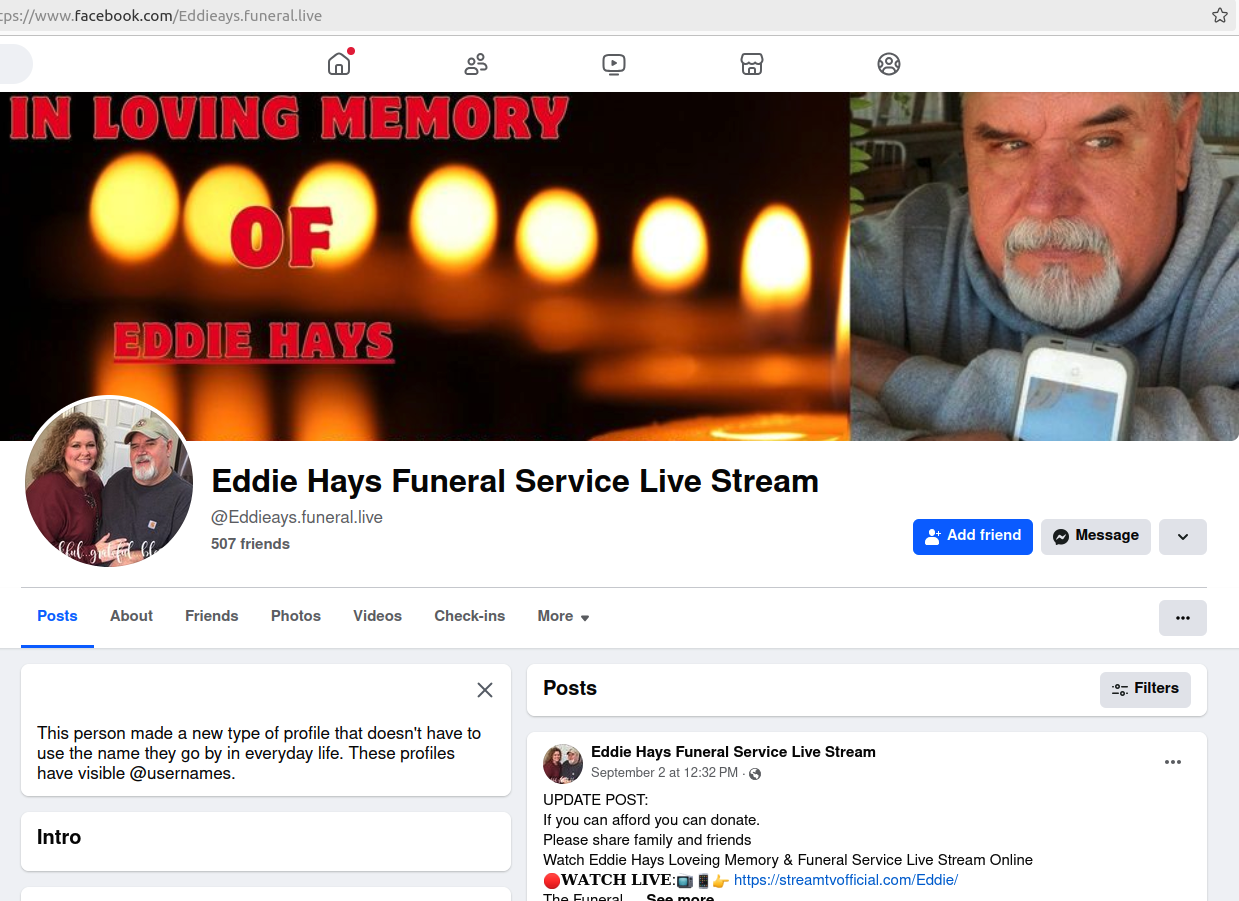
​Scammers are flooding Facebook with groups that purport to offer video streaming of funeral services for the recently deceased. Friends and family who follow the links for the streaming services are then asked to cough up their credit card information. Recently, these scammers have branched out into offering fake streaming services for nearly any kind of event advertised on Facebook. Here’s a closer look at the size of this scheme, and some findings about who may be responsible. 

Scammers are flooding Facebook with groups that purport to offer video streaming of funeral services for the recently deceased. Friends and family who follow the links for the streaming services are then asked to cough up their credit card information. Recently, these scammers have branched out into offering fake streaming services for nearly any kind of event advertised on Facebook. Here’s a closer look at the size of this scheme, and some findings about who may be responsible.

One of the many scam funeral group pages on Facebook. Clicking to view the “live stream” of the funeral takes one to a newly registered website that requests credit card information.

KrebsOnSecurity recently heard from a reader named George who said a friend had just passed away, and he noticed that a Facebook group had been created in that friend’s memory. The page listed the correct time and date of the funeral service, which it claimed could be streamed over the Internet by following a link that led to a page requesting credit card information.

“After I posted about the site, a buddy of mine indicated [the same thing] happened to her when her friend passed away two weeks ago,” George said.

Searching Facebook/Meta for a few simple keywords like “funeral” and “stream” reveals countless funeral group pages on Facebook, some of them for services in the past and others erected for an upcoming funeral.

All of these groups include images of the deceased as their profile photo, and seek to funnel users to a handful of newly-registered video streaming websites that require a credit card payment before one can continue. Even more galling, some of these pages request donations in the name of the deceased.

It’s not clear how many Facebook users fall for this scam, but it’s worth noting that many of these fake funeral groups attract subscribers from at least some of the deceased’s followers, suggesting those users have subscribed to the groups in anticipation of the service being streamed. It’s also unclear how many people end up missing a friend or loved one’s funeral because they mistakenly thought it was being streamed online.

One of many look-alike landing pages for video streaming services linked to scam Facebook funeral groups.

George said their friend’s funeral service page on Facebook included a link to the supposed live-streamed service at livestreamnow[.]xyz, a domain registered in November 2023.

According to DomainTools.com, the organization that registered this domain is called “apkdownloadweb,” is based in Rajshahi, Bangladesh, and uses the DNS servers of a Web hosting company in Bangladesh called webhostbd[.]net.

A search on “apkdownloadweb” in DomainTools shows three domains registered to this entity, including live24sports[.]xyz and onlinestreaming[.]xyz. Both of those domains also used webhostbd[.]net for DNS. Apkdownloadweb has a Facebook page, which shows a number of “live video” teasers for sports events that have already happened, and says its domain is apkdownloadweb[.]com.

Livestreamnow[.]xyz is currently hosted at a Bangladeshi web hosting provider named cloudswebserver[.]com, but historical DNS records show this website also used DNS servers from webhostbd[.]net.

The Internet address of livestreamnow[.]xyz is 148.251.54.196, at the hosting giant Hetzner in Germany. DomainTools shows this same Internet address is home to nearly 6,000 other domains (.CSV), including hundreds that reference video streaming terms, like watchliveon24[.]com and foxsportsplus[.]com.

There are thousands of domains at this IP address that include or end in the letters “bd,” the country code top-level domain for Bangladesh. Although many domains correspond to websites for electronics stores or blogs about IT topics, just as many contain a fair amount of placeholder content (think “lorem ipsum” text on the “contact” page). In other words, the sites appear legitimate at first glance, but upon closer inspection it is clear they are not currently used by active businesses.

The passive DNS records for 148.251.54.196 show a surprising number of results that are basically two domain names mushed together. For example, there is watchliveon24[.]com.playehq4ks[.]com, which displays links to multiple funeral service streaming groups on Facebook.

Another combined domain on the same Internet address — livestreaming24[.]xyz.allsportslivenow[.]com — lists dozens of links to Facebook groups for funerals, but also for virtually all types of events that are announced or posted about by Facebook users, including graduations, concerts, award ceremonies, weddings, and rodeos.

Even community events promoted by state and local police departments on Facebook are fair game for these scammers. A Facebook page maintained by the police force in Plympton, Mass. for a town social event this summer called Plympton Night Out was quickly made into two different Facebook groups that informed visitors they could stream the festivities at either espnstreamlive[.]co or skysports[.]live.

WHO’S BEHIND THE FAKEBOOK FUNERALS?

Recall that the registrant of livestreamnow[.]xyz — the bogus streaming site linked in the Facebook group for George’s late friend — was an organization called “Apkdownloadweb.” That entity’s domain — apkdownloadweb[.]com — is registered to a Mazidul Islam in Rajshahi, Bangladesh (this domain is also using Webhostbd[.]net DNS servers).

Mazidul Islam’s LinkedIn page says he is the organizer of a now defunct IT blog called gadgetsbiz[.]com, which DomainTools finds was registered to a Mehedi Hasan from Rajshahi, Bangladesh.

To bring this full circle, DomainTools finds the domain name for the DNS provider on all of the above-mentioned sites  — webhostbd[.]net — was originally registered to a Md Mehedi, and to the email address webhostbd.net@gmail.com (“MD” is a common abbreviation for Muhammad/Mohammod/Muhammed).

A search on that email address at Constella finds a breached record from the data broker Apollo.io saying its owner’s full name is Mohammod Mehedi Hasan. Unfortunately, this is not a particularly unique name in that region of the world.

But as luck would have it, sometime last year the administrator of apkdownloadweb[.]com managed to infect their Windows PC with password-stealing malware. We know this because the raw logs of data stolen from this administrator’s PC were indexed by the breach tracking service Constella Intelligence [full disclosure: As of this month, Constella is an advertiser on this website].

These so-called “stealer logs” are mostly generated by opportunistic infections from information-stealing trojans that are sold on cybercrime markets. A typical set of logs for a compromised PC will include any usernames and passwords stored in any browser on the system, as well as a list of recent URLs visited and files downloaded.

Malware purveyors will often deploy infostealer malware by bundling it with “cracked” or pirated software titles. Indeed, the stealer logs for the administrator of apkdownloadweb[.]com show this user’s PC became infected immediately after they downloaded a booby-trapped mobile application development toolkit.

Those stolen credentials indicate Apkdownloadweb[.]com is maintained by a 20-something native of Dhaka, Bangladesh named Mohammod Abdullah Khondokar.

The “browser history” folder from the admin of Apkdownloadweb shows Khondokar recently left a comment on the Facebook page of Mohammod Mehedi Hasan, and Khondokar’s Facebook profile says the two are friends.

Neither MD Hasan nor MD Abdullah Khondokar responded to requests for comment. KrebsOnSecurity also sought comment from Meta.


Read More

CISA Adds Four Known Exploited Vulnerabilities to Catalog

 ​CISA has added four new vulnerabilities to its Known Exploited Vulnerabilities Catalog, based on evidence of active exploitation.

CVE-2014-0497 Adobe Flash Player Integer Underflow Vulnerability
CVE-2013-0643 Adobe Flash Player Incorrect Default Permissions Vulnerability
CVE-2013-0648 Adobe Flash Player Code Execution Vulnerability
CVE-2014-0502 Adobe Flash Player Double Free Vulnerability

These types of vulnerabilities are frequent attack vectors for malicious cyber actors and pose significant risks to the federal enterprise.
Binding Operational Directive (BOD) 22-01: Reducing the Significant Risk of Known Exploited Vulnerabilities established the Known Exploited Vulnerabilities Catalog as a living list of known Common Vulnerabilities and Exposures (CVEs) that carry significant risk to the federal enterprise. BOD 22-01 requires Federal Civilian Executive Branch (FCEB) agencies to remediate identified vulnerabilities by the due date to protect FCEB networks against active threats. See the BOD 22-01 Fact Sheet for more information.
Although BOD 22-01 only applies to FCEB agencies, CISA strongly urges all organizations to reduce their exposure to cyberattacks by prioritizing timely remediation of Catalog vulnerabilities as part of their vulnerability management practice. CISA will continue to add vulnerabilities to the catalog that meet the specified criteria. 

CISA has added four new vulnerabilities to its Known Exploited Vulnerabilities Catalog, based on evidence of active exploitation.

CVE-2014-0497 Adobe Flash Player Integer Underflow Vulnerability
CVE-2013-0643 Adobe Flash Player Incorrect Default Permissions Vulnerability
CVE-2013-0648 Adobe Flash Player Code Execution Vulnerability
CVE-2014-0502 Adobe Flash Player Double Free Vulnerability

These types of vulnerabilities are frequent attack vectors for malicious cyber actors and pose significant risks to the federal enterprise.

Binding Operational Directive (BOD) 22-01: Reducing the Significant Risk of Known Exploited Vulnerabilities established the Known Exploited Vulnerabilities Catalog as a living list of known Common Vulnerabilities and Exposures (CVEs) that carry significant risk to the federal enterprise. BOD 22-01 requires Federal Civilian Executive Branch (FCEB) agencies to remediate identified vulnerabilities by the due date to protect FCEB networks against active threats. See the BOD 22-01 Fact Sheet for more information.

Although BOD 22-01 only applies to FCEB agencies, CISA strongly urges all organizations to reduce their exposure to cyberattacks by prioritizing timely remediation of Catalog vulnerabilities as part of their vulnerability management practice. CISA will continue to add vulnerabilities to the catalog that meet the specified criteria.

 Read More

CISA Releases Three Industrial Control Systems Advisories

 ​CISA released three Industrial Control Systems (ICS) advisories on September 17, 2024. These advisories provide timely information about current security issues, vulnerabilities, and exploits surrounding ICS.

ICSA-24-261-01 Siemens SIMATIC S7-200 SMART Devices
ICSA-24-261-02 Millbeck Communications Proroute H685t-w
ICSA-24-261-03 Yokogawa Dual-redundant Platform for Computer (PC2CKM)

CISA encourages users and administrators to review newly released ICS advisories for technical details and mitigations. 

CISA released three Industrial Control Systems (ICS) advisories on September 17, 2024. These advisories provide timely information about current security issues, vulnerabilities, and exploits surrounding ICS.

ICSA-24-261-01 Siemens SIMATIC S7-200 SMART Devices
ICSA-24-261-02 Millbeck Communications Proroute H685t-w
ICSA-24-261-03 Yokogawa Dual-redundant Platform for Computer (PC2CKM)

CISA encourages users and administrators to review newly released ICS advisories for technical details and mitigations.

 Read More

Millbeck Communications Proroute H685t-w

 ​View CSAF
1. EXECUTIVE SUMMARY

CVSS v3 8.8
ATTENTION: Exploitable remotely/low attack complexity
Vendor: Millbeck Communications
Equipment: Proroute H685t-w
Vulnerabilities: Command Injection, Cross-site Scripting

2. RISK EVALUATION
Successful exploitation of these vulnerabilities could allow an attacker to execute arbitrary commands on the device’s operating system.
3. TECHNICAL DETAILS
3.1 AFFECTED PRODUCTS
The following versions of Millbeck Communications Proroute H685t-w, a 4G router, are affected:

Proroute H685t-w: Version 3.2.334

3.2 Vulnerability Overview
3.2.1 Improper Neutralization of Special Elements used in a Command (‘Command Injection’) CWE-77
There is a command injection vulnerability that may allow an attacker to inject malicious input on the device’s operating system.
CVE-2024-45682 has been assigned to this vulnerability. A CVSS v3.1 base score of 8.8 has been calculated; the CVSS vector string is (AV:N/AC:L/PR:L/UI:N/S:U/C:H/I:H/A:H).
3.2.2 Improper Neutralization of Input During Web Page Generation (‘Cross-site Scripting’) CWE-79
This vulnerability occurs when user-supplied input is improperly sanitized and then reflected back to the user’s browser, allowing an attacker to execute arbitrary JavaScript in the context of the victim’s browser session.
CVE-2024-38380 has been assigned to this vulnerability. A CVSS v3.1 base score of 5.5 has been calculated; the CVSS vector string is (AV:N/AC:L/PR:L/UI:R/S:U/C:L/I:L/A:L).
3.3 BACKGROUND

CRITICAL INFRASTRUCTURE SECTORS: Commercial Facilities, Energy
COUNTRIES/AREAS DEPLOYED: Worldwide
COMPANY HEADQUARTERS LOCATION: United Kingdom

3.4 RESEARCHER
Joe Lovett from Pen Test Partners reported these vulnerabilities to CISA.
4. MITIGATIONS
Millbeck Communications recommends that users download the firmware patch v3.2.335 or higher.
CISA recommends users take defensive measures to minimize the risk of exploitation of these vulnerabilities, such as:

Minimize network exposure for all control system devices and/or systems, ensuring they are not accessible from the internet.
Locate control system networks and remote devices behind firewalls and isolating them from business networks.
When remote access is required, use more secure methods, such as Virtual Private Networks (VPNs), recognizing VPNs may have vulnerabilities and should be updated to the most current version available. Also recognize VPN is only as secure as the connected devices.

CISA reminds organizations to perform proper impact analysis and risk assessment prior to deploying defensive measures.
CISA also provides a section for control systems security recommended practices on the ICS webpage on cisa.gov/ics. Several CISA products detailing cyber defense best practices are available for reading and download, including Improving Industrial Control Systems Cybersecurity with Defense-in-Depth Strategies.
CISA encourages organizations to implement recommended cybersecurity strategies for proactive defense of ICS assets.
Additional mitigation guidance and recommended practices are publicly available on the ICS webpage at cisa.gov/ics in the technical information paper, ICS-TIP-12-146-01B–Targeted Cyber Intrusion Detection and Mitigation Strategies.
Organizations observing suspected malicious activity should follow established internal procedures and report findings to CISA for tracking and correlation against other incidents.
CISA also recommends users take the following measures to protect themselves from social engineering attacks:

Do not click web links or open attachments in unsolicited email messages.
Refer to Recognizing and Avoiding Email Scams for more information on avoiding email scams.
Refer to Avoiding Social Engineering and Phishing Attacks for more information on social engineering attacks.

No known public exploitation specifically targeting these vulnerabilities has been reported to CISA at this time.
5. UPDATE HISTORY

September 17, 2024: Initial Publication 

View CSAF

1. EXECUTIVE SUMMARY

CVSS v3 8.8
ATTENTION: Exploitable remotely/low attack complexity
Vendor: Millbeck Communications
Equipment: Proroute H685t-w
Vulnerabilities: Command Injection, Cross-site Scripting

2. RISK EVALUATION

Successful exploitation of these vulnerabilities could allow an attacker to execute arbitrary commands on the device’s operating system.

3. TECHNICAL DETAILS

3.1 AFFECTED PRODUCTS

The following versions of Millbeck Communications Proroute H685t-w, a 4G router, are affected:

Proroute H685t-w: Version 3.2.334

3.2 Vulnerability Overview

3.2.1 Improper Neutralization of Special Elements used in a Command (‘Command Injection’) CWE-77

There is a command injection vulnerability that may allow an attacker to inject malicious input on the device’s operating system.

CVE-2024-45682 has been assigned to this vulnerability. A CVSS v3.1 base score of 8.8 has been calculated; the CVSS vector string is (AV:N/AC:L/PR:L/UI:N/S:U/C:H/I:H/A:H).

3.2.2 Improper Neutralization of Input During Web Page Generation (‘Cross-site Scripting’) CWE-79

This vulnerability occurs when user-supplied input is improperly sanitized and then reflected back to the user’s browser, allowing an attacker to execute arbitrary JavaScript in the context of the victim’s browser session.

CVE-2024-38380 has been assigned to this vulnerability. A CVSS v3.1 base score of 5.5 has been calculated; the CVSS vector string is (AV:N/AC:L/PR:L/UI:R/S:U/C:L/I:L/A:L).

3.3 BACKGROUND

CRITICAL INFRASTRUCTURE SECTORS: Commercial Facilities, Energy
COUNTRIES/AREAS DEPLOYED: Worldwide
COMPANY HEADQUARTERS LOCATION: United Kingdom

3.4 RESEARCHER

Joe Lovett from Pen Test Partners reported these vulnerabilities to CISA.

4. MITIGATIONS

Millbeck Communications recommends that users download the firmware patch v3.2.335 or higher.

CISA recommends users take defensive measures to minimize the risk of exploitation of these vulnerabilities, such as:

Minimize network exposure for all control system devices and/or systems, ensuring they are not accessible from the internet.
Locate control system networks and remote devices behind firewalls and isolating them from business networks.
When remote access is required, use more secure methods, such as Virtual Private Networks (VPNs), recognizing VPNs may have vulnerabilities and should be updated to the most current version available. Also recognize VPN is only as secure as the connected devices.

CISA reminds organizations to perform proper impact analysis and risk assessment prior to deploying defensive measures.

CISA also provides a section for control systems security recommended practices on the ICS webpage on cisa.gov/ics. Several CISA products detailing cyber defense best practices are available for reading and download, including Improving Industrial Control Systems Cybersecurity with Defense-in-Depth Strategies.

CISA encourages organizations to implement recommended cybersecurity strategies for proactive defense of ICS assets.

Additional mitigation guidance and recommended practices are publicly available on the ICS webpage at cisa.gov/ics in the technical information paper, ICS-TIP-12-146-01B–Targeted Cyber Intrusion Detection and Mitigation Strategies.

Organizations observing suspected malicious activity should follow established internal procedures and report findings to CISA for tracking and correlation against other incidents.

CISA also recommends users take the following measures to protect themselves from social engineering attacks:

Do not click web links or open attachments in unsolicited email messages.
Refer to Recognizing and Avoiding Email Scams for more information on avoiding email scams.
Refer to Avoiding Social Engineering and Phishing Attacks for more information on social engineering attacks.

No known public exploitation specifically targeting these vulnerabilities has been reported to CISA at this time.

5. UPDATE HISTORY

September 17, 2024: Initial Publication
 Read More

Yokogawa Dual-redundant Platform for Computer (PC2CKM)

 ​View CSAF
1. EXECUTIVE SUMMARY

CVSS v3 7.5
ATTENTION: Exploitable remotely/low attack complexity
Vendor: Yokogawa
Equipment: Dual-redundant Platform for Computer (PC2CKM)
Vulnerability: Unchecked Return Value

2. RISK EVALUATION
Successful exploitation of this vulnerability could allow an attacker to perform a denial-of-service.
3. TECHNICAL DETAILS
3.1 AFFECTED PRODUCTS
The following versions of Yokogawa PC2CKM, a dual-redundant platform computer, are affected:

Dual-redundant Platform for Computer (PC2CKM): R1.01.00 to R2.03.00

3.2 Vulnerability Overview
3.2.1 UNCHECKED RETURN VALUE CWE-252
If a computer on which the affected product is installed receives a large number of UDP broadcast packets in a short period, occasionally that computer may restart. If both the active and standby computers are restarted at the same time, the functionality on that computer may be temporarily unavailable.
CVE-2024-8110 has been assigned to this vulnerability. A CVSS v3.1 base score of 7.5 has been calculated; the CVSS vector string is (AV:N/AC:L/PR:N/UI:N/S:U/C:N/I:N/A:H).
3.3 BACKGROUND

CRITICAL INFRASTRUCTURE SECTORS: Critical Manufacturing, Energy, Food and Agriculture
COUNTRIES/AREAS DEPLOYED: Worldwide
COMPANY HEADQUARTERS LOCATION: Japan

3.4 RESEARCHER
Yokogawa reported this vulnerability to JPCERT.
4. MITIGATIONS
Yokogawa recommends users update to the following version:

Dual-redundant Platform for Computer (PC2CKM): Update to R2.03.10

For more information, contact Yokogawa.
CISA recommends users take defensive measures to minimize the risk of exploitation of this vulnerability, such as:

Minimize network exposure for all control system devices and/or systems, ensuring they are not accessible from the internet.
Locate control system networks and remote devices behind firewalls and isolating them from business networks.
When remote access is required, use more secure methods, such as Virtual Private Networks (VPNs), recognizing VPNs may have vulnerabilities and should be updated to the most current version available. Also recognize VPN is only as secure as the connected devices.

CISA reminds organizations to perform proper impact analysis and risk assessment prior to deploying defensive measures.
CISA also provides a section for control systems security recommended practices on the ICS webpage on cisa.gov/ics. Several CISA products detailing cyber defense best practices are available for reading and download, including Improving Industrial Control Systems Cybersecurity with Defense-in-Depth Strategies.
CISA encourages organizations to implement recommended cybersecurity strategies for proactive defense of ICS assets.
Additional mitigation guidance and recommended practices are publicly available on the ICS webpage at cisa.gov/ics in the technical information paper, ICS-TIP-12-146-01B–Targeted Cyber Intrusion Detection and Mitigation Strategies.
Organizations observing suspected malicious activity should follow established internal procedures and report findings to CISA for tracking and correlation against other incidents.
No known public exploitation specifically targeting this vulnerability has been reported to CISA at this time.
5. UPDATE HISTORY

September 17, 2024: Initial Publication 

View CSAF

1. EXECUTIVE SUMMARY

CVSS v3 7.5
ATTENTION: Exploitable remotely/low attack complexity
Vendor: Yokogawa
Equipment: Dual-redundant Platform for Computer (PC2CKM)
Vulnerability: Unchecked Return Value

2. RISK EVALUATION

Successful exploitation of this vulnerability could allow an attacker to perform a denial-of-service.

3. TECHNICAL DETAILS

3.1 AFFECTED PRODUCTS

The following versions of Yokogawa PC2CKM, a dual-redundant platform computer, are affected:

Dual-redundant Platform for Computer (PC2CKM): R1.01.00 to R2.03.00

3.2 Vulnerability Overview

3.2.1 UNCHECKED RETURN VALUE CWE-252

If a computer on which the affected product is installed receives a large number of UDP broadcast packets in a short period, occasionally that computer may restart. If both the active and standby computers are restarted at the same time, the functionality on that computer may be temporarily unavailable.

CVE-2024-8110 has been assigned to this vulnerability. A CVSS v3.1 base score of 7.5 has been calculated; the CVSS vector string is (AV:N/AC:L/PR:N/UI:N/S:U/C:N/I:N/A:H).

3.3 BACKGROUND

CRITICAL INFRASTRUCTURE SECTORS: Critical Manufacturing, Energy, Food and Agriculture
COUNTRIES/AREAS DEPLOYED: Worldwide
COMPANY HEADQUARTERS LOCATION: Japan

3.4 RESEARCHER

Yokogawa reported this vulnerability to JPCERT.

4. MITIGATIONS

Yokogawa recommends users update to the following version:

Dual-redundant Platform for Computer (PC2CKM): Update to R2.03.10

For more information, contact Yokogawa.

CISA recommends users take defensive measures to minimize the risk of exploitation of this vulnerability, such as:

Minimize network exposure for all control system devices and/or systems, ensuring they are not accessible from the internet.
Locate control system networks and remote devices behind firewalls and isolating them from business networks.
When remote access is required, use more secure methods, such as Virtual Private Networks (VPNs), recognizing VPNs may have vulnerabilities and should be updated to the most current version available. Also recognize VPN is only as secure as the connected devices.

CISA reminds organizations to perform proper impact analysis and risk assessment prior to deploying defensive measures.

CISA also provides a section for control systems security recommended practices on the ICS webpage on cisa.gov/ics. Several CISA products detailing cyber defense best practices are available for reading and download, including Improving Industrial Control Systems Cybersecurity with Defense-in-Depth Strategies.

CISA encourages organizations to implement recommended cybersecurity strategies for proactive defense of ICS assets.

Additional mitigation guidance and recommended practices are publicly available on the ICS webpage at cisa.gov/ics in the technical information paper, ICS-TIP-12-146-01B–Targeted Cyber Intrusion Detection and Mitigation Strategies.

Organizations observing suspected malicious activity should follow established internal procedures and report findings to CISA for tracking and correlation against other incidents.

No known public exploitation specifically targeting this vulnerability has been reported to CISA at this time.

5. UPDATE HISTORY

September 17, 2024: Initial Publication
 Read More

Siemens SIMATIC S7-200 SMART Devices

 ​As of January 10, 2023, CISA will no longer be updating ICS security advisories for Siemens product vulnerabilities beyond the initial advisory. For the most up-to-date information on vulnerabilities in this advisory, please see Siemens’ ProductCERT Security Advisories (CERT Services | Services | Siemens Global). 
View CSAF
1. EXECUTIVE SUMMARY

CVSS v4 8.7
ATTENTION: Exploitable remotely/low attack complexity
Vendor: Siemens
Equipment: SIMATIC S7-200 SMART Devices
Vulnerability: Uncontrolled Resource Consumption

2. RISK EVALUATION
Successful exploitation of this vulnerability could allow an attacker to cause a denial-of-service condition.
3. TECHNICAL DETAILS
3.1 AFFECTED PRODUCTS
The following versions of Siemens SIMATIC S7-200 SMART Devices are affected:

SIMATIC S7-200 SMART CPU CR40 (6ES7288-1CR40-0AA0): All versions
SIMATIC S7-200 SMART CPU CR60 (6ES7288-1CR60-0AA0): All Versions
SIMATIC S7-200 SMART CPU SR20 (6ES7288-1SR20-0AA0): All Versions
SIMATIC S7-200 SMART CPU SR20 (6ES7288-1SR20-0AA1): All Versions
SIMATIC S7-200 SMART CPU SR30 (6ES7288-1SR30-0AA0): All Versions
SIMATIC S7-200 SMART CPU SR30 (6ES7288-1SR30-0AA1): All Versions
SIMATIC S7-200 SMART CPU SR40 (6ES7288-1SR40-0AA0): All Versions
SIMATIC S7-200 SMART CPU SR40 (6ES7288-1SR40-0AA1): All Versions
SIMATIC S7-200 SMART CPU SR60 (6ES7288-1SR60-0AA0): All Versions
SIMATIC S7-200 SMART CPU SR60 (6ES7288-1SR60-0AA1): All Versions
SIMATIC S7-200 SMART CPU ST20 (6ES7288-1ST20-0AA0): All Versions
SIMATIC S7-200 SMART CPU ST20 (6ES7288-1ST20-0AA1): All Versions
SIMATIC S7-200 SMART CPU ST30 (6ES7288-1ST30-0AA0): All Versions
SIMATIC S7-200 SMART CPU ST30 (6ES7288-1ST30-0AA1): All Versions
SIMATIC S7-200 SMART CPU ST40 (6ES7288-1ST40-0AA0): All Versions
SIMATIC S7-200 SMART CPU ST40 (6ES7288-1ST40-0AA1): All Versions
SIMATIC S7-200 SMART CPU ST60 (6ES7288-1ST60-0AA0): All Versions
SIMATIC S7-200 SMART CPU ST60 (6ES7288-1ST60-0AA1): All Versions

3.2 Vulnerability Overview
3.2.1 Uncontrolled Resource Consumption CWE-400
Affected devices do not properly handle TCP packets with an incorrect structure. This could allow an unauthenticated remote attacker to cause a denial of service condition. To restore normal operations, the network cable of the device needs to be unplugged and re-plugged.
CVE-2024-43647 has been assigned to this vulnerability. A CVSS v3.1 base score of 7.5 has been calculated; the CVSS vector string is (AV:N/AC:L/PR:N/UI:N/S:U/C:N/I:N/A:H).
A CVSS v4 score has also been calculated for CVE-2024-43647. A base score of 8.7 has been calculated; the CVSS vector string is (CVSS4.0/AV:N/AC:L/AT:N/PR:N/UI:N/VC:N/VI:N/VA:H/SC:N/SI:N/SA:N).
3.3 BACKGROUND

CRITICAL INFRASTRUCTURE SECTORS: Critical Manufacturing
COUNTRIES/AREAS DEPLOYED: Worldwide
COMPANY HEADQUARTERS LOCATION: Germany

3.4 RESEARCHER
Siemens reported this vulnerability to CISA.
4. MITIGATIONS
Siemens has identified the following specific workarounds and mitigations that users can apply to reduce the risk:

Limit network access to trusted users and systems only

Please use the following General Security Recommendations:
As a general security measure, Siemens strongly recommends users protect network access to devices with appropriate mechanisms. In order to operate the devices in a protected IT environment, Siemens recommends users configure the environment according to Siemens’ operational guidelines for Industrial Security, and to follow the recommendations in the product manuals. Additional information on Industrial Security by Siemens can be found here.
For further inquiries on security vulnerabilities in Siemens products and solutions, please view contact the Siemens ProductCERT
For more information see the associated Siemens security advisory SSA-969738 in HTML and CSAF.
CISA recommends users take defensive measures to minimize the risk of exploitation of this vulnerability, such as:

Minimize network exposure for all control system devices and/or systems, ensuring they are not accessible from the internet.
Locate control system networks and remote devices behind firewalls and isolating them from business networks.
When remote access is required, use more secure methods, such as Virtual Private Networks (VPNs), recognizing VPNs may have vulnerabilities and should be updated to the most current version available. Also recognize VPN is only as secure as the connected devices.

CISA reminds organizations to perform proper impact analysis and risk assessment prior to deploying defensive measures.
CISA also provides a section for control systems security recommended practices on the ICS webpage on cisa.gov/ics. Several CISA products detailing cyber defense best practices are available for reading and download, including Improving Industrial Control Systems Cybersecurity with Defense-in-Depth Strategies.
CISA encourages organizations to implement recommended cybersecurity strategies for proactive defense of ICS assets.
Additional mitigation guidance and recommended practices are publicly available on the ICS webpage at cisa.gov/ics in the technical information paper, ICS-TIP-12-146-01B–Targeted Cyber Intrusion Detection and Mitigation Strategies.
Organizations observing suspected malicious activity should follow established internal procedures and report findings to CISA for tracking and correlation against other incidents.
CISA also recommends users take the following measures to protect themselves from social engineering attacks:

Do not click web links or open attachments in unsolicited email messages.
Refer to Recognizing and Avoiding Email Scams for more information on avoiding email scams.
Refer to Avoiding Social Engineering and Phishing Attacks for more information on social engineering attacks.

No known public exploitation specifically targeting this vulnerability has been reported to CISA at this time.
5. UPDATE HISTORY

September 17, 2024: Initial Publication 

As of January 10, 2023, CISA will no longer be updating ICS security advisories for Siemens product vulnerabilities beyond the initial advisory. For the most up-to-date information on vulnerabilities in this advisory, please see Siemens’ ProductCERT Security Advisories (CERT Services | Services | Siemens Global). 

View CSAF

1. EXECUTIVE SUMMARY

CVSS v4 8.7
ATTENTION: Exploitable remotely/low attack complexity
Vendor: Siemens
Equipment: SIMATIC S7-200 SMART Devices
Vulnerability: Uncontrolled Resource Consumption

2. RISK EVALUATION

Successful exploitation of this vulnerability could allow an attacker to cause a denial-of-service condition.

3. TECHNICAL DETAILS

3.1 AFFECTED PRODUCTS

The following versions of Siemens SIMATIC S7-200 SMART Devices are affected:

SIMATIC S7-200 SMART CPU CR40 (6ES7288-1CR40-0AA0): All versions
SIMATIC S7-200 SMART CPU CR60 (6ES7288-1CR60-0AA0): All Versions
SIMATIC S7-200 SMART CPU SR20 (6ES7288-1SR20-0AA0): All Versions
SIMATIC S7-200 SMART CPU SR20 (6ES7288-1SR20-0AA1): All Versions
SIMATIC S7-200 SMART CPU SR30 (6ES7288-1SR30-0AA0): All Versions
SIMATIC S7-200 SMART CPU SR30 (6ES7288-1SR30-0AA1): All Versions
SIMATIC S7-200 SMART CPU SR40 (6ES7288-1SR40-0AA0): All Versions
SIMATIC S7-200 SMART CPU SR40 (6ES7288-1SR40-0AA1): All Versions
SIMATIC S7-200 SMART CPU SR60 (6ES7288-1SR60-0AA0): All Versions
SIMATIC S7-200 SMART CPU SR60 (6ES7288-1SR60-0AA1): All Versions
SIMATIC S7-200 SMART CPU ST20 (6ES7288-1ST20-0AA0): All Versions
SIMATIC S7-200 SMART CPU ST20 (6ES7288-1ST20-0AA1): All Versions
SIMATIC S7-200 SMART CPU ST30 (6ES7288-1ST30-0AA0): All Versions
SIMATIC S7-200 SMART CPU ST30 (6ES7288-1ST30-0AA1): All Versions
SIMATIC S7-200 SMART CPU ST40 (6ES7288-1ST40-0AA0): All Versions
SIMATIC S7-200 SMART CPU ST40 (6ES7288-1ST40-0AA1): All Versions
SIMATIC S7-200 SMART CPU ST60 (6ES7288-1ST60-0AA0): All Versions
SIMATIC S7-200 SMART CPU ST60 (6ES7288-1ST60-0AA1): All Versions

3.2 Vulnerability Overview

3.2.1 Uncontrolled Resource Consumption CWE-400

Affected devices do not properly handle TCP packets with an incorrect structure. This could allow an unauthenticated remote attacker to cause a denial of service condition. To restore normal operations, the network cable of the device needs to be unplugged and re-plugged.

CVE-2024-43647 has been assigned to this vulnerability. A CVSS v3.1 base score of 7.5 has been calculated; the CVSS vector string is (AV:N/AC:L/PR:N/UI:N/S:U/C:N/I:N/A:H).

A CVSS v4 score has also been calculated for CVE-2024-43647. A base score of 8.7 has been calculated; the CVSS vector string is (CVSS4.0/AV:N/AC:L/AT:N/PR:N/UI:N/VC:N/VI:N/VA:H/SC:N/SI:N/SA:N).

3.3 BACKGROUND

CRITICAL INFRASTRUCTURE SECTORS: Critical Manufacturing
COUNTRIES/AREAS DEPLOYED: Worldwide
COMPANY HEADQUARTERS LOCATION: Germany

3.4 RESEARCHER

Siemens reported this vulnerability to CISA.

4. MITIGATIONS

Siemens has identified the following specific workarounds and mitigations that users can apply to reduce the risk:

Limit network access to trusted users and systems only

Please use the following General Security Recommendations:

As a general security measure, Siemens strongly recommends users protect network access to devices with appropriate mechanisms. In order to operate the devices in a protected IT environment, Siemens recommends users configure the environment according to Siemens’ operational guidelines for Industrial Security, and to follow the recommendations in the product manuals. Additional information on Industrial Security by Siemens can be found here.

For further inquiries on security vulnerabilities in Siemens products and solutions, please view contact the Siemens ProductCERT

For more information see the associated Siemens security advisory SSA-969738 in HTML and CSAF.

CISA recommends users take defensive measures to minimize the risk of exploitation of this vulnerability, such as:

Minimize network exposure for all control system devices and/or systems, ensuring they are not accessible from the internet.
Locate control system networks and remote devices behind firewalls and isolating them from business networks.
When remote access is required, use more secure methods, such as Virtual Private Networks (VPNs), recognizing VPNs may have vulnerabilities and should be updated to the most current version available. Also recognize VPN is only as secure as the connected devices.

CISA reminds organizations to perform proper impact analysis and risk assessment prior to deploying defensive measures.

CISA also provides a section for control systems security recommended practices on the ICS webpage on cisa.gov/ics. Several CISA products detailing cyber defense best practices are available for reading and download, including Improving Industrial Control Systems Cybersecurity with Defense-in-Depth Strategies.

CISA encourages organizations to implement recommended cybersecurity strategies for proactive defense of ICS assets.

Additional mitigation guidance and recommended practices are publicly available on the ICS webpage at cisa.gov/ics in the technical information paper, ICS-TIP-12-146-01B–Targeted Cyber Intrusion Detection and Mitigation Strategies.

Organizations observing suspected malicious activity should follow established internal procedures and report findings to CISA for tracking and correlation against other incidents.

CISA also recommends users take the following measures to protect themselves from social engineering attacks:

Do not click web links or open attachments in unsolicited email messages.
Refer to Recognizing and Avoiding Email Scams for more information on avoiding email scams.
Refer to Avoiding Social Engineering and Phishing Attacks for more information on social engineering attacks.

No known public exploitation specifically targeting this vulnerability has been reported to CISA at this time.

5. UPDATE HISTORY

September 17, 2024: Initial Publication
 Read More

CISA and FBI Release Secure by Design Alert on Eliminating Cross-Site Scripting Vulnerabilities

 ​Today, CISA and FBI released a Secure by Design Alert, Eliminating Cross-Site Scripting Vulnerabilities, as a part of our ongoing effort to reduce the prevalence of vulnerability classes at scale. Vulnerabilities like cross-site scripting (XSS) continue to appear in software, enabling threat actors to exploit them. However, cross-site scripting vulnerabilities are preventable and should not be present in software products. 

CISA and FBI urge CEOs and other business leaders at technology manufacturers to direct their technical leaders/teams to review past instances of these defects and create a strategic plan to prevent them in the future.  

Visit our website to learn more about the principles of Secure by Design, take the Secure by Design Pledge, and stay informed on the latest Secure by Design Alerts.  

Today, CISA and FBI released a Secure by Design Alert, Eliminating Cross-Site Scripting Vulnerabilities, as a part of our ongoing effort to reduce the prevalence of vulnerability classes at scale. Vulnerabilities like cross-site scripting (XSS) continue to appear in software, enabling threat actors to exploit them. However, cross-site scripting vulnerabilities are preventable and should not be present in software products. 

CISA and FBI urge CEOs and other business leaders at technology manufacturers to direct their technical leaders/teams to review past instances of these defects and create a strategic plan to prevent them in the future.  

Visit our website to learn more about the principles of Secure by Design, take the Secure by Design Pledge, and stay informed on the latest Secure by Design Alerts. 

 Read More

New CISA Plan Aligns Federal Agencies in Cyber Defense

 ​Today, the Cybersecurity and Infrastructure Security Agency (CISA) released the Federal Civilian Executive Branch (FCEB) Operational Cybersecurity Alignment (FOCAL) Plan. Developed in collaboration with FCEB agencies, this plan provides standard, essential components of enterprise operational cybersecurity and aligns the collective operational defense capabilities across the federal enterprise.
Currently, federal agencies maintain their own networks and system architectures—and they independently manage their cyber risk. CISA’s FOCAL plan aligns the federal enterprise, empowering agencies to better address the dynamic cyber threat environment collectively. The plan recommends actions that substantively advance operational cybersecurity improvements and alignment goals. 
For additional guidance, visit CISA’s Securing Networks web page.  

Today, the Cybersecurity and Infrastructure Security Agency (CISA) released the Federal Civilian Executive Branch (FCEB) Operational Cybersecurity Alignment (FOCAL) Plan. Developed in collaboration with FCEB agencies, this plan provides standard, essential components of enterprise operational cybersecurity and aligns the collective operational defense capabilities across the federal enterprise.

Currently, federal agencies maintain their own networks and system architectures—and they independently manage their cyber risk. CISA’s FOCAL plan aligns the federal enterprise, empowering agencies to better address the dynamic cyber threat environment collectively. The plan recommends actions that substantively advance operational cybersecurity improvements and alignment goals. 

For additional guidance, visit CISA’s Securing Networks web page. 

 Read More

Scroll to Top